Image 1 of 10
© Zanchetta Fabio (faxstaff), some rights reserved (CC-BY-SA) · Wikimedia Commons
1 / 10
Phlox, Genus, subulata, Species,
- Genus & species
Creeping phlox
Overview
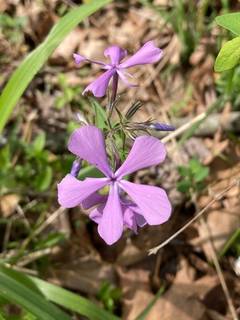
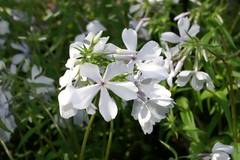
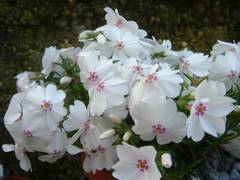
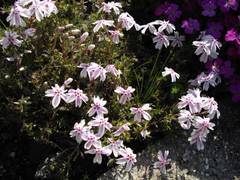
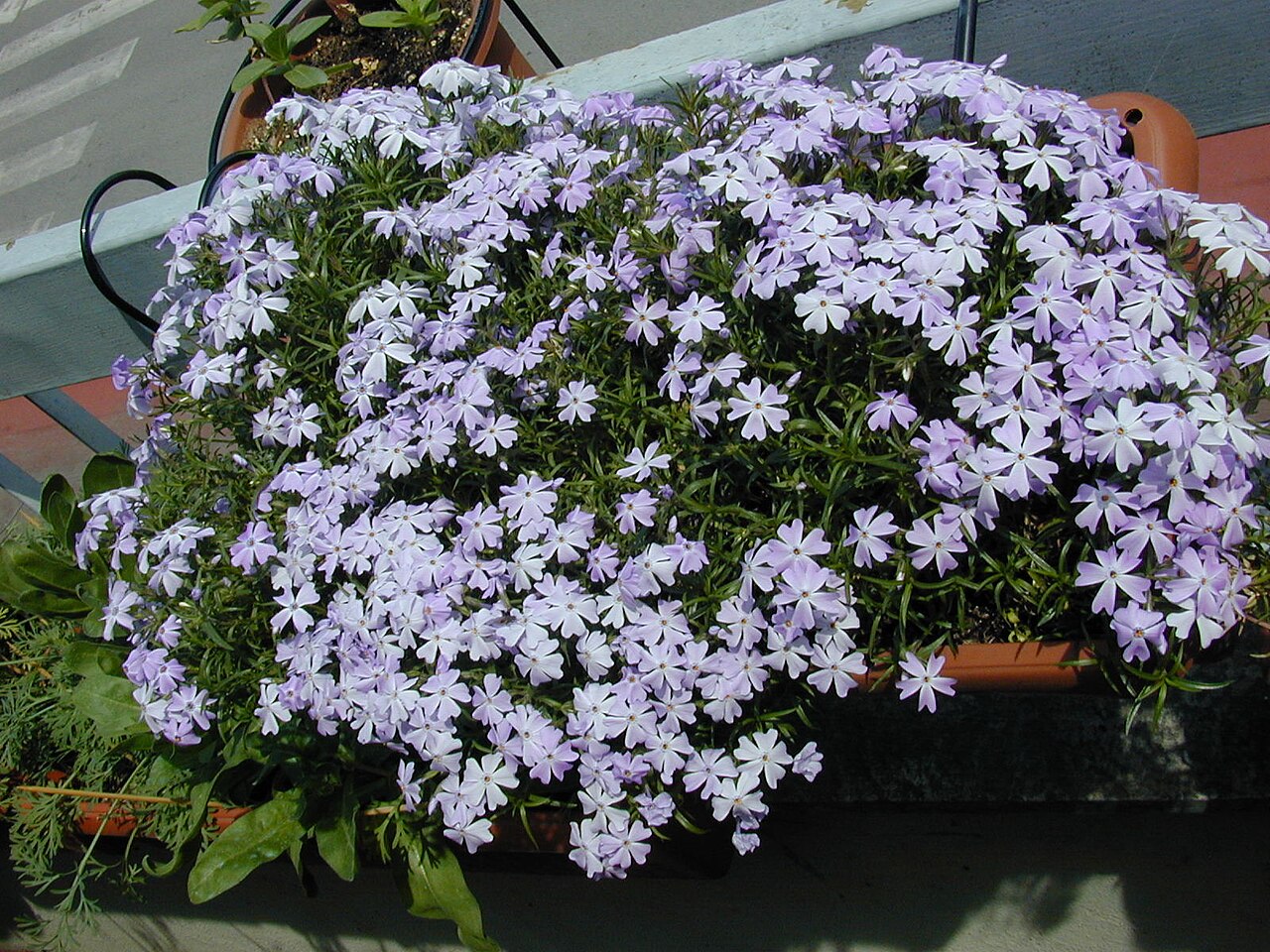
Phlox subulata is a mat-forming evergreen perennial 4-6 inches (10-15 cm) tall spreading 18-24 inches (45-60 cm) wide, built from prostrate woody-based stems that root where they touch soil. Leaves are stiff and needle-like, 0.3-0.75 inch (8-20 mm) long, set in dense opposite pairs and crowded clusters that keep the mat covered through winter. Flowers open 0.5-0.75 inch (12-20 mm) across with five notched petals in pink, magenta, lavender-blue, or white, most forms carrying a darker central eye, held just above the foliage in clusters of 3-7. Bloom covers 80-100 percent of the mat surface for 3-4 weeks between April and May, after which no further flowering follows that season. Growth extends 3-6 inches (8-15 cm) per year. Foliage browns and thins at the center of the mat after 3-4 years, leaving a ring of live growth around dead stems. Powdery mildew whitens foliage in humid summers with still air, and spider mites bronze the leaves during hot dry spells.
Native Range
Native to the eastern and central United States from New York and Michigan south to North Carolina and Tennessee, growing on rocky slopes, gravel banks, sandy barrens, and open woodland edges at 300-3,000 feet (90-900 m). Populations occupy thin dry soils over shale, sandstone, and gravel.Suggested Uses
Planted at 15-18 inch (38-45 cm) spacing on banks, over retaining walls, along path edges, and in rock gardens and gravel beds where the mat spills across stone. Roots hold surface soil on slopes up to 45 degrees once cover closes after 2-3 seasons. Foot traffic breaks the stems, so it is set beside paths rather than within them.How to Identify
Appearance
Size & Dimensions
Height4" - 6"
Width/Spread1'6" - 2'
Bloom Information
Flowers for 3-4 weeks between early April and late May, opening in late March in zones 8-9 and mid-May in zones 3-4. Individual flowers hold 7-10 days. The species carries a single flush, with scattered flowers in September in roughly one season in three following a cool wet August. Bloom shortens to 2 weeks under temperatures above 80F (27C) during flowering.
Detailed Descriptions
Flower Description
Pink, magenta, lavender-blue, or white with a darker eyeFoliage Description
Mid-greenGrowing Conditions
Sun Requirements
Requires 6-8 hours of direct sunlight daily
• Full Sun: 6+ hours of direct sunlight
• Partial Shade: 3-6 hours of direct sunlight
• Full Shade: Less than 3 hours of direct sunlight
Care & Maintenance
Care Guide
Water weekly through the first season; established mats hold through 3-4 weeks of drought and decline in soil that stays moist. Sharp drainage is required, since crowns rot in wet winter soil and under overhead irrigation. Soil at pH 6.0-8.0 in sand, gravel, or loam matches the species, and no fertilizer is needed beyond a light spring feed on poor ground. Shearing the mat by half within 2 weeks of the last flower fading produces fresh growth that closes gaps by August. Mats are lifted, split, and replanted every 3-4 years as the center dies out, or rooted stems are pinned into soil to fill bare patches. Powdery mildew follows still humid air and spider mites follow hot dry positions, both marking foliage without killing plants.Pruning
The mat is sheared back by one-third to one-half within 2 weeks of the last flower fading, which strips spent stems and produces branching that closes the surface. Shearing later than mid-July cuts into the growth carrying the following spring's flower buds. Dead patches at the center are cut out and refilled with rooted sections lifted from the edge.Pruning Schedule
Prune: May–June
late spring
Container Growing
Suitable for container growing
Minimum container size: 2 gallons