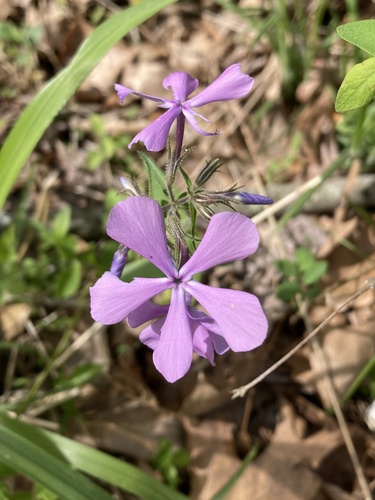
Phlox, Genus, divaricata, Species,
- Genus & species
woodland phlox
Eastern North America, from Quebec south to Georgia and west to Texas
Overview
Phlox divaricata is a native woodland phlox that grows 10–15 inches (25–38 cm) tall and spreads by stolons to form a low, semi-evergreen ground cover. Loose clusters of soft blue to lavender-blue five-petaled flowers 1–1.5 inches (2.5–4 cm) across with a light sweet fragrance carpet the woodland floor in April and May — creating the signature blue color of the eastern spring forest. The species name 'divaricata' means 'spreading', describing the stoloniferous growth that gradually extends the colony. After flowering, the plant maintains a low mat of semi-evergreen medium green soft lance-shaped foliage through summer and into winter. The eastern woodland origin means the species thrives in the conditions that many garden perennials cannot tolerate: dappled shade under deciduous trees, moist humus-rich soil, and competition from tree roots. The spring bloom coincides with the window before deciduous trees leaf out fully — the flowers receive maximum light during the leafless canopy period. Unlike the tall garden phlox (P. paniculata), woodland phlox is not susceptible to powdery mildew. The spreading habit fills gaps between taller woodland perennials and creates a blue spring carpet. Deer may browse the soft foliage.
Native Range
Phlox divaricata is native to eastern North America, from Quebec south to Georgia and west to Texas. It grows in moist deciduous forests, along streams, and on wooded slopes.Suggested Uses
Used as a woodland ground cover, along shaded paths, and under deciduous trees. The spring blue carpet is the signature of the eastern shade garden. Naturalizes gradually to fill woodland areas. Pairs with yellow woodland flowers like trillium and Virginia bluebells for a blue-and-yellow spring combination.How to Identify
Appearance
Size & Dimensions
Height10" - 1'3"
Width/Spread1' - 1'6"
Colors
Bloom Information
Flowering in April and May, approximately 4 weeks. The blue spring carpet peaks when deciduous canopy trees are still leafless.
Detailed Descriptions
Flower Description
Soft blue to lavender-blue, five-petaled, in loose clustersFoliage Description
Medium green, soft, lance-shaped, slightly pubescentGrowing Conditions
Sun Requirements
Requires 2-5 hours of direct sunlight daily
• Full Sun: 6+ hours of direct sunlight
• Partial Shade: 3-6 hours of direct sunlight
• Full Shade: Less than 3 hours of direct sunlight
Care & Maintenance
Care Guide
Plant in partial to full shade with 2–5 hours of filtered light under deciduous trees. Moist, humus-rich, well-drained soil. Mulch with leaf mold. Water during dry spells. Shear lightly after bloom to encourage dense mat growth. The stoloniferous spread gradually fills the woodland floor.Pruning
Shear lightly after bloom to tidy the mat. No other maintenance needed.Pruning Schedule
Prune: June
summer
Container Growing
Suitable for container growing
Minimum container size: 3 gallons
Toxicity
Non-toxicRelated Phlox species
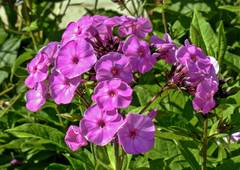 Garden phloxPhlox paniculata
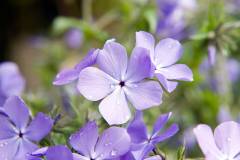 Blue moon woodland phloxPhlox divaricata 'Blue Moon'
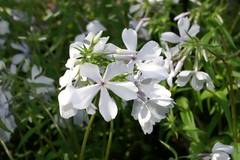 May breeze woodland phloxPhlox divaricata 'May Breeze'
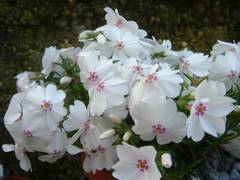 Amazing grace creeping phloxPhlox subulata 'Amazing Grace'
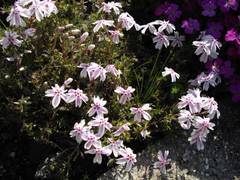 Candy stripe creeping phloxPhlox subulata 'Candy Stripe'
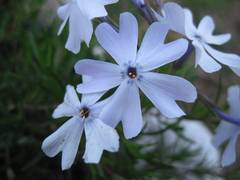 Emerald blue creeping phloxPhlox subulata 'Emerald Blue'