Image 1 of 5
1 / 5
© Ghislain118 http://www.fleurs-des-montagnes.net, some rights reserved (CC-BY-SA) · Wikimedia Commons
Phlox, Genus, subulata, Species, 'Amazing Grace', Cultivar,
- Genus & species
- Cultivar
amazing grace creeping phlox
Garden selection; species {Phlox subulata} is native to eastern North America
Overview
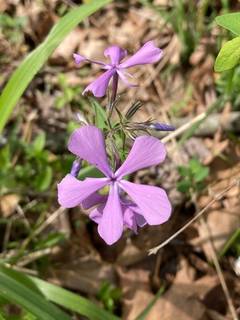
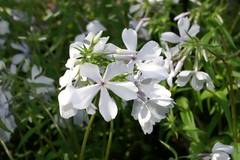
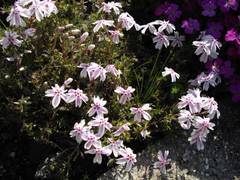
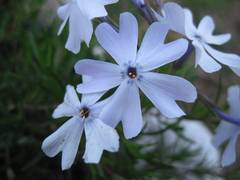
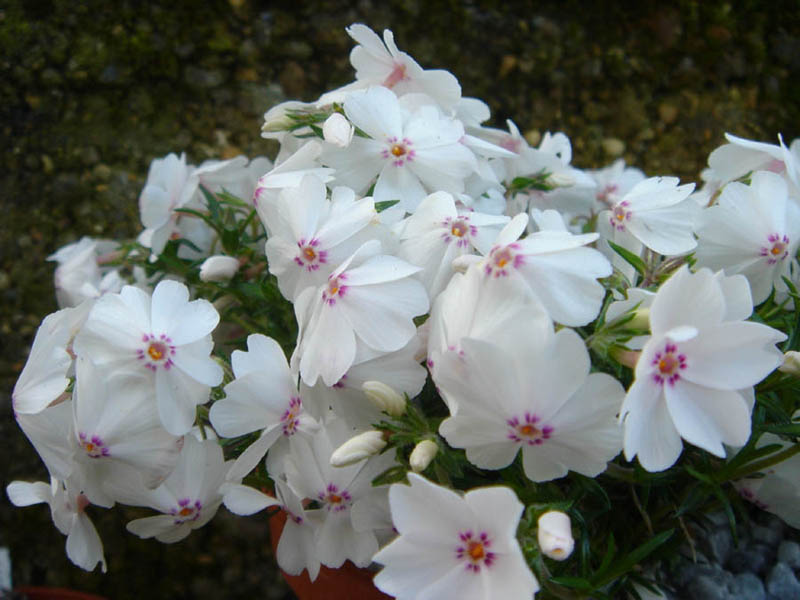
Phlox subulata 'Amazing Grace' is a creeping moss phlox that forms a dense, low mat 4–6 inches (10–15 cm) tall and 18–24 inches (45–60 cm) wide. White five-petaled flowers 0.75 inch (2 cm) across with a soft pink central eye cover the foliage in April and May, blooming for about 3 weeks. The species name 'subulata' means awl-shaped, referring to the small needle-like evergreen leaves 0.25–0.5 inch (6–13 mm) long that compose the mat. Foliage is dark green and persists year-round. The mat trails over walls, rock-garden ledges, and raised-bed edges. After flowering, light shearing maintains mat density and slows the central thinning that develops in older plantings. Cultural requirements are restrictive: full sun and lean, well-drained soil are needed for dense growth, and the mat thins in shade or in soils that hold moisture. The species P. subulata is native to rocky outcrops and dry slopes in eastern North America. Carries a light sweet fragrance. Deer browse this species rarely. Spider mites can damage foliage in hot, dry summers if irrigation is not adjusted.
Native Range
The species Phlox subulata is native to eastern North America, ranging from New England south to North Carolina and west to Michigan, where it grows on rocky outcrops, sandy slopes, and dry open ground. P. subulata 'Amazing Grace' is a garden selection with white flowers and a soft pink central eye.Suggested Uses
Used cascading over retaining walls, along stone-edged paths, in rock gardens, and as a flowering evergreen ground cover on sunny slopes. Plant 12–15 inches (30–38 cm) apart for solid coverage in 1–2 growing seasons. Combines with spring bulbs that finish before the phlox mat reaches full density.How to Identify
Appearance
Size & Dimensions
Height4" - 6"
Width/Spread1'6" - 2'
Colors
Bloom Information
Flowers from early April through mid-May for approximately 3 weeks across USDA zones 5–7; bloom shifts about 2 weeks earlier in zone 8 and later in zone 4. White petals with a soft pink central eye cover the mat at peak bloom. Light sweet fragrance carries in still air.
Detailed Descriptions
Flower Description
White with a soft pink central eyeFoliage Description
Dark green needle-like awl-shaped foliage in a dense low matGrowing Conditions
Sun Requirements
Requires 6-10 hours of direct sunlight daily
• Full Sun: 6+ hours of direct sunlight
• Partial Shade: 3-6 hours of direct sunlight
• Full Shade: Less than 3 hours of direct sunlight
Care & Maintenance
Care Guide
Plant in a site receiving 6 or more hours of direct sun daily; mat density declines below 5 hours. Soil should be lean and well-drained — sandy loam or rocky soil performs better than amended garden soil. Water during establishment in the first season, then irrigate only during extended drought. Avoid overhead watering, which can encourage foliar disease in the dense mat. Shear back by one-third immediately after bloom to encourage tight regrowth. Skip nitrogen fertilizer; rich soils produce loose, floppy growth and reduce flowering.Pruning
Shear back by one-third in late May or early June, immediately after the last flowers fade. No additional pruning is needed during the year. If the mat opens at the center after several seasons, lift and divide in early fall.Pruning Schedule
Prune: May–June
late spring
Container Growing
Suitable for container growing
Minimum container size: 1 gallons