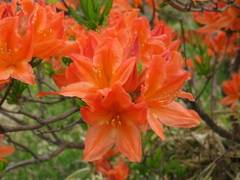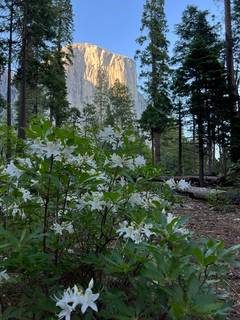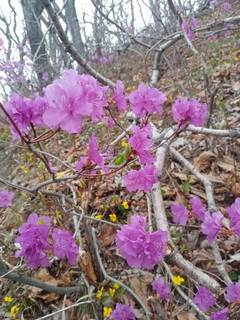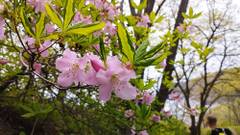
Rhododendron, Genus, macrophyllum, Species,
- Genus & species
Pacific rhododendron
Pacific coast of North America: British Columbia to northern California
Overview
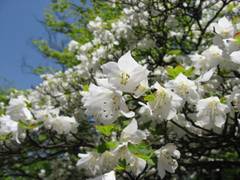
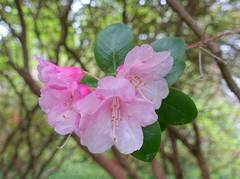
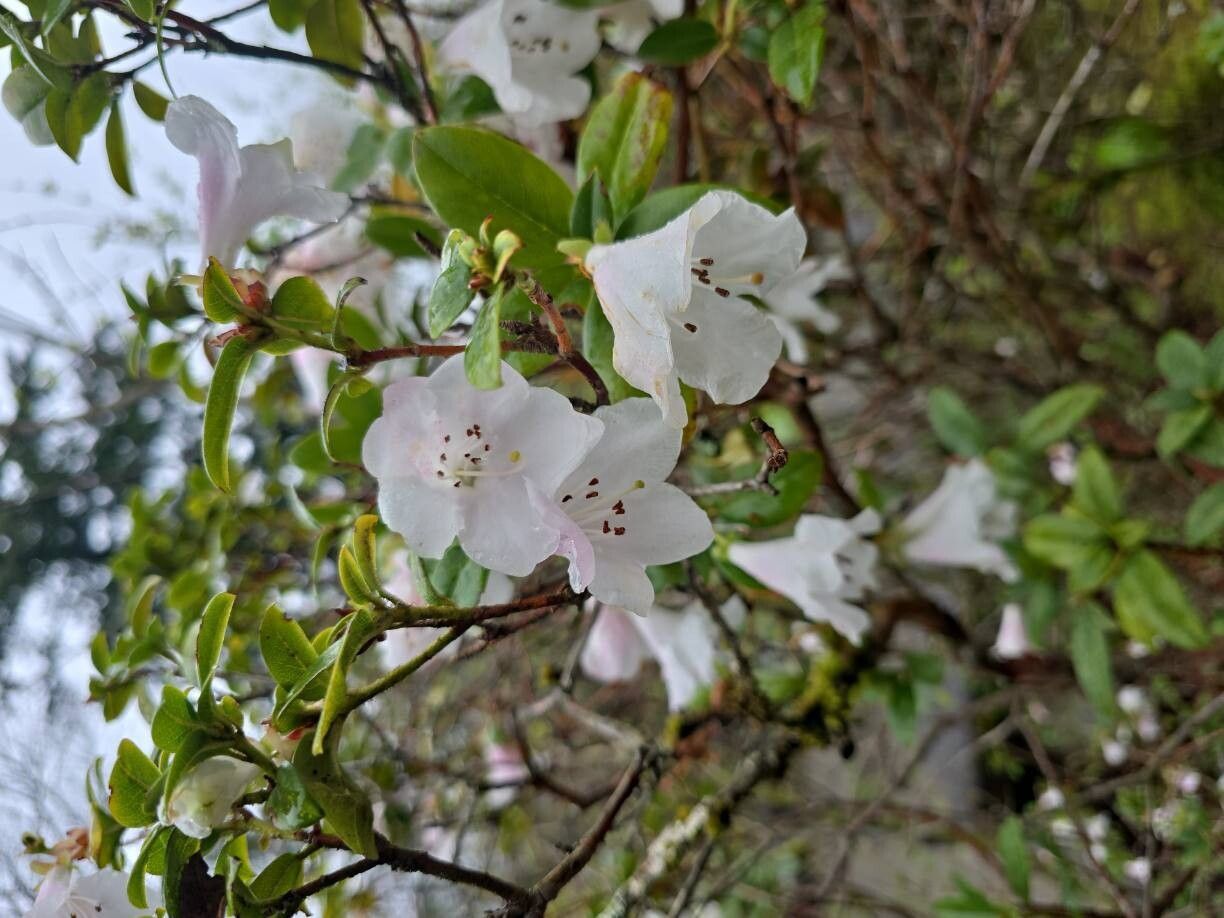
Rhododendron macrophyllum is a large evergreen shrub or small tree reaching 8-25 feet (2.5-7.5 m) tall and 6-15 feet (1.8-4.5 m) wide, with a multi-stemmed open form on shaded sites and a denser habit in full sun. Leaves are leathery, oblong-elliptic, 3-8 inches (7.5-20 cm) long and 1-2.5 inches (2.5-6 cm) wide, dark green above and pale green beneath, persisting 2-3 years before falling. Flowers are funnel-shaped, 1.5-2 inches (4-5 cm) across, pale pink to deep rose-pink with red-brown spotting in the upper throat, in dome-shaped terminal trusses of 15-25 from May through July. Stems are stout with smooth grey-brown bark; older trunks become reddish and fibrous on mature specimens. Plants flower at 8-12 years from seed and may live 100+ years on suitable sites. Growth is slow at 6-12 inches (15-30 cm) per year. Soil disturbance and root damage are poorly tolerated; transplanted specimens older than 5 years often decline over 2-3 years before recovery, if recovery occurs at all. All plant parts contain grayanotoxins; honey produced from R. macrophyllum nectar is toxic to humans and livestock.
Native Range
Native to the Pacific coast of North America from southwestern British Columbia south through western Washington, Oregon, and northwestern California. Grows in coniferous forest understory, on coastal headlands, and along stream banks at 0-4,500 feet (0-1,400 m) elevation. The Washington state flower.Suggested Uses
Used as a specimen, hedge component, or woodland understory shrub in zones 7-9 west of the Cascades and Coast Ranges. Spaced 8-12 feet (2.5-3.5 m) apart in mass plantings; closer spacing leads to leggy stems with bare lower branches. Not suited to alkaline-soil regions, hot dry interior climates, or small urban lots without long-term irrigation.How to Identify
Appearance
Size & Dimensions
Height8' - 25'
Width/Spread6' - 15'
Colors
Bloom Information
May through July across the range; begins early May in coastal Oregon and California, late May in Washington at lower elevations, and extends into late July at high elevations in the Cascades and Olympics. Individual flowers last 7-10 days; total bloom period at the shrub level lasts 3-4 weeks. Mature shrubs in full bloom carry 50-200 trusses simultaneously.
Detailed Descriptions
Flower Description
Pale pink to deep rose-pinkFoliage Description
Dark green above, pale green beneathGrowing Conditions
Sun Requirements
Requires 4-8 hours of direct sunlight daily
• Full Sun: 6+ hours of direct sunlight
• Partial Shade: 3-6 hours of direct sunlight
• Full Shade: Less than 3 hours of direct sunlight
Care & Maintenance
Care Guide
Establish in acidic, organically rich, well-drained soil at pH 4.5-6.0; the species declines in heavy clay, alkaline soil, or compacted urban substrates. Maintain consistent soil moisture during the first 3 years, especially during summer dry months in the Pacific Northwest where natural rainfall is limited from June through September. Mulch with conifer needles or shredded bark to a 3-4 inch (7.5-10 cm) depth, refreshed annually. Root weevils notch leaves throughout the range; damage is cosmetic but heavy infestations on container plants reduce vigor. Powdery mildew develops on second-year leaves in humid conditions and is host-specific. Plants are sensitive to phytophthora root rot in poorly drained or warm soils; symptoms include leaf wilting on otherwise moist plants and rapid decline.Pruning
Deadhead spent trusses in late June and July before seed capsules form; seed production reduces flower bud formation for the following year by 30-50 percent. Renewal pruning is performed immediately after bloom; cuts back to a leaf whorl produce new shoots within 4-6 weeks. Removal of more than one-third of the canopy in a single season delays flowering by 2-3 years.Pruning Schedule
Prune: June–July
summer