Image 1 of 18
1 / 18
Plant Reference
Rhododendron, Genus, schlippenbachii, Species,
- Genus & species
royal azalea
Korea, northeastern China (Manchuria), and the Russian Far East; open oak woodlands and mountain slopes
Overview
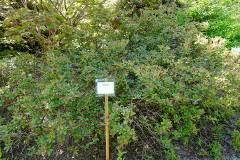
Rhododendron schlippenbachii is a mounding deciduous shrub in the family Ericaceae reaching 4–8 feet (1.2–2.4 m) tall and 4–8 feet (1.2–2.4 m) wide with a rounded multi-stemmed habit. The leaves are broadly obovate, 2–4 inches (5–10 cm) long, and arranged in whorls of 5 at the branch tips rather than alternate along the stems — the whorl-of-5 leaf arrangement is the main field character for the species and separates it from all other commonly grown deciduous azaleas. Foliage emerges medium green with the flowers in April and May, matures through the summer, and turns yellow, orange, and red in fall before leaf drop. Pale pink to white broadly funnel-shaped flowers 3 inches (7 cm) across open in terminal trusses of 3–6 flowers with or just before the new leaves and carry reddish-brown spots on the upper petals and a light sweet fragrance; the bloom lasts about 2 weeks across April and May and is pollinated by bees and butterflies. The species was collected in Korea in the 1850s by Baron Alexander von Schlippenbach, a naval officer of the Russian Imperial Navy, for whom the species is named. Limitation: the species calls for a soil pH of 4.5–6.0 and develops iron chlorosis and eventual decline on soils above pH 6.0, growth is slow at roughly 3–6 inches (8–15 cm) per year so mature size is reached only after 8–12 years, and the shallow fibrous root system does not tolerate compaction, root disturbance, or deep mulch layers above 2 inches (5 cm) over the root zone. Flower buds form the previous summer and are exposed on the stems through winter, so hard late spring frosts in USDA zone 4 damage the opening flowers and reduce the display for that year. All parts of the plant contain grayanotoxins and are toxic to humans and pets if ingested.
Native Range
Native to Korea, northeastern China (Manchuria), and the Russian Far East. Grows in open oak woodlands and mountain slopes at middle elevations. Introduced to Western cultivation from Korea in the 1850s by Baron Alexander von Schlippenbach of the Russian Imperial Navy, for whom the species is named.Suggested Uses
Used in woodland gardens, shade borders, foundation plantings, and mixed shrub borders at 4–8 foot (1.2–2.4 m) spacing, and in containers of at least 10 gallons (38 L) with acidic well-drained potting mix. The whorled leaf arrangement at the branch tips, the April and May flower display, and the yellow, orange, and red fall foliage supply three seasons of interest. Alkaline soils above pH 6.0, positions subject to root compaction or deep mulch, and hot dry summer positions are unsuitable.How to Identify
Appearance
Size & Dimensions
Height4' - 8'
Width/Spread4' - 8'
Bloom Information
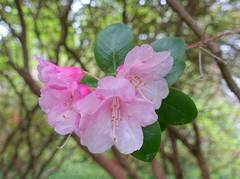
Pale pink to white broadly funnel-shaped flowers 3 inches (7 cm) across with reddish-brown spots on the upper petals open in terminal trusses of 3–6 flowers with or just before the new leaves in April and May, lasting about 2 weeks. The flowers carry a light sweet fragrance and are pollinated by bees and butterflies. Flower buds form the previous summer and are exposed on the stems through winter, so hard late spring frosts in USDA zone 4 damage the opening flowers and reduce the display for that year.
Detailed Descriptions
Flower Description
pale pink to white broadly funnel-shaped flowers 3 inches (7 cm) across with reddish-brown spots on the upper petals, in terminal trusses of 3-6 opening with or just before the new leaves; lightly fragrantFoliage Description
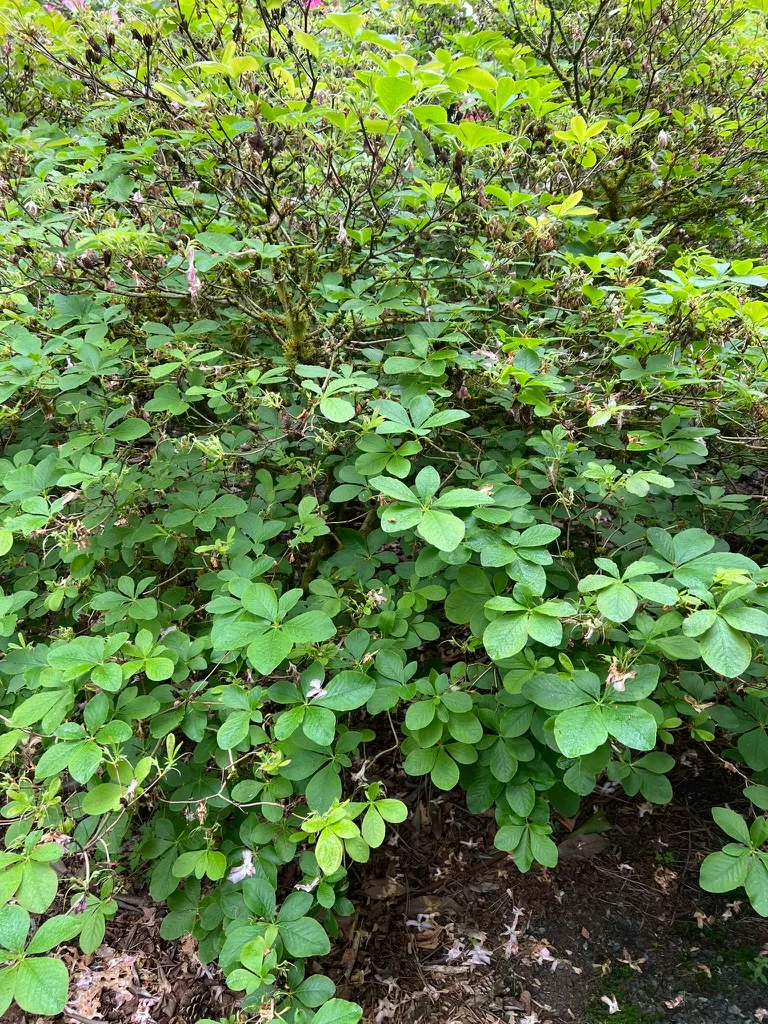
medium green through the growing season; broadly obovate, 2-4 inches (5-10 cm) long, arranged in whorls of 5 at the branch tips; turns yellow, orange, and red in fall before droppingGrowing Conditions
Sun Requirements
Requires 4-6 hours of direct sunlight daily
• Full Sun: 6+ hours of direct sunlight
• Partial Shade: 3-6 hours of direct sunlight
• Full Shade: Less than 3 hours of direct sunlight
Care & Maintenance
Care Guide
Site in part shade with 4–6 hours of direct sun per day; morning sun with afternoon shade holds flower color and foliage quality in hot summer positions, and the species tolerates more sun than most other deciduous azaleas in cool summer climates of the Pacific Northwest and the British Isles. Soil should be acidic and well-drained with a pH of 4.5–6.0; soils above pH 6.0 produce iron chlorosis and eventual decline, and a soil test before planting is called for on sites with unknown soil chemistry. The species is not drought-tolerant and consistent soil moisture through summer dry periods holds foliage and flower bud quality. Mulch over the root zone is kept to 2 inches (5 cm) deep because the shallow fibrous root system does not tolerate deeper layers. Growth is slow at 3–6 inches (8–15 cm) per year. Hardy in USDA zones 4–8. All parts of the plant contain grayanotoxins and are toxic if ingested.Pruning
Pruning is done lightly after flowering in May and June because flower buds for the following year form on current-season growth through summer. Shaping cuts are kept light and sheared or hedged cuts are avoided because the mounding rounded form develops naturally over the slow growth cycle of the species. Dead or crossing branches are removed at the base as they appear, and hard renovation is rarely needed because the species grows slowly and does not become overgrown like faster-growing shrubs.Pruning Schedule
Prune: May–June
late spring
Container Growing
Suitable for container growing
Minimum container size: 10 gallons