Rhododendron, Genus, ponticum, Species,
- Genus & species
common rhododendron
Southwestern Europe (Iberian Peninsula relict populations in Portugal and southern Spain, isolated populations in Bulgaria) and southwestern Asia (Turkey, Georgia, Armenia, Lebanon along the Black Sea coast and Pontic Mountains); mesic mountain forests; widely naturalized as an invasive species across the British Isles, western Europe, and parts of the Pacific Northwest of North America through escape from garden cultivation
Overview
Rhododendron ponticum (common rhododendron, Pontic rhododendron) is a large spreading evergreen shrub in the family Ericaceae growing 8-15 feet (2.4-4.5 m) tall and 10-15 feet (3-4.5 m) wide with a thicket-forming spreading habit, native to scattered relict populations in southwestern Europe and southwestern Asia and grown in temperate gardens of zones 6-9 for the late-spring mauve-purple flower display and the dense evergreen screening function — but the species is also among the worst ornamental-plant invasive species of the British Isles, western Europe, and parts of the Pacific Northwest of North America, and the invasive status is the central practical consideration for any contemporary planting decision involving the species. The species was widely planted across British and Irish estates and parklands during the 18th, 19th, and early 20th centuries as a hardy ornamental shrub and as a windbreak and game cover for sporting estates, and the species escaped cultivation into the surrounding landscape through bird-dispersed seeds and through layering of branches that contact the ground. Naturalized populations in the British Isles now occupy more than 200,000 acres of upland woodland, moorland, and Atlantic-coast oak forest across Scotland, Wales, Ireland, and northern England, and the species forms dense impenetrable monocultures that exclude all other vegetation, suppress native woodland regeneration through dense shading and through allelopathic chemical inhibition of other species' germination, and host the destructive root pathogen Phytophthora ramorum (sudden oak death) that has spread from R. ponticum hosts to native British oak and larch populations. The British government and the National Trust have invested tens of millions of pounds per decade in R. ponticum eradication programs in protected woodland sites including the Snowdonia National Park, the Killarney National Park, and the Atlantic oakwood forests of western Scotland, with the eradication work involving cutting, herbicide stem-injection, and follow-up seedling control over multiple decades because the species' soil seed bank persists for many years after the parent plants are removed. Similar invasive issues exist in the Pacific Northwest of North America (especially in coastal Oregon and Washington forest understory), parts of New Zealand, and Atlantic-climate regions of mainland western Europe. Garden cultivation of the species in regions where it is invasive is restricted or actively discouraged by extension services, native plant societies, and habitat restoration programs, and gardeners in those regions are directed toward non-invasive substitute rhododendron species and hybrids that provide similar garden character without the ecological risk. The species is commonly used as the grafting rootstock for ornamental rhododendron cultivars in commercial production because of its vigorous root system and easy propagation from seed, and grafted plants in older garden collections sometimes develop R. ponticum suckers from the rootstock that flower with the typical mauve-purple species color rather than the cultivar color of the scion — these rootstock suckers are removed promptly to keep the cultivar identity of the plant. Mauve to lilac-purple funnel-campanulate flowers 1.5-2 inches (4-5 cm) with greenish-yellow spotting on the upper petal open in rounded trusses of 10-15 flowers during May and June. All parts of the plant contain grayanotoxins (the cardiac and neurological toxins characteristic of the genus Rhododendron); honey produced from R. ponticum flowers is the principal source of historical 'mad honey' poisoning recorded since classical antiquity (the ancient Greek historian Xenophon described the symptoms in his army during the retreat from Persia in 401 BC after his soldiers ate honey produced by bees foraging on R. ponticum along the Black Sea coast), and ingestion of the leaves, flowers, or honey causes vomiting, diarrhea, salivation, weakness, slowed heart rate, and at high enough dose seizures and death in dogs, cats, horses, and humans. Strict acidic soil pH 4.5-6.0 is needed (the standard rhododendron cultural requirement), and the species is not drought-tolerant. Deer browse the foliage less than they browse most other woody plants because of the toxic alkaloids — this deer-deterrent effect is one of the practical contributors to the species' invasive success in deer-grazed British and North American woodlands.
Native Range
Rhododendron ponticum has a fragmented native range across two widely separated regions: relict populations in southwestern Europe (Portugal, southern Spain, isolated localities in Bulgaria) representing the western fragment, and a much larger native range across southwestern Asia along the southern and eastern coast of the Black Sea (Turkey, Georgia, Armenia, Lebanon) representing the eastern fragment that gives the species its specific epithet (the Pontic Mountains and the historical region of Pontus along the Black Sea coast). The disjunct distribution reflects the species' status as a Tertiary relict — the species was widespread across western Europe during the warmer interglacial periods and was reduced to scattered refuge populations during the cold glacial periods, leaving the modern fragmented native range. The native habitat is mesic mountain forest understory at moderate elevations under broadleaf canopy, with cool moist year-round conditions and acidic forest-floor soils. Invasive naturalized populations now exceed the native range in total area and are established across the British Isles (especially Scotland, Wales, Ireland, and the southwest of England), western mainland Europe, the Pacific Northwest of North America (coastal Oregon and Washington), New Zealand, and parts of the southern hemisphere temperate regions through escape from 18th, 19th, and early 20th century garden cultivation. The British naturalized populations are the principal example of R. ponticum invasive ecology in modern conservation literature: the species was deliberately planted across British sporting estates and parklands as game cover and windbreak from the late 18th century onward, escaped into the surrounding landscape through bird-dispersed seeds and through layering, and now occupies over 200,000 acres of British upland woodland, moorland, and Atlantic oak forest where dense monoculture stands exclude native vegetation and host Phytophthora ramorum (sudden oak death) infection that spreads to native British oak and larch.Suggested Uses
Suited to garden cultivation only in regions where the species is not invasive — in those regions, planted as a large evergreen screen, woodland understory shrub, parkland feature, and shelter-belt component at 10-15 foot (3-4.5 m) spacing in zones 6-9. The dense year-round evergreen foliage and the late-spring mauve-purple flower display give the species a strong screening and ornamental role in large-scale landscape settings where its mature size can develop without conflict, and the species' broad cultural tolerance (acidic soil, partial shade to full shade, wide range of soil types) makes it a low-maintenance large-scale evergreen for those settings. In regions where the species is documented as invasive (the British Isles, Ireland, much of western mainland Europe, the Pacific Northwest of North America including coastal Oregon and Washington, New Zealand, and other Atlantic-climate temperate regions), the species is not planted in new garden installations and existing plants are increasingly being removed by gardeners, conservation organizations, and habitat restoration programs to reduce the seed dispersal contribution to the surrounding wild landscape. Substitute selections for the screening and ornamental role in invasive-zone gardens include the larger R. catawbiense hybrid group cultivars (which carry similar large evergreen size and the showier flower display without the documented invasive behavior in the same regions), R. fortunei and other Asian large-leaved species, and non-Rhododendron large evergreen alternatives including Prunus laurocerasus (cherry laurel), Viburnum tinus (laurustinus), and Ilex (hollies) that provide the screening function without the rhododendron-specific invasive risk. Not suited to alkaline-soil regions where chlorosis develops, dry sites without supplemental water, formal garden settings where the natural informal spreading thicket habit conflicts with controlled design intent, regions where the species is documented as invasive and where contemporary garden planting is restricted, or households with grazing pets, beekeeping operations, or curious children where the toxicity of the leaves, flowers, and honey poses a real risk.How to Identify
Appearance
Size & Dimensions
Height8' - 15'
Width/Spread10' - 15'
Bloom Information
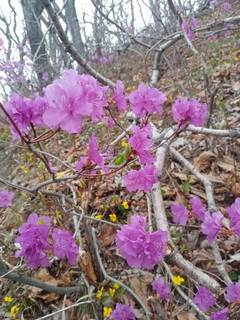
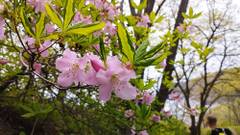
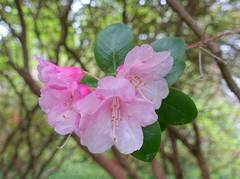
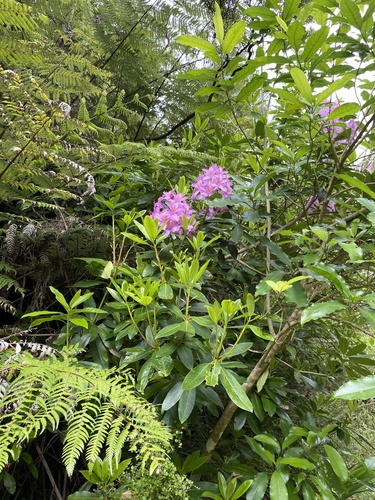
Mauve to lilac-purple funnel-campanulate flowers 1.5-2 inches (4-5 cm) across with small greenish-yellow spotting on the upper petal open in rounded trusses of 10-15 flowers at the branch tips during May and June in zones 6-9, lasting approximately 4 weeks at peak bloom. The flowering period is the most visible phase of the species' annual cycle and is the period when invasive populations across the British Isles, the Pacific Northwest, and other naturalized regions display the bloom pattern that signals the species' presence in the landscape — hillsides, woodland edges, and roadside verges that carry the mauve-purple bloom across continuous large areas during May and June indicate dense R. ponticum infestation rather than a healthy native ecosystem. Bees and butterflies visit the flowers during the bloom period for the abundant nectar resource, and the bee-collected nectar is the principal source of the historical 'mad honey' poisoning of classical antiquity and modern intermittent poisoning incidents in regions where commercial beekeeping operates near R. ponticum populations (Turkey is the principal modern source of unintentional and occasional intentional 'mad honey' production from native R. ponticum populations along the Black Sea coast). Spent flower trusses are deadheaded after the bloom finishes in garden plantings to direct energy toward the next year's flower formation rather than seed set, and deadheading is also a recommended invasive-control practice in garden cultivation in regions where the species is invasive because removing the spent trusses before seed set reduces the seed dispersal contribution of the garden plants to the surrounding landscape.
Detailed Descriptions
Flower Description
mauve to lilac-purple with small greenish-yellow spotting on the upper petal of each flower; funnel-campanulate (funnel-bell-shaped) flowers 1.5-2 inches (4-5 cm) across carried in rounded trusses of 10-15 flowers at the branch tips during late spring through early summer; the bloom display is the visual signal of the species in late spring across the British Isles, the Pacific Northwest, and other regions where the species has naturalized into wild landscapes — the mauve-purple flower color reading across hillsides, woodlands, and roadside verges is a recognizable signature of the species' invasive presence in those landscapesFoliage Description
glossy dark green above with lighter green on the underside; oblong-elliptic leathery evergreen leaves 4-8 inches (10-20 cm) long arranged in alternate spiral whorls at the branch tips; the leaves are large by Rhododendron standards and the dense canopy of broad leaves builds the impenetrable thicket habit that gives the species its central garden role and its central invasive ecological problem in regions where the species has naturalized outside its native rangeGrowing Conditions
Sun Requirements
Requires 2-6 hours of direct sunlight daily
• Full Sun: 6+ hours of direct sunlight
• Partial Shade: 3-6 hours of direct sunlight
• Full Shade: Less than 3 hours of direct sunlight
Care & Maintenance
Care Guide
Plant in well-drained acidic soil with a pH of 4.5-6.0 in part shade to full shade (2-6 hours of direct sun); the species tolerates a wider range of soil types than most other rhododendrons and grows in loam, clay, sand, and peat-amended garden soils with the appropriate acidic pH. Tolerated soil types are limited only by the strict pH requirement; alkaline or near-neutral soils cause chlorosis (yellowing of the leaves from iron deficiency) within a season or two and the species cannot be successfully grown without naturally acidic soil or sustained soil-acidification amendments. The species is not drought-tolerant and consistent soil moisture through the growing season is part of routine cultural care. The central consideration for any contemporary garden planting decision is the species' invasive status: the species is among the worst ornamental-plant invasive species of the British Isles, western Europe, and parts of the Pacific Northwest of North America, and garden planting in those regions is restricted by extension services, native plant societies, and habitat restoration programs. Gardeners in those regions are directed toward non-invasive substitute rhododendron species and hybrids — verification of local invasive species regulations and habitat restoration program guidance through the local extension service, state department of agriculture, or national park authority is the standard pre-planting step before installing this species in any region within or adjacent to the documented invasive range. Pruning is done after the spring bloom finishes in June or July; the species tolerates hard renovation pruning to bare wood and regenerates from latent buds. In garden cultivation in regions where the species is invasive, deadheading of spent flower trusses before seed set is a recommended invasive-control practice that reduces the seed dispersal contribution of garden plants to the surrounding landscape. Grafted ornamental rhododendrons that use R. ponticum as the rootstock sometimes develop suckers from the rootstock at the base of the grafted plant — these suckers carry the typical mauve-purple species flower color rather than the cultivar color of the scion and are removed promptly to keep the cultivar identity of the grafted plant. All parts contain grayanotoxins; ingestion of the leaves, flowers, or honey causes vomiting, diarrhea, slowed heart rate, and at high enough dose seizures in dogs, cats, horses, and humans. Honey produced from R. ponticum flowers is the principal source of historical 'mad honey' poisoning. Deer browse the foliage less than they browse most other woody plants because of the toxic alkaloids.Pruning
Pruning is done after the spring bloom finishes in June or July to control plant size and shape; the species tolerates hard renovation pruning to bare wood and regenerates from latent buds, so an overgrown plant can be cut back hard and recovers within 2-3 seasons. Spent flower trusses are deadheaded after the bloom finishes by snapping off the spent truss stem at the base — the deadheading pass directs the plant's energy toward next year's flower bud formation, and in regions where the species is invasive the deadheading is also a recommended invasive-control practice that prevents seed dispersal from the garden plant to the surrounding landscape. Suckers arising from the rootstock of grafted ornamental rhododendrons that use R. ponticum as the grafting stock are removed at the point of emergence as soon as they appear — these suckers carry the typical mauve-purple species flower color rather than the cultivar color of the scion and gradually overtake the scion if left unmanaged, ultimately replacing the cultivar with the species rootstock. Mechanical and chemical removal techniques are used in invasive-control programs in regions where the species has naturalized: cutting at ground level followed by herbicide stem-injection or by cut-stump herbicide application is the standard removal protocol, with multi-year follow-up to remove resprouts and seedlings from the persistent soil seed bank.Pruning Schedule
Prune: June–July
summer