Rhododendron, Genus, 'Azurro', Cultivar,
- Genus
- Cultivar
Azurro rhododendron
Hybrid of garden origin; parent species from temperate Asia and southeastern North America
Overview
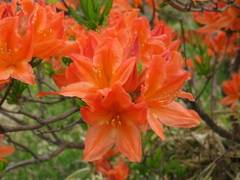
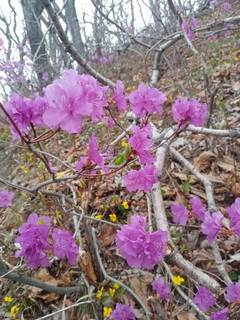
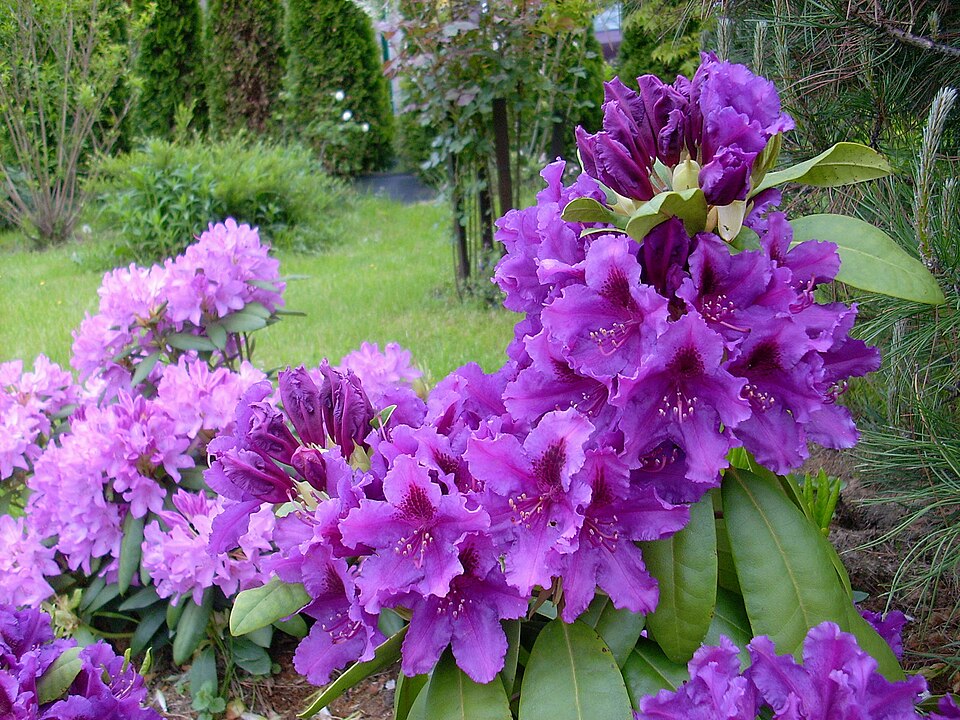
Rhododendron 'Azurro' is an evergreen shrub reaching 4–6 feet (1.2–1.8 m) tall and 4–6 feet (1.2–1.8 m) wide, with a compact dense rounded habit. The cultivar is an elepidote rhododendron — a member of the large-leaved group of the genus, distinguished from the lepidote (scaly-leaved) group by the absence of glandular scales on the leaf undersurface. Trusses are rounded and hold 10–15 funnel-shaped flowers 2–2.5 inches (5–6 cm) wide in deep violet-purple with a dark burgundy to near-black blotch 0.5–0.8 inch (13–20 mm) across on the upper petal — the blotch is the central identifying feature of the cultivar, producing a dark-eyed appearance when the flower is viewed face-on. Flower color sits in the deeper-violet range of large-leaved rhododendrons, with more blue content than the reddish-purple of 'Anah Kruschke' and more red content than the lavender-blue of 'Blue Boy'. Flowers appear in May–June over a 3–4 week window on the previous year's wood. Leaves are simple, alternate, elliptic, 3–5 inches (8–13 cm) long, glossy dark green, leathery, held year-round. Growth rate is slow to moderate; the shrub reaches full mature size in 8 growing seasons. Hardy to USDA zone 6. All parts of the plant contain grayanotoxins and are toxic to pets and humans if ingested.
Native Range
Rhododendron 'Azurro' is a hybrid cultivar of garden origin, bred from crosses involving large-leaved elepidote Rhododendron species of the Ponticum subgenus.Suggested Uses
Used in mixed perennial borders, woodland garden plantings, north-facing or east-facing foundation beds, along shaded paths, or in large containers at 4–5 foot (1.2–1.5 m) spacing. The deep violet-purple flower color with near-black blotch reads as a dark-toned anchor in spring border plantings, pairing with lighter-colored companion shrubs such as white-flowered Viburnum plicatum or pale-pink Kalmia latifolia for color contrast. The 4–6 foot mature size fits mid-border positions where the larger 5–8 foot 'Anah Kruschke' would overwhelm adjacent plantings. The plant does not grow well in alkaline soils above pH 6.5, full sun in USDA zones 7 and warmer, dry positions, or climates below USDA zone 6.How to Identify
Appearance
Size & Dimensions
Height4' - 6'
Width/Spread4' - 6'
Bloom Information
Rounded trusses of 10–15 funnel-shaped deep violet-purple flowers 2–2.5 inches (5–6 cm) wide, each carrying a dark burgundy to near-black blotch 0.5–0.8 inch (13–20 mm) on the upper petal, appear in May–June over a 3–4 week window on the previous year's wood.
Detailed Descriptions
Flower Description
Deep violet-purple with dark burgundy to near-black blotch 0.5-0.8 inch on upper petal; funnel-shaped 2-2.5 inches in rounded trusses of 10-15; May-June on previous year's woodFoliage Description
Glossy dark green; simple, alternate, elliptic, 3-5 inches long, leathery; evergreen year-roundGrowing Conditions
Sun Requirements
Requires 3-6 hours of direct sunlight daily
• Full Sun: 6+ hours of direct sunlight
• Partial Shade: 3-6 hours of direct sunlight
• Full Shade: Less than 3 hours of direct sunlight
Care & Maintenance
Care Guide
Grow in partial shade with 3–6 hours of direct or filtered morning light in moist, well-drained, acidic loam, peat, or sandy loam at pH 4.5–6.0. The pH requirement is strict — soils above pH 6.0 cause iron and manganese chlorosis that yellows foliage and slows growth progressively over 2–3 seasons until the plant declines. Partial shade protection from afternoon sun is required in USDA zones 7 and warmer; direct midday summer sun bleaches flower color and scorches leaf margins. Apply 3–4 inches (8–10 cm) of organic mulch over the root zone in spring to retain soil moisture and keep the shallow fibrous root system cool. Water deeply once per week during dry periods from April through September; the plant does not tolerate drought, with first symptoms being leaf-tip browning and bud drop within 10–14 days of sustained dry conditions. Hardy to USDA zone 6.Pruning
Deadhead spent flower trusses after bloom in late June or early July by snapping them off at the base with thumb and forefinger above the developing growth buds — take care not to damage the paired growth buds immediately below each truss, which produce the following year's flowering wood and new vegetative growth. The compact rounded habit develops naturally without shaping cuts. Structural pruning when needed should take place immediately after flowering, before new growth buds extend.Pruning Schedule
Prune: June
summer
Container Growing
Suitable for container growing
Minimum container size: 5 gallons