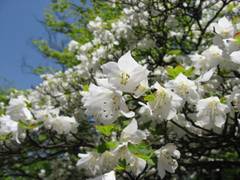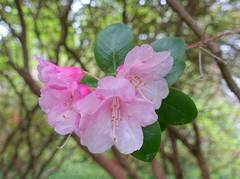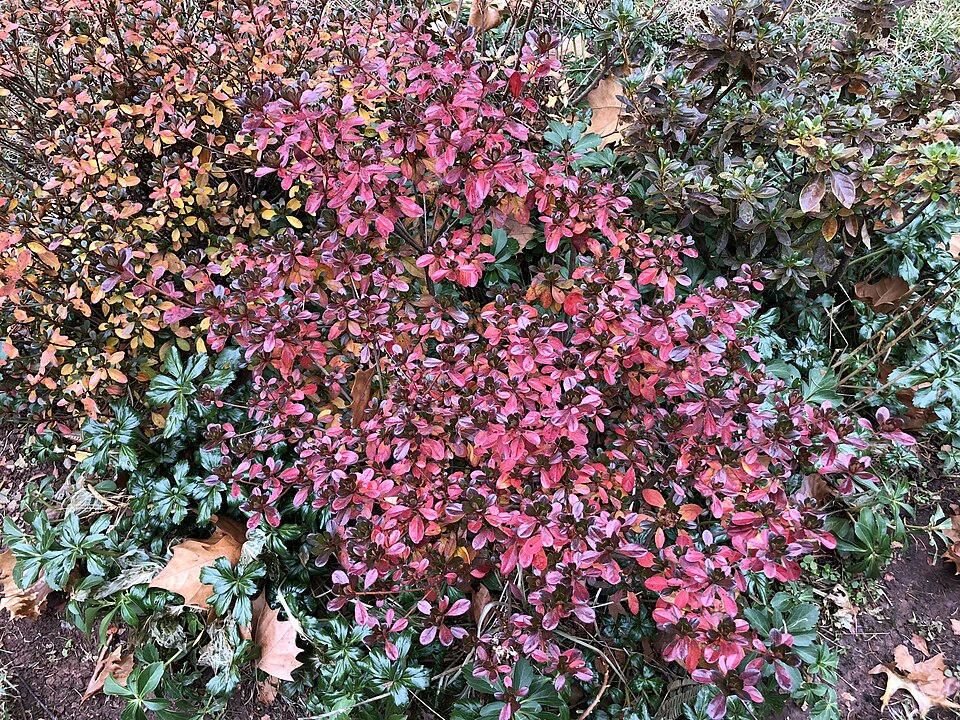
Rhododendron, Genus, 'Hinode-giri', Cultivar,
- Genus
- Cultivar
Hinode-giri azalea
Garden hybrid origin (Kurume, Kyushu, Japan; introduced by E.H. Wilson 1918; most profusely blooming azalea; foliage disappears under flowers)
Overview
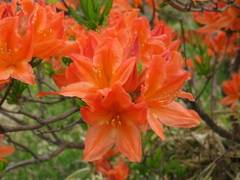
Rhododendron 'Hinode-giri' is an evergreen azalea reaching 2-4 feet (0.6-1.2 m) tall with a spread of 2-4 feet (0.6-1.2 m) and a compact, dense, rounded to mounding habit. A Kurume hybrid (a group of small-flowered, profusely blooming evergreen azaleas originating from Kurume, Kyushu, Japan), it produces single, funnel-shaped flowers 1-1.5 inches (2.5-4 cm) wide in bright magenta-crimson to cerise-red, so profusely that the foliage is completely hidden during peak bloom in April-May. The small, elliptic leaves 0.5-1 inch (13-25 mm) long are glossy dark green, among the smallest in the azalea collection. Growth rate is slow. Hardy to zone 5. One of the original Kurume azaleas introduced to the West by E.H. Wilson in 1918. The name means sunrise (hinode) giri (paulownia pattern) in Japanese.
Native Range
Rhododendron 'Hinode-giri' is a Kurume hybrid of Japanese garden origin, from Kurume, Kyushu, Japan. Introduced to the West by E.H. Wilson in 1918.Suggested Uses
Planted in mass plantings, borders, or containers at 2-3 foot (0.6-0.9 m) spacing. The most profuse azalea bloom—foliage disappears under flowers. Historic 1918 Wilson introduction. Kurume type—small flowers, extreme profusion. Not suitable for alkaline soils, full sun, or dry conditions.How to Identify
Appearance
Size & Dimensions
Height2' - 4'
Width/Spread2' - 4'
Bloom Information
Single funnel-shaped bright magenta-crimson flowers 1-1.5 inches (2.5-4 cm), produced so profusely the foliage is completely hidden, April-May. Bloom duration 3-4 weeks. The hallmark Kurume profusion—flowers per square inch exceed all other azalea types.
Detailed Descriptions
Flower Description
Bright magenta-crimson to cerise-red; single funnel-shaped 1-1.5 inches; so profuse foliage disappears; Apr-MayFoliage Description
Glossy dark green; very small elliptic 0.5-1 inch; among smallest azalea leavesGrowing Conditions
Sun Requirements
Requires 3-6 hours of direct sunlight daily
• Full Sun: 6+ hours of direct sunlight
• Partial Shade: 3-6 hours of direct sunlight
• Full Shade: Less than 3 hours of direct sunlight
Care & Maintenance
Care Guide
Plant in partial shade in moist, well-drained, acidic soil (pH 4.5-6.0). Hardy to zone 5. Slow growing. The very dense habit benefits from some air circulation. Mulch to protect shallow roots.Pruning
Prune lightly after flowering to shape. The dense compact form rarely needs pruning. Avoid pruning after July.Pruning Schedule
Prune: May–June
late spring
Container Growing
Suitable for container growing
Minimum container size: 2 gallons