Rhododendron, Genus, maximum, Species,
- Genus & species
great rhododendron
Overview
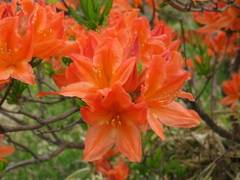
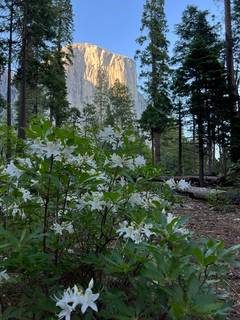
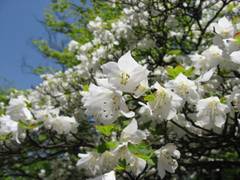
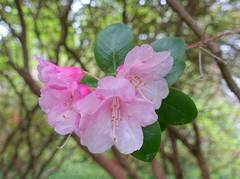
Rhododendron maximum is a broadleaf evergreen shrub reaching 13-30 feet (4-9 m) tall and 8-12 feet (2.4-3.7 m) wide, forming dense thickets in cool, moist forest understories. The leathery, oblong leaves measure 4-8 inches (10-20 cm) long and 1.5-3 inches (4-8 cm) wide, dark green above and paler beneath, curling and drooping in temperatures below 20°F (-7°C). Bark is thin, reddish-brown, and flaking on mature stems. Flower trusses open in June and July, each holding 14-30 funnel-shaped blooms of white to pale pink, 1-1.5 inches (2.5-4 cm) across, marked with yellow-green to orange spotting on the upper lobe. The fruit is a dry, brown capsule 0.5 inch (13 mm) long that splits to release small seed. Growth is slow, with mature height reached over 20-30 years. All parts contain grayanotoxins, which are poisonous to people, pets, and livestock if eaten, and honey made from the nectar can also carry the toxin. The species spreads by layering where low branches contact soil, producing the dense colonies seen across its range. It requires consistently acidic, moist soil and declines in heat, drought, or alkaline conditions.
Native Range
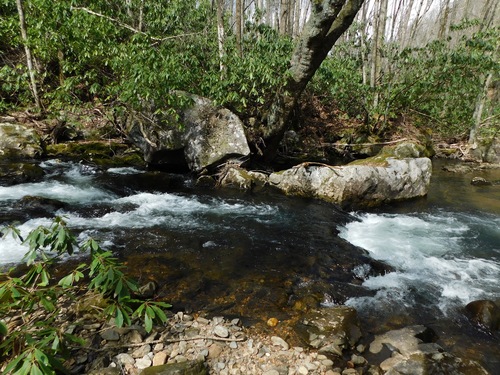
Native to eastern North America, from Nova Scotia south through the Appalachian Mountains to Georgia and Alabama. It grows most densely in the southern Appalachians at elevations of 3,000-5,000 feet (900-1,500 m).Suggested Uses
Used in woodland gardens, shaded borders, and naturalized plantings on acidic soils, spaced 6-10 feet (1.8-3 m) apart. The dense evergreen habit creates screening and erosion control on cool, north-facing slopes.How to Identify
Appearance
Size & Dimensions
Height13' - 30'
Width/Spread8' - 12'
Bloom Information
Blooms in June and July, later than most eastern Rhododendron species. Each truss carries 14-30 funnel-shaped flowers 1-1.5 inches (2.5-4 cm) wide. Flowering lasts roughly 2-3 weeks and is heaviest in years following a warm, moist summer.
Detailed Descriptions
Flower Description
white to pale pinkFoliage Description
dark greenGrowing Conditions
Sun Requirements
Requires 2-4 hours of direct sunlight daily
• Full Sun: 6+ hours of direct sunlight
• Partial Shade: 3-6 hours of direct sunlight
• Full Shade: Less than 3 hours of direct sunlight
Care & Maintenance
Care Guide
Grows in part shade to full shade in cool, humus-rich soil kept consistently moist. Soil must be acidic, with a pH of 4.5-6.0; foliage yellows in alkaline conditions. Shallow roots are served by a 2-3 inch (5-8 cm) mulch layer to retain moisture and moderate soil temperature. Plants are intolerant of drought, heat above 90°F (32°C), and waterlogged or compacted soil. In zones 3-7 the species is fully cold hardy, though winter sun and wind can scorch exposed foliage. Fertilizer needs are low and met with an acidic, slow-release formulation in spring.Pruning
Prune immediately after flowering, since flower buds for the next year form in late summer. Remove spent trusses by snapping them off above the developing buds, and cut out dead or damaged wood at any time. Older thickets can be renewed by cutting tall stems back to 12-24 inches (30-60 cm), though regrowth is slow.Pruning Schedule
Prune: June–July
summer