Image 1 of 3
1 / 3
Plant Reference
Polystichum, Genus, munitum, Species,
- Genus & species
western sword fern
Western North America — southeastern Alaska to Baja California, inland to Idaho and Montana; the dominant understory fern in Pacific Northwest coniferous forests
Overview
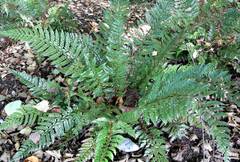
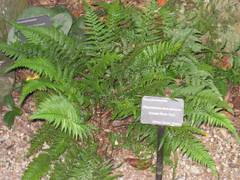
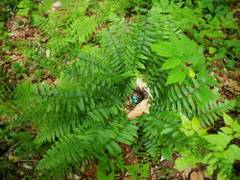
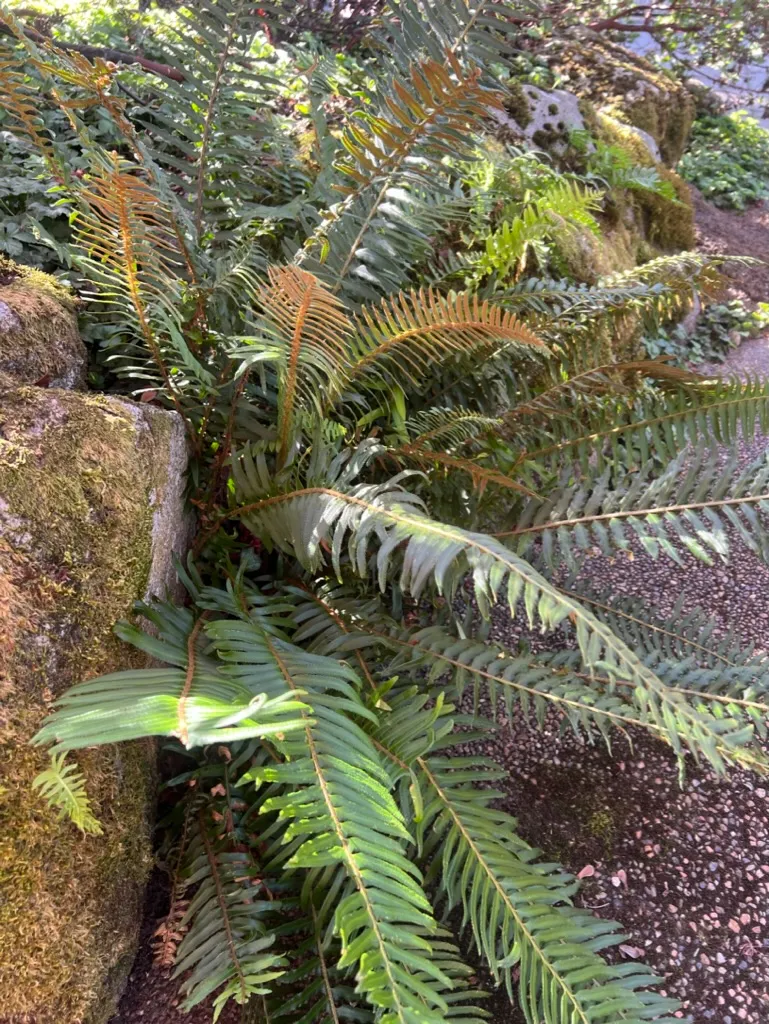
Polystichum munitum is western sword fern (giant sword fern), a clumping evergreen fern growing 2-4 feet (0.6-1.2 m) tall and 3-6 feet (0.9-1.8 m) wide. Glossy dark green once-pinnate fronds 2-4 feet (0.6-1.2 m) long with 35-100+ pinnae per frond arching from a central crown. Each pinna has a characteristic pointed basal lobe ('sword hilt') at the attachment point. In Dryopteridaceae. Munitum = armed (the pointed basal lobes). The dominant understory fern of Pacific Northwest coniferous forests — from southeastern Alaska to Baja California. A single mature crown produces 75-100 fronds forming a dense vase-shaped rosette. Fronds persist 1-2 years. Drought-tolerant once established. Acidic soil required (pH 4.5-6.5). The large mature spread (3-6 feet / 0.9-1.8 m) requires ample space per crown — this is the primary spatial consideration. Non-toxic. Deer-resistant. Zones 3-8. Full shade to part shade. Growth rate is moderate.
Native Range
Native to western North America — southeastern Alaska to Baja California, inland to Idaho and Montana. The dominant understory fern in Pacific Northwest coniferous forests under Douglas fir, western red cedar, and Sitka spruce.Suggested Uses
Grown as a native shade ground cover, woodland understory, and in containers of at least 5 gallons (19 L) with acidic mix, spaced 3-6 feet (0.9-1.8 m). PNW native. Evergreen fern. Drought-tolerant once established. Non-toxic. Zones 3-8.How to Identify
Appearance
Size & Dimensions
Height2' - 4'
Width/Spread3' - 6'
Reproduction
Reproduces by spores in round sori on the underside of fertile fronds, covered by a peltate (shield-shaped) indusium. Spores ripen in late summer.
Detailed Descriptions
Foliage Description
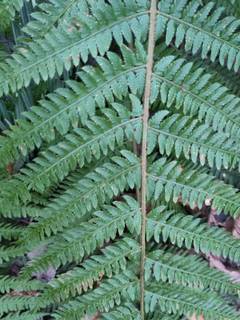
Glossy dark green, once-pinnate fronds 2-4 feet (0.6-1.2 m) long and 4-8 inches (10-20 cm) wide, with 35-100+ individual pinnae (leaflets) per frond; each pinna has a characteristic pointed basal lobe ('sword hilt' or 'thumb') at the base where it attaches to the rachis — this lobe is diagnostic; fronds arching from a central crown; golden-brown fiddleheads (crosiers) in springGrowing Conditions
Sun Requirements
Requires 1-4 hours of direct sunlight daily
• Full Sun: 6+ hours of direct sunlight
• Partial Shade: 3-6 hours of direct sunlight
• Full Shade: Less than 3 hours of direct sunlight
Care & Maintenance
Care Guide
Full shade to part shade (1-4 hours). Well-drained acidic soil pH 4.5-6.5. Drought-tolerant once established. Remove old tattered fronds in early spring (February-March) before new fiddleheads emerge. No pest or disease issues of note. Non-toxic. Deer-resistant. Zones 3-8.Pruning
Remove old tattered or brown fronds at the crown base in early spring (February-March) before new fiddleheads emerge. Do not cut new emerging fiddleheads.Pruning Schedule
Prune: February–March
early spring
Container Growing
Suitable for container growing
Minimum container size: 5 gallons