Polystichum, Genus, neolobatum, Species,
- Genus & species
Asian sword fern
Eastern Asia (China, Japan, Korea, Taiwan)
Overview
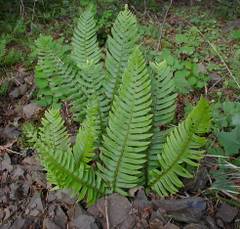
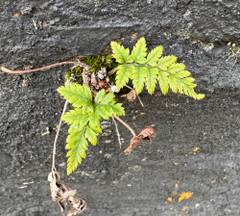
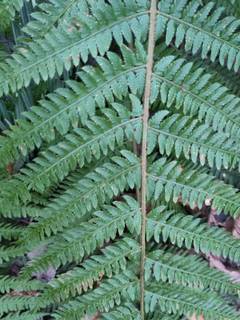
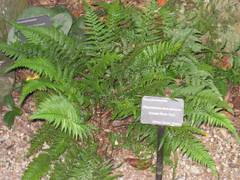
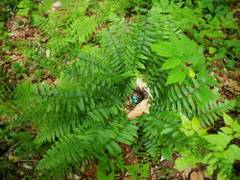
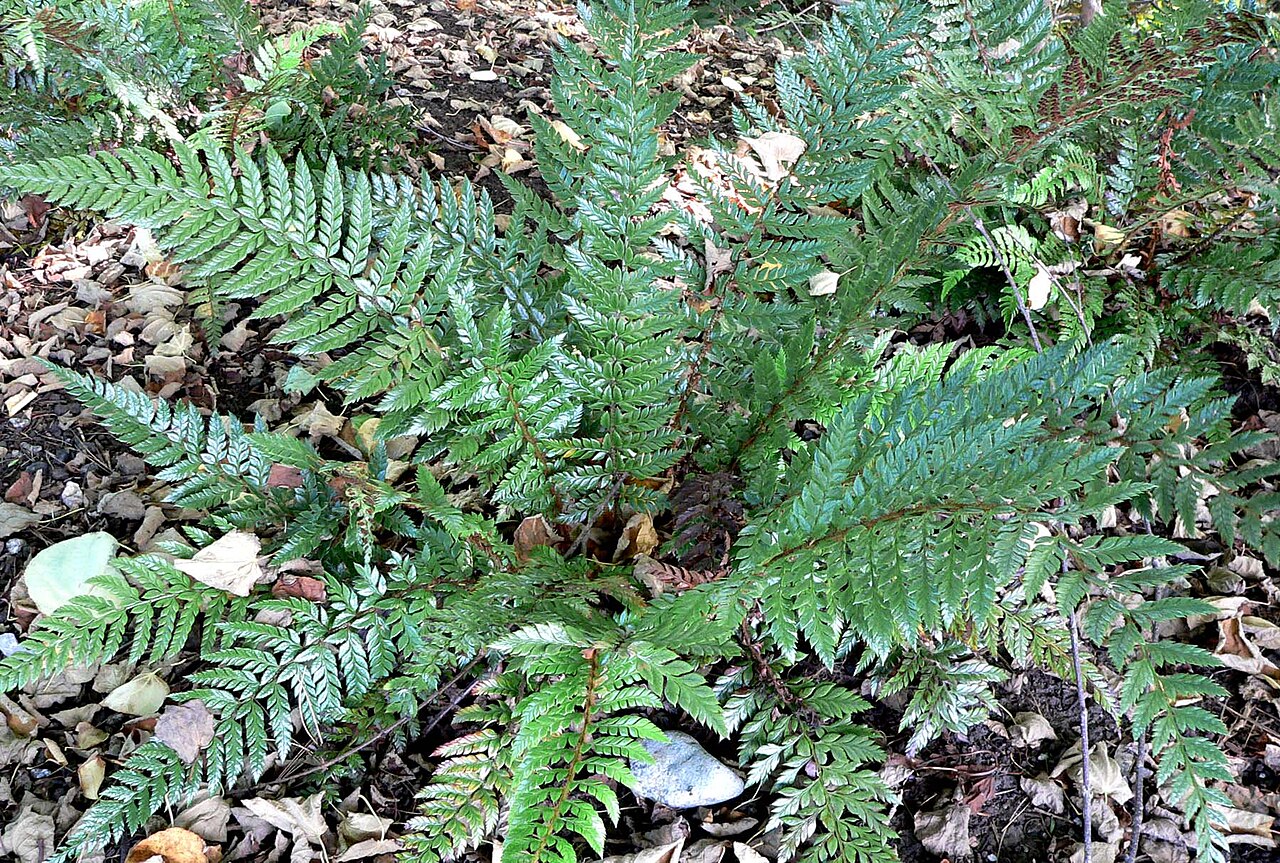
Polystichum neolobatum is an evergreen fern reaching 18–24 inches (45–60 cm) tall and 24–30 inches (60–75 cm) wide, with an upright to slightly arching vase-shaped habit. Fronds are once-pinnate, 18–24 inches (45–60 cm) long and 5–7 inches (13–18 cm) wide, with broadly lanceolate pinnae 0.6–0.9 inch (15–23 mm) wide arranged in ladder-like rows along a dark-brown-scaly rachis. The pinnae carry a heavy glossy lacquered finish on the upper surface — the cuticle reflects filtered and direct light at a higher intensity than matte-surfaced ferns, which reads as wet-looking foliage in shaded positions where most ferns appear dull green. Pinna margins are more prominently lobed and toothed than on P. makinoi, with each pinna carrying a pronounced ear-shaped auricle at the base. Fiddleheads emerge in April through May coated in dense brown to cinnamon-brown scales that persist on the rachis of young fronds. Frond architecture reads as bolder and coarser than P. makinoi: pinnae are 0.3–0.4 inch (8–10 mm) wider, fronds are 2–3 inches (5–8 cm) wider overall, and mature plant size is 6 inches (15 cm) taller and wider. Growth rate is moderate; the clump reaches full mature size in 3 growing seasons. Hardy to USDA zone 6. Not known to be toxic to pets or humans.
Native Range
Polystichum neolobatum is native to eastern Asia — China, Japan, Korea, and Taiwan — occurring in moist montane forests and shaded slopes at moderate elevations of 2,000–6,000 feet (600–1,800 m).Suggested Uses
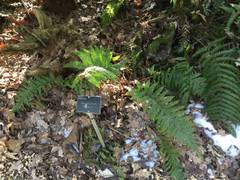
Used as a specimen fern in shade gardens, in woodland mixed plantings, along shaded paths, in foundation plantings on north-facing walls, or in large shaded containers at 18–24 inch (45–60 cm) spacing. The heavy gloss on the frond surface reflects filtered and direct shaded light at a higher intensity than matte-surfaced shade perennials, which makes the species a visual anchor in shade compositions where a light-reflecting element is wanted among duller matte foliage plants such as Hosta, Tiarella, or deciduous shade perennials. Broader-pinnaed frond architecture than P. makinoi suits medium-to-large-scale plantings at 24–30 inch (60–75 cm) mature width, where the 18–24 inch (45–60 cm) width of P. makinoi would register as smaller-scale. The plant does not grow well in full sun (frond scorch on the glossy surface), sustained dry soils, or climates below USDA zone 6.How to Identify
Appearance
Size & Dimensions
Height1'6" - 2'
Width/Spread2' - 2'6"
Bloom Information
Ferns reproduce by spores rather than flowers. Sori are round 1–2 mm clusters of spore-producing sporangia borne on the underside of fertile fronds in two rows along each pinna midrib, each sorus covered by a round peltate indusium. Spore production runs July through September on mature plants. Evergreen frond display holds year-round in USDA zones 7 and warmer, with frond dieback to the crown in USDA zone 6 after hard frost.
Detailed Descriptions
Foliage Description
Glossy lacquered dark green surface; once-pinnate fronds 18-24 inches long and 5-7 inches wide with broadly lanceolate pinnae 0.6-0.9 inch wide, prominently lobed and toothed margins, and pronounced ear-shaped auricles at each pinna base; dense dark brown scaly rachis; cinnamon-brown-scaled fiddleheads in springGrowing Conditions
Sun Requirements
Requires 2-4 hours of direct sunlight daily
• Full Sun: 6+ hours of direct sunlight
• Partial Shade: 3-6 hours of direct sunlight
• Full Shade: Less than 3 hours of direct sunlight
Care & Maintenance
Care Guide
Grow in partial to full shade with 2–4 hours of direct or filtered light in moist, humus-rich, well-drained loam, peat, or silt at pH 5.5–7.0. The species is more adaptable to imperfect growing conditions than many cultivated holly ferns — it tolerates heavier clay soils, brief summer drought periods of 2–3 weeks, and mild winter wind exposure that causes foliage damage on P. makinoi or P. tsus-simense at the same positions. Consistent soil moisture supports the fullest frond growth; plants in drier conditions produce smaller fronds within the stated size range. Water deeply once per week during dry periods from May through September. Apply 2–3 inches (5–8 cm) of shredded leaf mulch or pine-needle mulch over the root zone in spring. The evergreen fronds persist through winter in USDA zones 7 and warmer; in zone 6 the fronds die back and new fronds emerge from the crown in spring. Hardy to USDA zone 6.Pruning
Remove old tattered fronds in late winter (February–March) before new fiddleheads emerge from the crown. Cut fronds at the base with clean pruners to avoid tearing the crown. No other pruning is needed through the growing season.Pruning Schedule
Prune: February–March
late winter
Container Growing
Suitable for container growing
Minimum container size: 3 gallons