Polystichum, Genus, spp., Multiple species,
- Genus
- Multiple species
shield ferns
Temperate and montane regions worldwide
Overview
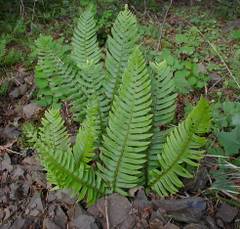
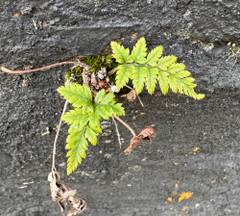
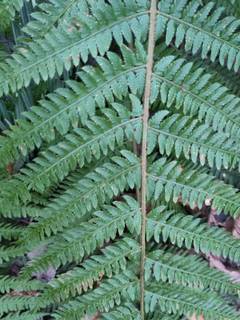
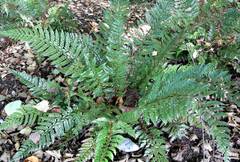
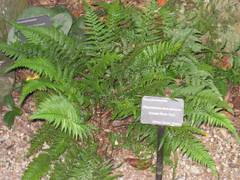
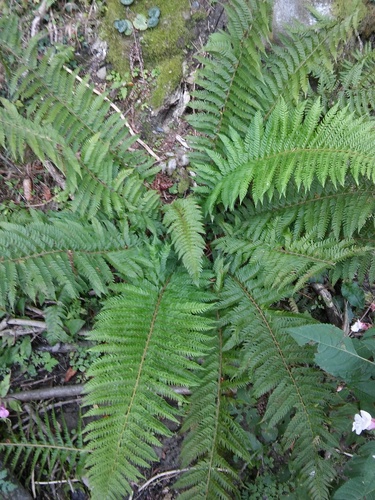
Polystichum is a genus of roughly 260 species of mostly evergreen ferns in the family Dryopteridaceae, distributed through temperate and tropical regions on every continent except Antarctica, typically in shaded woodland and on rocky banks. Plants grow from a stout, scaly crown that throws up a vase-shaped rosette of leathery fronds 1-4 ft (0.3-1.2 m) long, the shape behind the group's shield-fern and holly-fern names. Fronds are once- or twice-divided into many toothed segments, each often bearing a small pointed lobe at its base and a bristle-tipped margin, and new croziers unfurl covered in pale to rusty scales. Spores ripen in round clusters protected by a central umbrella-shaped shield on the frond underside. Most species hold their fronds through winter, browning only in hard cold, and tolerate deep shade and dry root competition better than many ferns. They need moist, humus-rich, freely draining soil and shelter from drying wind and midday sun. Old fronds flatten and tatter by late winter, and the crowns are slow to spread, forming tight clumps rather than running colonies.
Native Range
The genus is widespread in temperate and montane regions worldwide, with strong representation in eastern Asia, North America, and Europe. The Christmas fern P. acrostichoides is common in eastern North American woodlands, while the western sword fern P. munitum dominates Pacific coast forests.Suggested Uses
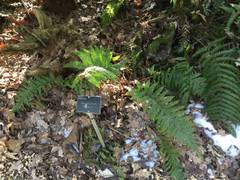
Shield and sword ferns are grown in shade and woodland gardens, along north-facing borders, and among shrubs and trees as evergreen ground texture. They suit shaded rock gardens, the banks of ponds and streams, and large containers in sheltered shade. Evergreen fronds are cut for winter arrangements.How to Identify
Appearance
Size & Dimensions
Height1' - 4'
Width/Spread1' - 3'
Colors
Foliage Colors
Fall Foliage Colors
Bloom Information
As a fern, Polystichum produces no flowers and reproduces by spores rather than seed. Round spore clusters develop on the underside of fertile fronds through summer, ripening from green to brown before releasing dust-like spores. The unfurling of new croziers in spring is the main seasonal change.
Detailed Descriptions
Foliage Description
deep glossy greenGrowing Conditions
Sun Requirements
Requires 1-5 hours of direct sunlight daily
• Full Sun: 6+ hours of direct sunlight
• Partial Shade: 3-6 hours of direct sunlight
• Full Shade: Less than 3 hours of direct sunlight
Care & Maintenance
Care Guide
Polystichum grows in part to full shade in moist, humus-rich, freely draining soil at slightly acidic to neutral pH around 5.0-7.0. Most species tolerate drier shade and root competition better than other woodland ferns once established, though new plantings need steady moisture through the first season. Shelter from strong wind and hot afternoon sun prevents frond scorch. A spring mulch of leaf mould feeds the shallow roots and conserves moisture. Few pests trouble the genus, but crown rot follows waterlogged soil, and old fronds can harbour fungal spotting if left wet. Plants are slow to establish and decline if the crown is planted too deep.Pruning
Cut away old, flattened, or winter-damaged fronds at the base in late winter, just before new croziers unfurl, to keep the crown tidy and reduce fungal spotting. Remove dead fronds at any time through the year. No other pruning is needed, and the crown itself should not be cut into.Pruning Schedule
Prune: February–March
winterearly spring
Container Growing
Suitable for container growing
Minimum container size: 2 gallons