Image 1 of 4
1 / 4
Plant Reference
Polystichum, Genus, polyblepharum, Species,
- Genus & species
Korean tassel fern
Japan, southern Korea, and parts of China; mountain forests and shaded rocky slopes at low to middle elevations
Overview
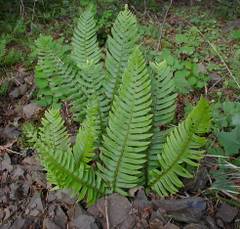
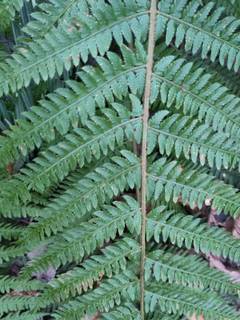
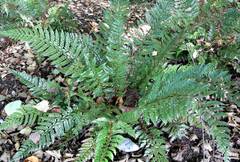
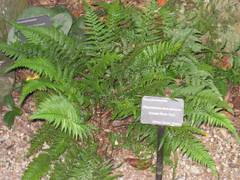
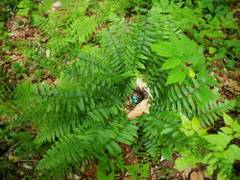
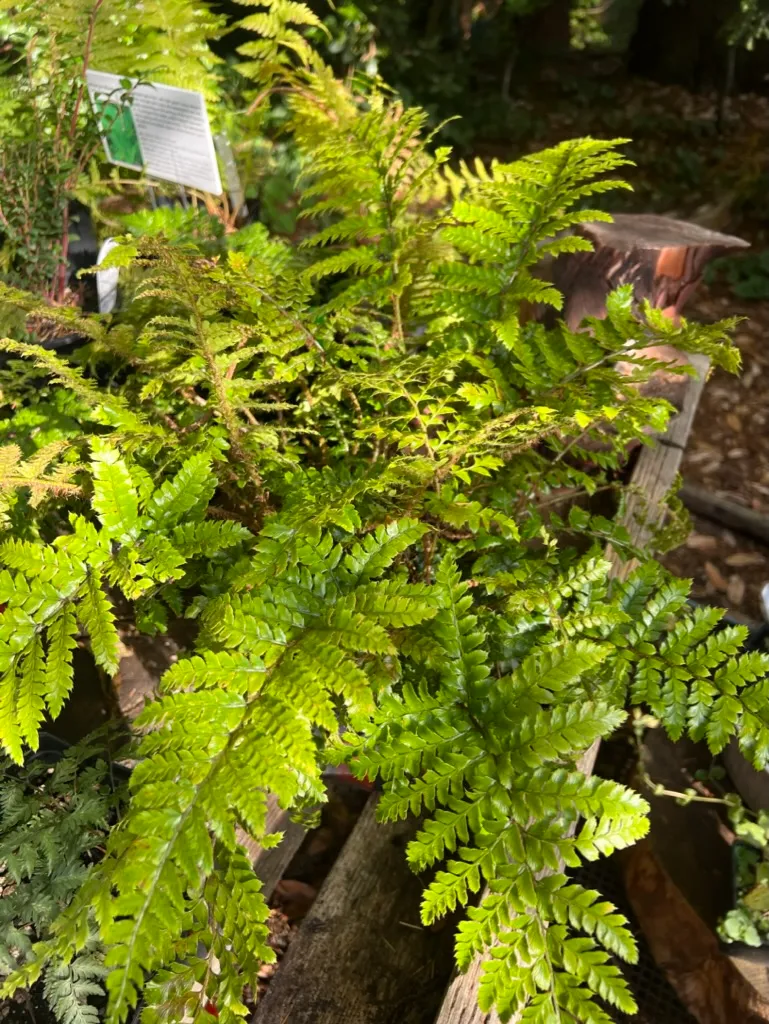
Polystichum polyblepharum is a clumping evergreen fern in the family Dryopteridaceae growing 18–30 inches (45–75 cm) tall and 24–36 inches (60–90 cm) wide from a central crown that produces bipinnate fronds arching outward in a vase-shaped clump. The specific epithet polyblepharum is from Greek poly meaning many and blepharon meaning eyelash and refers to the dense covering of golden-brown fringed scales on the rachis (the central stalk of each frond) and on the stipe (the stalk below the leafy portion of the frond) — the eyelash-like scales radiate outward from the central stalks and are particularly prominent on the emerging spring fiddleheads where the densely scaled new growth produces the tassel appearance that is the basis for the common names Korean tassel fern and Japanese tassel fern. Fronds are highly glossy dark green with a polished lacquered surface sheen that reflects light in shaded positions, and the polished frond surface is the species' primary identifying ornamental character — the lacquered glossiness is not matched by the matte-surfaced P. setiferum (soft shield fern) or by the once-pinnate P. munitum (western sword fern) or by other commonly cultivated hardy ferns. The emerging spring fiddleheads carry the singular character of curving backward toward the crown rather than uncurling forward and outward as in most other ferns, producing a tassel-like silhouette as the densely scaled new fronds elongate before the curl unrolls and the frond extends to its mature length. Limitation: the species is not drought-tolerant and calls for consistent moisture through the growing season — the moist mountain-forest native habitat in Japan, southern Korea, and parts of China supports the cultural moisture preference that the species carries into garden cultivation, and dry-summer regions without supplemental irrigation are unsuitable for the species. Acidic soil with a pH of 5.0–6.5 supports the species' cultural preference inherited from the acidic forest soils of the native range. Native to Japan, southern Korea, and parts of China. Non-toxic. Deer-resistant.
Native Range
Native to Japan, southern Korea, and parts of central and southern China — growing in mountain forests and on shaded rocky slopes at low to middle elevations on acidic forest soils with consistent moisture from rainfall and from the cool understory humidity of the native habitat. The species was introduced to western horticulture from Japanese botanical garden collections during the late 19th century and has subsequently become a standard hardy evergreen fern in temperate-region shade gardens across western Europe and North America.Suggested Uses
Used in shade gardens, woodland understory plantings under high deciduous canopy, mixed shade borders alongside Hosta, Heuchera, and Tiarella companions, Japanese-garden plantings, north-side foundation plantings on the shaded side of buildings, and container specimens in containers of at least 3 gallons (11 L) with acidic potting mix at 24–36 inch (60–90 cm) spacing between plants in USDA zones 5 through 8. The polished lacquered glossy dark green evergreen fronds, the backward-curving tassel-like spring fiddleheads, the golden-brown eyelash-like fringed scales on the rachis, and the year-round vase-shaped foliage clump combine for a high-value evergreen shade fern across temperate-region garden positions where the moisture and the acidic soil requirements can be supplied. Dry-summer regions without supplemental irrigation, alkaline-soil positions without acidification, and full-sun hot-afternoon-exposure positions are unsuitable because of the moisture, acidity, and shade preferences inherited from the moist acidic mountain-forest native habitat.How to Identify
Appearance
Size & Dimensions
Height1'6" - 2'6"
Width/Spread2' - 3'
Reproduction
Spores ripen and shed in late summer through fall, and germination of spores in moist shaded soil can produce small gametophytes that develop into new sporophyte ferns where the cultural conditions support spore germination. Vegetative spread is by slow expansion of the central crown rather than by rhizome runners.
Detailed Descriptions
Foliage Description
highly glossy dark green with a polished lacquered surface sheen that reflects light in shaded positions and that is the species' primary identifying ornamental character not matched by any other commonly cultivated hardy fern; bipinnate fronds 18-30 inches (45-75 cm) long arching outward from a central crown; the rachis (the central stalk of each frond) and the stipe (the stalk below the leafy portion) are densely covered in golden-brown fringed scales that radiate outward like eyelashes — the source of the specific epithet polyblepharum from Greek poly meaning many and blepharon meaning eyelash; evergreen year-roundGrowing Conditions
Sun Requirements
Requires 1-4 hours of direct sunlight daily
• Full Sun: 6+ hours of direct sunlight
• Partial Shade: 3-6 hours of direct sunlight
• Full Shade: Less than 3 hours of direct sunlight
Care & Maintenance
Care Guide
Site in full shade to part shade with 1–4 hours of direct sun per day in well-drained acidic loam or peat-amended soil with a pH of 5.0–6.5 — the species develops chlorosis at higher pH levels and calls for naturally acidic native soil or sustained acidification through pine-needle mulch, leaf-mold mulch, or elemental-sulfur amendment to maintain the low pH at the root zone. The species is not drought-tolerant and calls for consistent moisture through the growing season — dry-summer regions without supplemental irrigation are unsuitable for in-ground plantings. Old tattered or browned fronds are removed at the crown base in early spring (February or March) before the new spring fiddleheads emerge, and care is taken not to damage the emerging backward-curving fiddleheads at the center of the crown during the cleanup. Non-toxic. Deer-resistant. Hardy in USDA zones 5–8.Pruning
Old tattered or browned fronds are cut off at the crown base in early spring (February or March) before the new spring fiddleheads emerge from the center of the crown, and the spent frond bases are pulled cleanly away to allow unobstructed expansion of the new growth flush. Care is taken not to damage or trample the emerging backward-curving fiddleheads at the center of the crown during the cleanup, and pruning shears or sharp scissors rather than pulling-by-hand are used to make clean cuts at the base of the spent fronds without disturbing the crown roots.Pruning Schedule
Prune: February–March
early spring
Container Growing
Suitable for container growing
Minimum container size: 3 gallons