How to Build a Pollinator Garden That Works
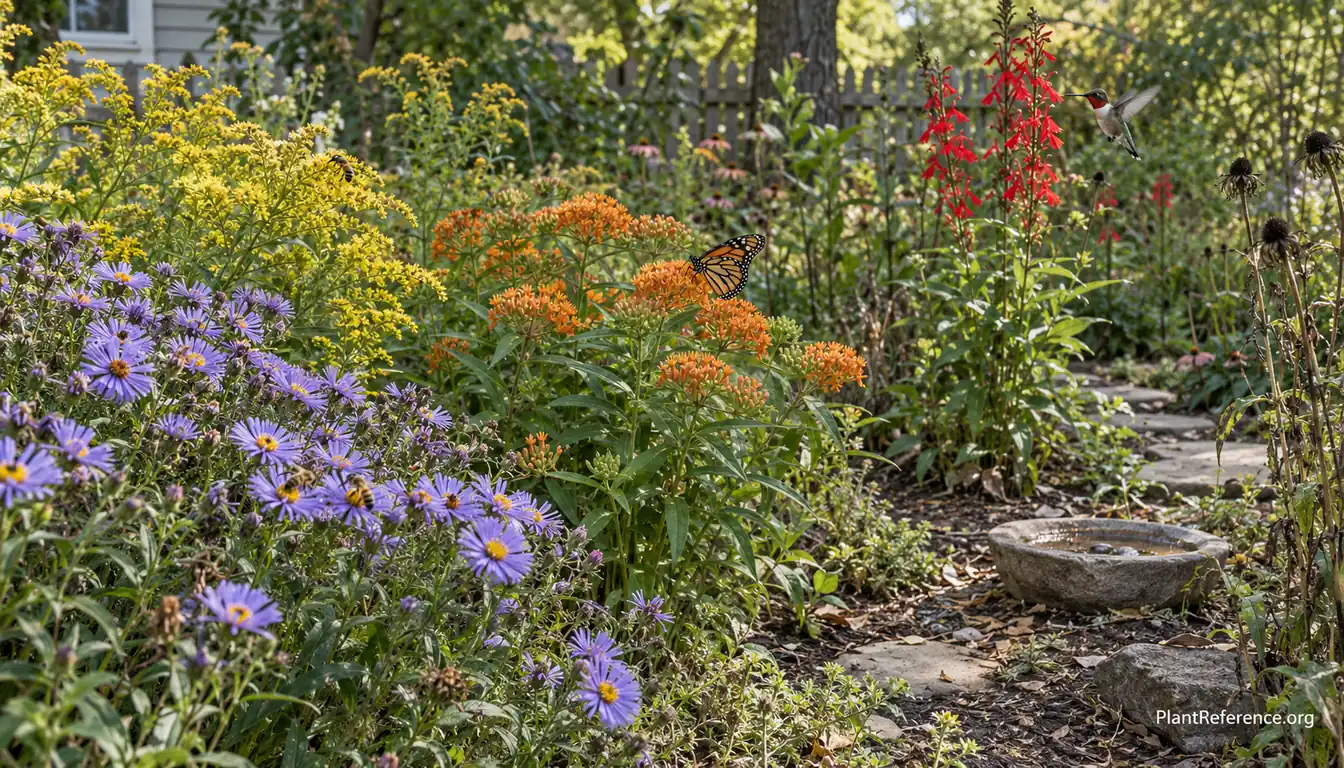
— Image © PlantReference.org 2026
Pets & Toxicity
Recorded toxicity for plants linked in this guide. An unknown status is not a safety assessment.
Toxic to pets: butterfly weed, cardinal flower, prairie star and 1 moreDetailsHide
Asclepias tuberosa — Toxicity Warning
Toxic to pets and humans (cardiac glycosides — cardenolides — at moderate concentration; less toxic than other milkweed species but still toxic if ingested in quantity)View Asclepias tuberosa plant profileAquilegia canadensis — Toxicity Warning
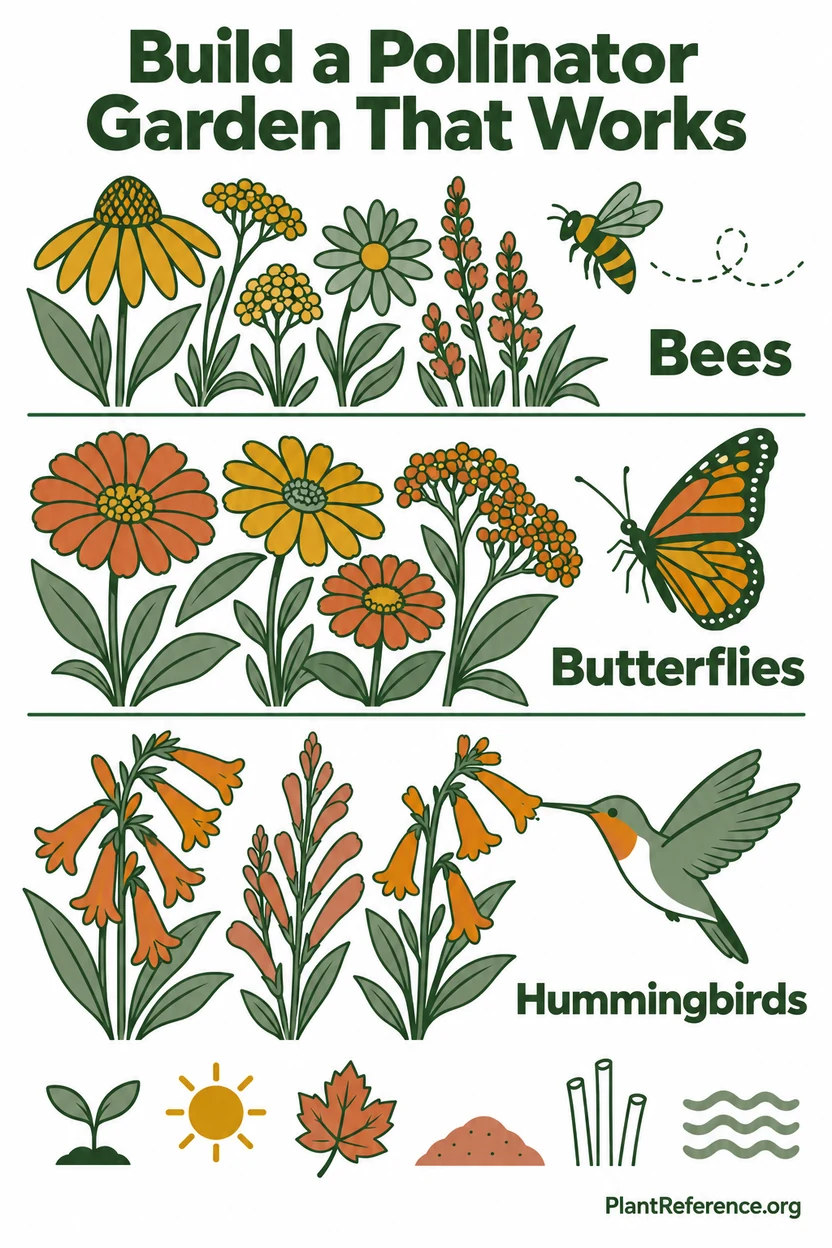
Toxic to pets and humansView Aquilegia canadensis plant profileA pollinator garden works when its visitors can find food, reach it efficiently, and reproduce nearby. That requires more than buying plants labeled “pollinator friendly.” Bees, butterflies, and hummingbirds see colors differently, approach flowers differently, and use different floral structures. A useful design matches color and shape to the animal, repeats those flowers in visible clumps, and keeps something blooming across the entire growing season.
The garden around the flowers matters just as much. Roughly three quarters of native bee species nest in the ground, while others use hollow or pithy stems and existing cavities. Butterflies need host plants for caterpillars as well as nectar for adults. Hummingbirds benefit from safe perches, shrubs, and an open approach to tubular flowers. The finished plan should look layered and abundant, but it must also leave some bare soil, standing stems, leaf litter, and shallow water.
Start With Pollinator Vision and Flower Shape
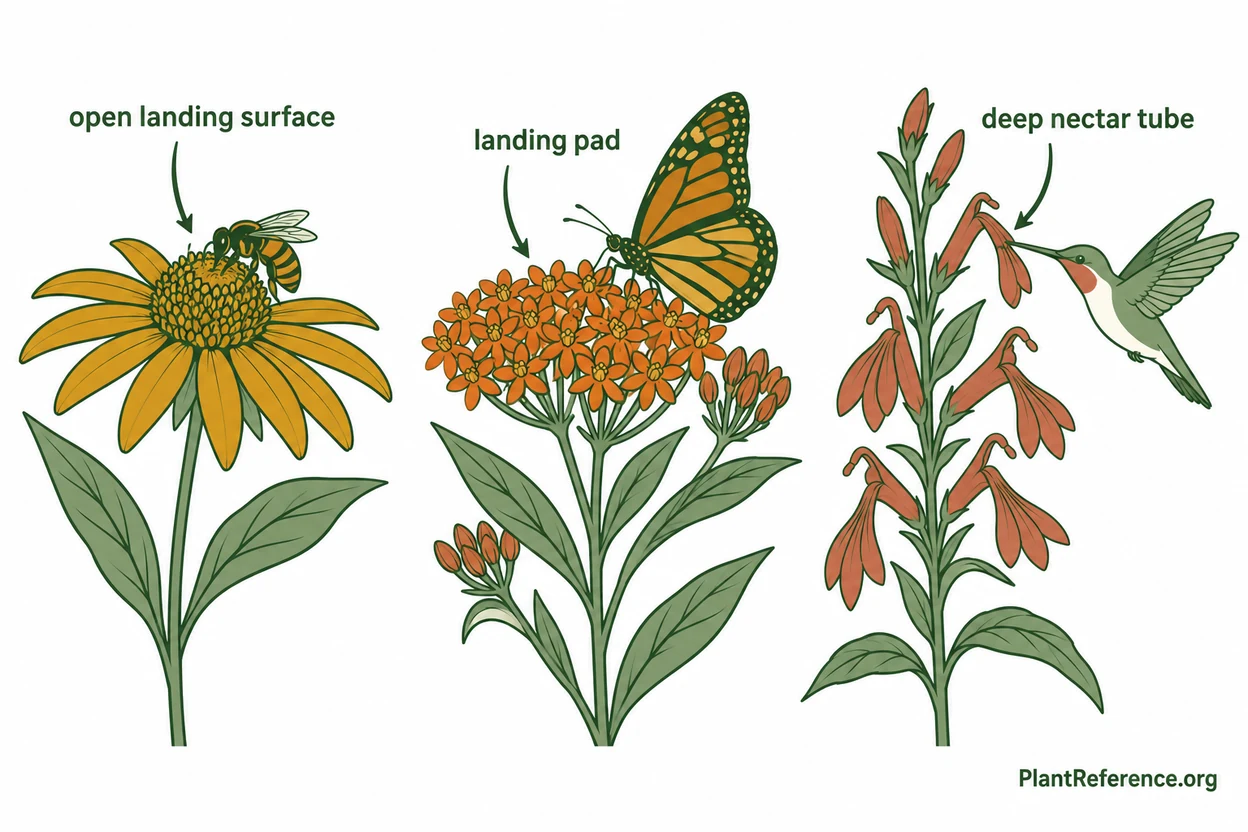
Color is a signal, but flower architecture determines whether the reward is reachable. Bees respond strongly to white, yellow, blue, and purple flowers, especially flat, open, or densely clustered blooms where they can land and move among many florets. Composite heads such as 🌿Echinacea purpurea and 🌿Symphyotrichum novae-angliae act like feeding platforms. Spikes and clusters can work too when individual flowers remain accessible.
Butterflies commonly use red, orange, pink, purple, and yellow flowers, but a secure landing surface is critical. Flat-topped clusters on 🌿Asclepias tuberosa and 🌿Eutrochium maculatum let a butterfly brace its legs while uncoiling its proboscis. Adult nectar plants should be paired with caterpillar host plants. Milkweed, for example, serves monarch larvae as well as many adult flower visitors.
Hummingbirds excel at hovering and reaching into deep tubes. Red, pink, and orange tubular flowers such as 🌿Lobelia cardinalis and 🌿Monarda didyma advertise nectar without requiring a landing platform. A bloom can serve more than one group, but designing around the best match prevents a garden from accidentally favoring only generalist bees.
Pollinator group | Strong color signals | Useful flower shapes | Example native plants | Extra habitat need |
|---|---|---|---|---|
Bees | White, yellow, blue, purple | Flat, open, dense clusters, composite disks | 🌿Echinacea purpurea, 🌿Solidago rugosa, 🌿Symphyotrichum novae-angliae | Bare soil, hollow stems, pesticide-free forage |
Butterflies | Red, orange, pink, purple, yellow | Flat-topped clusters and broad landing pads | 🌿Asclepias tuberosa, 🌿Eutrochium maculatum, 🌿Liatris spicata | Caterpillar host plants, shelter, puddling minerals |
Hummingbirds | Red, pink, orange | Tubular and pendant flowers | Perches, open flight paths, season-long nectar |
Treat these signals as design priorities, not rigid rules. A purple flower may serve butterflies as well as bees, and a hummingbird may visit a non-red tube when it contains an accessible reward. Diversity is useful when it is structured: repeat the clearest color-and-shape matches first, then weave in compatible local natives. That approach produces strong visual targets without turning the garden into three isolated sections. It also gives visitors alternatives when weather shortens the bloom of one species.
Choose Plants for Bees, Butterflies, and Hummingbirds
Build the Bee Layer
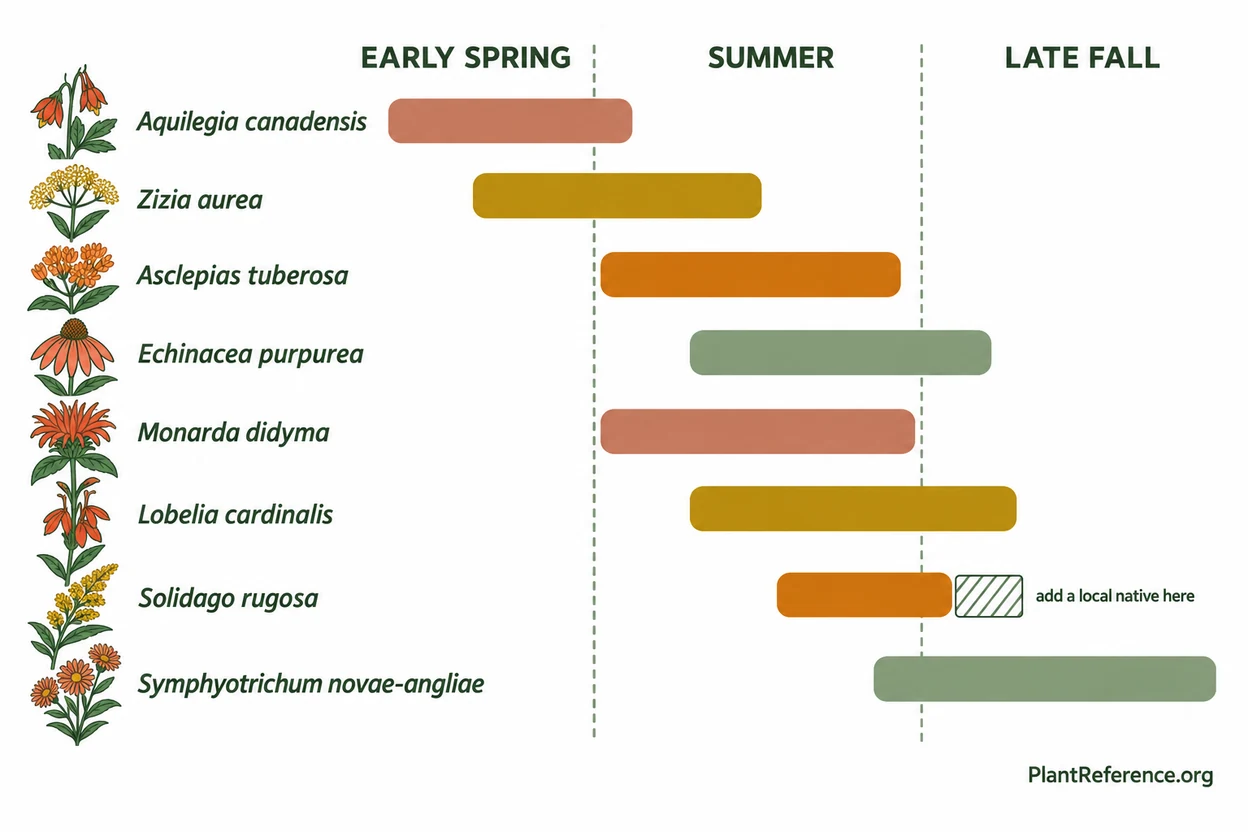
Begin with several flower forms because bees vary in body size and tongue length. Add a spring bloomer, a midsummer anchor, and a late source. In an eastern garden, 🌿Aquilegia canadensis can open the season, 🌿Echinacea purpurea can carry midsummer, and 🌿Solidago rugosa with 🌿Symphyotrichum novae-angliae can support late activity. In other regions, use locally native equivalents with the same sequence and accessible shapes.
Do not select solely by petal color. A double-flowered form may hide or replace reproductive structures, making pollen and nectar difficult to reach. Straight species and open single flowers are dependable starting points. Best Perennials for Pollinators: Bees & Butterflies provides additional perennial comparisons, while How to Grow Coneflowers (Echinacea) That Feed Pollinators explains how to keep a key composite flowering well.
Build the Butterfly Layer
Adult butterflies need nectar, but a complete butterfly garden also feeds caterpillars. Select host plants for species present in your area, then place nectar plants nearby. 🌿Asclepias tuberosa is a monarch host and provides orange flower clusters. 🌿Zizia aurea supports black swallowtail caterpillars and produces spring yellow umbels. 🌿Eutrochium maculatum offers tall, broad landing platforms later in the season.
Accept some chewed foliage. Caterpillar feeding is evidence that the host layer is functioning. Avoid moving larvae to unfamiliar plants, and do not spray a host plant because its leaves look damaged. If a formal front edge needs to stay crisp, place host plants a little deeper in the bed and use shorter nectar plants along the path.
Build the Hummingbird Layer
Hummingbirds defend productive patches, so repeat tubular flowers in several parts of the garden rather than creating one tiny target. 🌿Aquilegia canadensis supplies early red-and-yellow tubes, 🌿Monarda didyma follows in summer, and 🌿Lobelia cardinalis can extend the sequence in moist soil. Choose plants that match the actual site; cardinal flower is not a substitute for a dry-slope species.
Leave an open flight lane in front of tall tubular flowers and include nearby woody stems or shrubs for perching. A garden does not need red dye or a feeder to serve hummingbirds. Flowers renew nectar naturally and integrate with habitat for insects that also form part of a hummingbird's diet.
Lay Out the Garden in Functional Clumps
Map the site before selecting quantities. Mark direct sun, afternoon shade, drainage, hose access, and existing vegetation. Full-sun meadow plants usually need at least 6 hours of direct light, but woodland-edge species can use dappled conditions. Match each plant to the site rather than forcing every pollinator group into the same soil moisture.
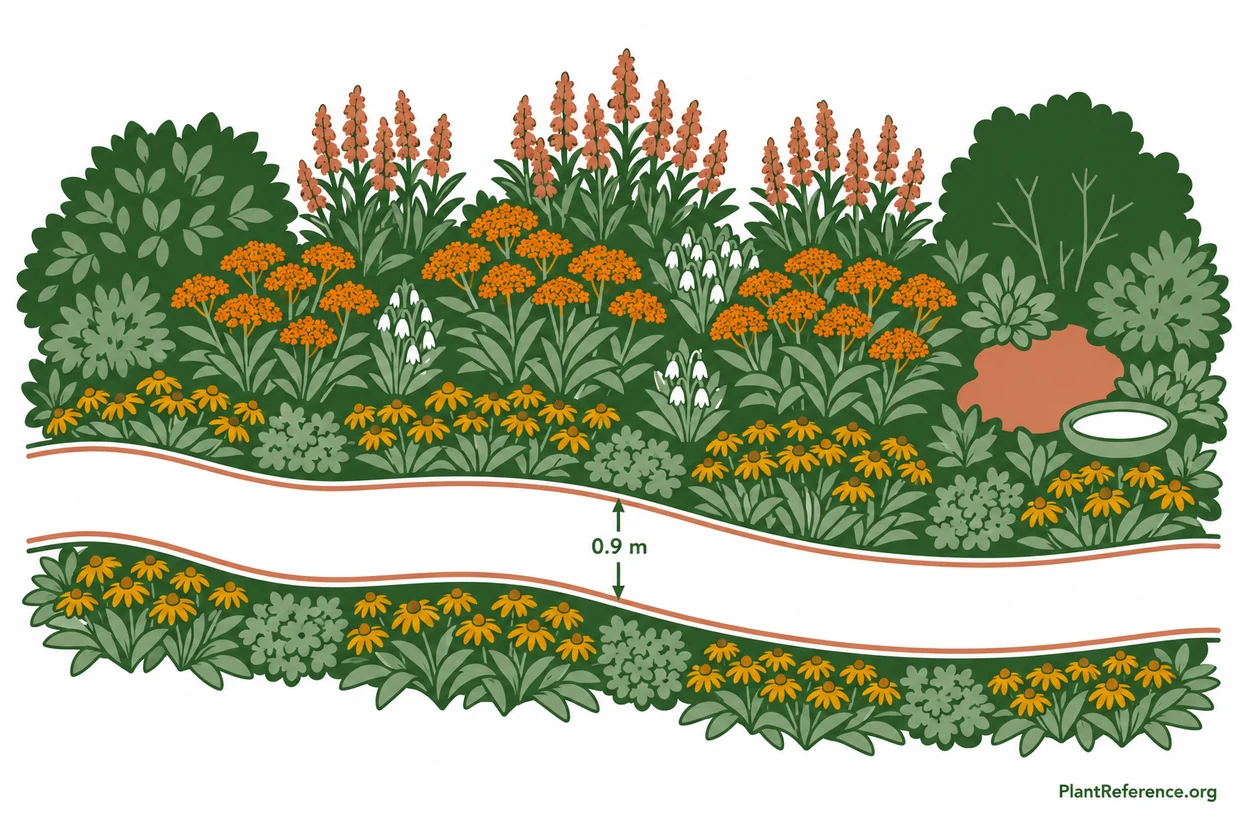
Next, draw clumps. A patch 3 to 5 feet (0.9 to 1.5 m) across is visible from a distance and lets a visitor move efficiently between flowers. Repeat two or three anchor species rather than buying one plant from a dozen unrelated species. Repetition also makes the bed look designed. The combination principles in Perennial Combinations That Look Good Together help balance repetition, texture, and height.
Put short, open flowers along sunny path edges where bees can warm and forage.
Place broad butterfly landing flowers where wind is buffered by taller plants or shrubs.
Set tall tubular flowers behind lower clumps with a clear aerial approach.
Repeat each major nectar plant at least twice across the garden.
Connect spring, summer, and fall bloom so no long forage gap appears.
Reserve nesting and water features before every open space is planted or mulched.
Sequence matters more than a single peak. Make a three-column list for spring, summer, and fall, then place each chosen species in its main season. If one column is sparse, fill that gap first. Plan a Perennial Garden That Blooms Spring to Fall offers a broader bloom-calendar method, and Perennials That Bloom All Summer: 12 Longest Bloomers can help strengthen the middle without replacing early and late resources.
Keep mature size in view. A 4-foot (1.2-m) Joe-Pye weed can shade a low milkweed if the two are planted too close. Use tall species as wind-filtering backdrops, medium flowers through the center, and low plants near the path. Leave small breaks for access; trampling soil around active nests defeats the purpose.
Add Water, Minerals, and Shelter
Bees and hummingbirds drink, while many butterflies seek moisture and dissolved minerals from damp soil. A shallow saucer filled with coarse sand and flat stones can serve as a controlled puddling station. Keep part of the sand damp rather than flooded, and refresh the water often. Place the station where butterflies can see it but cats cannot crouch unseen nearby.
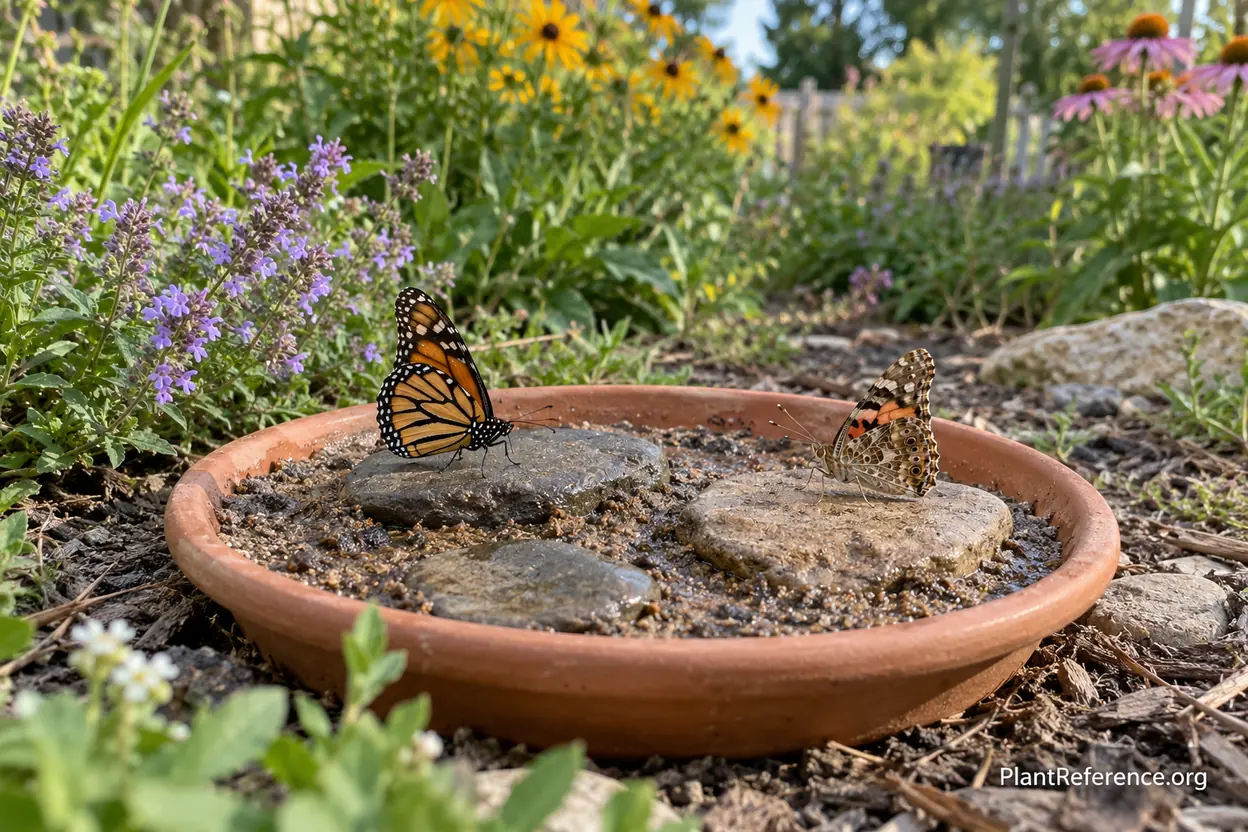
For hummingbirds, moving water can be attractive, but deep open basins are unnecessary. A dripper over a shallow textured basin or a fine mister near foliage provides safe access. Scrub and refill any water feature regularly. Stagnant water breeds mosquitoes and can spread pathogens.
Shelter comes from structure. Native bunch grasses, shrubs, and layered perennials slow wind without enclosing the garden completely. Keep a clear view of flowers and approach routes. If deer pressure is high, consult Deer-Resistant Perennials: A Zone-by-Zone Planting Guide before investing in large drifts, then protect vulnerable host plants rather than assuming they will survive browsing.
Plant and Establish the Bed
Remove turf and perennial weeds before planting. Smothering, careful hand removal, or site-appropriate sod removal preserves more soil structure than repeated tilling. If the area is currently lawn, Lawn Alternatives That Actually Work: 5 Options Beyond Grass can help compare full conversion with smaller linked habitat beds.
Set container plants at the same depth they grew in the pot. Space them for mature width, not nursery size. Water immediately and settle soil around the root ball without compacting it hard. New perennials generally need about 1 inch (2.5 cm) of water per week from rain and irrigation while establishing, adjusted for heat, soil, and species. Check 3 to 4 inches (8 to 10 cm) deep before watering again.
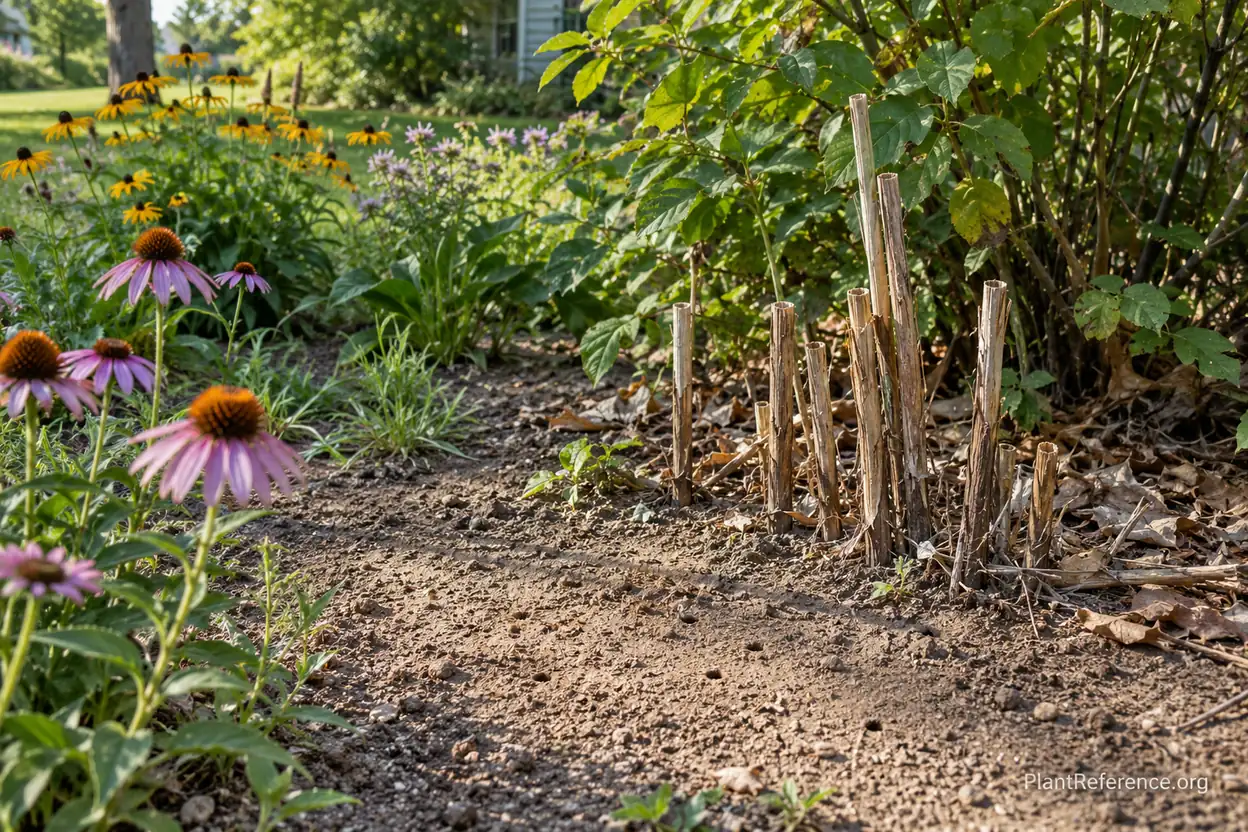
Use mulch selectively. A 1- to 2-inch (2.5- to 5-cm) layer can suppress weeds around new transplants, but thick mulch over the entire site removes nesting opportunities. Leave several sunny patches of firm bare mineral soil, each at least 1 to 2 feet (30 to 60 cm) across if space permits. Do not till, flood, or walk on those patches once bees investigate them.
Planting time depends on region and water availability. Cool, moist spring or early fall conditions often reduce stress for container-grown perennials. When to Plant Perennials: Season-by-Season Timing explains the tradeoffs. During establishment, replace failed plants only after identifying the cause—wrong moisture, light, or competition—not simply with another of the same plant.
Keep the Garden Useful After Flowers Fade
The traditional fall cleanup removes much of what native insects need. Leave seed heads, stems, and a light layer of leaves through winter. Stem-nesting bees may occupy hollow or pithy material, while leaf litter shelters insects at the soil surface. When to Cut Back Perennials in Fall (And What to Leave) explains which plants can remain and why.
In spring, wait through a stretch of consistently warm weather before major cutting. Reduce old stems to 12 to 24 inches (30 to 60 cm) rather than shearing everything at ground level. Place sound cut stems loosely in an out-of-the-way corner so occupants can emerge. Divide expanding perennials only when necessary, using the methods in How to Divide Perennials: A Species-by-Species Guide.
Never use broad-spectrum insecticides in a pollinator garden. “Organic” does not mean harmless to bees or caterpillars. If a serious pest appears, identify it, tolerate cosmetic damage, use physical removal where practical, and treat only the affected plant at a time when pollinators are not active. Avoid systemic insecticides entirely on nectar and host plants.
Observe the garden monthly. Note first and last bloom, visitor groups, caterpillar feeding, dry zones, and nesting activity. Move or replace plants that consistently fail, but preserve successful volunteer seedlings and expanding clumps. The design becomes stronger through evidence: more continuous bloom, larger floral targets, safer nest sites, and fewer interventions each year.
Frequently Asked Questions
Three daily games
Can you name a plant on sight?
Thursday’s specimenBrassica oleracea 'Georgia Southern'Reading about plants and recognising them are different skills. These three build the second.
- Daily PlantIdentify the day’s mystery plant from a close-up photograph.
- Keyed OutWork a dichotomous key, lead by lead, to name a hidden specimen.
- Name That PlantName a specimen from botanical clues dealt hardest first.
Free to play, no account needed
Tagged with
Priya is a soil scientist at an agricultural extension office who gardens on a quarter-acre suburban lot in Indianapolis. Her professional work focuses on soil health and nutrient management, which gives her a perspective most gardening writers don't have—she thinks about what's happening underground before worrying about what's happening above it. Priya maintains a large pollinator garden, grows herbs and vegetables, and is slowly converting her conventional lawn to a mix of native grasses and low-growing groundcovers. She writes about soil health, composting, fertilizer use, and building the kind of foundation that makes plants thrive without constant intervention.