Image 1 of 15
1 / 15
Plant Reference
Lobelia, Genus, cardinalis, Species,
- Genus & species
cardinal flower
Eastern and central North America (New Brunswick and Quebec south to Florida, west to Nebraska and Texas)
Overview
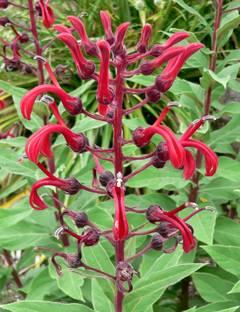
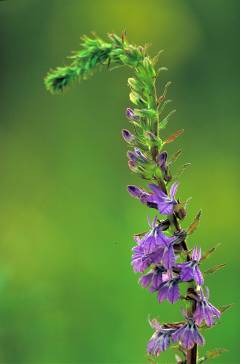
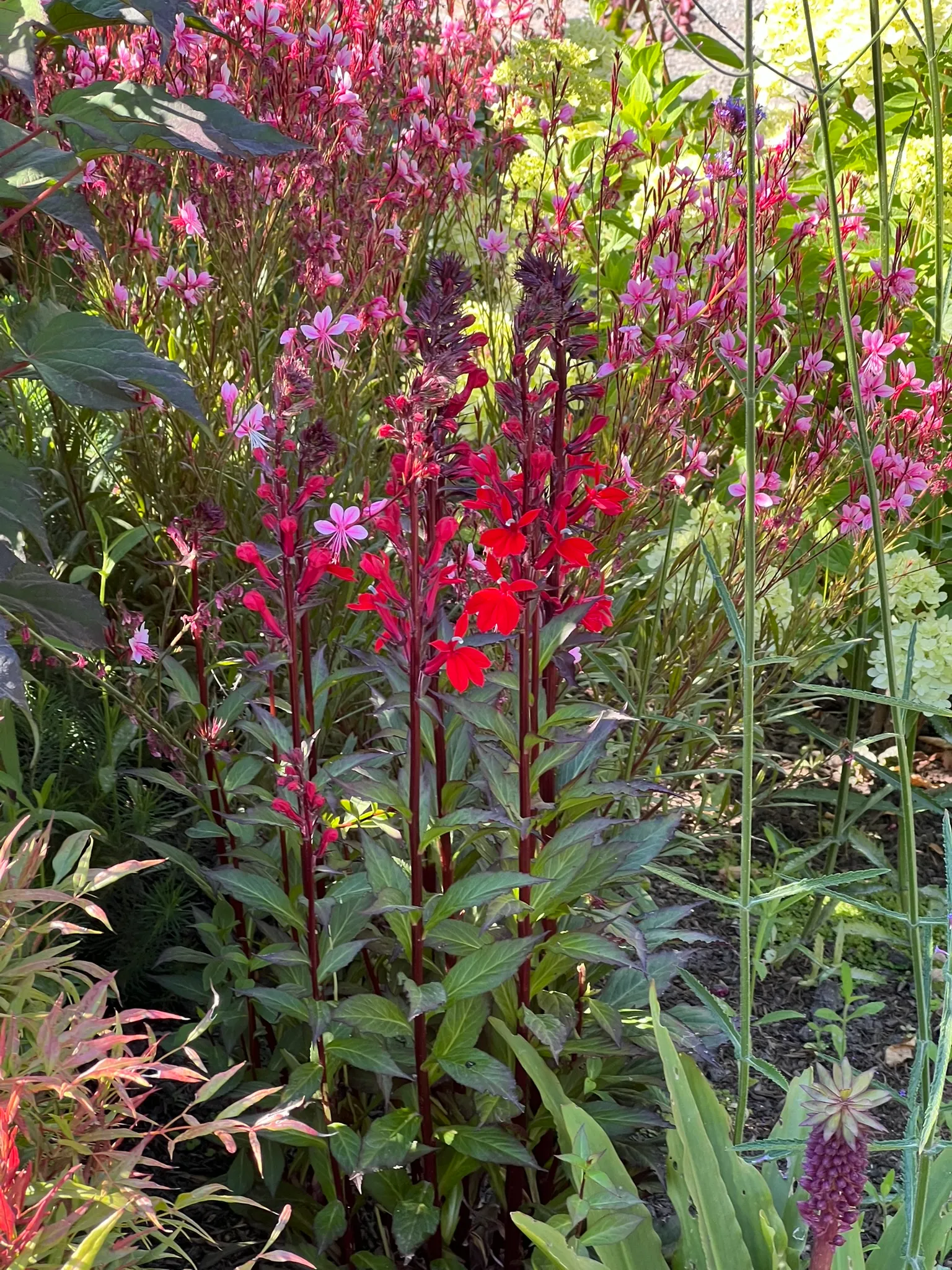
Lobelia cardinalis is a short-lived native perennial in the family Campanulaceae, native to wet meadows, stream banks, seeps, and moist woodland edges across eastern and central North America. Plants form clumps of basal rosettes that overwinter, sending up erect stems 24-48 inches (60-120 cm) tall in summer, clothed in alternate lance-shaped leaves 2-5 inches (5-13 cm) long in medium to dark green, often tinged reddish-bronze, a trait intensified in red-leaved cultivars such as 'Queen Victoria'. From midsummer through early fall, terminal racemes 8-18 inches (20-45 cm) long carry densely packed two-lipped tubular flowers 1.5 inches (4 cm) long in saturated scarlet-red, with a three-lobed lower lip and two erect upper petals. Plants are short-lived (2-4 years) but produce offset rosettes from the crown and self-seed freely in moist soil, so colony maintenance is by replacement rather than longevity of individual crowns. Hardy in USDA zones 3-9. Reliable scarlet color pairs with a specific site requirement: plants decline rapidly on dry sites and do not transition well to average-moisture borders, which limits placement. All parts contain the alkaloid lobeline and are toxic if ingested, with symptoms resembling nicotine poisoning.
Native Range
Lobelia cardinalis is native to eastern and central North America, from New Brunswick and Quebec south to Florida and west to Nebraska and Texas, in wet meadows, stream banks, marshes, pond edges, and moist open woodland clearings, typically in full sun to partial shade.Suggested Uses
Planted at pond margins, in bog gardens, rain gardens, and consistently moist perennial borders at 12-18 inch (30-45 cm) spacing. In eastern North American plantings, the species fills the role of primary mid-to-late summer hummingbird nectar source. Combines with Eutrochium fistulosum, L. siphilitica, and native ferns in naturalistic moist plantings. Dry sites and unirrigated average-moisture borders are outside the use range.How to Identify
Appearance
Size & Dimensions
Height2' - 4'
Width/Spread1' - 1'6"
Bloom Information
Terminal racemes of scarlet-red two-lipped tubular flowers 1.5 inches (4 cm) long, borne July through September in zones 3-9 with peak bloom in August. The raceme opens progressively from the base upward over 4-6 weeks. Individual flowers last 4-7 days. In the Pacific Northwest, peak bloom runs mid-July through late August. Ruby-throated hummingbirds visit through the bloom window, and the species is a primary mid-to-late summer nectar plant for that species in its eastern range.
Detailed Descriptions
Flower Description
Saturated scarlet-red; two-lipped tubular 1.5 inches (4 cm); three-lobed lower lip and two erect upper petals; terminal racemes 8-18 inches (20-45 cm); July-SeptemberFoliage Description
Medium to dark green, often tinged reddish-bronze; lance-shaped 2-5 inches (5-13 cm); alternate; deciduousGrowing Conditions
Sun Requirements
Requires 4-8 hours of direct sunlight daily
• Full Sun: 6+ hours of direct sunlight
• Partial Shade: 3-6 hours of direct sunlight
• Full Shade: Less than 3 hours of direct sunlight
Care & Maintenance
Care Guide
Grows in partial shade to full sun in consistently moist to wet humus-rich fertile soil at pH 5.5-7.0. Hardy to USDA zone 3. Reliable soil moisture across the growing season is the primary site condition; plants wilt and decline rapidly in dry soil. Bog gardens, rain gardens, pond margins, and irrigated perennial borders suit the species. A 2-3 inch (5-8 cm) mulch layer supports moisture retention. In zones 3-5, fall mulching over the basal rosettes protects the overwintering crowns. Colony renewal proceeds through self-seeding and through division of offset rosettes in early spring every 2-3 years. All parts contain lobeline and are toxic if ingested.Pruning
Spent racemes can be left to set seed and support colony renewal through self-seeding, since seeds germinate freely in moist soil. Alternatively, spikes are cut back to the crown rosette after bloom when spread control is the goal. In fall, stems are cut to ground level after frost. Offset rosettes are separated and replanted in early spring every 2-3 years, and each rosette produces a flowering stem the following season.Pruning Schedule
Prune: March & September
fallearly spring