Lobelia, Genus, erinus, Species,
- Genus & species
bedding lobelia
South Africa (Cape Province); rocky slopes and sandy grasslands in the winter-rainfall Mediterranean climate zone of the Western Cape
SunFull Sun – Part Shade
WaterMedium
Overview
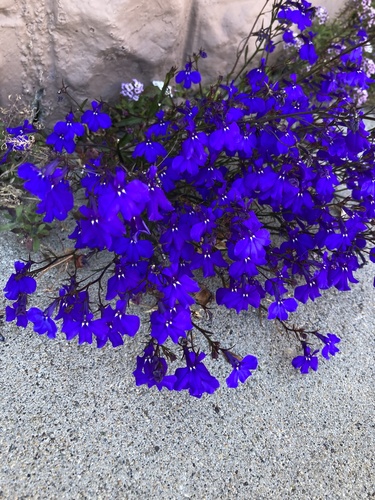
Lobelia erinus is a small mounding or trailing frost-tender annual in the bellflower family Campanulaceae growing 4–10 inches (10–25 cm) tall and 6–12 inches (15–30 cm) wide as a compact rounded mound in bedding cultivars or as a cascading pendant in hanging basket cultivars. Leaves are dark green, small, lance-shaped to oblong, 0.5–1 inch (12–25 mm) long, and carried densely along the branching stems. Two-lipped 5-lobed flowers 0.5 inch (12 mm) across open continuously from late spring through fall with the upper 2 lobes smaller and the lower 3 lobes larger and fanned outward, in a range of cultivar colors including deep blue, violet, sky blue, white, pink, and various bicolor combinations — deep blue is the cultivar color most associated with the species and the reason the annual is widely planted as the blue component of mixed summer container plantings and bedding schemes. The species is a winter-rainfall annual in its native South African range and is grown as a frost-tender summer annual in temperate gardens where it is replanted each year from seed or from plug transplants. Limitation: flowering slows or pauses during sustained summer heat above 80 °F (27 °C) in a heat-induced dormancy that can leave plantings bare of bloom through July and August in warm continental climates, and the plants resume flowering as cooler temperatures return in late summer and fall. Shearing the plants back by one-third during the midsummer heat pause removes the tired growth and promotes a fresh flush of bloom when the weather cools, and this midsummer shearing is the main cultural management calendar item for the species in warm-summer gardens. Propagation is from seed sown 10–12 weeks before the last spring frost because the species is slow to reach flowering size from seed: the seed is dust-sized (among the smallest of any commonly grown annual flower), and the seed is surface-sown without covering because it calls for light to germinate and does not push through a soil layer. All parts of the plant contain lobeline, a nicotinic acetylcholine receptor agonist alkaloid that produces nausea, tremors, and cardiac effects if the foliage is ingested, and the species is toxic to humans, dogs, and cats. Deer-resistant because of the lobeline content.
Native Range
Native to South Africa, primarily the Cape Province of the Western Cape region, growing on rocky slopes, sandy grasslands, and the lower reaches of mountain fynbos vegetation in the winter-rainfall Mediterranean climate zone. The species flowers as a winter-growing annual in its native range where summer drought and summer heat impose the main seasonal stress, and the heat-induced dormancy observed in temperate summer cultivation is the carryover of this winter-growing native rhythm.Suggested Uses
Used as a front-of-border bedding edging, container mix filler, hanging basket cascade (trailing cultivars), window box edge planting, and rock garden annual at 6–12 inch (15–30 cm) spacing between plants. Deep blue cultivars are the default color choice and supply the true blue component of mixed summer plantings alongside warm-toned annuals such as Pelargonium, Tagetes, and Calibrachoa. Cool-summer maritime climates (Pacific Northwest, coastal New England, the British Isles, and northern Europe) support continuous bloom through the entire summer without a heat-induced dormancy, and warm-summer continental climates support spring and fall bloom with a midsummer pause. Dry xeric garden positions and hot interior summer climates without afternoon shade are unsuitable because of the moisture requirement and the heat-induced dormancy, and gardens where pet or child access to the foliage is a concern are unsuitable because of the lobeline toxicity.How to Identify
Appearance
Size & Dimensions
Height4" - 10"
Width/Spread6" - 1'
Bloom Information
Two-lipped 5-lobed flowers 0.5 inch (12 mm) across open continuously from late spring (May) through fall (October) in cool maritime climates, producing up to a 20-week bloom window under suited conditions. Flowering slows or pauses during sustained summer heat above 80 °F (27 °C), which causes a heat-induced dormancy lasting several weeks in warm continental climates, and the plants resume flowering as cooler temperatures return in late summer and fall. Honeybees, butterflies, and small solitary bees work the flowers for nectar during the full bloom window.
Detailed Descriptions
Flower Description
blue, violet, deep purple, sky blue, white, pink, or bicolor depending on cultivar; 2-lipped 5-lobed flowers 0.5 inch (12 mm) across with the upper 2 lobes smaller and the lower 3 lobes larger and fanned outwardFoliage Description
dark green; small lance-shaped to oblong leaves 0.5-1 inch (12-25 mm) long, carried densely along the stems in a compact mounding arrangement (or trailing on pendant cultivars)Growing Conditions
Sun Requirements
Requires 4-8 hours of direct sunlight daily
• Full Sun: 6+ hours of direct sunlight
• Partial Shade: 3-6 hours of direct sunlight
• Full Shade: Less than 3 hours of direct sunlight
Care & Maintenance
Care Guide
Site in part sun to full sun with 4–8 hours of direct sun per day, and afternoon shade in hot continental climates extends the bloom period into midsummer by reducing heat stress on the compact mounding plants. Moist well-drained loam soil with a pH of 6.0–7.0 holds consistent moisture through the growing season, and the species calls for regular watering because the fibrous root system is shallow and the plants wilt quickly during dry periods. Propagation is from seed sown indoors 10–12 weeks before the last spring frost: the seed is dust-sized and is surface-sown without covering because it calls for light to germinate, and the seedlings are slow to reach transplant size and are typically grown as pelleted seed for easier handling. Flowering pauses during sustained heat above 80 °F (27 °C), and shearing the plants back by one-third during the midsummer heat pause promotes a fresh flush of bloom when cooler temperatures return in late summer and fall. All parts of the plant contain lobeline alkaloid and are toxic to humans, dogs, and cats if ingested. Grown as a frost-tender annual in temperate climates and treated as a tender perennial only in USDA zones 10 and warmer where winter frost does not occur.Pruning
The plants are sheared back by one-third (a light haircut with garden shears or scissors) when flowering slows in midsummer heat, typically during July and August in warm continental climates. This mid-season shearing removes the tired growth and the fading flower mass and promotes regrowth and fresh bloom when cooler temperatures return in late summer and fall. No other pruning is needed through the season because the compact mounding habit of bedding cultivars and the cascading habit of trailing cultivars both develop naturally without shaping cuts, and individual flowers drop and are replaced continuously without deadheading.Pruning Schedule
Prune: July–August
summer
Container Growing
Suitable for container growing
Minimum container size: 1 gallons
Toxicity Warning
Toxic to pets and humansPlanting Guide
Planting Methods & Timing
Planting Method
transplant
Indoor Start
10 weeks before last frost
Direct Sow Timing
Not recommended — seeds too fine; start indoors 10–12 weeks before last frost
Days to Maturity
70–90 days
Plant Spacing
6 inches