Lobelia, Genus, siphilitica, Species,
- Genus & species
great blue lobelia
Eastern and central North America from Maine and Ontario south to Georgia and west to Texas, Colorado, and Manitoba
Overview
Lobelia siphilitica is a moisture-loving native perennial of eastern and central North America, growing 24–36 inches (60–90 cm) tall and 12–18 inches (30–45 cm) wide as an upright single-stemmed clump. True blue to blue-violet two-lipped tubular flowers about 1 inch (2.5 cm) long are carried in dense terminal spikes 6–10 inches (15–25 cm) long from early August through early October for about 5 weeks; the species is among a small number of native perennials carrying true blue flowers in the late season, alongside Salvia azurea and Gentiana andrewsii. The species epithet 'siphilitica' records an 18th-century Native American and European medicinal use against syphilis; the treatment was abandoned as medical understanding advanced. Foliage is composed of medium green lance-shaped toothed leaves 2–5 inches (5–13 cm) long arranged alternately along the stem. The plant is a short-lived perennial with a typical 2–4 year lifespan, but self-sows reliably in moist conditions to maintain colonies indefinitely. The red-flowered relative L. cardinalis occupies the same wet-habitat niche; both can be planted together for a red-and-blue late-season native pairing. All parts contain lobeline and related piperidine alkaloids that can cause vomiting, diarrhea, and respiratory symptoms in pets and humans. Hummingbirds and bumblebees visit the flowers. Hardy through USDA zone 3. Deer rarely browse the toxic foliage.
Native Range
Lobelia siphilitica is native to eastern and central North America, with a range from Maine and Ontario south to Georgia and west to Texas, Colorado, and Manitoba, where it grows along stream banks, in wet meadows, in seeps, and at the edges of swamps and ponds.Suggested Uses
Used in rain gardens, along the margins of ponds and streams, in wet meadow plantings, in moist native-plant gardens, and in low spots in mixed borders that hold water in summer. Combines with the red-flowered L. cardinalis for a red-and-blue late-season pairing in moist sites; also pairs with Asclepias incarnata, Eutrochium maculatum, and Iris versicolor in wet meadow plantings.How to Identify
Appearance
Size & Dimensions
Height2' - 3'
Width/Spread1' - 1'6"
Bloom Information
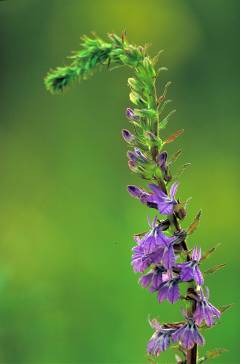
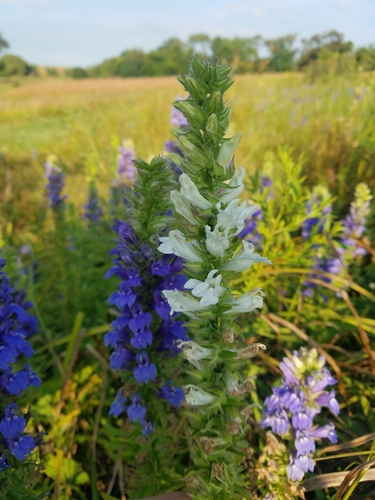
Flowers from early August through early October for approximately 5 weeks across USDA zones 5–7; bloom shifts about 2 weeks earlier in zone 8 and later in zone 4. True blue to blue-violet tubular flowers in dense terminal spikes. Carries no perceptible fragrance; pollinators include hummingbirds and bumblebees.
Detailed Descriptions
Flower Description
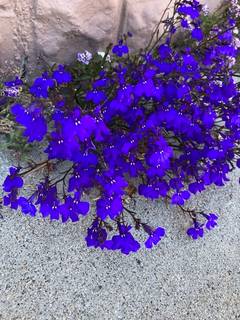
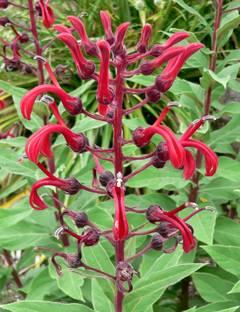
True blue to blue-violet two-lipped tubular flowers about 1 inch (2.5 cm) long in dense terminal spikes 6-10 inches (15-25 cm) longFoliage Description
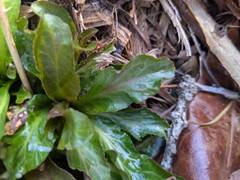
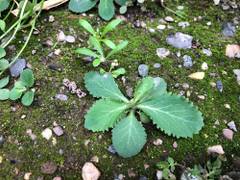
Medium green lance-shaped toothed leaves 2-5 inches (5-13 cm) long arranged alternately along the stemGrowing Conditions
Sun Requirements
Requires 4-8 hours of direct sunlight daily
• Full Sun: 6+ hours of direct sunlight
• Partial Shade: 3-6 hours of direct sunlight
• Full Shade: Less than 3 hours of direct sunlight
Care & Maintenance
Care Guide
Plant in partial shade to full sun with 4–8 hours of direct or filtered light; in hot-summer regions, morning sun with afternoon shade preserves flower color. Soil should be moist to wet — the species naturally grows along stream banks and in wet meadows, and wilts and declines if soil dries out for more than a few days. Soil pH 5.5–7.5 in clay or loam textures both work; sandy soils dry too quickly without supplemental irrigation. Water during dry spells. Allow some seed to set and disperse for self-sowing; the plant is short-lived (2–4 years), and colonies persist through self-sown seedlings rather than long-lived crowns. Cut stems to the ground after frost or in early spring before new growth pushes.Pruning
Allow the seed pods to ripen and disperse before cutting back; this maintains the colony through self-sowing. Cut all stems to ground level after the first hard frost in late autumn, or in early March before new growth pushes. No mid-season pruning is required.Pruning Schedule
Prune: March & November
fallearly spring