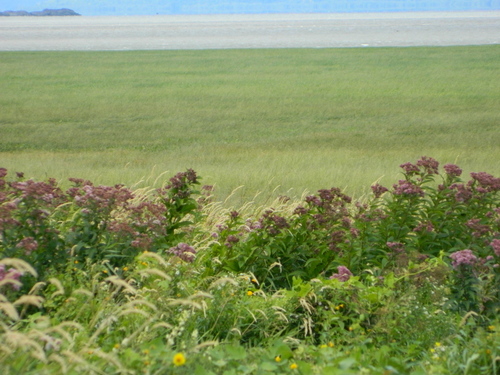
Eutrochium, Genus, maculatum, Species,
- Genus & species
spotted Joe Pye weed
Overview
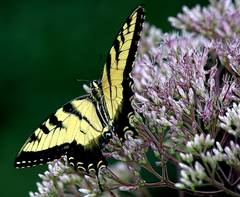
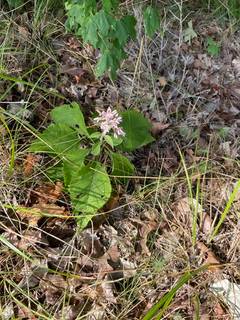
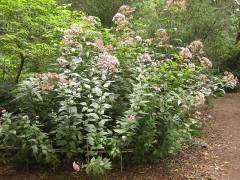
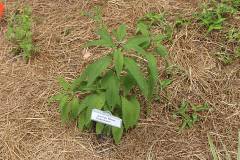
Eutrochium maculatum is a clump-forming herbaceous perennial reaching 4-7 feet (1.2-2.1 m) tall and 2-4 feet (60-120 cm) wide. Stems are sturdy, hollow, and conspicuously spotted or streaked with purple. Leaves are arranged in whorls of 3-5 around the stem, lance-shaped, 4-8 inches (10-20 cm) long, with toothed margins and prominent veins. Flat-topped to slightly domed flower clusters 4-6 inches (10-15 cm) across hold dozens of small pink-purple disc florets; ray florets are absent. Bloom occurs from July through September. Fruits are small dry achenes with whitish bristles, dispersed by wind from October onward. Plants spread slowly via short rhizomes, forming clumps that expand 2-3 inches (5-8 cm) per year. Stems die back to the ground in late fall and dry persistently through winter; new shoots emerge in late April. Powdery mildew develops in dry conditions and crowded plantings, producing a white coating on leaves without major effect on plant vigor. Lower leaves yellow and drop in late summer drought.
Native Range
Native to eastern and central North America from Newfoundland and Quebec south through New England, the Great Lakes region, the Appalachians, and as far south as North Carolina, and west to the Dakotas and Saskatchewan. Found in wet meadows, marshes, stream banks, ditches, and seasonally moist prairies at 0-5,000 feet (0-1,500 m) elevation.Suggested Uses
Used in rain gardens, pond margins, wet meadow plantings, and moist perennial borders at 30-36 inch (75-90 cm) spacing. Suited to pollinator gardens and native plant restoration; flowers attract numerous butterfly species, including swallowtails, monarchs, and fritillaries. Performs poorly in hot, dry sites and in containers smaller than 10 gallons (38 L).How to Identify
Appearance
Size & Dimensions
Height4' - 7'
Width/Spread2' - 4'
Bloom Information
Flowers open from July through September across most of the range, with peak bloom in August. Individual flower clusters remain open 2-3 weeks; total bloom period extends 4-6 weeks per plant. Flowers fade from fresh pink-purple to dusky brown as they age and persist as seedheads through winter. Bloom is shortened in dry summers; plants in moist sites flower 1-2 weeks longer than those in average garden soil.
Detailed Descriptions
Flower Description
pink-purple, aging dusky brownFoliage Description
medium green; whorled, lance-shaped with toothed marginsGrowing Conditions
Sun Requirements
Requires 4-12 hours of direct sunlight daily
• Full Sun: 6+ hours of direct sunlight
• Partial Shade: 3-6 hours of direct sunlight
• Full Shade: Less than 3 hours of direct sunlight
Care & Maintenance
Care Guide
Water deeply weekly during the first growing season; established plants require regular moisture and tolerate brief flooding for 2-3 weeks. Drought conditions cause leaf scorch beginning at the lower stems and a shortened bloom period. Powdery mildew develops in dry conditions or crowded plantings; the white coating is cosmetic and does not kill plants. Aphids may cluster on flower buds in early summer. Plants self-sow modestly on bare moist soil, producing 10-30 seedlings per parent annually. Cut stems to 4-6 inches (10-15 cm) above ground in late fall after seed dispersal or in early spring before new growth.Pruning
Cut all stems to 4-6 inches (10-15 cm) above ground in late fall after seed dispersal or in early spring before new growth emerges. To reduce final height by 1-2 feet (30-60 cm), pinch or cut stems back by half in late May or early June; this also delays bloom by 1-2 weeks. Remove any rust-affected lower leaves during the season to limit spread.Pruning Schedule
Prune: March, May–June & October–November
late springfallearly spring
Container Growing
Suitable for container growing
Minimum container size: 10 gallons