Eutrochium, Genus, purpureum, Species,
- Genus & species
sweet Joe-Pye-weed
Overview
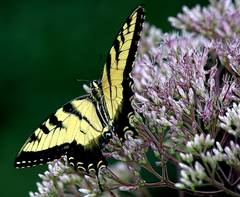
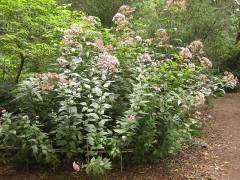
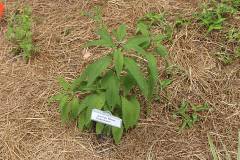
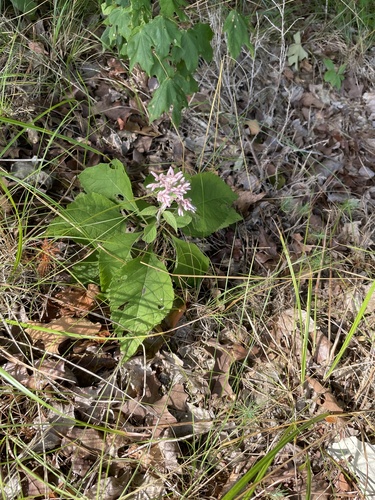
Eutrochium purpureum is a tall, clump-forming perennial in the aster family (Asteraceae), reaching 4-7 feet (1.2-2.1 m) tall and 2-4 feet (0.6-1.2 m) wide. The stout, mostly green stems are purple only at the leaf nodes, a feature separating it from related Joe-Pye-weeds with fully purple stems. The lance-shaped, toothed leaves are 4-12 inches (10-30 cm) long and arranged in whorls of three to four; they smell of vanilla when crushed. From midsummer into early fall, branched, domed clusters 8-18 inches (20-45 cm) across carry many small pale pink to rosy-purple flower heads. Each head holds 4-7 tubular florets, and the massed bloom draws large numbers of butterflies and bees. Seed heads turn tan and persist into winter. The plant grows from a slowly expanding crown rather than running roots. Stems can flop in rich soil or shade, and the plant goes fully dormant to the ground each winter. E. purpureum occupies moist to medium woodland edges and is more shade- and drought-tolerant than the wetland Joe-Pye-weeds.
Native Range
Native to eastern and central North America, Eutrochium purpureum ranges from New Hampshire and Ontario south to Florida and west to Nebraska and Oklahoma. It grows in moist to dry open woods, woodland edges, thickets, and clearings, often on richer soils.Suggested Uses
Used in pollinator and native plant gardens, the back of perennial borders, rain gardens, and woodland edges. Its height suits massing as a seasonal screen or backdrop. The flowers support butterflies and bees, and the winter seed heads feed birds.How to Identify
Appearance
Size & Dimensions
Height4' - 7'
Width/Spread2' - 4'
Bloom Information
Flowers open from midsummer into early fall, generally July to September, lasting about 4-6 weeks. The domed clusters open over an extended period. They draw heavy traffic from butterflies, native bees, and other pollinators, followed by tan seed heads that hold into winter.
Detailed Descriptions
Flower Description
pale pink to rosy-purpleFoliage Description
greenGrowing Conditions
Sun Requirements
Requires 4-10 hours of direct sunlight daily
• Full Sun: 6+ hours of direct sunlight
• Partial Shade: 3-6 hours of direct sunlight
• Full Shade: Less than 3 hours of direct sunlight
Care & Maintenance
Care Guide
Grows in full sun to part shade in moist, fertile, well-drained soil with a pH around 5.5-7.0. It tolerates more shade and drier soil than other Joe-Pye-weeds, though prolonged drought scorches the leaf margins. Stems reach full height in sun with steady moisture and may flop in shade or overly rich ground. Cutting plants back by about a third in early summer lowers and steadies the habit at the cost of later bloom. It spreads slowly by a thickening crown and self-sows where seed heads are left. Division in spring every few years renews crowded clumps.Pruning
Cut the dead stems to the ground in late fall or late winter. An optional cut-back by one-third in late spring or early summer produces shorter, sturdier stems. Spent flower heads can be left for winter structure and bird seed or removed to limit self-sowing.Pruning Schedule
Prune: March & November
fallwinter