Solidago, Genus, rugosa, Species,
- Genus & species
wrinkle-leaved goldenrod
Native to eastern North America from Nova Scotia and Quebec south to Florida and west to Texas in moist meadows, stream banks, woodland edges, and disturbed open ground
Overview
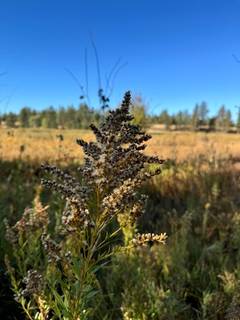
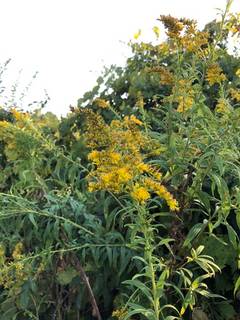
Solidago rugosa is wrinkle-leaved goldenrod — a native ornamental goldenrod in the daisy family (Asteraceae) reaching 36–60 inches (90–150 cm) tall and 24–36 inches (60–90 cm) wide on rough-textured stems. The species name 'rugosa' translates as 'wrinkled', referencing the characteristically rugose (corrugated) leaf surface that separates the species from smoother-leaved goldenrod relatives. Golden-yellow flowers in large arching plume-like panicles appear from August through October across approximately 5 weeks. The flower form runs as the most gracefully arching among the native goldenrods — the panicle sprays cascade outward in a fountain pattern that the cultivar 'Fireworks' (the dominant nursery-trade selection) particularly emphasizes. Goldenrod runs as an important late-season pollinator resource — bees, butterflies, beneficial wasps, and many specialist insects depend on the fall nectar and pollen flow that Solidago species provide across the August-October bloom window. The widespread hay-fever attribution that the public assigns to goldenrod runs incorrect: Solidago species are insect-pollinated and the heavy sticky pollen does not become airborne. The actual hay-fever culprit blooming at the same time is ragweed (Ambrosia species) — wind-dispersed pollen from ragweed coincides with the goldenrod bloom window and the visual prominence of goldenrod creates the mistaken association. The species spreads moderately by rhizomes and forms broad colonies in moist garden soil. Hardy to USDA zone 3. Deer avoid the foliage. Not known to be toxic to pets or humans.
Native Range
Solidago rugosa is native to eastern North America, from Nova Scotia and Quebec south to Florida and west to Texas, in moist meadows, stream banks, woodland edges, and disturbed open ground.Suggested Uses
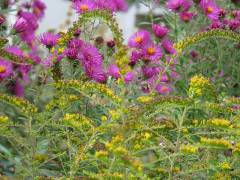
Used in native meadow plantings, pollinator gardens, naturalized garden areas, late-season perennial borders, and butterfly gardens — particularly for monarch butterfly fall migration support. The cultivar 'Fireworks' runs as the principal nursery-trade selection and carries a more compact arching habit than the wild species. The late-season bloom timing covers a critical pollinator resource gap — most native pollinator plants finish blooming by August, leaving the fall pollinator community dependent on goldenrods, asters, and a few other late-blooming species for nectar and pollen through the migration and pre-overwintering window. Goldenrod runs incorrectly blamed for hay fever — the actual culprit is ragweed (Ambrosia species). Pairs with native asters (Symphyotrichum, Eurybia) and prairie grasses (Schizachyrium, Sorghastrum) in fall-peak prairie compositions.How to Identify
Appearance
Size & Dimensions
Height3' - 5'
Width/Spread2' - 3'
Bloom Information
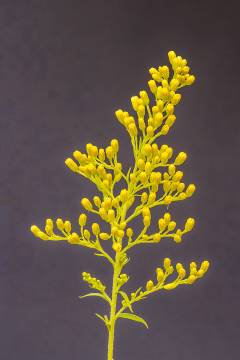
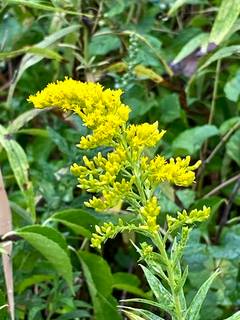
Flowering from August through October across approximately 5 weeks. Golden-yellow small daisy-like flowers in large arching plume-like panicles cascade outward in a fountain spray pattern. The species runs as a key late-season pollinator resource — bees (honey bees, bumblebees, native solitary bees), butterflies (monarchs during fall migration, painted ladies, sulfurs), beneficial wasps, and specialist Solidago-associated insect species depend on the fall pollen and nectar flow during the August-October bloom window when most other native pollinator plants have already finished blooming.
Detailed Descriptions
Flower Description
Golden-yellow; small daisy-like flowers in large arching plume-like paniclesFoliage Description
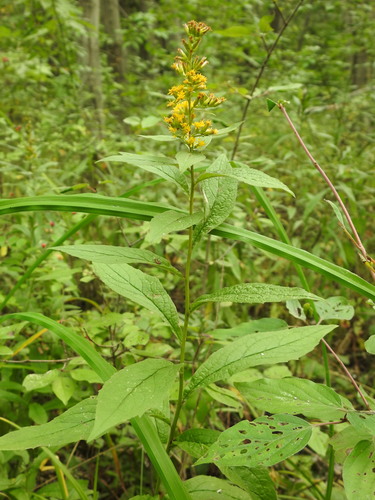
Dark green; wrinkled (rugose) corrugated lance-shaped leaves with rough surface textureGrowing Conditions
Sun Requirements
Requires 4-12 hours of direct sunlight daily
• Full Sun: 6+ hours of direct sunlight
• Partial Shade: 3-6 hours of direct sunlight
• Full Shade: Less than 3 hours of direct sunlight
Care & Maintenance
Care Guide
Plant in full sun to partial shade with 4–10 hours of light. Average to moist garden soil at pH 5.5–7.5 suits the species. The species tolerates a wide range of soil conditions from average garden loam to heavy clay and damp meadow soil. Spreads moderately by rhizomes; the spread runs less aggressive than S. canadensis but still warrants division every 3–4 years to control colony size in tidy garden beds. Cut all stems to ground level after frost browns the foliage or in early spring before new growth emerges; leaving the seed heads standing through winter gives food for goldfinches and other seed-eating birds. Hardy to USDA zone 3. The hay-fever attribution that the public assigns to goldenrod runs incorrect — the species is insect-pollinated and the pollen does not become airborne.Pruning
Cut all stems to ground level in early spring before new growth emerges. Leaving the seed heads standing through winter gives food for goldfinches and other seed-eating birds during the dormant season. Divide colonies every 3–4 years to control the rhizomatous spread.Pruning Schedule
Prune: March
spring