Zizia, Genus, aurea, Species,
- Genus & species
golden alexanders
Eastern North America — from Quebec south to Florida and west to Texas
Overview
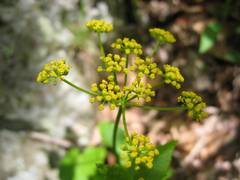
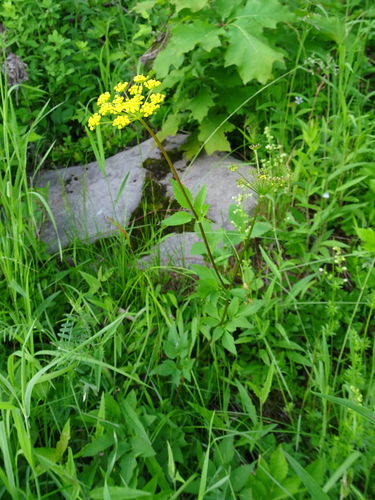
Zizia aurea is golden Alexanders — a native spring-blooming umbellifer (carrot family) growing 18–30 inches (45–75 cm) tall and 18–24 inches (45–60 cm) wide. The species name 'aurea' means 'golden'. Bright golden-yellow flowers in flat compound umbels appear from April through June — among the earliest-blooming native perennials and the earliest native umbellifer. The early bloom timing is ecologically critical — golden Alexanders gives nectar and pollen to native bees, flies, and beetles when very few other native flowers are open. The species is a larval host plant for the Black Swallowtail butterfly (Papilio polyxenes); the caterpillars feed on the foliage, and allowing caterpillar feeding is part of growing this plant for wildlife. Medium green compound three-parted glossy leaves. The flat umbel flower form is characteristic of the carrot family. Tolerates moist to wet soil and clay — more moisture-tolerant than most garden perennials. Self-sows in favorable conditions to form naturalized colonies. Deer avoid the foliage. Non-toxic when garden-sourced, but wild plants can be confused with toxic water hemlock (Cicuta); nursery-purchased plants prevent misidentification.
Native Range
Zizia aurea is native to eastern North America — from Quebec south to Florida and west to Texas, growing in moist meadows, open woodlands, and along streams.Suggested Uses
Used in native plant gardens, pollinator gardens, meadows, rain gardens (tolerates wet soil), and along streams. The earliest native pollinator food source. Black Swallowtail butterfly host plant. The golden spring color fills a gap before summer perennials begin.How to Identify
Appearance
Size & Dimensions
Height1'6" - 2'6"
Width/Spread1'6" - 2'
Bloom Information
Flowering from April through June, approximately 5 weeks. Bright golden-yellow flat umbels. The earliest native umbellifer to bloom.
Detailed Descriptions
Flower Description
Bright golden-yellow, in flat compound umbelsFoliage Description
Medium green, compound, three-parted, glossyGrowing Conditions
Sun Requirements
Requires 4-8 hours of direct sunlight daily
• Full Sun: 6+ hours of direct sunlight
• Partial Shade: 3-6 hours of direct sunlight
• Full Shade: Less than 3 hours of direct sunlight