Aquilegia, Genus, canadensis, Species,
- Genus & species
wild columbine
Eastern North America, from Nova Scotia south to Florida and west to Texas and the Great Plains
Overview
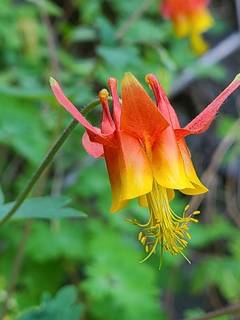
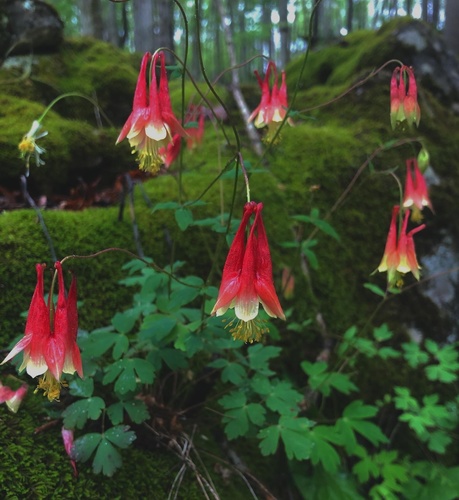
Aquilegia canadensis is a native North American columbine in the Ranunculaceae family that grows 24–36 inches (60–90 cm) tall and 12–18 inches (30–45 cm) wide. Nodding flowers with red sepals, yellow tubular corolla, and straight red spurs 0.75–1 inch (2–2.5 cm) long dangle from wiry, branching stems from April through June. The red-and-yellow colour combination is adapted to ruby-throated hummingbird pollination, and the species is among the earliest nectar sources for migrating hummingbirds returning to eastern North America in spring. Blue-green, ternately compound basal leaves with rounded leaflet lobes form a mound beneath the flowering stems. Compared with many hybrid columbines, this species tolerates dry, rocky, and even shallow soils, growing naturally on shaded limestone ledges and wooded slopes. Plants self-sow readily, with seedlings reproducing the species type without the colour variation seen in hybrid columbine offspring. Individual plants are short-lived, persisting 2–4 years, but self-sown replacements maintain colonies indefinitely. Columbine leaf miner creates serpentine trails on foliage; cutting damaged foliage to the ground in midsummer triggers a clean flush of new leaves. All parts contain cyanogenic glycosides toxic to humans and pets if ingested. Deer bypass the foliage.
Native Range
Aquilegia canadensis is native to eastern North America, ranging from Nova Scotia and Quebec south through Florida and west to Texas and the Great Plains. It grows in rocky woodlands, shaded ledges, open forests, and along stream banks from sea level to 4,000 feet (1,200 m).Suggested Uses
Planted in native woodland gardens, shaded rock gardens, and along woodland edges where it naturalises freely. A key hummingbird plant for spring-migrating ruby-throats. Suited to shaded slopes, rocky ledges, and dry-shade sites where many alternatives struggle. Container culture works in pots of 3 gallons (11 L) or more.How to Identify
Appearance
Size & Dimensions
Height2' - 3'
Width/Spread1' - 1'6"
Bloom Information
Flowering begins in April in southern populations and May in northern areas, continuing through June. Nodding flowers open in succession along branching stems over 4–6 weeks. The bloom period coincides with the spring return of ruby-throated hummingbirds in eastern North America.
Detailed Descriptions
Flower Description
Red sepals with yellow corolla and short red spursFoliage Description
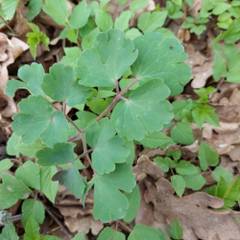
Blue-green, ternately compound, with rounded leaflet lobesGrowing Conditions
Sun Requirements
Requires 3-8 hours of direct sunlight daily
• Full Sun: 6+ hours of direct sunlight
• Partial Shade: 3-6 hours of direct sunlight
• Full Shade: Less than 3 hours of direct sunlight
Care & Maintenance
Care Guide
Site in partial shade to full sun with 3–8 hours of light; afternoon shade is welcome in hot climates. Well-drained soil suits this species, including rocky and lean ground. The species tolerates drier conditions than many columbines once established. Water moderately during establishment; reduce once rooted. Fertilization is unnecessary. Self-sowing maintains the colony, or removing spent stems controls spread. Where leaf miner damage is heavy, cutting damaged foliage to the ground in midsummer triggers a fresh flush.Pruning
Remove spent flower stems after bloom for self-sowing control, or leave them for natural reseeding. Cut leaf-miner-damaged foliage to 1–2 inches (3–5 cm) above ground; new growth appears within 2–3 weeks. Cut all remaining foliage to ground level after fall frost.Pruning Schedule
Prune: July
summer
Container Growing
Suitable for container growing
Minimum container size: 3 gallons