Image 1 of 5
1 / 5
Plant Reference
Cortaderia, Genus, selloana, Species, 'Pumila', Cultivar,
- Genus & species
- Cultivar
dwarf pampas grass
South America — Argentina, Brazil, and Uruguay; the pampas grasslands and river margins of the southern cone that give the species its common name
Overview
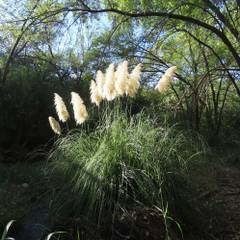
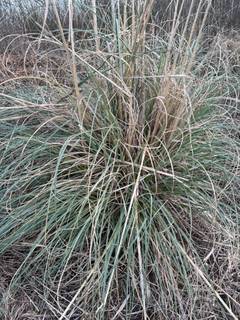
Cortaderia selloana 'Pumila' is a compact selection of pampas grass in the grass family Poaceae growing 48–60 inches (120–150 cm) tall and wide, approximately half the size of the species type C. selloana which reaches 96–144 inches (240–360 cm) — the dwarf cultivar name 'Pumila' is Latin for dwarf and refers to this reduced stature. Leaves are blue-green, narrow, arching, 36–48 inches (90–120 cm) long, and carried in a dense mounding fountain from the central clump; the leaf margins are razor-sharp because of silica-embedded serrations that cut unprotected skin on contact, and thick leather gloves and long-sleeved clothing are warranted during any handling of the foliage including cutback, division, and weed removal at the base of the clump. White to cream feathery plumes 12–18 inches (30–45 cm) long open on stout stems that rise 18–24 inches (45–60 cm) above the foliage mound from August through October across a 6–8 week bloom period, and the plumes persist through winter in a dried tan form that supplies vertical structural interest through the cold months until the entire clump is cut back in late winter. The species is dioecious: male and female plants are carried on separate individuals, and the female plants produce larger showier plumes than the male plants because the female plumes carry silky silvery hairs on the developing seeds. Commercial 'Pumila' stock in the nursery trade is generally female-selected for the larger plume display. Limitation: the species Cortaderia selloana is classified as an invasive plant in California, Hawaii, and parts of the southeastern United States, where wind-dispersed seed colonizes disturbed ground, coastal bluffs, roadsides, and open grasslands and displaces native vegetation — while 'Pumila' is less aggressive than the species type, the cultivar still self-seeds in mild climates, and regional invasive species lists should be consulted before planting in jurisdictions where the species is restricted. Native to South America (Argentina, Brazil, and Uruguay), growing in the pampas grasslands and along river margins of the southern cone. Drought-tolerant once established and adapts to clay, sandy, and alkaline soils without significant decline. Non-toxic and deer-resistant.
Native Range
Native to South America — Argentina, Brazil, and Uruguay — growing in the pampas grasslands (the wide open grass-dominated plains of the southern cone that give the species its common name) and along river margins at low elevations. The species was introduced to European and North American gardens in the 19th century as an ornamental specimen grass and spread from garden cultivation into wild populations in warm-temperate regions including coastal California, the Hawaiian Islands, and parts of the southeastern United States where the climate matches the native South American range.Suggested Uses
Used as a specimen grass, in mixed shrub and perennial borders, and in containers of at least 10 gallons (38 L) at 48–60 inch (120–150 cm) spacing between plants in USDA zones 7 through 10. The compact 48–60 inch size of 'Pumila' fits smaller garden spaces than the species-type C. selloana (96–144 inches), and the late-summer through fall feathery plume display and the winter-persistent dried plumes carry the cultivar through multiple seasons of vertical structural interest. Jurisdictions where the species is listed as invasive (California, Hawaii, parts of the southeastern United States) are unsuitable, and gardens near coastal bluffs, open grasslands, or disturbed-ground areas where wind-dispersed seed could escape into native vegetation are unsuitable regardless of local regulations because of the colonization risk.How to Identify
Appearance
Size & Dimensions
Height4' - 5'
Width/Spread4' - 5'
Bloom Information
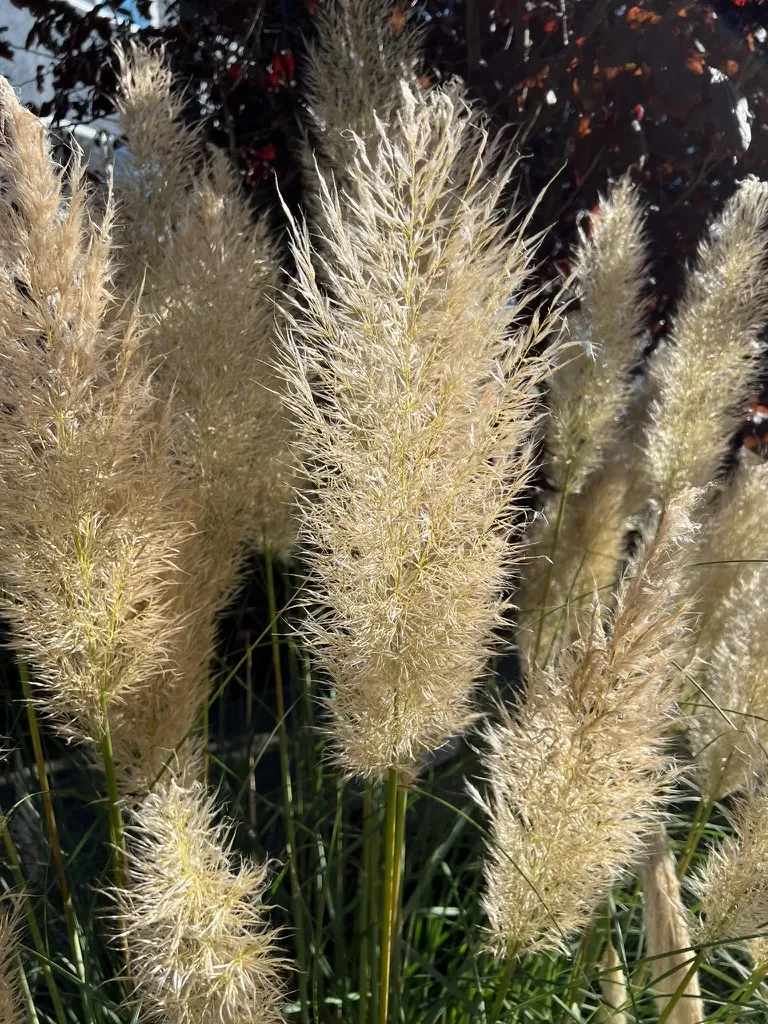
White to cream feathery plumes 12–18 inches (30–45 cm) long open on stout stems rising 18–24 inches (45–60 cm) above the foliage mound from August through October across a 6–8 week bloom period. Female plants produce larger showier plumes than male plants because the female plumes carry silky silvery hairs on the developing seeds, and commercial 'Pumila' stock is generally female-selected for the larger plume display. Dried tan plumes persist through winter and supply vertical structural interest until the late-winter cutback.
Detailed Descriptions
Flower Description
white to cream feathery plumes 12-18 inches (30-45 cm) long carried on stout stems that rise 18-24 inches (45-60 cm) above the foliage mound from late summer through fall; the plumes persist through winter in a dried tan form and supply vertical structural interest through the cold monthsFoliage Description
blue-green narrow arching blades 36-48 inches (90-120 cm) long with razor-sharp serrated margins — the leaf edges carry silica-embedded serrations that cut unprotected skin on contact; the blades fade to tan through winter and are cut back in late winter before new growthGrowing Conditions
Sun Requirements
Requires 6-10 hours of direct sunlight daily
• Full Sun: 6+ hours of direct sunlight
• Partial Shade: 3-6 hours of direct sunlight
• Full Shade: Less than 3 hours of direct sunlight
Care & Maintenance
Care Guide
Site in full sun with 6 or more hours of direct sun per day in well-drained soil with a pH of 6.0–8.0. The cultivar adapts to loam, sand, clay, and alkaline soils and is drought-tolerant once the root system is established. The razor-sharp silica-embedded serrated leaf margins cut unprotected skin on contact, and thick leather gloves and long-sleeved clothing are warranted during any handling of the foliage including cutback, division, and weed removal at the base of the clump. The species is classified as invasive in California, Hawaii, and parts of the southeastern United States where wind-dispersed seed colonizes disturbed ground, coastal bluffs, roadsides, and open grasslands — regional invasive species lists should be consulted before planting in jurisdictions where the species is restricted. The entire clump is cut back to 6–12 inches (15–30 cm) above the crown in late winter (February or March) before new growth emerges. Division of crowded clumps is done every 4–5 years in spring with a sharp spade or saw because the tight fibrous crown resists hand separation. Non-toxic and deer-resistant. Hardy in USDA zones 7–10.Pruning
The entire clump is cut back to 6–12 inches (15–30 cm) above the crown in late winter (February or March) before new growth emerges from the crown, and thick leather gloves, long sleeves, and eye protection are warranted during the cutback operation because the razor-sharp silica-embedded leaf margins cut unprotected skin on contact. Controlled burning of the cutback clump is practiced in some rural settings as an alternative to hand cutting, but local fire regulations govern the practice. Division of crowded clumps is done every 4–5 years in spring with a sharp spade or saw because the tight fibrous crown resists hand separation.Pruning Schedule
Prune: February–March
early spring
Container Growing
Suitable for container growing
Minimum container size: 10 gallons