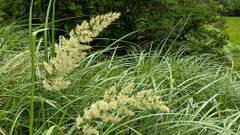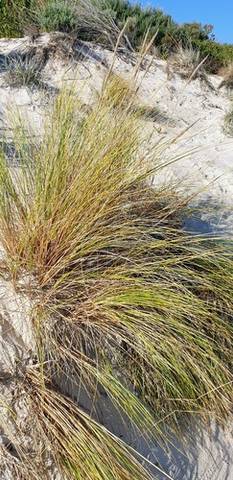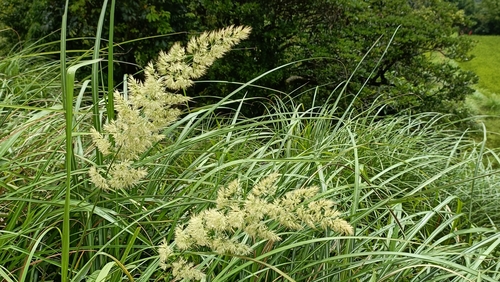
Calamagrostis, Genus, ×, Hybrid, acutiflora, Species, 'Karl Foerster', Cultivar,
- Genus & species
- Hybrid
- Cultivar
Karl Foerster feather reed grass
Sterile hybrid; parent species native to Europe and temperate Asia
Overview
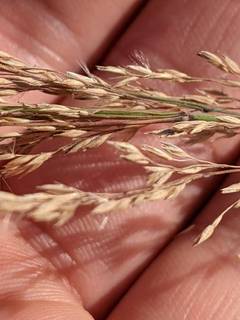
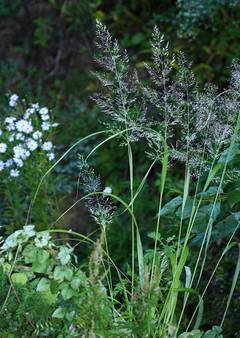
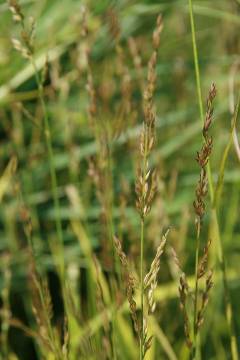
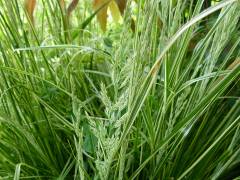
Calamagrostis × acutiflora 'Karl Foerster' is an upright clump-forming cool-season ornamental grass reaching 4-5 feet (1.2-1.5 m) tall in flower, with a basal foliage clump 24-30 inches (60-75 cm) tall and 18-24 inches (45-60 cm) wide. Foliage narrow and arching, blades 0.25-0.5 inch (0.6-1.3 cm) wide and 18-24 inches (45-60 cm) long, medium green and glossy on the upper surface. Flower stems rise vertically in late May or June bearing narrow feathery panicles 5-10 inches (13-25 cm) long; emerging panicles are flushed pinkish-bronze and mature within 3-4 weeks to wheat-tan stiff plumes that hold through winter. The cultivar is a sterile hybrid and produces no viable seed. Plants establish a 12-15 inch (30-38 cm) basal clump within 2 seasons and reach mature size by year 3. As a cool-season grass, growth begins in early spring at soil temperatures of 40-50°F (4-10°C), peaks during cool weather, and slows in summer heat above 85°F (29°C). In zones 8-9, foliage may yellow or brown during midsummer dormancy. Foliage stays upright through winter snow loads in zones 4-7 and is cut back in early spring.
Native Range
Calamagrostis × acutiflora is a sterile hybrid of C. arundinacea (native to wet meadows and forest edges across Europe and temperate Asia) and C. epigejos (native to streamsides and disturbed ground across Eurasia and northern Africa). The cultivar 'Karl Foerster' was selected at the Foerster nursery in Bornim, Germany in the early 20th century and named for the founder, German nurseryman Karl Foerster (1874-1970).Suggested Uses
Used as a vertical accent in mixed perennial borders, in mass plantings as a screen or backdrop at 24-36 inch (60-90 cm) spacing, and in naturalistic and prairie-style gardens. The strict upright form contrasts with mounded perennials and creates structure year-round. Containers of at least 7 gallons (26 L) accommodate single plants for 3-4 years before division is needed.How to Identify
Appearance
Size & Dimensions
Height4' - 5'
Width/Spread1'6" - 2'
Bloom Information
Flowering panicles emerge in late May to early June in zones 4-7, with peak bloom appearance lasting 3-4 weeks. After pollen release, panicles dry to wheat-tan and persist through winter, holding form 6-8 months from emergence to spring cutback. Bloom is earlier in zones 8-9, often appearing in early-to-mid May.
Detailed Descriptions
Flower Description
pinkish-bronze fading to wheat-tanFoliage Description
medium greenGrowing Conditions
Sun Requirements
Requires 6-8 hours of direct sunlight daily
• Full Sun: 6+ hours of direct sunlight
• Partial Shade: 3-6 hours of direct sunlight
• Full Shade: Less than 3 hours of direct sunlight
Care & Maintenance
Care Guide
Water weekly during the first growing season in the absence of rain. Established plants tolerate drought and a wide range of soil conditions including clay, loam, and sandy soils. Foliage may go semi-dormant and yellow in midsummer in zones 8-9 with summer temperatures consistently above 90°F (32°C); the plant resumes growth in fall as temperatures cool. Rust diseases (Puccinia coronata and others) occur occasionally on foliage in humid summers but are cosmetic. Plants are sterile and do not self-seed, unlike seed-spreading Calamagrostis species. Divide every 4-6 years in early spring as new growth emerges.Pruning
Cut all foliage and old flower stems to 4-6 inches (10-15 cm) above ground in late winter or very early spring before new growth emerges. Cutting too late after new shoots have begun to grow damages the emerging foliage. Foliage left through winter holds upright through snow until the spring cutback.Pruning Schedule
Prune: February–March
early spring
Container Growing
Suitable for container growing
Minimum container size: 7 gallons