Calamagrostis, Genus, canadensis, Species,
- Genus & species
bluejoint
Circumboreal — across Canada and Alaska, throughout the northern and western United States including the Pacific Northwest; wet meadows, marsh edges, bogs, riparian zones, and lakeshores
Overview
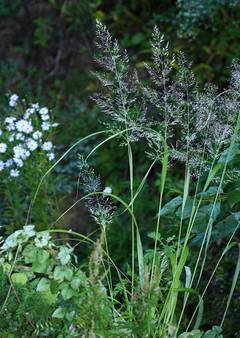
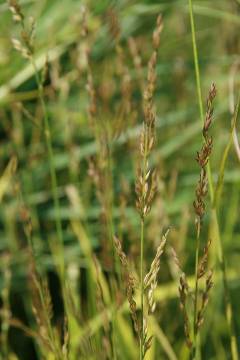
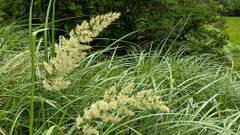
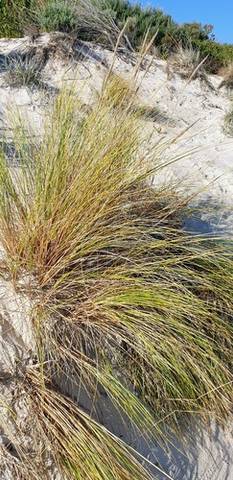
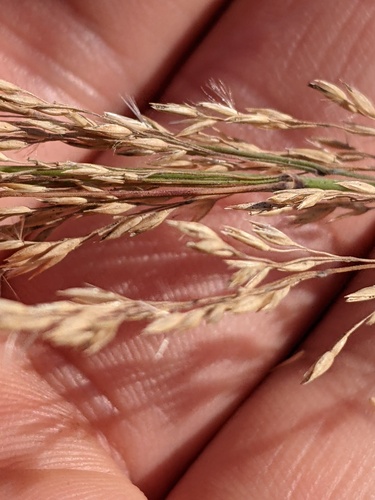
Calamagrostis canadensis is a rhizomatous cool-season grass of the family Poaceae, forming colonies through long underground stems that send up culms 2-5 feet (60-150 cm) tall. Foliage clumps reach 12-30 inches (30-75 cm) with flat blue-green to gray-green leaf blades 0.16-0.32 inch (4-8 mm) wide that arch outward from the base. Inflorescences are open pyramidal panicles 4-10 inches (10-25 cm) long with single-flowered spikelets that open purplish in June and fade to straw-tan by August. The species spreads aggressively by rhizomes 12-24 inches (30-60 cm) per year in saturated soils and forms dense single-species stands in wet meadows; this rhizomatous habit makes the species too vigorous for small garden plantings and limits use to large-scale wetland restoration sites. Foliage greens up in April, flowers June through August, and goes dormant by mid-October leaving tan seed heads through winter. Native populations cover wet meadows, sedge fens, marsh edges, and seasonally flooded swales across the boreal zone of North America.
Native Range
Circumboreal in distribution, found throughout Canada, Alaska, and the northern and western United States from the Atlantic to the Pacific. In the Pacific Northwest, it occurs in wet meadows, fen edges, lake margins, and seasonally flooded swales from sea level to 9,000 feet (2,750 m).Suggested Uses
Used in wetland restoration, riparian buffer plantings, sedge meadow reconstruction, and constructed treatment wetlands at one-acre (0.4 ha) and larger scales. Spaced 24-36 inches (60-90 cm) apart at planting; clumps merge within 2-3 seasons. Aggressive rhizomes restrict garden use to large naturalistic plantings with permanent water and isolation from cultivated beds.How to Identify
Appearance
Size & Dimensions
Height2' - 5'
Width/Spread2' - 3'
Bloom Information
Panicles emerge in early June with purplish florets, continuing to expand and develop through July as new culms produce additional inflorescences. By mid-August, spikelets ripen to straw-tan, and the seed heads persist through winter on standing dormant culms.
Detailed Descriptions
Flower Description
purplish to tan open panicles fading to straw colorFoliage Description
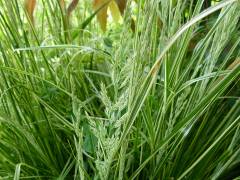
blue-green to gray-green; flat blades 0.16-0.32 inch (4-8 mm) wideGrowing Conditions
Sun Requirements
Requires 4-10 hours of direct sunlight daily
• Full Sun: 6+ hours of direct sunlight
• Partial Shade: 3-6 hours of direct sunlight
• Full Shade: Less than 3 hours of direct sunlight
Care & Maintenance
Care Guide
Plant in saturated to permanently moist soils ranging from clay to silty loam to organic peat, in the pH range 5.0-7.5, in full sun to part shade. Soil drainage must be poor; the species fails in well-drained sites. Water needs are constant during the growing season. No fertilizer is required in mineral wetland soils. Rhizomes spread 12-24 inches (30-60 cm) per year and a single plant can colonize 100 square feet (9.3 sq m) within 5 years; this aggressive spread restricts use to restoration plantings on at least one acre (0.4 ha), or contained sites with a permanent root barrier. Division is rarely needed; clumps maintain themselves through rhizomatous spread.Pruning
Cut spent culms and dormant foliage to the rhizome in late winter (February-March) using a string trimmer or brush mower for large stands. Burning in early spring is also used in restoration management. No deadheading is required; seed heads persist through winter as habitat structure.Pruning Schedule
Prune: February–March
late spring