Calamagrostis, Genus, epigejos, Species,
- Genus & species
bushgrass
Overview
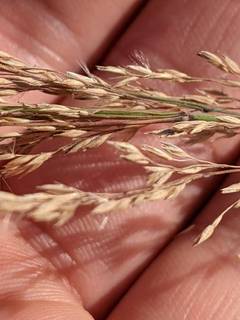
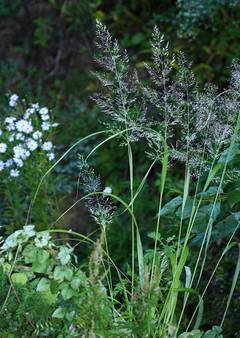
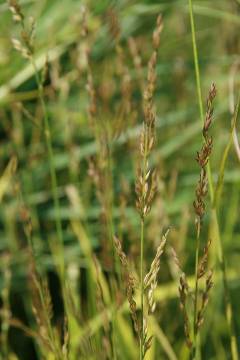
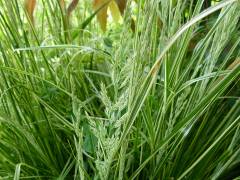
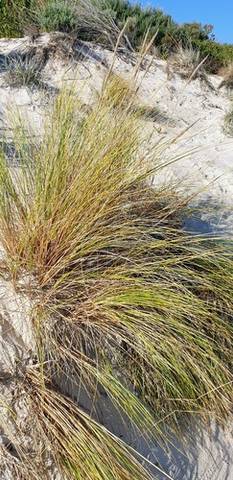
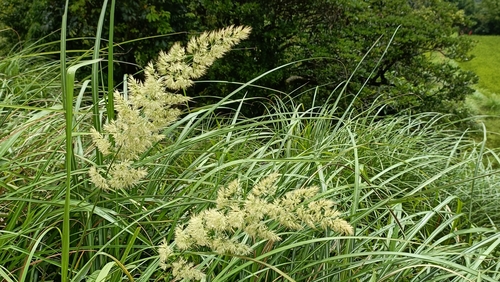
Calamagrostis epigejos is a tall, rhizomatous perennial grass in the grass family, forming dense, spreading colonies 24–79 inches (60–200 cm) tall from tough, far-creeping rhizomes. The grey-green leaf blades are flat, rough-edged, 8–24 inches (20–60 cm) long and up to 0.4 inch (1 cm) wide, with rolled tips. From June to August it produces erect, narrow flower panicles 6–14 inches (15–35 cm) long, dense and soft, in shades of green flushed purple that fade to straw and pale brown as the seed ripens. Each tiny floret carries a tuft of long silky hairs that aid wind dispersal. The grass spreads quickly by rhizome and seed, forming monocultures that crowd out other vegetation on disturbed and reclaimed land. It grows in damp woodland clearings, ditches, dune slacks, road and railway banks, and spoil heaps across a wide range of soils. The dead stems and panicles persist and bleach pale through winter.
Native Range
Native across Europe and temperate Asia, and naturalized in parts of North America. It grows in woodland clearings, fen and ditch margins, dune slacks, and disturbed ground such as road banks, quarries, and reclaimed industrial land.Suggested Uses
Used for erosion control and quick cover on banks, spoil heaps, and reclaimed ground. Suited to large naturalistic and wild areas where its spread is acceptable. Grown for winter structure from its bleached stems and seed heads in expansive plantings.How to Identify
Appearance
Size & Dimensions
Height2' - 6'7"
Width/Spread2' - 4'
Bloom Information
Flowers from June to August, with wind-pollinated panicles opening in midsummer. The soft, purple-tinged heads fade to straw and pale brown as seed ripens through late summer. Plumed seeds scatter on the wind into autumn.
Detailed Descriptions
Flower Description
green flushed purple, fading to strawFoliage Description
grey-greenGrowing Conditions
Sun Requirements
Requires 4-10 hours of direct sunlight daily
• Full Sun: 6+ hours of direct sunlight
• Partial Shade: 3-6 hours of direct sunlight
• Full Shade: Less than 3 hours of direct sunlight
Care & Maintenance
Care Guide
Grows in full sun to part shade on a wide range of soils, from sandy to clay, and across a pH of 5.0–8.0. It tolerates drought, seasonal waterlogging, compaction, and low fertility, and colonises bare ground quickly. No feeding or watering is needed. The rhizomes spread far and fast, so a deep barrier or regular cutting is needed to contain it in a garden. Hardy in USDA zones 4 to 8. It is treated as a weed of grassland and conservation sites because it forms dense, smothering stands.Pruning
Stems are cut to the ground in late winter before new growth, and the clippings are removed to reduce seeding. Cutting two or three times in the growing season weakens the rhizomes over time. Sections of rhizome are dug out to limit the spread.Pruning Schedule
Prune: February–March
winterearly spring