Calamagrostis, Genus, breviligulata, Species,
- Genus & species
American marram grass
Eastern North America (Atlantic coast and Great Lakes)
Overview
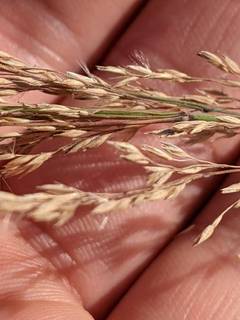
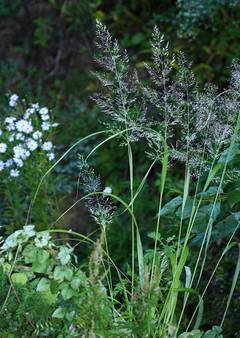
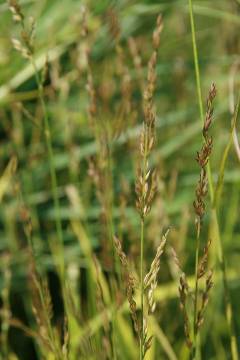
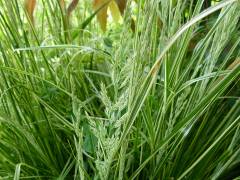
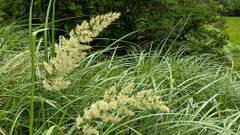
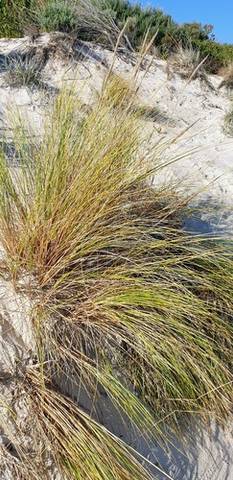
Calamagrostis breviligulata is a rhizomatous perennial grass 2-3 feet (60-90 cm) tall that spreads by underground stems to form colonies on sandy ground. The leaf blades are narrow, 0.1-0.3 inch (3-8 mm) wide and up to 24 inches (60 cm) long, gray-green, and roll inward in dry conditions. Flowering stems carry a dense, spike-like, cylindrical seed head 6-12 inches (15-30 cm) long that is pale tan at maturity, appearing from July to September. The plant grows outward through creeping rhizomes, sending up new shoots and trapping wind-blown sand, which builds and holds coastal dunes. It loses vigor when sand stops accumulating around it. Foliage turns straw-colored and dies back over winter, with new growth from the rhizomes in spring. It rarely sets viable seed and spreads mainly by rhizome.
Native Range
Native to eastern North America along the Atlantic coast from Newfoundland to North Carolina and around the Great Lakes. Grows on coastal and lake-shore sand dunes and beaches in loose, well-drained sand.Suggested Uses
Planted to stabilize coastal and lake-shore dunes and sandy banks, set 12-18 inches (30-45 cm) apart in staggered rows. It is used in dune-restoration and erosion-control projects rather than ornamental beds. The spreading rhizomes can move beyond a planted area in loose sand.How to Identify
Appearance
Size & Dimensions
Height2' - 3'
Width/Spread1' - 2'
Bloom Information
Produces seed heads from July to September. The cylindrical heads emerge pale green and dry to tan, persisting on the stems into fall. Seed set is often sparse, and the grass spreads mainly by rhizomes rather than seed.
Detailed Descriptions
Foliage Description
gray-greenGrowing Conditions
Sun Requirements
Requires 6-12 hours of direct sunlight daily
• Full Sun: 6+ hours of direct sunlight
• Partial Shade: 3-6 hours of direct sunlight
• Full Shade: Less than 3 hours of direct sunlight
Care & Maintenance
Care Guide
Grows in full sun in loose, sharply drained sand, and tolerates salt spray and wind. Water during the first season to establish; mature plants draw moisture from deep sand and tolerate drought. It grows most vigorously where wind-blown sand continues to bury the lower stems, and it thins in stabilized or shaded sites. Rich, heavy, or wet soil causes decline and rot. It is planted from rhizome divisions or culms rather than seed, since seed set is unreliable. Few pests affect it on open dunes.Pruning
Old foliage can be cut or burned back in late winter before new spring growth, a practice used in dune management to clear dead thatch. No routine pruning is needed in a garden setting. Dead leaves break down slowly in dry sand.Pruning Schedule
Prune: February
winter