Calamagrostis, Genus, spp., Multiple species,
- Genus
- Multiple species
reedgrasses
Temperate and cool regions of the Northern Hemisphere, with some in the Southern Hemisphere
Overview
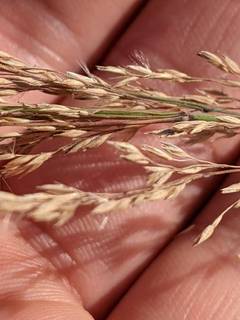
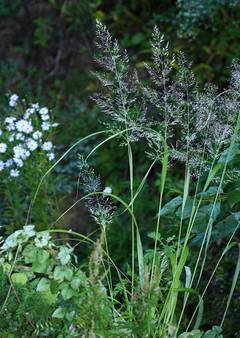
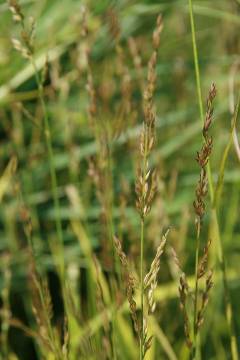
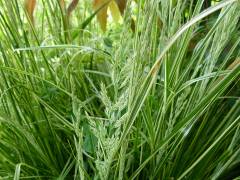
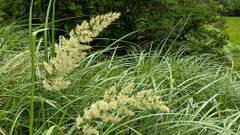
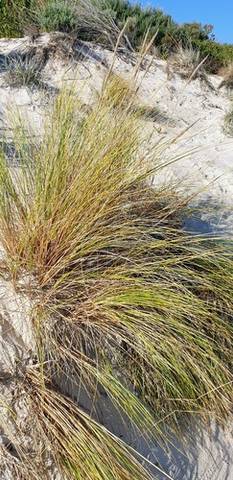
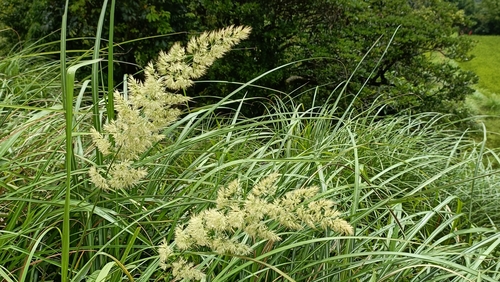
Calamagrostis is a genus of about 250 species of cool-season perennial grasses in the family Poaceae, the reed grasses, spread across temperate, boreal, and mountain regions of both hemispheres. Plants form upright clumps of narrow, arching leaf blades 1.5 to 3 ft (45 to 90 cm) high, from which stiff flowering stems rise to 2 to 6 ft (60 to 180 cm) tall. The feathery flower panicles open loose and pink-tinted to purplish in early to late summer, then contract and fade to a narrow, golden-tan plume that stands through autumn and winter. Most species are clump-forming, though some, such as the bluejoint C. canadensis, spread by rhizomes to form colonies. The hybrid C. × acutiflora, including the upright selection Karl Foerster, is sterile and widely planted for its narrow, vertical form. Limitations include rust disease in humid, crowded sites, the spreading habit of the rhizomatous species, and foliage that browns and needs cutting back each year.
Native Range
Calamagrostis is native across the cooler parts of the Northern Hemisphere, through North America, Europe, and Asia, with additional species in the mountains of the Southern Hemisphere. The bluejoint (C. canadensis) ranges widely across northern North America in wet meadows, marshes, and open woods. Plants grow in damp grassland, stream banks, woodland edges, and disturbed ground.Suggested Uses
Calamagrostis is planted in borders, mass plantings, rain gardens, and prairie-style schemes, where the narrow, upright forms add vertical structure and winter interest. The feather reed grasses are used as repeated accents along paths and in modern, geometric designs. The seed heads and cover support birds and overwintering insects.How to Identify
Appearance
Size & Dimensions
Height2' - 6'
Width/Spread1'6" - 3'
Bloom Information
Calamagrostis flowers from early to late summer depending on species, with the feather reed grasses blooming in June and July and Korean feather reed grass (C. brachytricha) in late summer to autumn. The plumes color pink to purple as they open and age to golden-tan, holding their shape into winter. The flowers are wind-pollinated, and the hybrid forms set little or no seed.
Detailed Descriptions
Flower Description
pinkish-purple aging to golden-tanFoliage Description
greenGrowing Conditions
Sun Requirements
Requires 5-10 hours of direct sunlight daily
• Full Sun: 6+ hours of direct sunlight
• Partial Shade: 3-6 hours of direct sunlight
• Full Shade: Less than 3 hours of direct sunlight
Care & Maintenance
Care Guide
Calamagrostis grows in full sun to light shade in moist, fertile soil with a pH from about 5.5 to 7.5, and tolerates heavy clay and seasonally wet ground that many grasses avoid. Plants stay upright with steady moisture, growing lax and flopping in deep shade or after drought. The genus is cold hardy across zones 4 to 9 and is among the earliest grasses to green up in spring. Rust can spot the leaves in humid, still, crowded plantings, so spacing for airflow reduces it. The rhizomatous species spread outward and suit larger, naturalistic areas rather than tight borders.Pruning
Calamagrostis is cut back to a few inches above the crown in late winter or early spring before new growth starts. The dried plumes and stems are left standing through winter for structure and wildlife. Clumps that thin out or die in the center are lifted and divided in spring.Container Growing
Suitable for container growing