Amsonia, Genus, hubrichtii, Species,
- Genus & species
Arkansas bluestar
Central United States (Arkansas, Oklahoma)
Overview
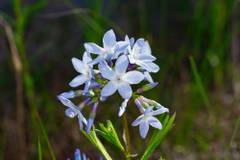
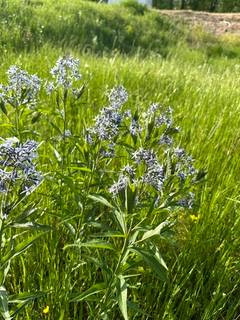
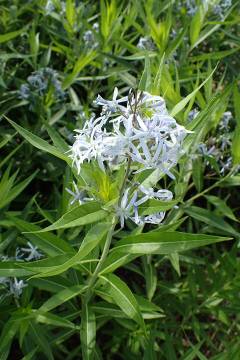
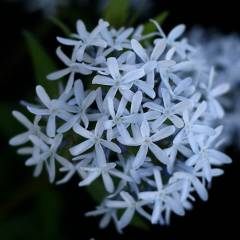
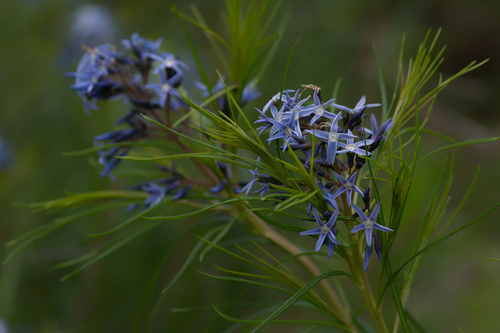
Amsonia hubrichtii is a clump-forming perennial reaching 30–36 inches (75–90 cm) tall and 36–48 inches (90–120 cm) wide with a dense, billowing mound of thread-textured foliage. Leaves are alternate, needle-like, 2–4 inches (5–10 cm) long and 1–2 mm wide — narrower than any other Amsonia species in cultivation. Terminal clusters of 5-petaled, star-shaped flowers open pale ice-blue, each 0.5 inch (1.3 cm) across, in April through May. Bloom lasts approximately 3 weeks. Fall foliage turns golden-yellow, persisting 3–4 weeks through October and November and holding color reliably in full sun — longer than most deciduous perennials produce autumn interest. Stems exude milky white sap when cut. Plants expand slowly by crown growth, reaching mature width of 48 inches (120 cm) in 3 years. Clumps persist 15+ years without division. In rich soils or partial shade, stems flop open by midsummer, exposing the crown. Self-seeding is modest in open, well-drained soils. All parts contain alkaloids and are toxic if ingested. Named for Leslie Hubricht, who rediscovered the species in 1942.
Native Range
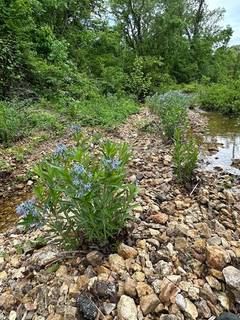
Native to a restricted range in the Ouachita Mountains of central Arkansas and eastern Oklahoma. Found on rocky, gravelly streamsides and in open woodland on the Ouachita and Novaculite formations. Listed as a species of conservation concern in Arkansas.Suggested Uses
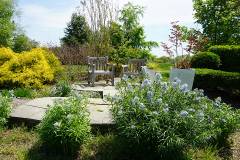
Planted in perennial borders, mass plantings, and native plant gardens at 30–36 inch (75–90 cm) spacing. Three-season interest from thread-textured foliage, ice-blue spring flowers, and sustained golden-yellow fall color. Drought tolerance and deer resistance suit low-maintenance landscapes and prairie-style plantings. Not suited to rich, moist soils or partially shaded sites where the mounding habit collapses by midsummer.How to Identify
Appearance
Size & Dimensions
Height2'6" - 3'
Width/Spread3' - 4'
Bloom Information
Flowers April through May in zones 4–9. Individual clusters last 2–3 weeks. In zones 8–9, bloom begins in late March. Flower color is pale ice-blue, 1–2 shades lighter than A. tabernaemontana.
Detailed Descriptions
Foliage Description
bright green; needle-like, thread-textured; golden-yellow in fallGrowing Conditions
Sun Requirements
Requires 6-10 hours of direct sunlight daily
• Full Sun: 6+ hours of direct sunlight
• Partial Shade: 3-6 hours of direct sunlight
• Full Shade: Less than 3 hours of direct sunlight
Care & Maintenance
Care Guide
Plant in well-drained soil with a pH of 5.5–7.5 in full sun. Water weekly during the first growing season. Established plants tolerate drought intervals of 3–4 weeks and grow in soils from sand to clay. Stems flop in partial shade or in soils with above-average nitrogen. Shearing by one-third in June after bloom restores a dense mound in flopping plants. No fertilization is needed. Clumps persist 15+ years without division. Self-seeding is modest in open soils. All parts contain alkaloids and are toxic if ingested.Pruning
Cut all stems to 4–6 inches (10–15 cm) in late winter (March) before new growth emerges. Shearing by one-third immediately after bloom in June restores density if stems have flopped; regrowth forms a full mound by late summer. Dried stems can remain standing through winter for structure.Pruning Schedule
Prune: March & June
early springsummer
Container Growing
Suitable for container growing
Minimum container size: 5 gallons