Amsonia, Genus, tabernaemontana, Species,
- Genus & species
eastern bluestar
Overview
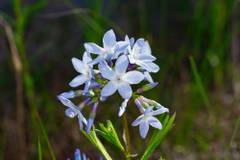
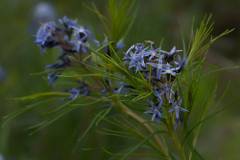
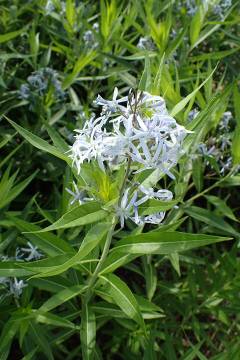
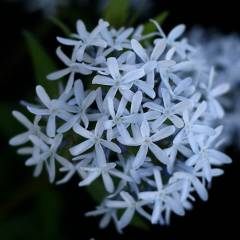
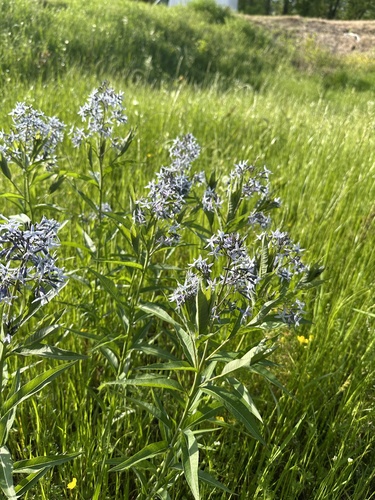
Amsonia tabernaemontana is a clump-forming perennial reaching 24–36 inches (60–90 cm) tall and 24–36 inches (60–90 cm) wide with a vase-shaped to upright habit. Native range spans from Massachusetts to Texas and Kansas — the broadest geographic distribution among cultivated Amsonia. Leaves are alternate, lance-shaped (willow-like), 3–6 inches (8–15 cm) long and 0.5–1 inch (1.3–2.5 cm) wide, medium to dark green with a matte surface. Terminal clusters of 5-petaled, star-shaped flowers open steel-blue to medium blue, each 0.5–0.75 inch (1.3–2 cm) across, in April through June. Individual clusters last 2–3 weeks. Stems exude milky white sap when cut. Fall foliage turns golden-yellow, persisting 2–3 weeks in October. Plants reach mature size in 3 years and persist 10+ years without division. Tolerates a broader range of soil moisture and light than other Amsonia species, including partial shade and average garden soils. Stems may flop open in deep shade or over-rich, moist conditions. Cold-hardy to zone 3, 1 zone cooler than A. hubrichtii, A. illustris, and A. ciliata. All parts contain alkaloids and are toxic if ingested.
Native Range
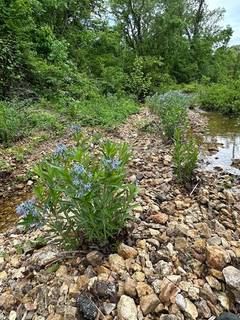
Native to the eastern United States, from Massachusetts south to Florida and west to Kansas and Texas. Found in moist woodlands, stream margins, meadows, and roadsides from sea level to 3,000 feet (900 m) elevation.Suggested Uses
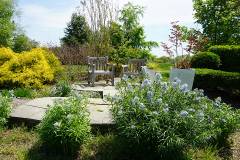
Planted in perennial borders, woodland edges, and native plant gardens at 24–30 inch (60–75 cm) spacing. Tolerance range extends to partial shade, clay soils, and zone 3 cold — broader than A. hubrichtii or A. ciliata. Not suited to deep shade where flopping becomes persistent.How to Identify
Appearance
Size & Dimensions
Height2' - 3'
Width/Spread2' - 3'
Bloom Information
Flowers April through June in zones 3–9. Individual clusters last 2–3 weeks; total bloom extends about 3 weeks. In zones 8–9, bloom begins in late March. Flower color is steel-blue to medium blue, 1–2 shades deeper than A. hubrichtii.
Detailed Descriptions
Flower Description
steel-blue to medium blueFoliage Description
medium to dark green, willow-like, lance-shaped, matte; golden-yellow in fallGrowing Conditions
Sun Requirements
Requires 4-10 hours of direct sunlight daily
• Full Sun: 6+ hours of direct sunlight
• Partial Shade: 3-6 hours of direct sunlight
• Full Shade: Less than 3 hours of direct sunlight
Care & Maintenance
Care Guide
Plant in moist to average soil with a pH of 5.5–7.5 in full sun to partial shade. Water weekly during the first growing season. Established plants tolerate drought intervals of 2–3 weeks and accept soils from clay to sand. Tolerates partial shade better than other Amsonia species and produces the densest habit in full sun. Shearing by one-third in June after bloom restores density in stems that flop in shaded or over-rich sites. Cold-hardy to zone 3. Clumps persist 10+ years without division. All parts contain alkaloids and are toxic if ingested.Pruning
Cut all stems to 4–6 inches (10–15 cm) in late winter (March) before new growth emerges. Shearing by one-third after bloom in June restores density if stems become lax; regrowth forms a full mound by late summer. Dried stems can remain standing through winter for structure.Pruning Schedule
Prune: March & June
early springsummer
Container Growing
Suitable for container growing
Minimum container size: 5 gallons