Amsonia, Genus, spp., Multiple species,
- Genus
- Multiple species
bluestars
Overview
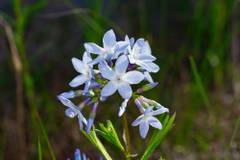
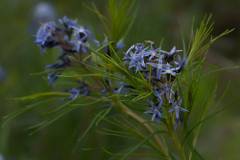
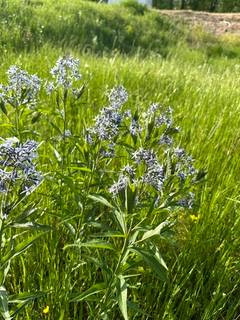
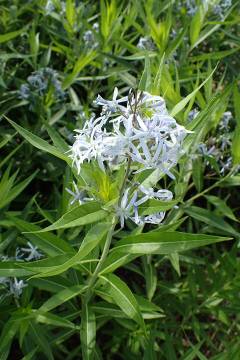
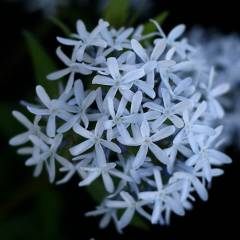
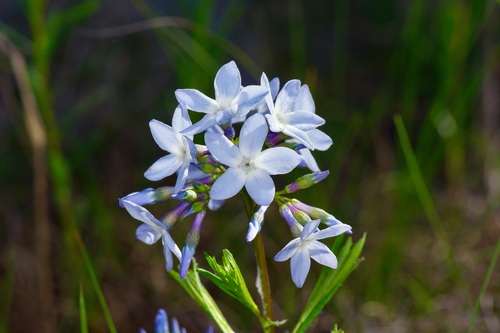
Amsonia is a genus of about 20 clump-forming perennials in the dogbane family, Apocynaceae, found mostly in North America with a few species in East Asia. Upright stems carry narrow, willow-like to needle-like leaves and rise to 1-3 feet (30-90 cm). In late spring the stems are topped by domed clusters of small, pale-blue, five-pointed star flowers. The foliage of several species, especially A. hubrichtii, turns golden-yellow in autumn before dying back. Cut stems exude a milky latex. Plants form dense mounds in sun and open, loose ones in shade. The brief spring bloom, the skin-irritating latex, and a tendency for tall clumps to flop in rich soil or shade are the main constraints in the garden.
Native Range
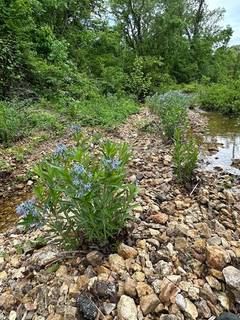
Native mostly to the United States and Mexico, from the eastern and central states to the desert Southwest, with a few species in East Asia. Plants grow in open woods, prairies, stream banks, and rocky slopes.Suggested Uses
Planted in mixed borders, prairie and native gardens, and massed for spring flowers and autumn foliage color. The narrow-leaved species form soft mounds that combine with ornamental grasses and later-blooming perennials.How to Identify
Appearance
Size & Dimensions
Height1' - 3'
Width/Spread2' - 3'
Bloom Information
Pale-blue star flowers open in late spring, roughly April to June, in domed terminal clusters that last about three weeks. A light shearing after bloom can produce a tidier mound, though usually not a second flush of flowers.
Detailed Descriptions
Flower Description
pale blue to steel-blueFoliage Description
green, turning golden-yellow in autumnGrowing Conditions
Sun Requirements
Requires 6-8 hours of direct sunlight daily
• Full Sun: 6+ hours of direct sunlight
• Partial Shade: 3-6 hours of direct sunlight
• Full Shade: Less than 3 hours of direct sunlight
Care & Maintenance
Care Guide
Amsonia grows in full sun to part shade in average, well-drained soil and is drought tolerant once established. Most species are hardy to USDA zone 4 or even zone 3, and they accept a wide range of soils, including clay. Plants grown in shade or rich, moist ground tend to flop and open at the center. The milky latex in the stems deters deer and rabbits. Little feeding is needed, and the clumps are long-lived without division.Pruning
Plants are sheared back by about one-third after flowering to keep a dense mound and limit flopping. Stems are cut to the ground in late winter once the autumn color has faded. Division, if wanted, is done in early spring.Container Growing
Suitable for container growing
Minimum container size: 3 gallons