Amsonia, Genus, tabernaemontana, Species, var., Variety, salicifolia, Variety,
- Genus & species
- Variety
willow-leaf bluestar
Overview
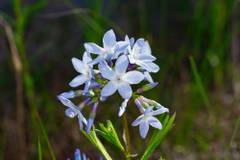
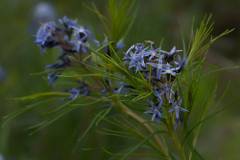
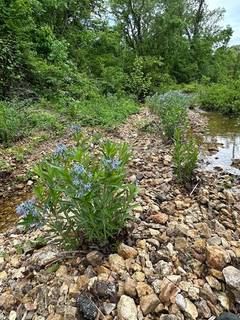
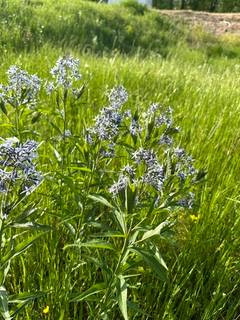
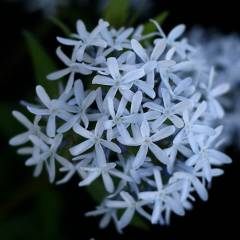
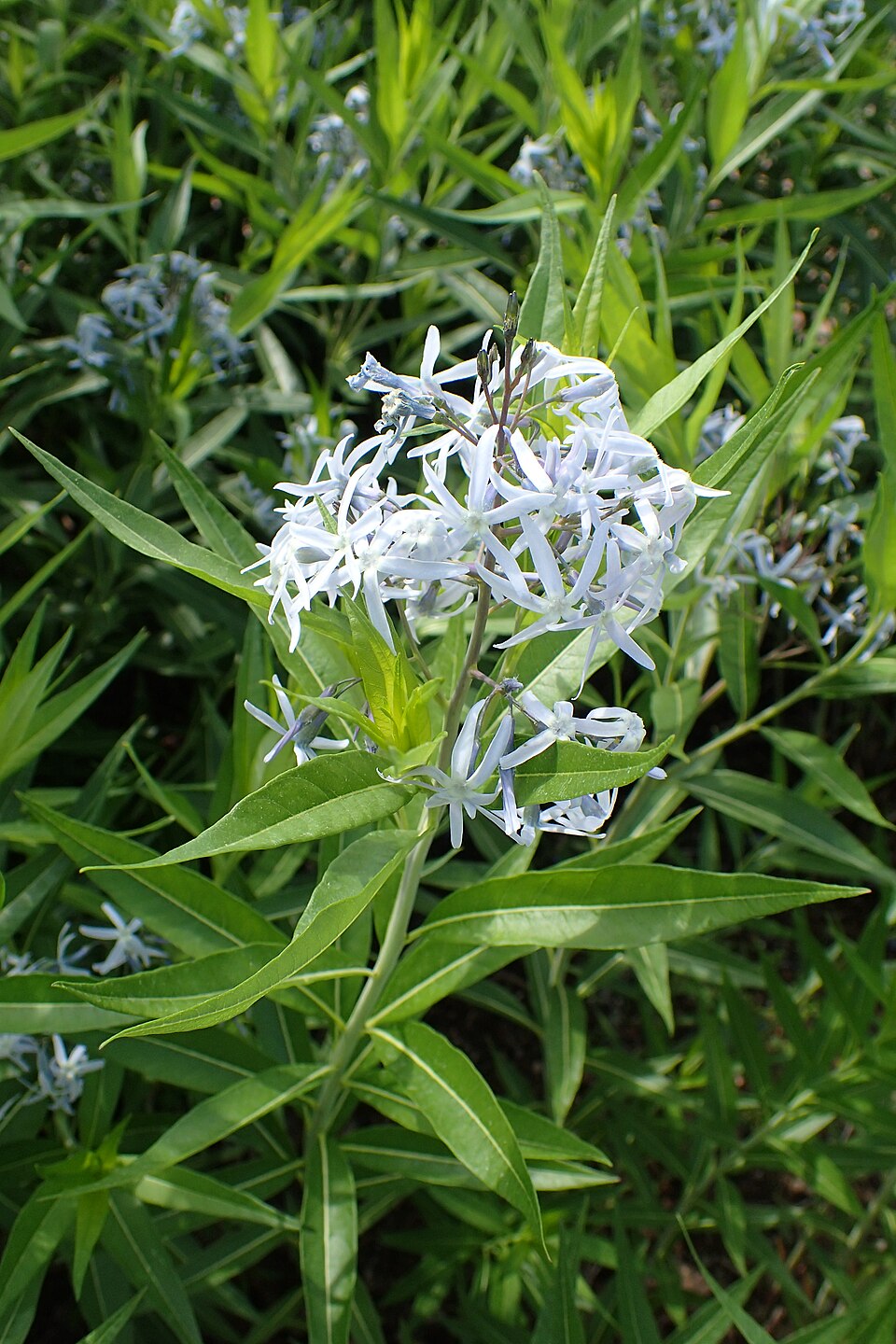
Amsonia tabernaemontana var. salicifolia is a clump-forming perennial reaching 24–36 inches (60–90 cm) tall and 24–36 inches (60–90 cm) wide, differing from the species type by narrower, more willow-like leaves. Leaves are alternate, narrowly lance-shaped, 3–5 inches (8–13 cm) long and 0.25–0.5 inch (6–13 mm) wide — approximately half the width of the species type. The narrower foliage produces a finer-textured appearance than A. tabernaemontana var. tabernaemontana but remains broader than the needle-like foliage of A. hubrichtii. Terminal clusters of 5-petaled, star-shaped flowers open steel-blue to medium blue, each 0.5–0.75 inch (1.3–2 cm) across, in April through June. Bloom timing and duration match the species type. Stems exude milky white sap when cut. Fall foliage turns golden-yellow, persisting 2–3 weeks in October. Growth habit, cultural requirements, and longevity are similar to the species type. Stems may flop in deep shade or overly rich soils. The taxonomic status of this variety is debated; some authorities treat it as a synonym of the species while others maintain it as a distinct variety. All parts contain alkaloids and are toxic if ingested.
Native Range
Native to the southeastern United States, with a range overlapping but slightly more southern than A. tabernaemontana var. tabernaemontana. Found in moist woodlands, stream banks, and meadows from Virginia south to Florida and west to Texas.Suggested Uses
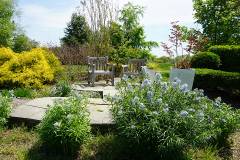
Commonly planted in perennial borders and native plant gardens at 24–30 inch (60–75 cm) spacing. Finer foliage texture than the species type adds variety in Amsonia collections and mixed borders. Suitable for the same sites as A. tabernaemontana var. tabernaemontana. Not suited to deep shade.How to Identify
Appearance
Size & Dimensions
Height2' - 3'
Width/Spread2' - 3'
Bloom Information
Flowers April through June in zones 3–9. Individual clusters last 2–3 weeks; total bloom extends about 3 weeks. Bloom timing and color are identical to the species type.
Detailed Descriptions
Flower Description
Steel-blue to medium blueFoliage Description
Medium to dark green, narrower than the species type, willow-likeGrowing Conditions
Sun Requirements
Requires 4-10 hours of direct sunlight daily
• Full Sun: 6+ hours of direct sunlight
• Partial Shade: 3-6 hours of direct sunlight
• Full Shade: Less than 3 hours of direct sunlight
Care & Maintenance
Care Guide
Cultural requirements are identical to A. tabernaemontana var. tabernaemontana. Water regularly during the first growing season. Tolerates partial shade and a range of soil types. Full sun produces the densest habit. Shear by one-third after bloom if stems flop. No fertilization needed. All parts are toxic if ingested.Pruning
Cut all stems to 4–6 inches (10–15 cm) in late winter (March) before new growth. If stems are lax, shear by one-third after bloom in June. Dried stems can persist through winter. Division is rarely needed.Pruning Schedule
Prune: March & June
summerearly spring
Container Growing
Suitable for container growing
Minimum container size: 5 gallons