Image 1 of 2
1 / 2
Plant Reference
Ophiopogon, Genus, planiscapus, Species, 'Nigrescens', Cultivar,
- Genus & species
- Cultivar
black mondo grass
Japan — forest understory and shaded rocky slopes; the cultivar 'Nigrescens' is a horticultural selection of the green-leaved species type and was selected for the near-black leaf color, with the color trait propagated vegetatively through division because seed-grown plants do not reliably carry the dark color
Overview
Ophiopogon planiscapus 'Nigrescens' is a clumping evergreen perennial in the family Asparagaceae growing 6-10 inches (15-25 cm) tall and 8-12 inches (20-30 cm) wide, native (in the species type) to the forest understory of Japan and grown in temperate gardens for the near-black strap-shaped foliage that gives the cultivar its central garden value. The cultivar belongs to a small group of cultivated plants that carry a true near-black leaf color rather than the dark purple, deep burgundy, or bronze tones that most 'black' garden plants actually display — the foliage reads as genuinely black against pale stone, gravel, or light-foliaged neighbors, and the cultivar is grown specifically for this color contrast rather than for any other ornamental feature. The cultivar epithet 'Nigrescens' is Latin for 'becoming black' and refers directly to the leaf color development, with the new spring leaves emerging dark green and deepening to near-black over several weeks of expansion as the dark anthocyanin pigments accumulate in the leaf tissue. The species belongs to the family Asparagaceae and is not a true grass despite the common name 'black mondo grass' and the strap-shaped grass-like foliage — the plant flowers and fruits like a lily relative rather than like a grass, and the small bell-shaped flowers and the glossy black berries clearly mark the plant's lily-family affinities to anyone examining the inflorescence. The central limitation for ground-cover use is the very slow spread: the cultivar expands by short stolons that send up new shoots only 1-2 inches per year from the parent clump, and a single planted division typically takes 3-4 years to develop a small patch and 5-7 years to fill in a defined ground-cover area. Gardeners using the cultivar for ground cover need to plant many starts at close 6-8 inch (15-20 cm) spacing to achieve coverage within a reasonable timeframe, and the high plant count required for any meaningful area makes the ground-cover use considerably more expensive than fast-spreading alternatives like Liriope spicata (creeping liriope) or Pachysandra terminalis. The slow growth makes the cultivar a poor match for budget-constrained installations and a stronger match for small-scale accent plantings, container specimens, and contrast positions in mixed border designs where the dark color is the primary purpose and the small footprint is acceptable. Pale lavender to pinkish-white bell-shaped flowers 0.2 inch (5 mm) long open in short racemes among the foliage during July and August and are easily missed against the dark leaf background, but each flower develops into a glossy jet-black berry 0.25 inch (6 mm) across that ripens by fall and persists into winter as a secondary ornamental element. The cultivar is not drought-tolerant and needs consistent soil moisture through the growing season, and dry conditions cause leaf tip browning that disfigures the foliage. Hot afternoon sun in warm climates causes leaf scorch on the dark foliage, so afternoon shade is needed in zones 8-9 and across the southeastern United States. The dark color develops most fully on plants in part sun (3-6 hours of morning sun) and looks more green than black in deep shade, so a position with morning sun and afternoon shade is the standard cultural approach for color development without scorch. Deer avoid the foliage. Non-toxic to humans and pets — the small black berries can be eaten by birds and pose no toxicity concern even in households with curious children or pets.
Native Range
Ophiopogon planiscapus (the species type from which the cultivar 'Nigrescens' was selected) is native to Japan, growing in deciduous and mixed forest understory and on shaded rocky slopes in the cool moist conditions of the Japanese mountain forests across Honshu, Shikoku, and Kyushu. The native species type carries dark green strap-shaped foliage rather than the near-black foliage of the cultivar 'Nigrescens', and the dark-leaved cultivar is a horticultural selection produced through vegetative propagation of an unusually dark-leaved seedling discovered in commercial cultivation rather than a wild population trait. The cultivar is propagated entirely by division because seed-grown plants do not reliably carry the dark leaf color, and most commercial nurseries grow the cultivar from tissue-cultured starts to maintain the consistent dark color across mass-produced plants. The genus Ophiopogon contains about 65 species distributed across the temperate and subtropical forests of east and southeast Asia, with the related O. japonicus (mondo grass, also Japanese) and Liriope muscari (the closely related lilyturf, native to China and Japan) being the other commonly cultivated members of this small group of grass-mimicking shade perennials. O. planiscapus 'Nigrescens' has been in Western horticultural cultivation since the late 20th century and was awarded the Royal Horticultural Society Award of Garden Merit for its garden performance and the rare near-black foliage color.Suggested Uses
Planted as a foliage-contrast accent against pale stone, gravel, light-foliaged neighbors, or chartreuse-leaved companions; as edging along path borders and bed edges; in container specimens of 1 gallon (3.8 L) or larger where the dark foliage stands out against pale pots; and in mass plantings for ground cover (with the slow spread accommodated through close 6-8 inch / 15-20 cm spacing of many starts) in zones 5-9. The near-black foliage color gives the cultivar a central role in color-contrast garden design where the rare true black leaf tone reads against pale or chartreuse companions to produce visual contrast that is otherwise hard to achieve in a temperate-climate planting palette. Combined with chartreuse-foliaged plants including Hakonechloa macra 'Aureola' (golden Japanese forest grass), Hosta 'Sum and Substance', Heuchera 'Lime Marmalade', and Carex 'Evergold' for the high-contrast yellow-against-black color combination that is one of the central uses of the cultivar in modern garden design. Combined also with silver-foliaged plants including Stachys byzantina (lamb's ear), Artemisia ludoviciana, and Brunnera macrophylla 'Jack Frost' for a softer silver-against-black contrast. Container plantings in pale ceramic or concrete vessels showcase the dark foliage particularly well. Not suited to fast ground-cover installations where the slow spread cannot be accommodated by patience or by high plant counts, dry sites without irrigation where the moisture requirement cannot be met, hot afternoon-sun positions in zones 8-9 where leaf scorch develops, deep shade positions where the dark color reverts toward green, or budget-constrained large-area plantings where the high plant cost (because of the slow spread) makes the cultivar uneconomical compared to faster-spreading green alternatives.How to Identify
Appearance
Size & Dimensions
Height6" - 10"
Width/Spread8" - 1'
Colors
Bloom Information
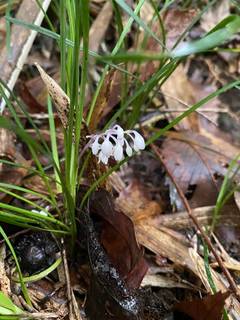
Pale lavender to pinkish-white bell-shaped flowers 0.2 inch (5 mm) long open in short racemes among the foliage during July and August in zones 5-9, lasting approximately 3 weeks. The flowers are easily missed against the dark foliage and are a secondary ornamental element rather than the central garden feature of the cultivar — the near-black foliage is the year-round ornamental value while the brief midsummer flower event is a small bonus. Bees visit the flowers during the short bloom window. After flowering, each flower develops into a glossy jet-black berry 0.25 inch (6 mm) across that ripens through late summer and early fall and persists on the plant through the winter months as a secondary ornamental contrast against the dark foliage and as a bird-food resource for thrushes and other berry-eating birds in the cold season.
Detailed Descriptions
Flower Description
Pale lavender to pinkish-whiteFoliage Description
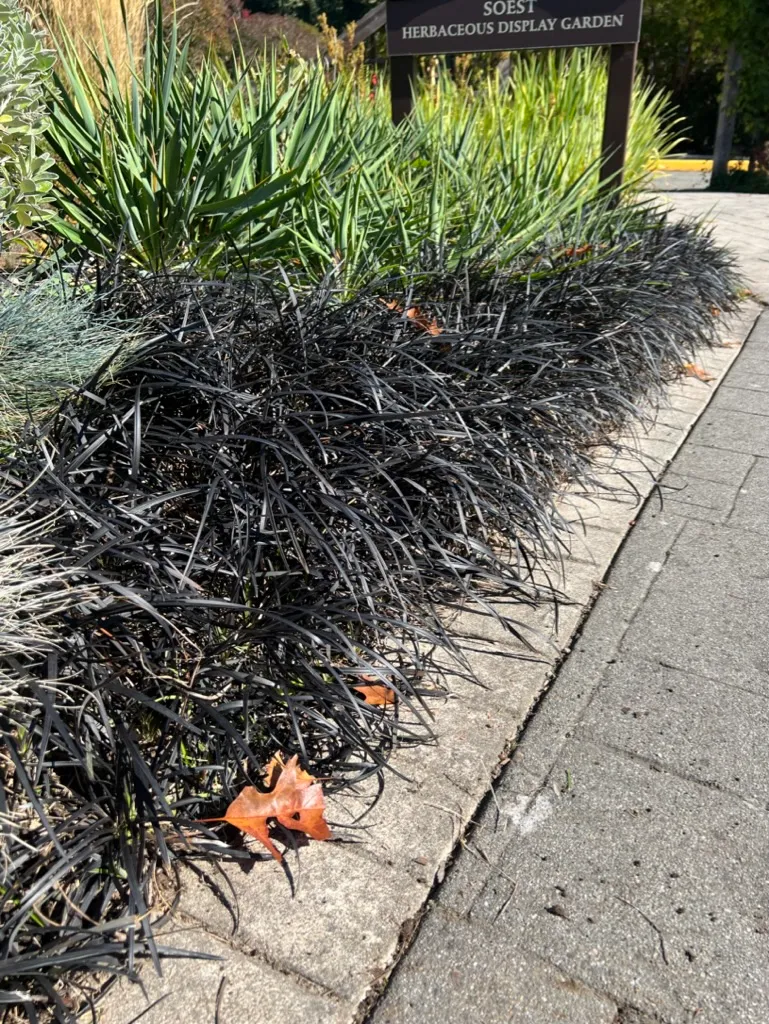
near-black to deep purple-black; narrow strap-shaped arching leaves 6-10 inches (15-25 cm) long and 0.25 inch (6 mm) wide arranged in a low basal tuft; new leaves emerge dark green and deepen to near-black within several weeks of expansion, with the darkest color developing on plants grown in part sun rather than deep shade — the foliage is one of very few cultivated plants carrying a true near-black leaf color rather than the dark purple or burgundy that most 'black' garden plants actually display, and the color reads as genuinely black against pale stone, gravel, or light-foliaged neighborsGrowing Conditions
Sun Requirements
Requires 3-6 hours of direct sunlight daily
• Full Sun: 6+ hours of direct sunlight
• Partial Shade: 3-6 hours of direct sunlight
• Full Shade: Less than 3 hours of direct sunlight
Care & Maintenance
Care Guide
Plant in well-drained soil with a pH of 5.5-7.0 in part shade (3-6 hours of direct sun, with morning sun rather than hot afternoon sun in warm climates); tolerated soil types include loam and sand, and humus-rich organic soils develop the strongest plant performance. The cultivar is not drought-tolerant and needs consistent soil moisture through the growing season — dry conditions cause leaf tip browning that disfigures the dark foliage and reduces the visual value of the plant, so summer watering during rainfall-deficit periods is part of the standard cultural routine. Hot afternoon sun in zones 8-9 and across the southeastern United States causes leaf scorch on the dark foliage, so afternoon shade is needed in warm climates while morning sun is needed for the darkest color development — the standard cultural sweet spot is a position with morning sun and afternoon shade. The cultivar spreads very slowly by short stolons that send up new shoots 1-2 inches per year from the parent clump, taking 3-4 years to develop a small patch from a single division and 5-7 years to fill in a defined ground-cover area. The slow spread is the central limitation for ground-cover use, and gardeners installing a ground cover need to plant many starts at close 6-8 inch (15-20 cm) spacing to achieve coverage within a reasonable timeframe, while small-scale accent and container plantings are unaffected by the slow rate. Tattered or damaged older foliage is combed out with a stiff hand-cultivator or trimmed back individually in early spring (February-March) before the new growth emerges; the slow growth rate means that the cultivar does not respond well to mowing or shearing as is sometimes done with the related Liriope, because the cut foliage takes too long to regrow and the plant looks weakened for an extended period after a hard cut. Deer avoid the foliage. Non-toxic to humans and pets.Pruning
Tattered or damaged older foliage is combed out with a stiff hand-cultivator or trimmed individually back to the base in early spring (February-March) before the new growth emerges, removing the worst of the winter weathering damage and clearing the planting for fresh spring growth. The slow growth rate means that the cultivar does not respond well to hard pruning or to mowing or shearing as is sometimes done with the related Liriope spicata — the cut foliage takes 1-2 seasons to regrow fully and the plant looks weakened for an extended period after a hard cut, so light selective grooming rather than wholesale cutback is the standard approach. Spent flower stalks can be trimmed off after the bloom finishes if the small black berries are not wanted, but the berries are a secondary ornamental feature and most gardeners leave them in place through fall and winter.Pruning Schedule
Prune: February–March
early spring
Container Growing
Suitable for container growing
Minimum container size: 1 gallons