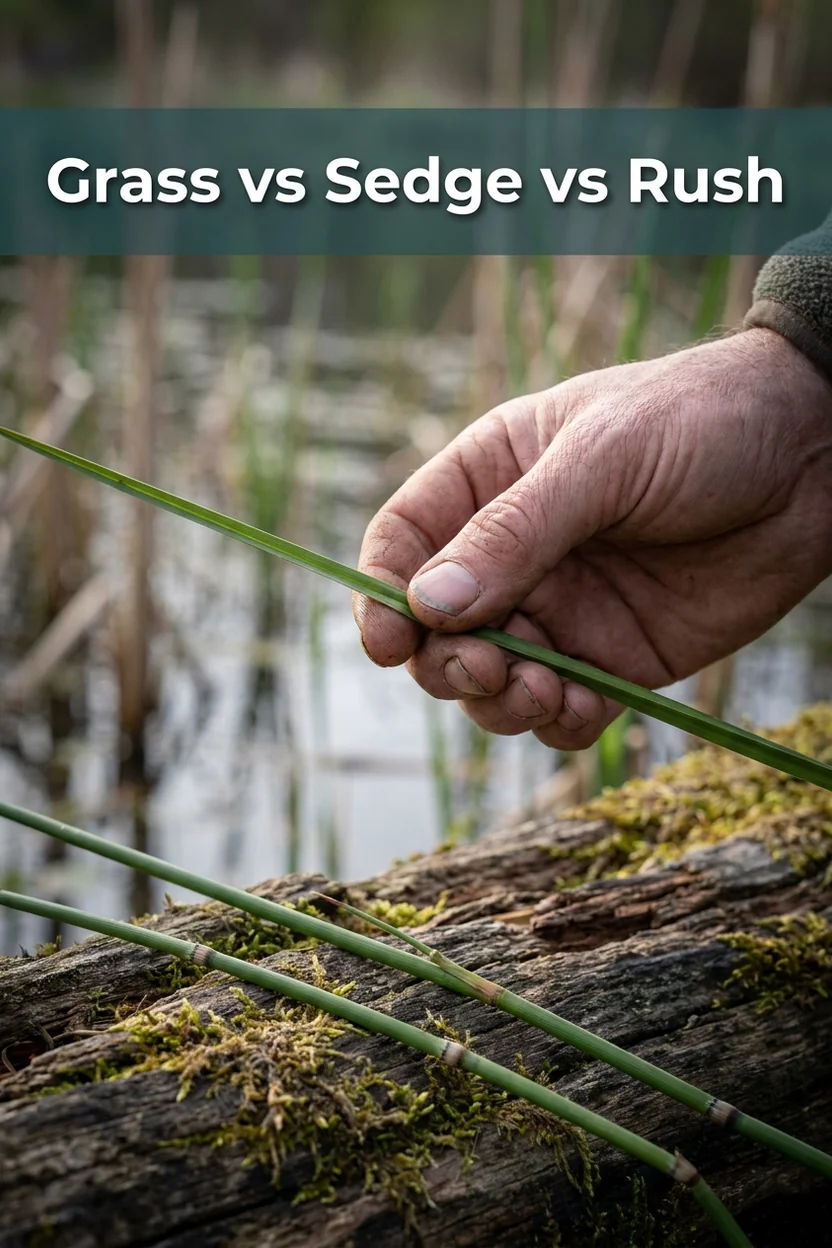
Grass vs Sedge vs Rush: How to Tell Them Apart
Pets & Toxicity
Recorded toxicity for plants linked in this guide. An unknown status is not a safety assessment.
Toxic to pets: tall fescue (7 linked plants checked)DetailsHide
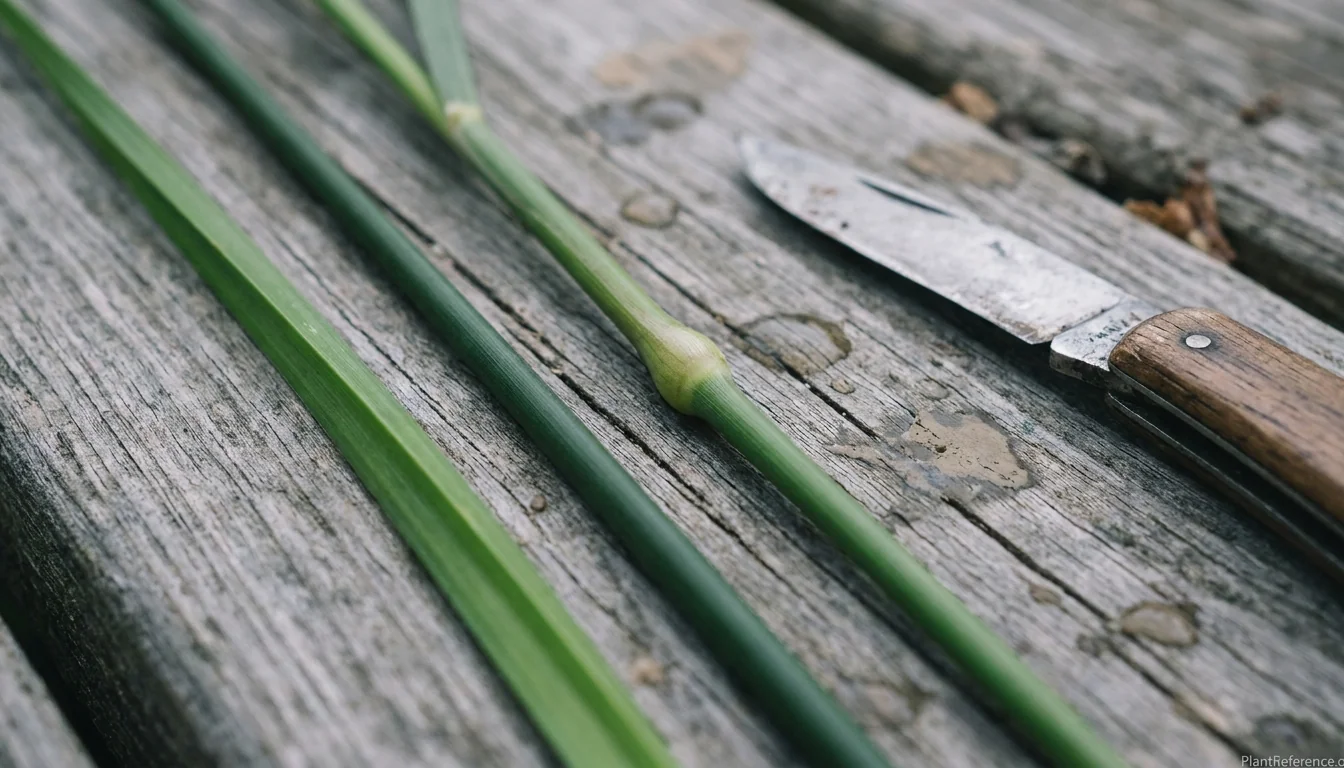
— Image © PlantReference.org 2026
Stand at the edge of any pond, ditch, or damp meadow and you will see a tangle of green blades that all look more or less like grass. Most of them are not. Sorting grass vs sedge vs rush is one of the most useful skills in plant identification, because these three families look nearly identical from a distance yet belong to completely different branches of the plant world. The good news is that a single rhyme and one quick test settle the question almost every time.
The Mnemonic That Solves It
Generations of botany students have learned this with a single rhyme: "Sedges have edges, rushes are round, grasses have nodes from the top to the ground." It compresses three families' worth of anatomy into one line, and it works because each family really does have a distinctive stem.
Sedges belong to the family Cyperaceae, rushes to Juncaceae, and grasses to Poaceae. All three are monocots with narrow leaves and parallel venation, which is exactly why they confuse beginners. If you want a refresher on why parallel-veined monocots look the way they do, the broader framework is laid out in How to Identify Any Plant: A Beginner's Guide to Leaves, Flowers, and Stems.
The stem is your fastest diagnostic, but leaf arrangement and flower structure back it up. Let us take each family in turn.
Sedges: Triangular and Solid
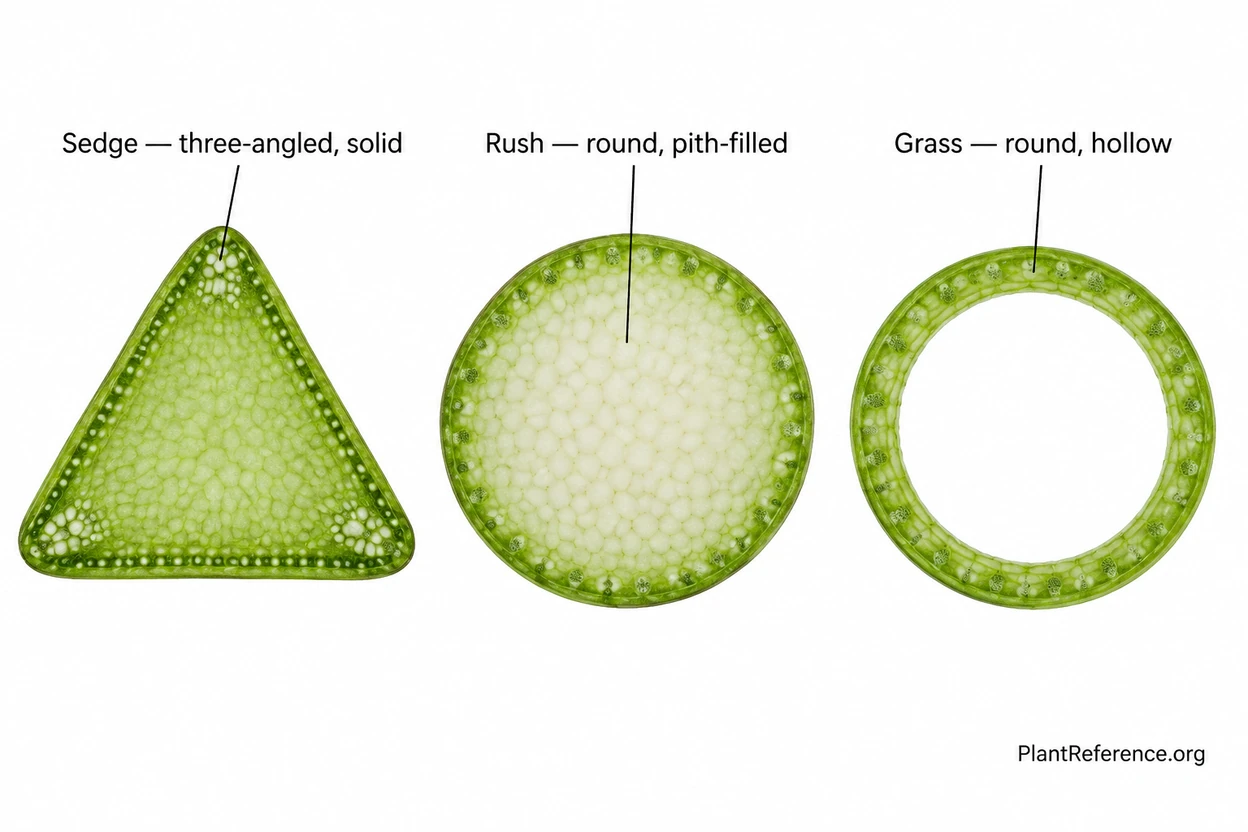
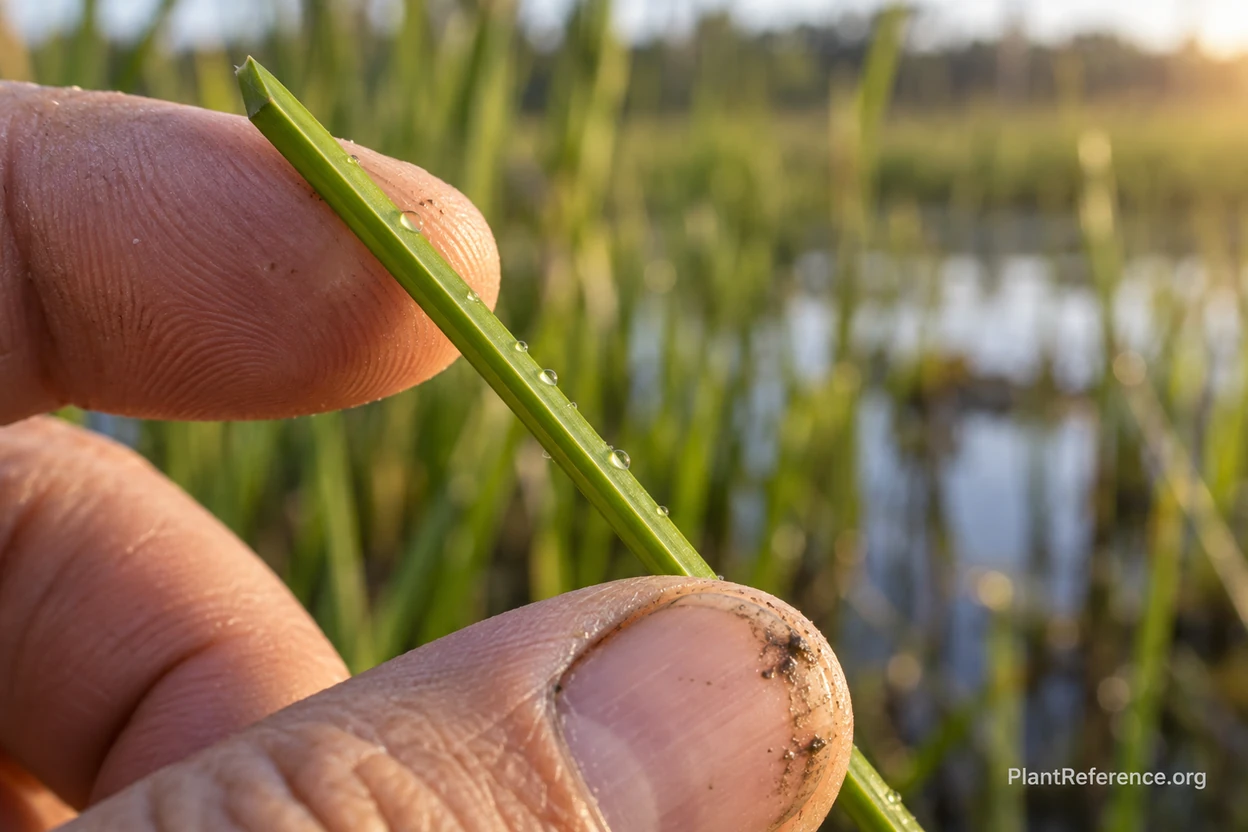
Sedges are the easiest of the three to confirm once you know the trick. Roll a sedge stem between your thumb and finger and you will feel distinct edges—most sedges have a sharply three-angled, triangular stem. That triangle is solid and pithy all the way through, with no hollow center and no swollen joints.
The leaves add a second clue. Sedge leaves are arranged in three vertical ranks around the stem, so looking down from above they radiate in a three-way pattern rather than the flat, two-sided arrangement of grasses. The largest sedge genus, 🌿Carex pensylvanica (KAIR-eks) and its relatives, dominates this family with hundreds of species in wet meadows and woodlands.
Not every sedge is a wetland plant, and not every sedge is welcome. Yellow nutsedge (🌿Cyperus esculentus) (sy-PEER-us) and purple nutsedge (🌿Cyperus rotundus) are aggressive lawn weeds whose triangular stems give them away instantly among the round grass blades around them. If you have battled one, you know they resist ordinary control—the reasons, and the right approach, are covered in How to Get Rid of Nutsedge: Why Pulling Makes It Worse. Larger members like the bulrushes (🌿Schoenoplectus tabernaemontani) (skoy-no-PLEK-tus) line pond margins and can stand chest-high.
Rushes: Round and Pithy
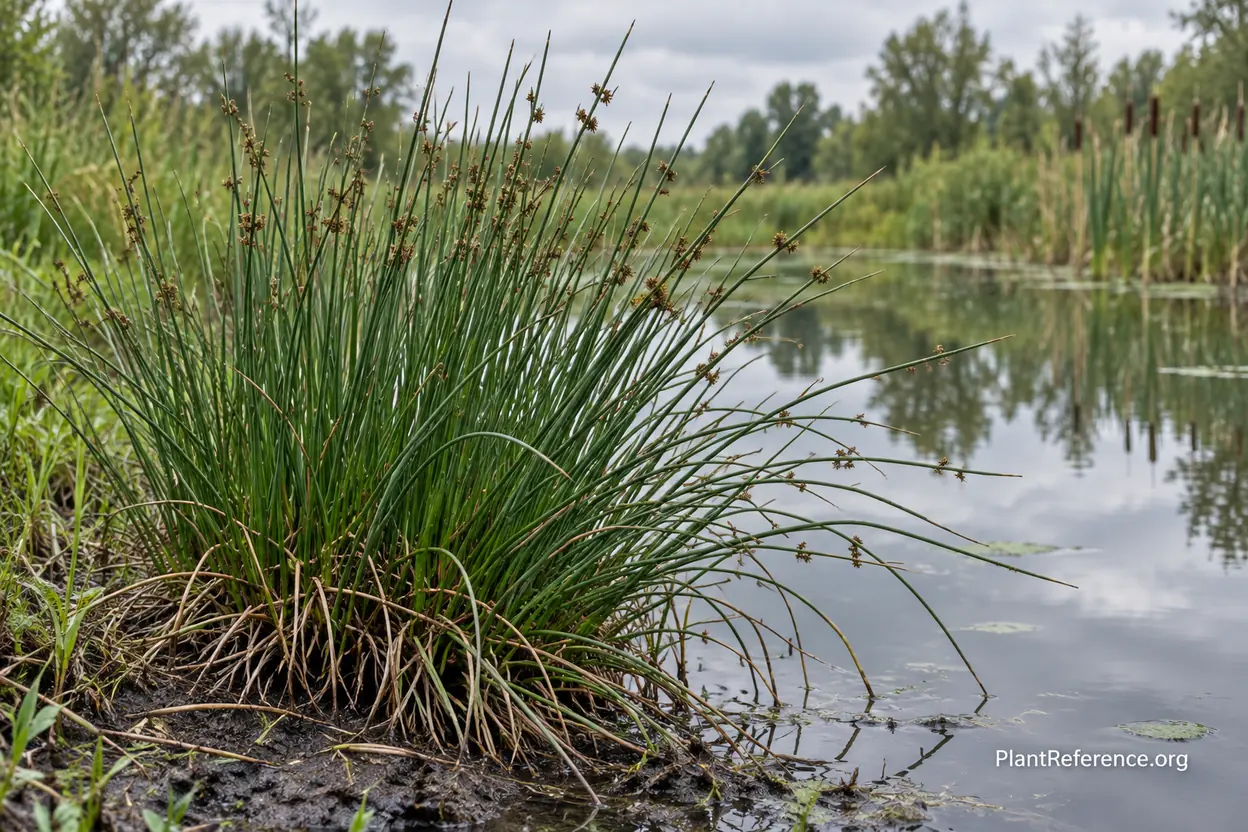
Rushes split the difference between sedges and grasses, which is why they trip people up. Roll a rush stem and it is round and smooth like a grass, but solid inside like a sedge. Slice one open and you find a continuous white pith filling the core rather than the hollow tube of a grass.
The classic example is soft rush (🌿Juncus effusus) (JUNG-kus eh-FEW-sus), a fountain of round, dark-green stems common in soggy pasture corners and rain gardens. Its leaves are often reduced to round, grass-like blades at the base, or absent altogether, so the stems do most of the photosynthesis.
Rush flowers are the giveaway when stems leave any doubt. Unlike the chaffy, scale-covered flowers of grasses and sedges, rushes produce tiny but true lily-like flowers with six brownish tepals, followed by a small capsule packed with many seeds. Under a hand lens those six-parted flowers are unmistakable, and they connect rushes to the broader logic of flower-based identification described in Flower Identification Guide: Petals, Shape & Color Explained.
Grasses: Round, Hollow, and Jointed
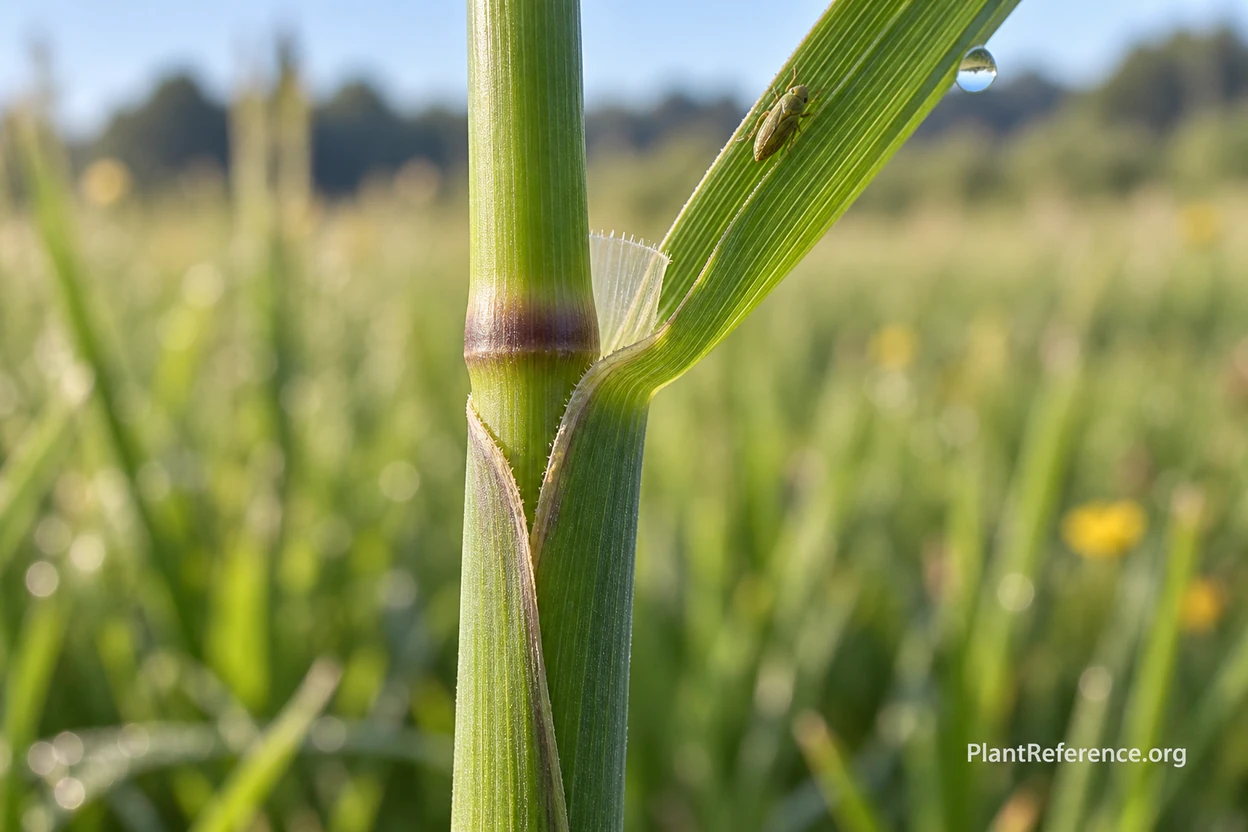
Grasses are the family you already know from lawns, and once you can rule out sedges and rushes, the grasses fall into place. Their stems, called culms, are round (or slightly flattened) and hollow between the nodes—the swollen, solid joints spaced along the stem "from the top to the ground." Those nodes are the single most reliable grass feature; neither sedges nor rushes have them.
Grass leaves emerge two-ranked, alternating on opposite sides of the stem in a flat plane, and each leaf wraps the stem in a sheath that is usually split open down one side. Reading how leaves are spaced around a stem is a broadly useful identification habit, explained further in Alternate vs Opposite Leaf Arrangement: The MADCapHorse Mnemonic Explained. Where the blade meets the sheath sits a small membranous or hairy flap called the ligule, a detail worth checking with a loupe for species-level grass work.
Lawn grasses like Kentucky bluegrass (🌿Poa pratensis) (POH-uh prah-TEN-sis) and the fescues (🌿Festuca arundinacea) (fes-TOO-kuh) show all these traits. Understanding which true grasses suit a site is its own topic, from shade tolerance in Best Grass Seed for Shade Under Trees: 5 Species That Actually Work to renovation in How to Overseed Your Lawn: Timing, Seed Selection, and Technique. When grass struggles and weedy sedges move in, correct identification is the first step before you reach for How to Fix Bare Spots in Your Lawn Fast.
The Five-Second Stem-Roll Test
When you are in the field and want a fast answer, skip the theory and roll the stem near its base between thumb and forefinger.
Feel distinct edges and a solid, three-angled core: it is a sedge (🌿Carex pensylvanica, 🌿Cyperus esculentus).
Feel a smooth round stem that is solid and pith-filled inside: it is a rush (🌿Juncus effusus).
Feel a round stem that is hollow between firm, swollen joints: it is a grass (🌿Poa pratensis).
Two cautions keep the test honest. A few sedges have rounded rather than triangular stems, so when a "round" stem feels solid and shows no nodes, check for three-ranked leaves and confirm against flowers before calling it a rush. And flattened grass stems can briefly feel edge-like until you find a hollow internode or a node to settle it.
Feature | Sedge (Cyperaceae) | Rush (Juncaceae) | Grass (Poaceae) |
|---|---|---|---|
Stem shape | Triangular, three-angled | Round | Round to flat |
Stem interior | Solid, pithy | Solid, pith-filled | Hollow between nodes |
Nodes (joints) | Absent | Absent | Present, swollen |
Leaf ranks | 3-ranked | Reduced or basal | 2-ranked |
Flowers | Scales, no tepals | 6 lily-like tepals | Scales, no tepals |
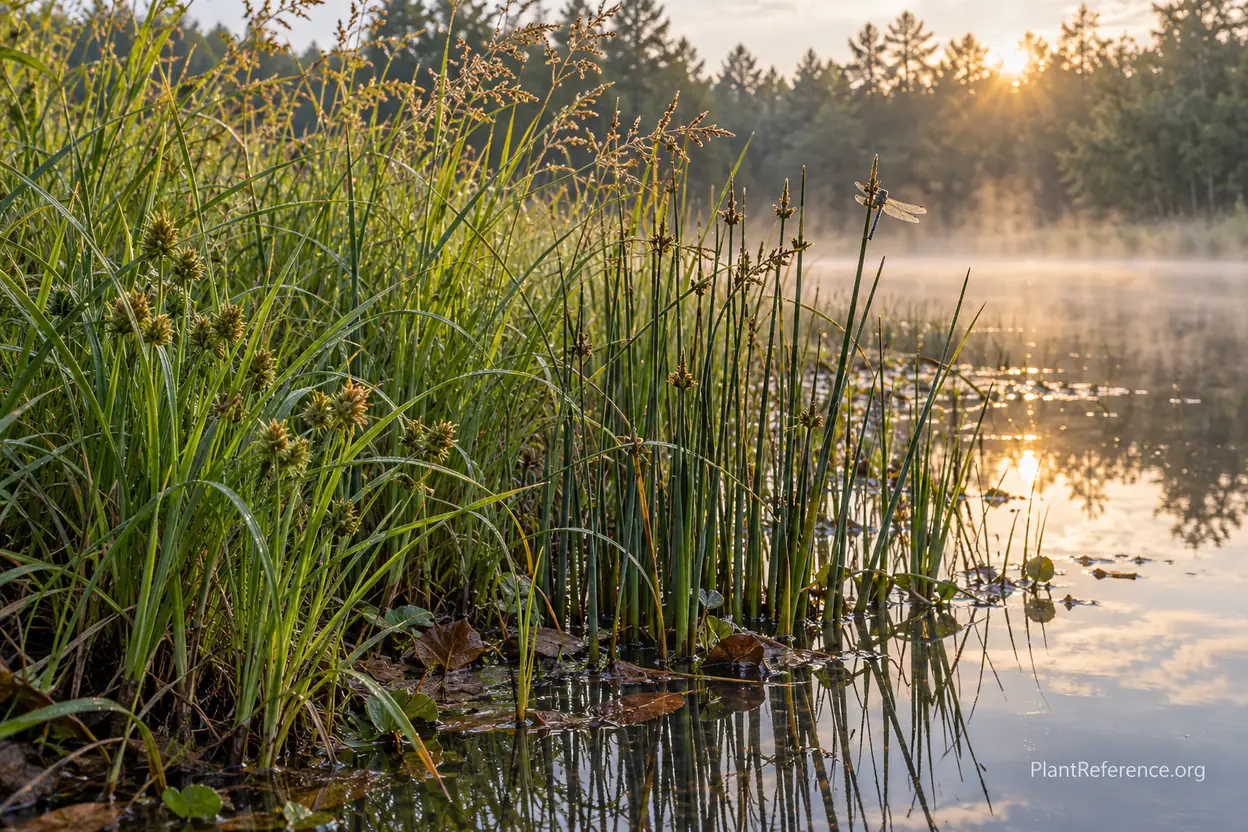
Why bother sorting them out? Because the family tells you how a plant behaves. Triangular nutsedge will not yield to grass herbicides, wetland sedges and rushes signal soggy soil you may want to drain or embrace, and true grasses are the ones worth seeding into a lawn. If you would rather work with these wet-loving plants than fight them, several make excellent low-water choices in Lawn Alternatives That Actually Work: 5 Options Beyond Grass. Once the rhyme and the stem-roll test are second nature, grass vs sedge vs rush stops being a guessing game and becomes a five-second glance.
Frequently Asked Questions
Reading about plants and recognising them are different skills. These three build the second.
- Daily PlantIdentify the day’s mystery plant from a close-up photograph.
- Keyed OutWork a dichotomous key, lead by lead, to name a hidden specimen.
- Name That PlantName a specimen from botanical clues dealt hardest first.
Free to play, no account needed
Tagged with
Sarah earned her doctorate in plant biology and spent time working in botanical garden education before transitioning to freelance writing and consulting. Now based in Portland, Oregon, she teaches plant identification workshops at local community centers and maintains a modest collection of over 60 houseplants in her small apartment. Sarah specializes in helping beginners understand plant science without the jargon—her approach focuses on practical observation over theory. She's killed her fair share of fiddle leaf figs and finally cracked the code on keeping them alive.