Image 1 of 9
1 / 9
Plant Reference
Rhus, Genus, glabra, Species,
- Genus & species
smooth sumac
North America throughout all 48 contiguous U.S. states, southern Canada, and northern Mexico; dry disturbed sites including roadsides, forest margins, old fields, rocky slopes, and railroad embankments
Overview
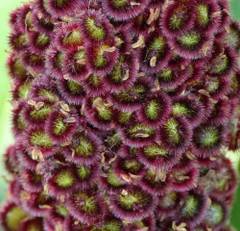
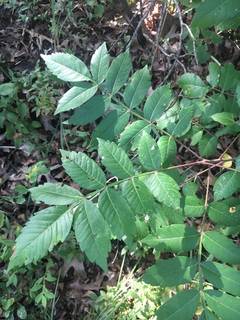
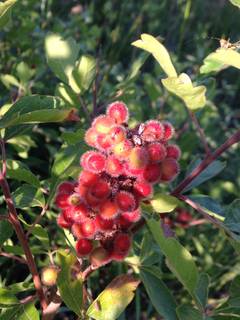
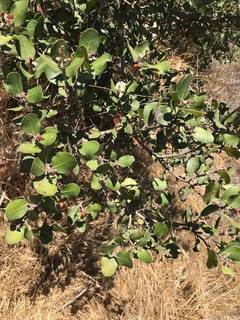
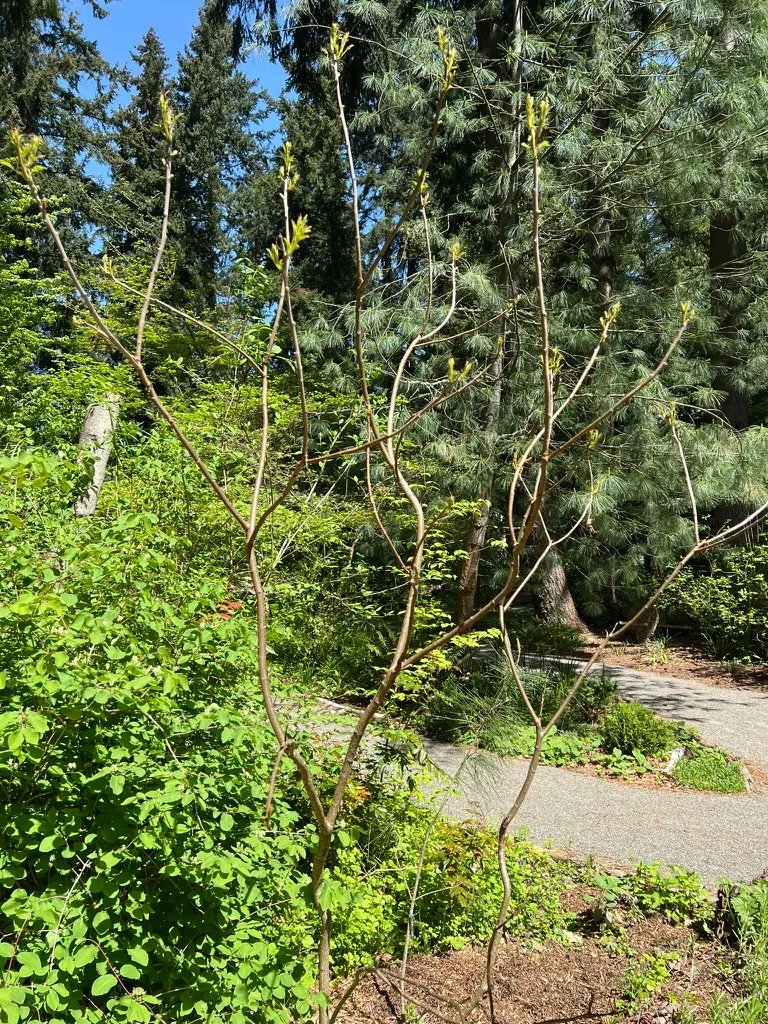
Rhus glabra is a suckering deciduous large shrub or small tree in the family Anacardiaceae reaching 9–15 feet (2.7–4.6 m) tall and 9–15 feet (2.7–4.6 m) wide, forming loose open flat-topped colonies through root suckers. The species is the only woody plant native to every one of the 48 contiguous United States, with additional populations extending into southern Canada and northern Mexico. Stems are smooth and hairless (glabrous), and young stems carry a waxy blue-green bloom; the smooth stems separate R. glabra from the closely related R. typhina (staghorn sumac), which carries densely velvety-hairy stems and twigs. Leaves are alternate, pinnately compound, 12–18 inches (30–46 cm) long, and carry 11–31 lanceolate sharply serrate leaflets each 2–5 inches (5–13 cm) long; the foliage is dark green on the upper surface with a whitish bloom beneath and turns scarlet, orange, and crimson red in fall, producing a reliably vivid fall color display every year regardless of growing conditions. The species is dioecious and male and female flowers are borne on separate plants. Small yellowish-green flowers open in dense terminal panicles 6–10 inches (15–25 cm) long in June and July, and female plants then develop dense erect conical clusters of fuzzy dark red drupes 4–8 inches (10–20 cm) long that ripen in August and September and persist on the stems through winter into the following spring, when birds consume the fruit as other food sources run out. Growth is rapid at 12–24 inches (30–61 cm) per year. Limitation: R. glabra spreads aggressively by root suckers that emerge several feet to many yards from the parent crown and rapidly form a colony, so garden positions without a root barrier, a lawn edge, or regular mowing at the colony perimeter are unsuitable for confined beds; the suckering habit makes the species appropriate for slopes, naturalized areas, and highway medians rather than for formal foundation plantings or small residential lots. R. glabra is not related to poison sumac (Toxicodendron vernix), which carries smooth white berries and occurs in wetlands.
Native Range
Native across North America through all 48 contiguous U.S. states, southern Canada, and northern Mexico, which is the widest native range of any woody plant in North America. Grows on dry disturbed sites including roadsides, forest margins, old fields, rocky slopes, and railroad embankments at elevations from sea level to 7,500 feet (2,300 m), and is a pioneer species that colonizes cleared ground, burned areas, and abandoned fields rapidly.Suggested Uses
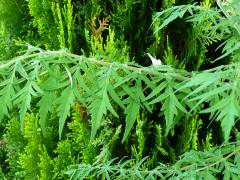
Used for erosion control on slopes, highway embankments, cleared ground, and naturalized plantings at 6–10 foot (1.8–3 m) spacing where the suckering habit is an asset rather than a problem. The scarlet fall color and the persistent dark red winter fruit clusters supply two seasons of strong ornamental interest, and the species supports wildlife through fruit consumed by over 30 bird species and dense colony cover used by ground-nesting birds and small mammals. Foundation plantings, formal gardens, and small residential lots are unsuitable because of the aggressive suckering habit. The cultivar 'Laciniata' carries finely dissected leaflets that produce a more delicate foliage texture while retaining the species habits.How to Identify
Appearance
Size & Dimensions
Height9' - 15'
Width/Spread9' - 15'
Bloom Information
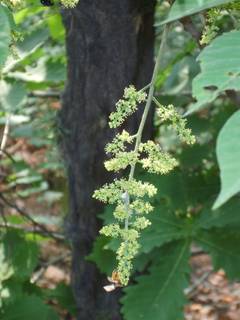
Small yellowish-green flowers open in dense terminal panicles 6–10 inches (15–25 cm) long in June and July across 2–3 weeks. The species is dioecious and male and female flowers are borne on separate plants; only female plants produce the ornamental fruit clusters. Dense erect conical clusters of fuzzy dark red drupes 4–8 inches (10–20 cm) long ripen in August and September and persist on the stems through winter into the following spring, when birds consume the fruit as other food sources run out.
Detailed Descriptions
Flower Description
small yellowish-green flowers in dense terminal panicles 6-10 inches (15-25 cm) long; dioecious, with male and female flowers borne on separate plants; female plants produce dense erect conical clusters of fuzzy dark red drupes that persist through winterFoliage Description
dark green on the upper surface with a whitish bloom beneath; alternate, pinnately compound, 12-18 inches (30-46 cm) long with 11-31 lanceolate sharply serrate leaflets each 2-5 inches (5-13 cm) long; turns scarlet, orange, and crimson red in fallGrowing Conditions
Sun Requirements
Requires 4-12 hours of direct sunlight daily
• Full Sun: 6+ hours of direct sunlight
• Partial Shade: 3-6 hours of direct sunlight
• Full Shade: Less than 3 hours of direct sunlight
Care & Maintenance
Care Guide
Site in full sun with 4–12 hours of direct sun per day in well-drained soil of any type, including poor dry rocky and alkaline substrates. The species tolerates a pH range of 5.0–8.0 and establishes readily on cleared ground. Supplemental irrigation through the first growing season helps establish the root system, and established plants are drought-tolerant and need no further supplemental water. Part shade reduces both the fall color and the fruit production, so open sunny positions are the design choice for the strongest seasonal display. The suckering habit spreads the colony several feet per year from the parent crown, and management options include a root barrier installed before planting, a mown edge around the colony perimeter, or placement of the planting in a naturalized area where the spreading habit is an asset rather than a problem. The species is essentially pest- and disease-free in cultivation. Hardy in USDA zones 3–9.Pruning
Pruning is done in late winter (January and February) while the plant is dormant. The colonial suckering habit makes conventional shaping pruning largely impractical, and management consists primarily of cutting unwanted suckers at the colony perimeter through the growing season. Renewal pruning cuts the entire colony to the ground in late winter every 3–5 years to control height and rebuild a younger framework, and vigorous regrowth emerges from the root system within a single growing season. Dead stems can be removed at any season.Pruning Schedule
Prune: January–February
winter