Cyperus, Genus, rotundus, Species,
- Genus & species
purple nutsedge
Southern Asia (India, Southeast Asia); now pantropical and subtropical worldwide
Overview
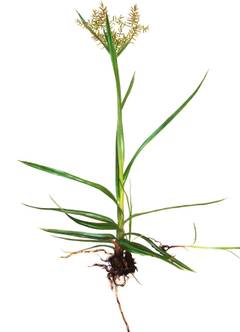
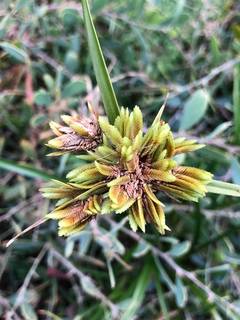
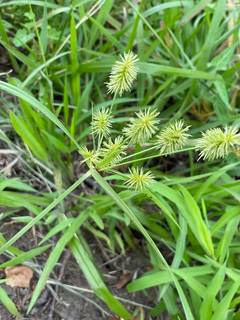
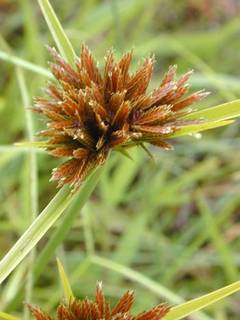
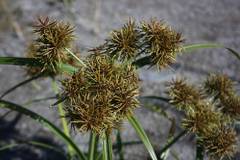
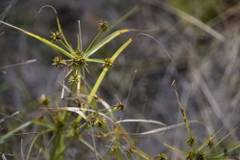
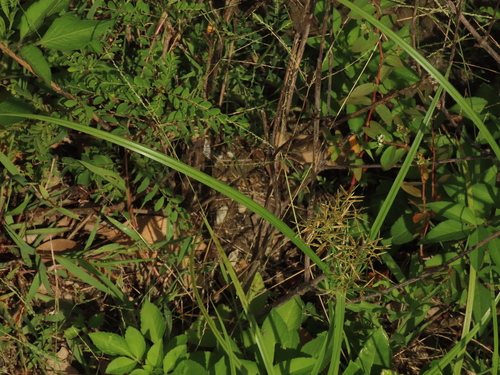
Cyperus rotundus is a perennial sedge in the Cyperaceae family, reaching 6-24 inches (15-60 cm) tall from a network of underground tubers (nutlets) connected by wiry rhizomes. The species is treated by some weed scientists as the world's worst weed — it infests more than 50 crops in over 90 countries. Stems are triangular in cross-section (the diagnostic sedge character), erect, dark green, smooth. Leaves are basal, V-shaped in cross-section (keeled), 0.1-0.3 inch (3-8 mm) wide, dark green, glossy, with a prominent midrib. The inflorescence is an umbel of 3-8 reddish-purple to dark brown spike clusters at the stem apex, subtended by 2-4 leaf-like bracts. Underground tubers are 0.3-0.5 inch (8-12 mm) in diameter, dark brown to black, hard, irregularly shaped, connected in chains by wiry rhizomes 2-6 inches (5-15 cm) apart. A single plant can produce 100+ tubers in a growing season, and each tuber can stay dormant in soil for 3-10 years. The tuber network makes C. rotundus extremely difficult to eradicate — tillage breaks rhizomes and spreads tubers, and most herbicides cannot penetrate the tuber dormancy. Separated from C. esculentus (yellow nutsedge) by the darker, more reddish-purple inflorescence, the darker leaf colour, and the irregular (not round) tuber shape. The species thrives in warm, moist conditions; growth ceases below 55°F (13°C). Not a significant weed in the Pacific Northwest because of insufficient heat accumulation.
Native Range
Cyperus rotundus is native to southern Asia, likely India and Southeast Asia. The species is now pantropical and subtropical in distribution, occurring on every continent except Antarctica. In North America, it is a serious weed in the southeastern states, California, and Hawaii.Suggested Uses
The species is not planted intentionally. In traditional medicine, tuber extracts have been used in Ayurvedic and Chinese medicine for digestive and anti-inflammatory purposes. In ecological context, the species is a component of tropical wetland and disturbed-ground communities. In agricultural and horticultural settings, the species is managed exclusively as a weed.How to Identify
Appearance
Size & Dimensions
Height6" - 2'
Width/Spread6" - 2'
Bloom Information
Reddish-purple spike clusters appear from June through October in warm climates. Each umbel bears 3-8 spikes of small florets. The species is wind-pollinated. Seed viability is low in many populations — reproduction is primarily vegetative via tubers.
Detailed Descriptions
Flower Description
Reddish-purple to dark brownFoliage Description
Dark green, glossyGrowing Conditions
Sun Requirements
Requires 4-12 hours of direct sunlight daily
• Full Sun: 6+ hours of direct sunlight
• Partial Shade: 3-6 hours of direct sunlight
• Full Shade: Less than 3 hours of direct sunlight