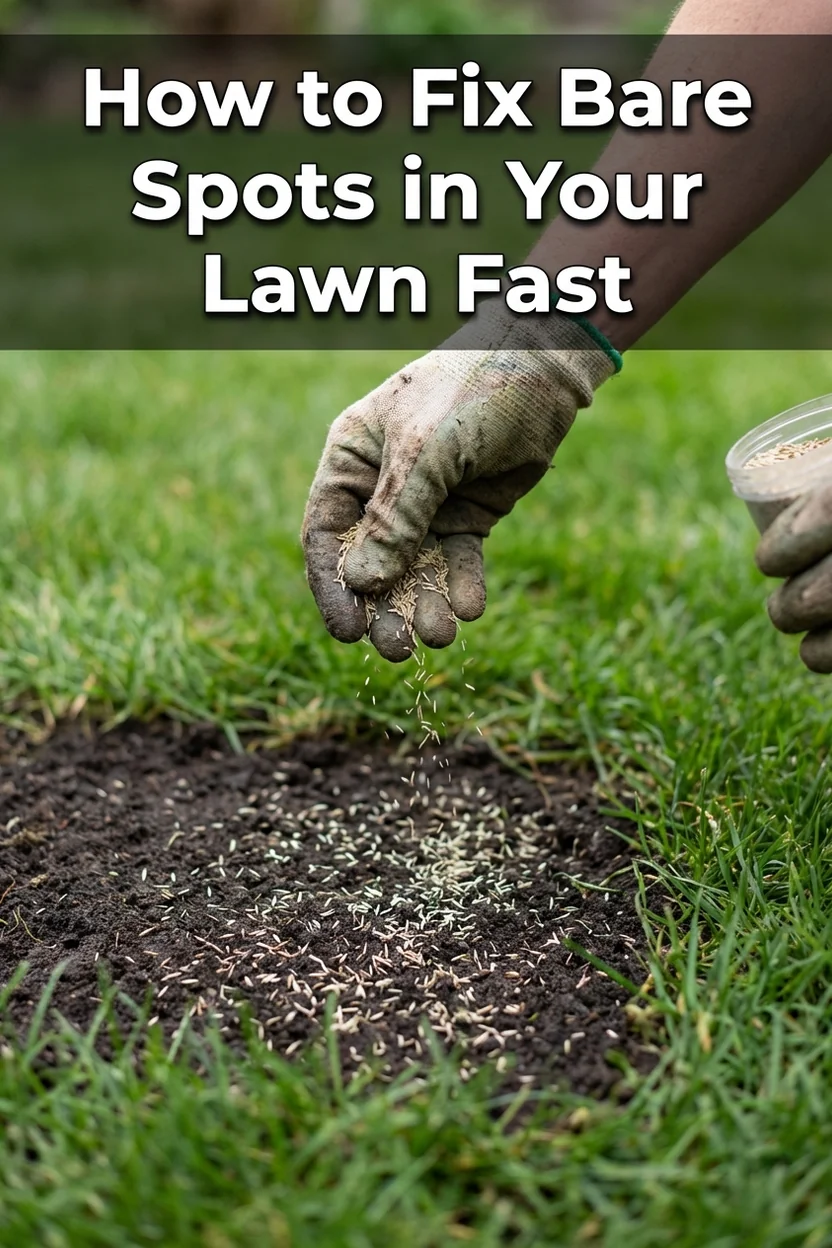
How to Fix Bare Spots in Your Lawn Fast
Pets & Toxicity
Recorded toxicity for plants linked in this guide. An unknown status is not a safety assessment.
No linked plant is recorded as toxicDetailsHide
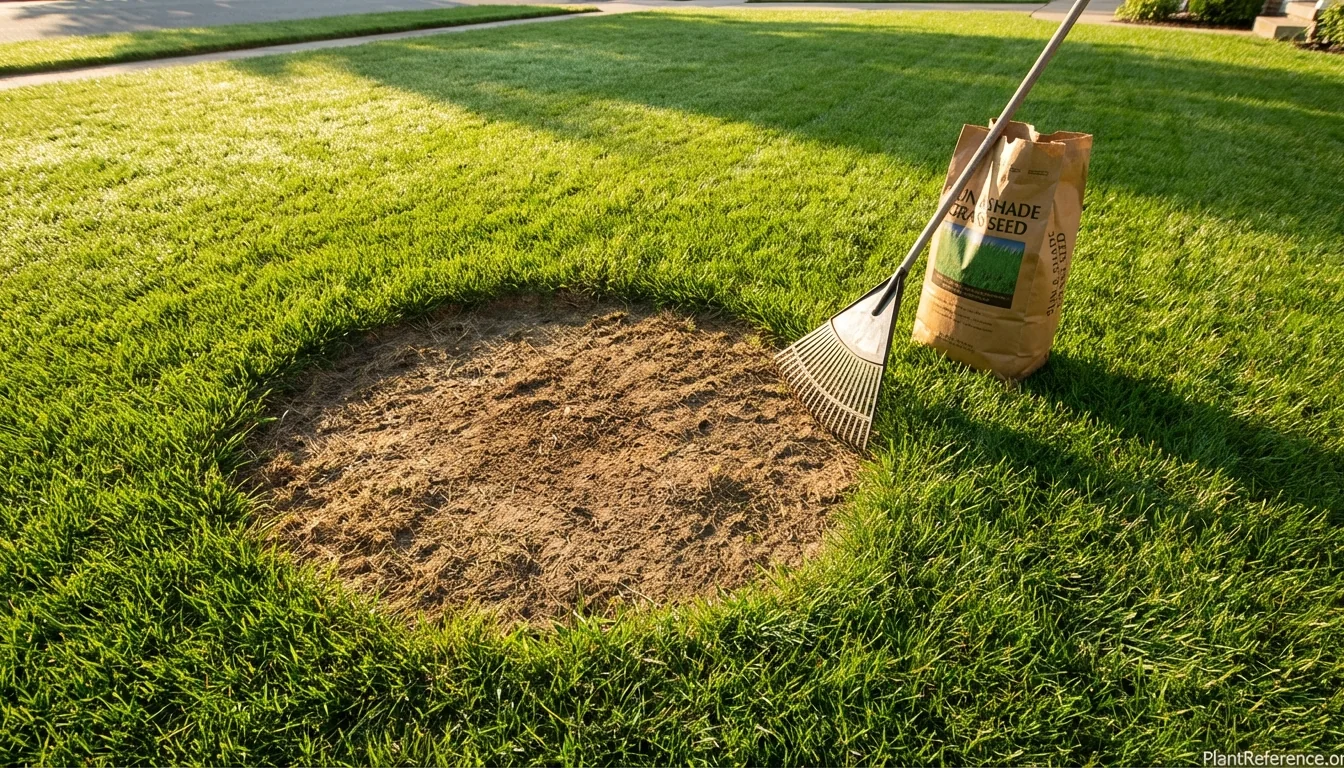
— Image © Plant Reference 2026
Bare spots are the most common cosmetic lawn complaint I hear, and the most common mistake is repairing the spot without fixing the cause. A homeowner reseeds a dog urine spot without flushing the salts from the soil — new seedlings may struggle. Another patches a grub-damaged area without checking for active grubs — the damage may continue. Checking the cause before you touch the soil helps avoid repeating the repair.
Identify the Cause Before You Repair
Every bare spot has a history. The shape, location, and surrounding conditions help narrow down what happened — and whether the cause is still active.
Pattern | Likely Cause | Fix Before Repairing |
|---|---|---|
Small circles with green rings | Dog urine | Dilute salts with water; avoid runoff or saturation |
Irregular patches, sod lifts easily | Grubs | Confirm damaging grubs; use local guidance and the product label |
Circular tan patches, blade lesions | Brown patch disease | Avoid prolonged leaf wetness and excess nitrogen |
Worn paths between fixed points | Foot traffic | Install stepping stones or redirect traffic |
Strips along mower turns | Scalping / compaction | Raise mowing height, core aerate |
Sudden dead patch, chemical smell | Fertilizer or chemical spill | Do not hose it away; identify the spill and get label/manufacturer cleanup guidance |
Brown Patches in Your Lawn: Causes, Diagnosis, and Treatment
Do not skip this step. If the cause is still active — grubs still feeding, dog still using the same spot, mower still scalping the same turn — your repair will fail. Fix the cause first, then patch the turf.
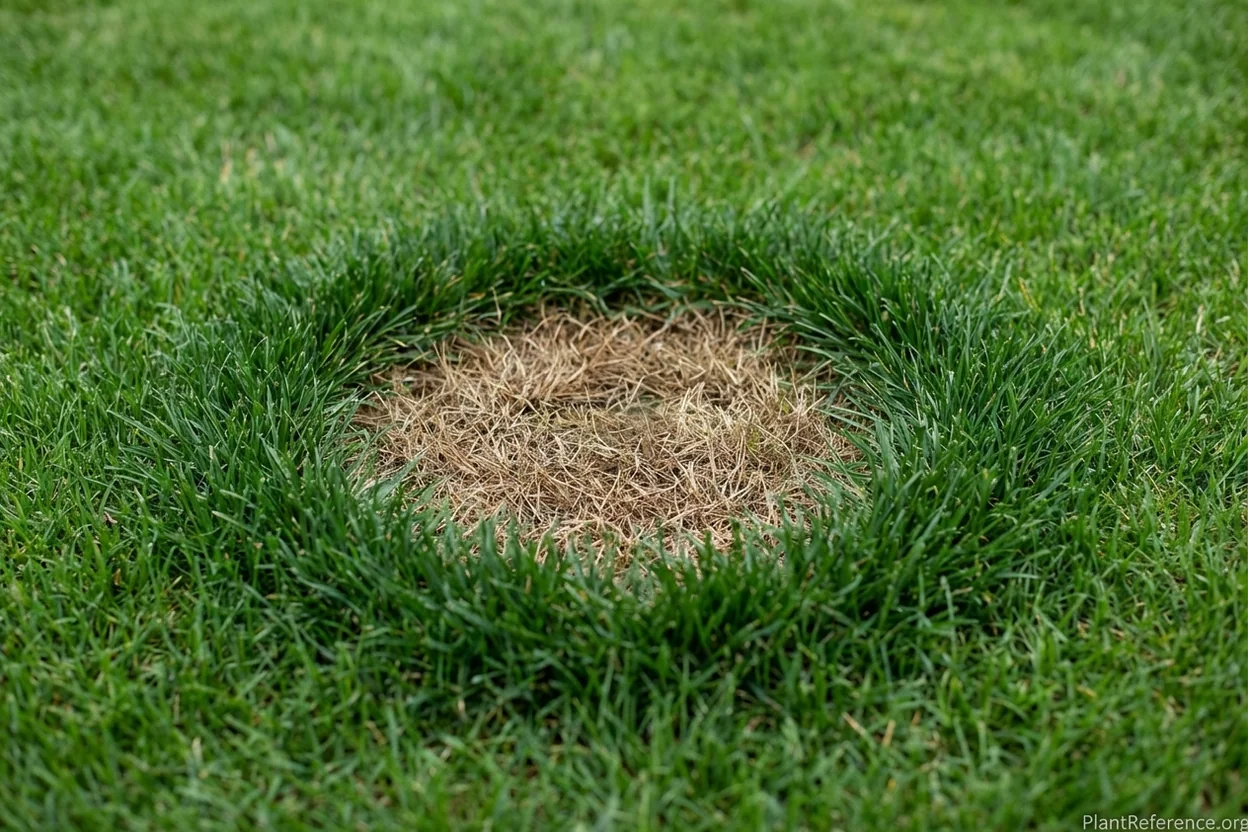
The Seed Patch Method (Best for Small to Medium Spots)
Seeding is the most cost-effective repair for bare spots up to several square feet. It takes longer than 2-4 weeks for full establishment but costs a fraction of sod.
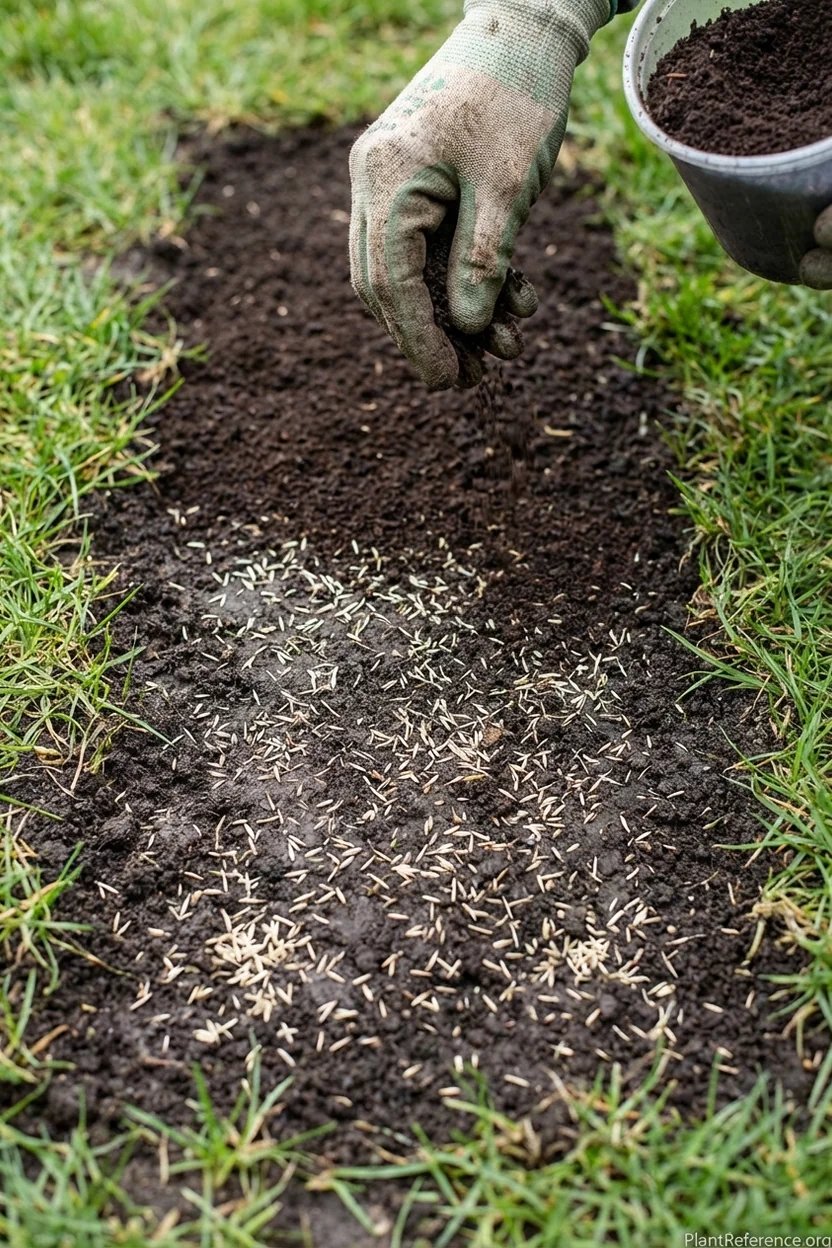
Step 1: Prepare the Soil
Rake or scratch the bare area to loosen the top 1-2 inches (3-5 cm) of soil. Compacted, crusted soil prevents seed-to-soil contact and blocks root penetration. If the soil is extremely hard, use a garden fork to break up the top 3-4 inches (8-10 cm). Remove any dead grass, debris, or rocks.
For dog urine spots, flush the soil with enough water to dilute salts without runoff or saturation before seeding to leach excess nitrogen salts. Residual salts can damage new seedlings too. How to Water Your Lawn the Right Way: Depth, Timing, and Drought
Step 2: Apply Seed
Spread grass seed at the new-lawn establishment rate — not the lighter overseeding rate. For 🌿Festuca arundinacea tall fescue: 6-8 lbs per 1,000 sq ft. For 🌿Poa pratensis Kentucky bluegrass: 2-3 lbs per 1,000 sq ft. For small spots, measure the area and scale the seed label rate. Match the seed species to your existing lawn. What Type of Grass Do I Have? Identify Your Lawn in 5 Steps
Step 3: Cover and Firm
Spread a thin layer of compost or topsoil (0.25 inches / 0.6 cm) over the seed. This protects seeds from birds, holds moisture, and supports germination. Gently press the covering down with your foot or the back of a rake to ensure firm seed-to-soil contact.
Step 4: Water
This is the critical phase. Water the patch lightly as needed to keep the seedbed moist through germination — just enough to keep the top 0.5 inches (1.3 cm) of soil moist. Do not soak the area; heavy watering washes seed away. Adjust for rain and heat; water less often but deeper as roots develop, rather than switching on a fixed date.
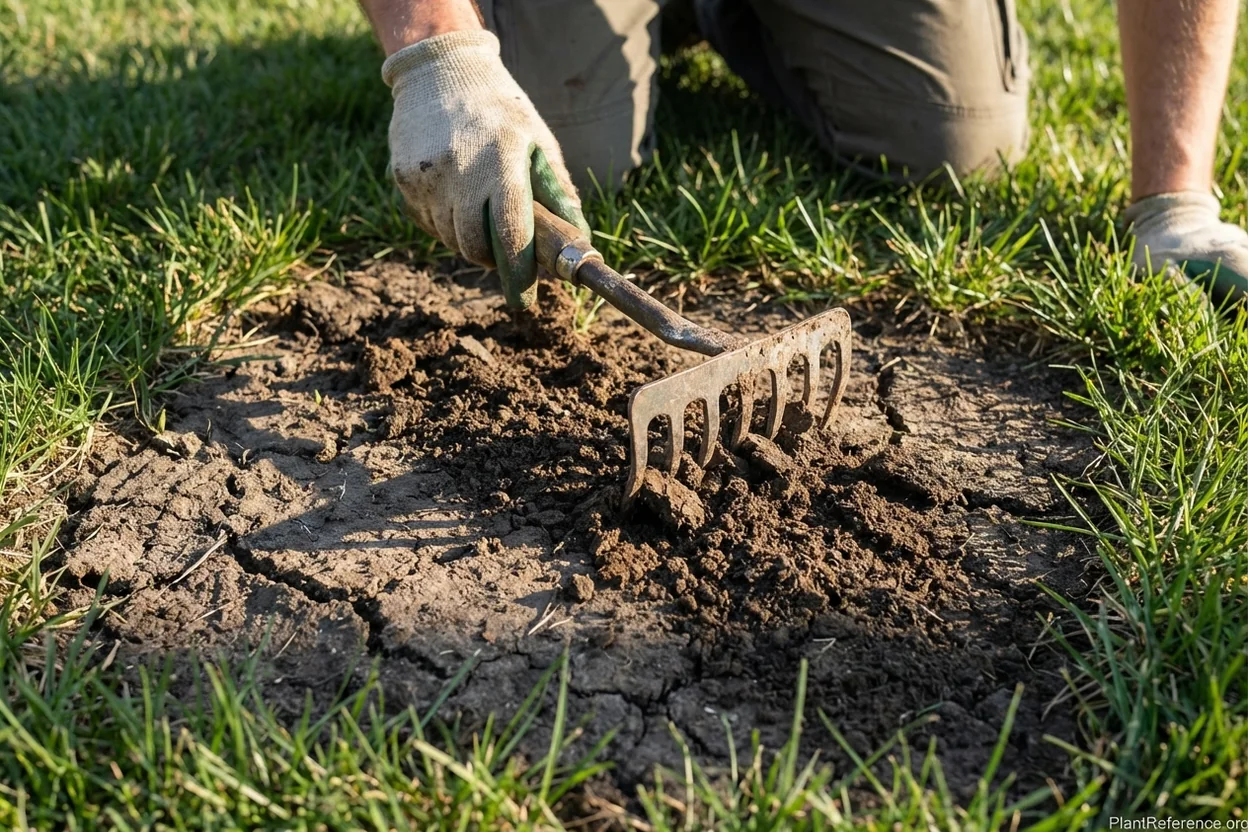
The Sod Patch Method (Instant Results)
For spots that need to look good immediately — front yards, high-visibility areas, or spots larger than 2-3 square feet where seed would take too long — sod patching provides same-day results.
How to Patch with Sod
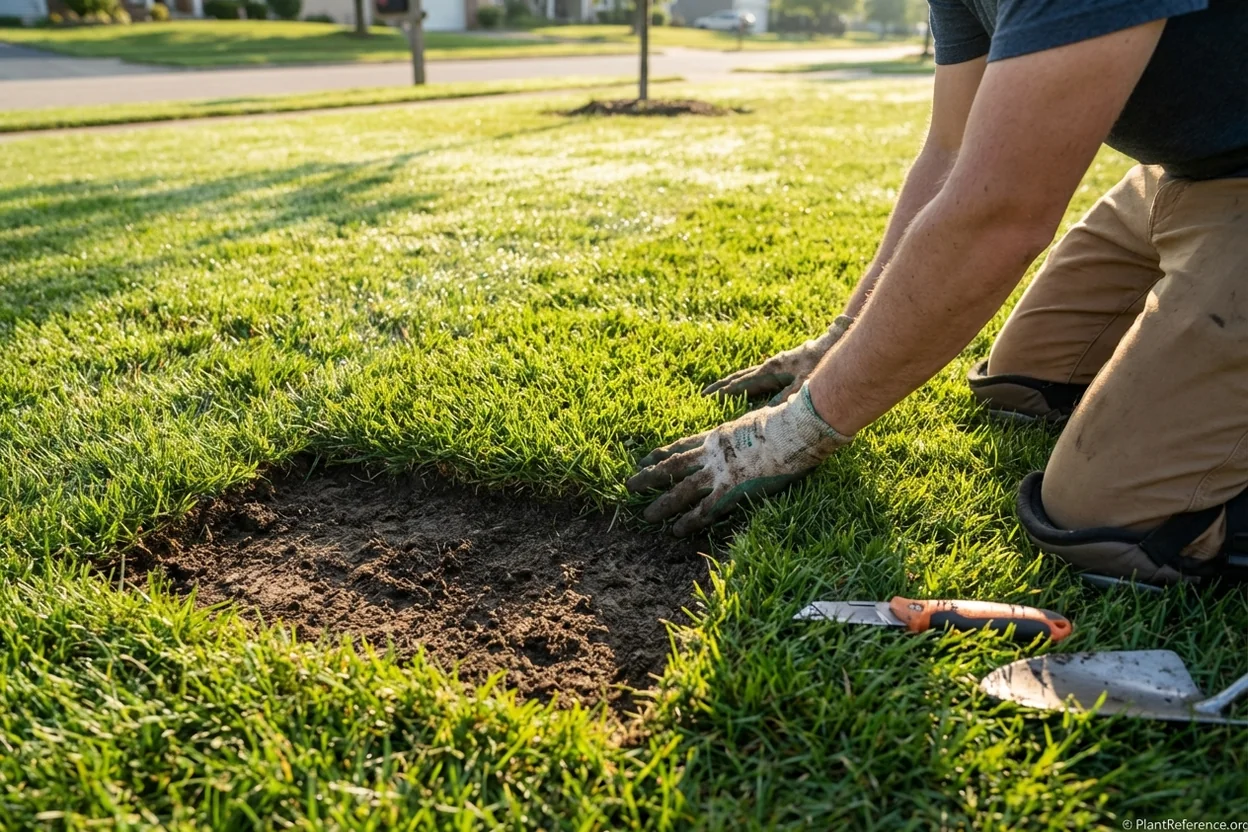
Cut a piece of sod from a garden center or sod farm that matches your existing grass species. Most retailers sell sod by the piece (typically 2 x 5 feet / 60 x 150 cm) or by the pallet. For small spots, a single piece is sufficient.
Prepare the bare area by loosening the top 2 inches (5 cm) of soil and leveling it so the sod surface will sit flush with the surrounding lawn — not above or below. If the sod sits higher than the surrounding grass, the edges can dry out. If it sits lower, it can collect water and become waterlogged.
Cut the sod to fit the bare area using a sharp utility knife. Press the sod firmly into the soil, eliminating air pockets. Water immediately to wet the sod and soil beneath, and keep them moist, not saturated, while roots grow into the underlying soil. Lawn Mowing Height Guide: The One-Third Rule and Seasonal Timing
The Tug Test for Establishment
After 2 weeks, tug gently on the sod edge. If it resists, roots have anchored into the soil and rooting is underway. If it lifts easily, check moisture, drainage and soil contact, then allow more rooting time. Do not mow the patch until it passes the tug test.
Timing: When to Repair by Grass Type
Cool-Season Lawns: Late Summer to Early Fall
Late summer to early fall is generally the best window for seeding bare spot repairs on 🌿Poa pratensis Kentucky bluegrass and 🌿Festuca arundinacea tall fescue lawns. Warm soil and cooling air favor establishment; use local seeding dates to leave enough growing time before winter. Lawn Care Schedule by Month: Your Complete Cool-Season Grass Calendar
Spring repairs (often April-May, depending on location) work but face two disadvantages: incoming summer heat stresses young seedlings before roots mature, and many pre-emergent herbicides inhibit new turf as well as crabgrass. Follow the label’s seeding interval; only use a product at seeding if labeled for your grass. How to Get Rid of Crabgrass: Prevention, Timing, and Treatment
Sod repairs are best timed for active rooting in your grass type. Cut sod must grow roots into the soil; unfrozen ground alone does not guarantee success. In summer, check moisture frequently without keeping soil saturated.
Warm-Season Lawns: Late Spring Through Summer
🌿Cynodon dactylon Bermudagrass and 🌿Zoysia japonica zoysiagrass bare spots self-repair during active summer growth if the surrounding turf is healthy. Stolons and rhizomes grow into bare areas naturally — fertilize within your grass type’s local program and soil-test guidance. If the spot is too large for natural fill-in, plug or sod during May-July in many warm-season regions, adjusting to local active-growth conditions. When to Fertilize Bermuda Grass: Monthly Schedule by Zone
Preventing Bare Spots from Returning
Address the Root Cause
The repair is permanent only if you fix what created the bare spot in the first place. Redirect foot traffic with stepping stones or paths. Train dogs to use a designated gravel or mulch area. Consider preventive grub treatment only with a recent damage history or other confirmed risk; follow local timing and all label precautions, including protection of people, pets and pollinators. Raise mowing height on scalp-prone areas. How to Get Rid of Lawn Grubs: Signs, Treatment, and Prevention
Build Lawn Density
A thick lawn resists bare spot formation because dense turf can absorb moderate traffic, recover from minor disease, and compete with weeds that colonize thin areas. Annual fall overseeding (cool-season), proper fertilization, and core aeration build the root density and plant population that make bare spots less likely. How to Overseed Your Lawn: Timing, Seed Selection, and Technique
Soil Health
Compacted soil under high-traffic areas prevents root growth and leads to chronic thinning. Core aerate these zones as needed during active growth — usually late summer/early fall (cool-season) or after spring green-up (warm-season). Topdress with compost after aeration to improve soil structure and water infiltration. When and How to Aerate Your Lawn: Timing, Method, and Results
Frequently Asked Questions
Reading about plants and recognising them are different skills. These three build the second.
- Daily PlantIdentify the day’s mystery plant from a close-up photograph.
- Keyed OutWork a dichotomous key, lead by lead, to name a hidden specimen.
- Name That PlantName a specimen from botanical clues dealt hardest first.
Free to play, no account needed
Tagged with
James is a lawn care professional in Dallas who runs a small residential maintenance company. He started mowing lawns as a teenager and worked his way up to running crews for a large landscaping firm before going out on his own. James specializes in warm-season turf grasses—Bermuda, St. Augustine, and Zoysia—and knows how to keep a lawn alive through Texas summers without wasting water. He's also experienced with the transition zone challenges that Dallas faces, where warm-season and cool-season grasses overlap. James takes a practical, science-informed approach to lawn care and pushes back on the idea that a good lawn requires heavy chemical inputs.