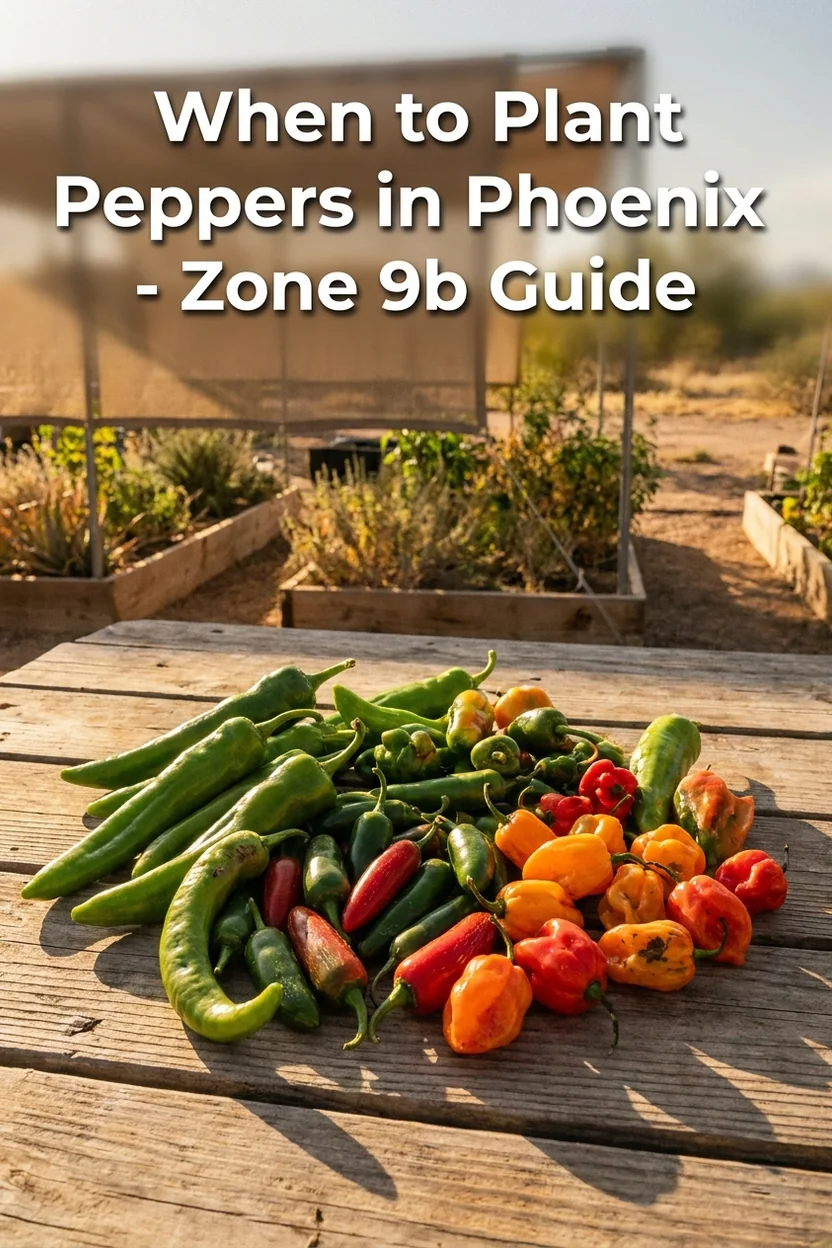
When to Plant Peppers in Phoenix: Zone 9b Dates + Best Varieties
Pets & Toxicity
Recorded toxicity for plants linked in this guide. An unknown status is not a safety assessment.
Toxic to pets: Poblano pepper (7 linked plants checked)DetailsHide
Capsicum chinense 'Habanero' — Toxicity: Not assessed
Fruit contains capsaicin at 100,000–350,000 Scoville Heat Units — strong enough to cause severe burning on skin, eyes, and mucous membranes through simple contact with cut fruit or the hand that held it. Nitrile gloves are used during handling and food preparation; face and eye contact is avoided. The fruit is irritating rather than toxic in the usual sense, but the heat level can cause significant discomfort and real injury if mishandled. The plant is kept out of reach of children and pets.View Capsicum chinense 'Habanero' plant profileCapsicum annuum 'Jalapeño' — Toxicity: Not assessed
Capsaicin in fruit causes burning sensations in mouth and on skin. Fruit and handling oils are irritating to eyes and mucous membranes but are not toxic in the usual sense. Gloves are used during harvesting and processing; hands are washed thoroughly before touching face. Small amounts are generally safe for pets but can cause digestive upset.View Capsicum annuum 'Jalapeño' plant profileCapsicum annuum 'Poblano' — Toxicity Warning
Toxic to petsView Capsicum annuum 'Poblano' plant profileCapsicum annuum 'California Wonder' — Toxicity
Non-toxicView Capsicum annuum 'California Wonder' plant profile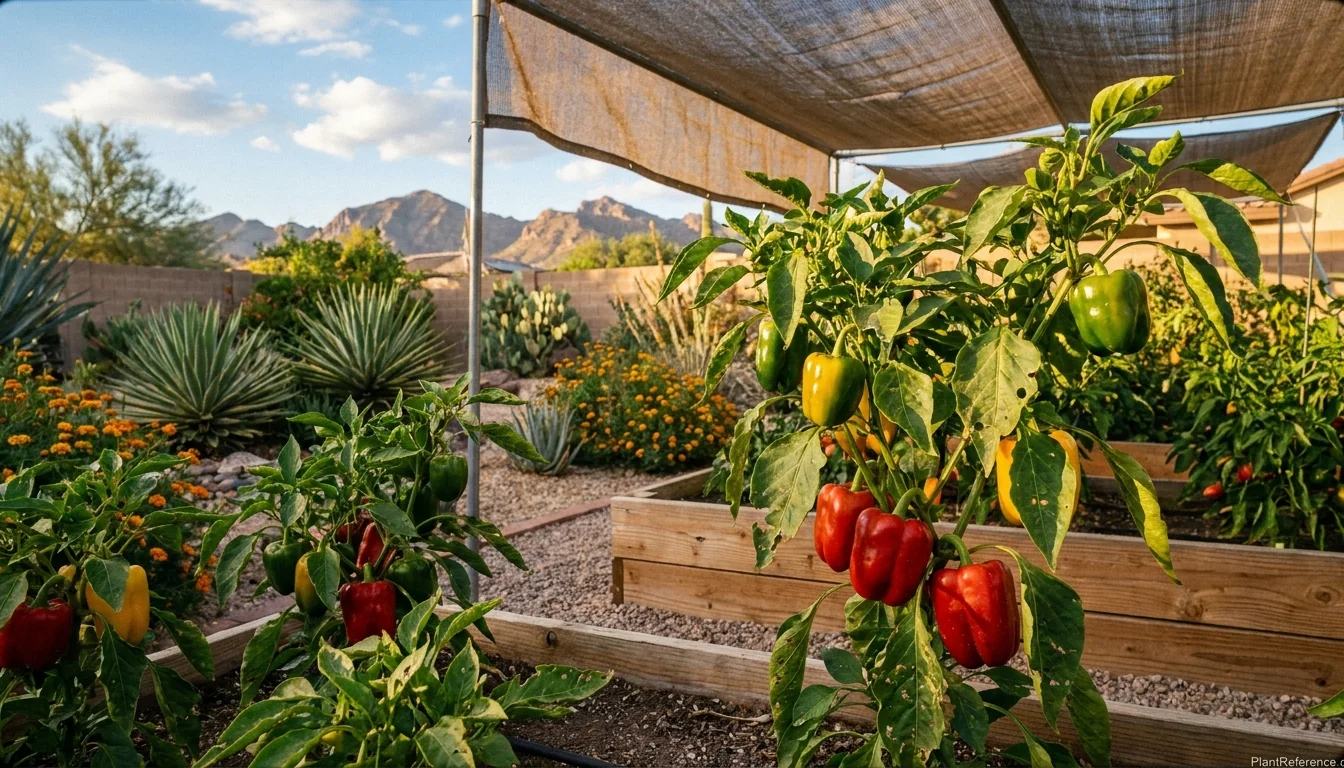
— Image © PlantReference.org 2026
Phoenix is a pepper city. The desert provides exactly what these tropical plants crave—intense sun, warm soil, and dry air that eliminates fungal disease. The catch is that Phoenix provides too much of a good thing in midsummer. When temperatures exceed 105°F, even heat-loving peppers stop setting fruit. Pollen becomes nonviable, flowers drop, and plants go into survival mode. You work around this by planting in two waves—spring and fall—and accepting a midsummer gap when plants are alive but not producing. The reward is a combined harvest season that stretches from May through December, with some of the hottest peppers you'll grow anywhere in the country.
Best Pepper Varieties for Phoenix's Zone 9b Climate
Phoenix soil is alkaline desert ground—caliche hardpan sits beneath much of the valley, and native soil pH runs 7.5-8.5. Irrigation water compounds the problem with its own alkalinity. Raised beds with imported soil are the practical approach for most vegetable gardening. The advantage: zero fungal pressure. Phoenix's dry air means you'll never deal with the leaf blight and rot that humid-climate gardeners fight constantly.
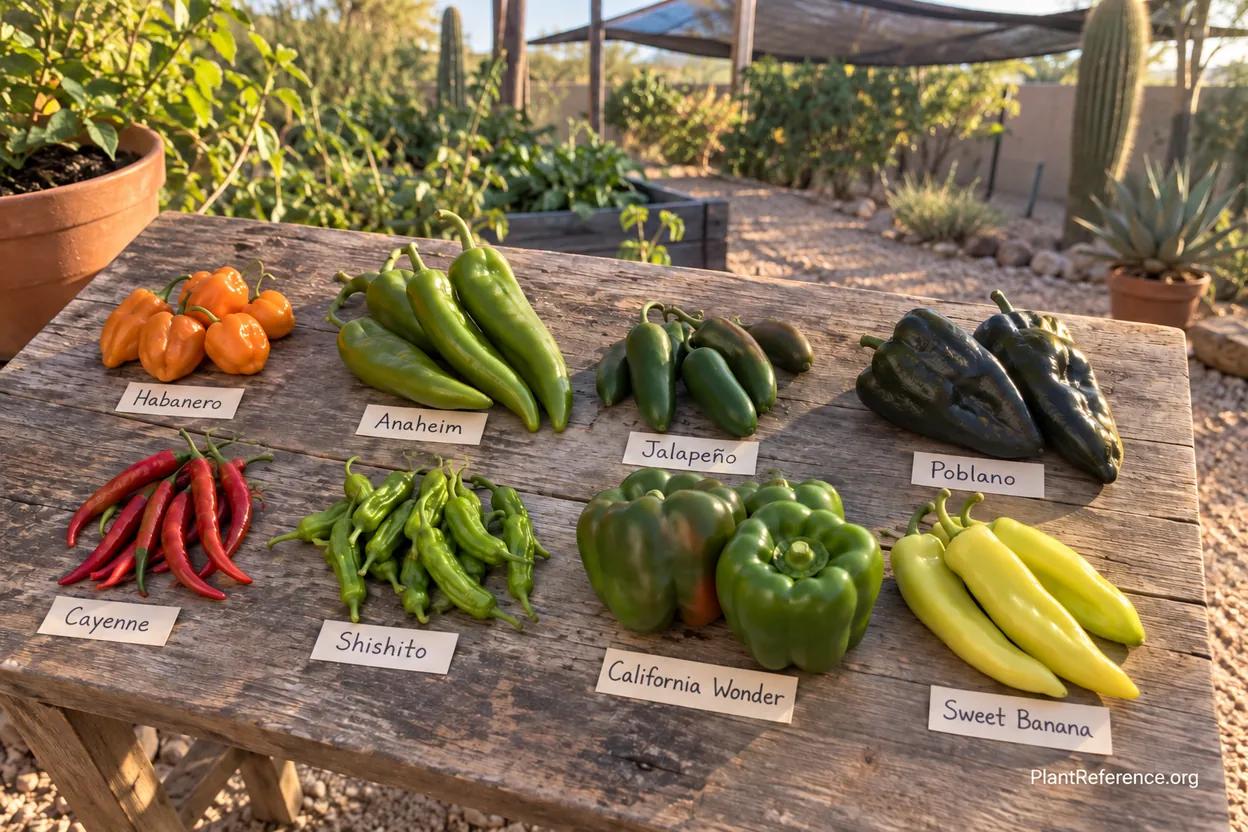
🌿Capsicum chinense 'Habanero' (KAP-sih-kum chi-NEN-see) is Phoenix's star performer. At 100,000-350,000 SHU and 90-120 days, 🌿Capsicum chinense 'Habanero' demands sustained heat that most American cities can't deliver. Phoenix can. February transplants give this slow variety the long runway it needs, and the extreme heat drives capsaicin production to maximum levels. This is the city where 🌿Capsicum chinense 'Habanero' reaches its full genetic potential.
🌿Capsicum annuum 'Anaheim' (KAP-sih-kum AN-yoo-um) produces heavily with minimal care in Phoenix's climate. At 500-2,500 SHU and 70-80 days, 🌿Capsicum annuum 'Anaheim' is the workhorse roasting pepper. Plants tolerate the heat better than most varieties and continue setting fruit later into summer than bells.
🌿Capsicum annuum 'Jalapeño' is reliable in both spring and fall waves. At 2,500-8,000 SHU and 70-80 days, 🌿Capsicum annuum 'Jalapeño' produces hotter fruits in Phoenix than in milder climates—the heat stress concentrates capsaicin. Start plants early for maximum spring production before the midsummer gap.
🌿Capsicum annuum 'Poblano' handles Phoenix heat well at 1,000-2,000 SHU and 65-80 days. The large leaves provide natural shade for developing fruits—an advantage in a city where sunscald is the primary fruit damage concern. Heavy producer in spring.
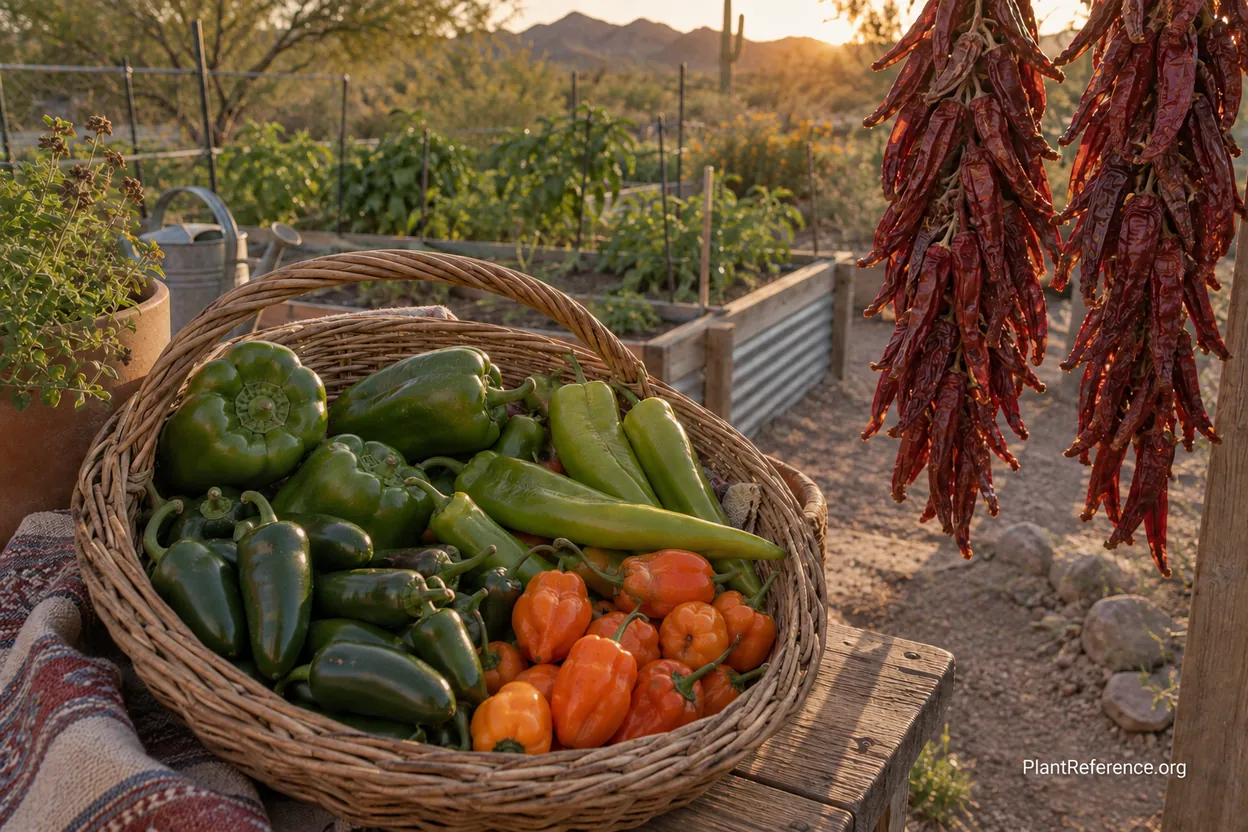
🌿Capsicum annuum 'Cayenne' thrives at 30,000-50,000 SHU and 70-85 days. The thin-walled fruits dry perfectly in Phoenix's near-zero humidity. Hang harvested Cayennes outdoors and they'll dry in a week—faster than any other city in this series.
🌿Capsicum annuum 'Shishito' matures fastest at 60-70 days and 50-200 SHU. Plant in both waves for continuous production. The quick maturity makes 🌿Capsicum annuum 'Shishito' especially useful in the fall wave when the window is shorter.
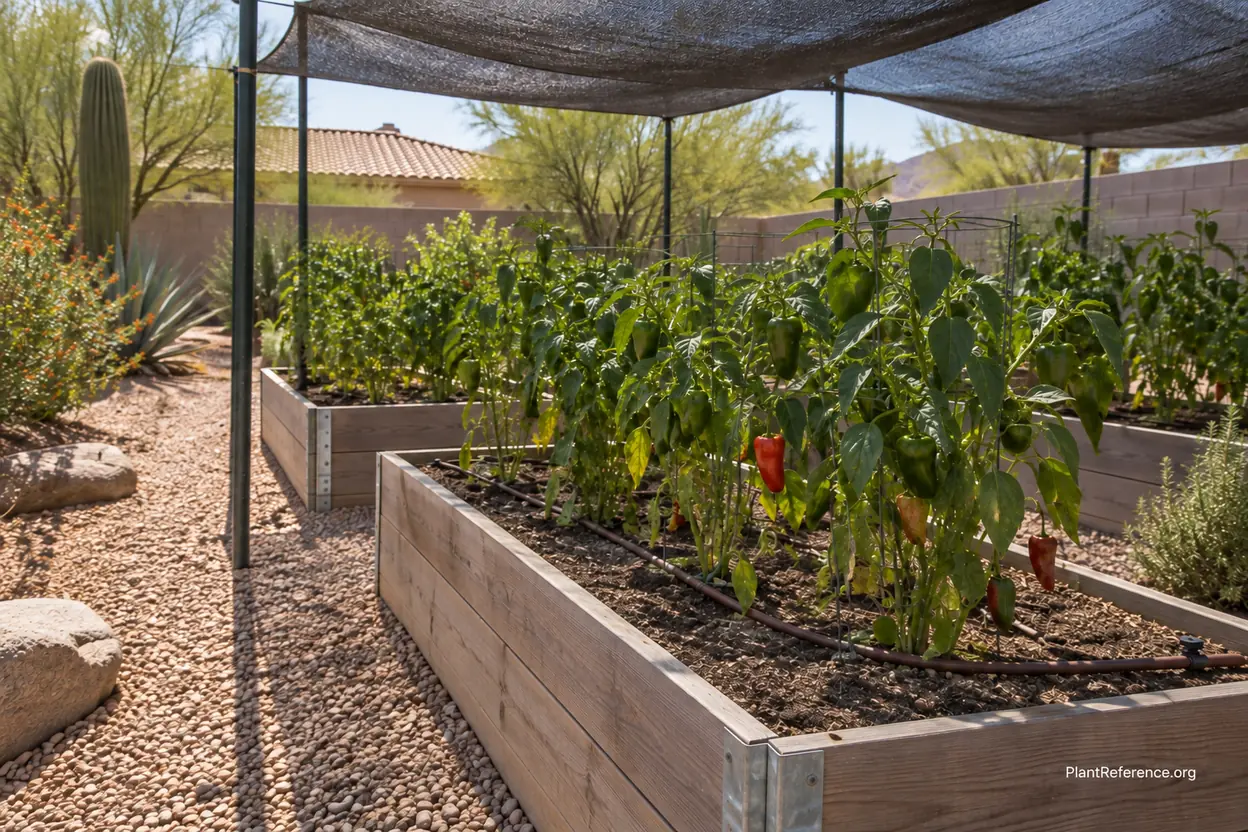
🌿Capsicum annuum 'California Wonder' needs the most protection in Phoenix. At 0 SHU and 70-80 days, this bell pepper is most susceptible to sunscald. Grow 🌿Capsicum annuum 'California Wonder' under 30% shade cloth or in morning-sun-only locations. Spring production is more reliable than fall for bells.
🌿Capsicum annuum 'Sweet Banana' matures early at 65-75 days with 0-500 SHU. Good for both waves and handles Phoenix heat better than bells. Excellent pickled.
Variety | Days to Maturity | Heat Level (SHU) | Best For Phoenix | Notes for Zone 9b |
|---|---|---|---|---|
90-120 days | 100,000-350,000 | Hot sauce, specialty | Star performer; Phoenix heat maximizes SHU; February transplant | |
70-80 days | 500-2,500 | Roasting, stuffing | Workhorse variety; minimal care; excellent heat tolerance | |
70-80 days | 2,500-8,000 | Salsa, pickling | Hotter in Phoenix than mild climates; both waves | |
65-80 days | 1,000-2,000 | Cooking, rellenos | Large leaves shade fruit naturally; heavy spring producer | |
70-85 days | 30,000-50,000 | Drying, hot sauce | Dries fastest in Phoenix; near-zero humidity ideal | |
60-70 days | 50-200 | Grilling, appetizers | Fastest maturity; both waves; quick fall turnaround | |
70-80 days | 0 | Fresh eating, stuffing | Needs shade cloth; most sunscald susceptible | |
65-75 days | 0-500 | Pickling, fresh eating | Better heat tolerance than bells; both waves |
Specific Planting Dates for Phoenix
Phoenix averages a February 15 last frost and December 1 first frost, giving you 289 frost-free days. But frost dates are almost irrelevant for peppers in Phoenix—heat is the constraint. Soil temperatures reach transplant-ready levels (65°F+) by mid-February and exceed 110°F at the surface by June. The midsummer heat gap typically runs six to eight weeks when temperatures consistently exceed 105°F.
Spring Wave: Mid-February through March
Begin transplanting in mid-February after the last frost passes. Soil is already warm from winter sun exposure. Continue through late March. Earlier transplants produce larger plants with more fruit set before the midsummer heat shutdown. 🌿Capsicum chinense 'Habanero' must go in during this wave—it needs the longest possible runway.
Midsummer Gap: Mid-June through Late July
When daytime temperatures exceed 105°F consistently, pepper pollen becomes nonviable and flowers drop. Plants survive but stop producing. This gap typically runs mid-June through late July. Keep plants alive with deep watering and shade cloth—they'll resume production when temperatures moderate.
Fall Wave: Late July through August
Transplant a second round in late July through mid-August for fall production. September and October provide ideal pepper weather—highs in the 90s, lows in the 60s-70s. Fall peppers produce through November and into early December before frost. Fast varieties like 🌿Capsicum annuum 'Shishito' (60-70 days) are ideal for this shorter window. Raised Bed Too Hot in Summer: Protecting Plants from Heat Stress
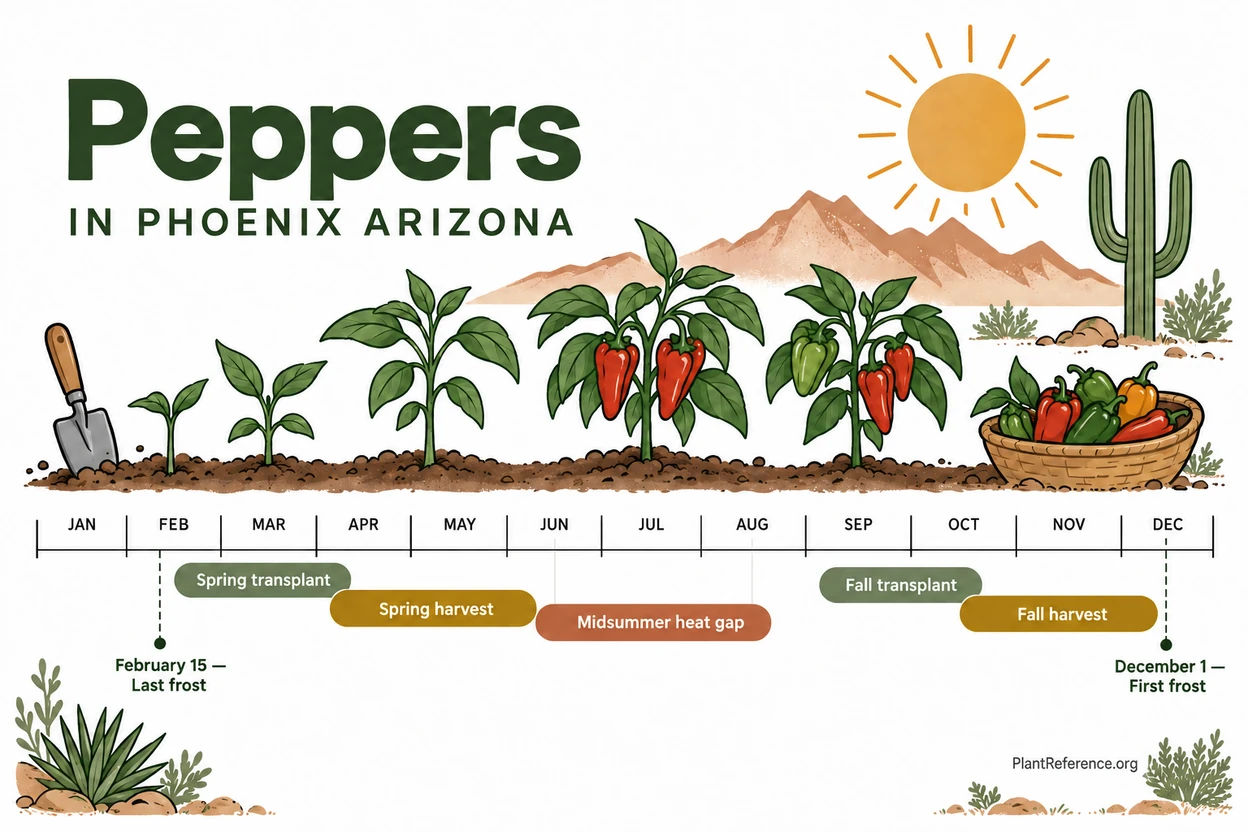
Spring transplant wave: February 15 - March 31
Spring harvest: May through mid-June
Midsummer heat gap: Mid-June through late July (plants survive but don't fruit)
Fall transplant wave: Late July through mid-August
Fall harvest: September through early December
Best hot pepper production: Spring wave gives longest heat accumulation
Complete Growing Guide for Phoenix
Soil Preparation
Phoenix's native desert soil is alkaline (pH 7.5-8.5+) with caliche hardpan sitting anywhere from 6 inches to 3 feet below the surface. Probe with a metal rod before investing in amendments—if you hit caliche within 12 inches, raised beds are the only practical option. Even above the caliche layer, native soil needs heavy amendment. Best Soil Mix for Raised Beds: Creating the Perfect Growing Medium
For raised beds, build to at least 12 inches (30 cm) deep with 60% topsoil, 30% compost, and 10% sand. Add elemental sulfur to lower pH toward the 6.0-6.8 pepper ideal—1-2 pounds per 100 square feet per pH point of reduction needed. Test pH every season because alkaline irrigation water pushes it back up. How to Build a Raised Garden Bed: Step-by-Step Construction Guide
Transplanting
Harden off seedlings for 7-10 days, increasing sun exposure gradually. Phoenix sun is intense—transplant shock is more severe here than in milder climates. Set transplants 18-24 inches (45-60 cm) apart. Plant in the evening or on a cloudy day if possible. Provide temporary shade for the first week using shade cloth or cardboard on the south and west sides. Water deeply immediately after transplanting. Raised Bed Vegetable Garden Layout: Planning for Maximum Production
Watering
Phoenix receives about 8 inches of annual rainfall—drip irrigation is non-negotiable. Peppers need 2-3 inches per week during the hottest months, delivered through drip lines that place water at the root zone. Overhead watering is wasted to evaporation in Phoenix's dry heat. Water deeply 3-4 times per week rather than shallowly every day to encourage deep root development that helps plants survive extreme heat. Raised Bed Irrigation Systems: Watering Solutions for Consistent Growth
Fertilizing
Apply balanced fertilizer at planting. Switch to low-nitrogen, high-phosphorus formula (5-10-10) at flowering. Phoenix's alkaline soil locks out iron and other micronutrients—chelated iron (EDDHA form) corrects yellowing foliage. Side-dress with compost every 4-6 weeks. Reduce fertilizer during the midsummer gap when plants are surviving rather than actively producing. Best Soil for Raised Beds: 6 Commercial Mixes Tested and Compared
Mulching
Apply 3-4 inches (8-10 cm) of straw or shredded bark. Mulch is critical in Phoenix—it reduces soil temperature by 10-15°F, conserves moisture, and prevents the surface crusting that bare desert soil develops. Avoid dark-colored mulch that absorbs heat. Refresh mulch as it decomposes quickly in Phoenix's arid conditions. Raised Bed Soil Settling and Compaction: Prevention and Solutions
Staking and Support
Phoenix's monsoon season (July-September) brings sudden wind gusts that topple loaded pepper plants. Stake all varieties at transplanting using bamboo stakes or tomato cages. 🌿Capsicum chinense 'Habanero' grows tall and leggy—it needs staking from the start. Heavy producers like 🌿Capsicum annuum 'Jalapeño' and 🌿Capsicum annuum 'Anaheim' benefit from caging that supports fruit-laden branches from all sides. Position beds near walls or fences for wind protection during haboob season.
Container Growing
Containers work well for Phoenix peppers—you can move them to shade during the worst heat and protect them from frost in winter. Use 5-gallon or larger pots with premium potting mix. Containers dry faster than beds in desert heat, so expect to water daily or even twice daily during the hottest months. Dark-colored pots absorb too much heat—use light-colored containers or wrap dark ones with reflective material to keep root zone temperatures manageable during the extreme summer months.
Troubleshooting Phoenix-Specific Problems
Midsummer Blossom Drop
When temperatures exceed 95°F at night and 105°F during the day, pepper pollen becomes sterile and flowers abort. This is normal and expected in Phoenix—not a sign of disease or nutrient deficiency. Maintain watering and shade cloth through the gap. Plants resume production when temperatures moderate in late July or August. Spring-set fruit continues ripening through the gap even though no new fruit sets. When to Plant Tomatoes in Phoenix: Complete Guide + Best Varieties for Zone 9b
Sunscald
White, papery, blistered patches on fruit surfaces indicate sunscald—Phoenix's most common pepper problem. Install 30-40% shade cloth over pepper beds from May through September. Avoid pruning interior foliage that shades developing fruit. Varieties with heavy canopy like 🌿Capsicum annuum 'Poblano' resist sunscald naturally. 🌿Capsicum annuum 'California Wonder' is most vulnerable and needs consistent shade protection. When to Plant Kale in Phoenix: Complete Guide + Best Varieties for Zone 9b
Caliche and Alkaline Soil
Caliche hardpan blocks root development and drainage. Raised beds above caliche are the standard solution. Even in raised beds, alkaline irrigation water (pH 7.5-8.5) gradually raises soil pH. Test annually and apply sulfur to maintain 6.0-6.8. Iron chlorosis—yellowing leaves with green veins—is the most visible symptom of alkaline lockout. Chelated iron provides quick relief while sulfur works over time. When to Plant Green Beans in Phoenix: Complete Guide + Best Varieties for Zone 9b
Wind Damage from Dust Storms
Phoenix haboobs and monsoon winds can shred pepper foliage and snap loaded branches. Stake all varieties at transplanting. Tomato cages provide 360-degree support for heavy producers like 🌿Capsicum annuum 'Jalapeño' and 🌿Capsicum annuum 'Anaheim'. Position beds where walls or fences provide wind breaks on the south and west sides. When to Plant Onions in Phoenix: Complete Guide + Best Varieties for Zone 9b
Harvest & Storage
Harvest peppers at any color stage. Green fruits are edible; ripe colored fruits have higher sugar and vitamin content. Cut stems with pruners—pulling damages branches and reduces future yields. Regular harvesting stimulates continued production, which matters in Phoenix where you want maximum fruit set before and after the midsummer gap. Raised Bed Weeds: Prevention Strategies and Control Methods
Phoenix excels at pepper preservation. 🌿Capsicum annuum 'Cayenne' strings dry outdoors in about a week—hang them in any covered, ventilated area. 🌿Capsicum annuum 'Anaheim' roasts beautifully on the grill and freezes well. Fresh peppers store 1-2 weeks refrigerated. 🌿Capsicum chinense 'Habanero' makes exceptional hot sauce—the extreme SHU levels Phoenix produces create a product worth bottling.
Frequently Asked Questions
Three daily games
Can you name a plant on sight?
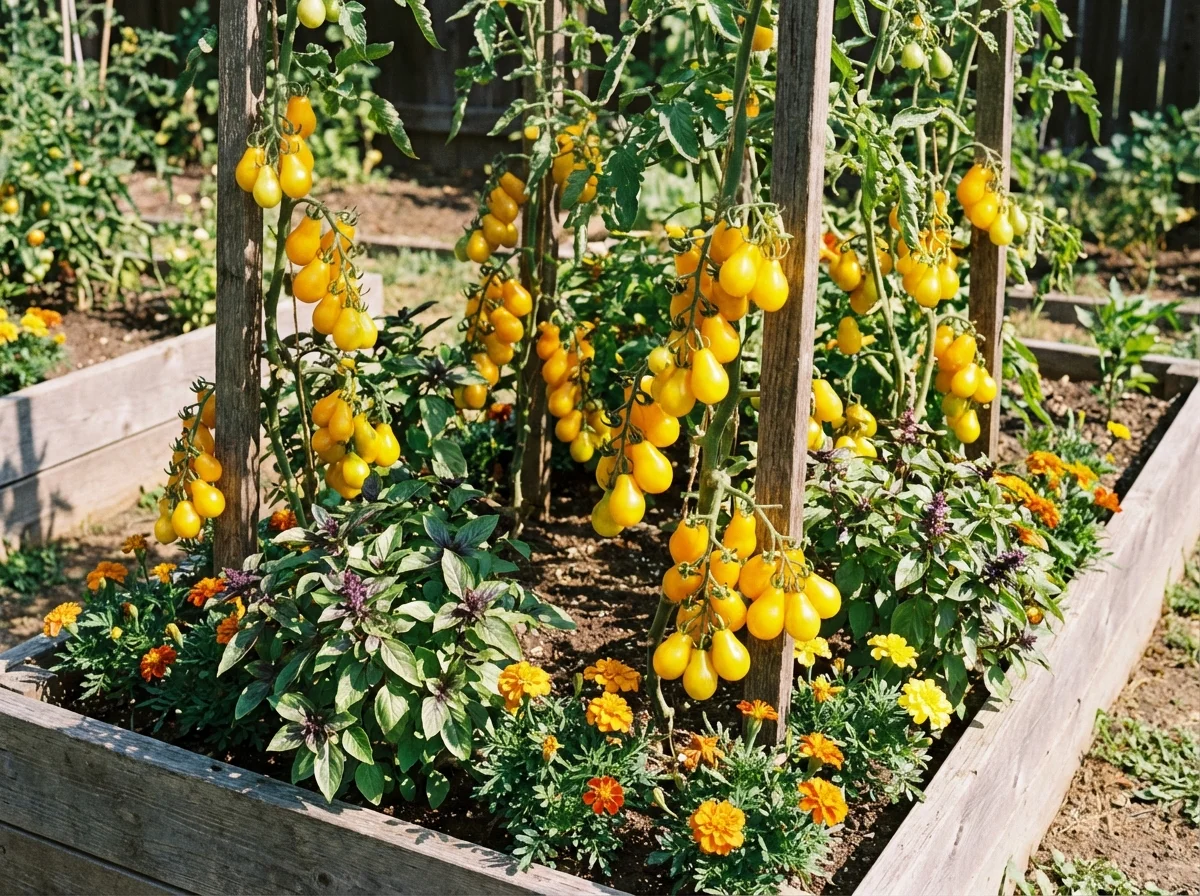
Saturday’s specimenSolanum lycopersicum 'Yellow Pear'Reading about plants and recognising them are different skills. These three build the second.
- Daily PlantIdentify the day’s mystery plant from a close-up photograph.
- Keyed OutWork a dichotomous key, lead by lead, to name a hidden specimen.
- Name That PlantName a specimen from botanical clues dealt hardest first.
Free to play, no account needed
Tagged with
Alejandro is a landscape designer in Phoenix who focuses on low-water, desert-adapted plantings. He grew up in Tucson surrounded by Sonoran Desert plants and got frustrated watching neighbors install water-hungry lawns in a city that gets eight inches of rain a year. After earning his landscape architecture degree, he started designing residential gardens using native and desert-adapted species. Alejandro's approach is practical—he works with the climate rather than against it, using microclimates, shade structures, and efficient irrigation to create gardens that look good without draining the aquifer. He's a regular speaker at local xeriscaping workshops.