Image 1 of 19
1 / 19
Plant Reference
Hedera, Genus, helix, Species,
- Genus & species
English ivy
Europe, western Asia, and northern Africa; widely naturalized and classified as invasive across the Pacific Northwest, eastern North America, and other temperate regions worldwide
Overview
Hedera helix is a climbing broadleaf evergreen vine in the family Araliaceae that grows in two distinct phases — a juvenile climbing/trailing phase that produces palmately 3–5 lobed leaves and attaches to vertical surfaces by aerial rootlets at rates that can reach 240–960 inches (600–2,400 cm / 20–80 feet) of vertical climb on suitable supports, and an adult flowering phase that emerges at the top of vertical supports once the climbing growth has reached the canopy or wall top, producing unlobed diamond-shaped leaves on woody non-climbing stems that bear the flowers and the bird-dispersed berries. As a ground cover without vertical support the species reaches only 6–9 inches (15–23 cm) tall and remains in the juvenile phase indefinitely without producing flowers or berries, and the transition to the adult phase requires the vine to reach the top of a vertical support where it can produce the woody non-climbing flowering shoots. The specific epithet helix is from Greek and Latin meaning spiral or twisting and refers to the climbing habit of the vine, and the genus name Hedera is the classical Latin name used by Roman authors for the same plant. Leaves of the juvenile phase are dark green with prominent pale leaf veins, palmately 3–5 lobed, and 2–4 inches (5–10 cm) long; leaves of the adult phase are dark green, unlobed, diamond to ovate, and 2–3 inches (5–7 cm) long. Greenish-yellow inconspicuous flowers open in rounded umbels 1.5–2 inches (4–5 cm) across in September through November on the adult-phase growth, and the late-fall bloom timing supplies a late-season nectar source for honeybees and other pollinators that are foraging when most other plants have finished flowering. Black fleshy berries 0.3 inch (8 mm) across develop in winter and early spring and are dispersed by birds across long distances. Limitation: the species is classified as an invasive plant across the Pacific Northwest, eastern North America, and other temperate regions worldwide where bird-dispersed seed and the climbing vegetative growth combine to colonize native forest understory and tree trunks — Oregon and Washington restrict the sale and planting of the species under state noxious weed regulations, and regional invasive species lists should be consulted before planting in jurisdictions where the species is restricted. The aerial rootlets that attach the vine to vertical surfaces damage mortar joints in masonry walls, the bark of host trees (where heavy ivy growth can shade the canopy and contribute to tree decline), and wood siding (where the rootlet attachments hold moisture against the substrate and accelerate decay). All parts of the plant contain falcarinol, saponins, and other secondary metabolites — toxic to humans, cats, and dogs if ingested, and the sap can cause contact dermatitis on sensitive skin. The species tolerates deep shade, drought, and poor soil, and this wide tolerance is the basis for the species' aggressive colonization of native vegetation in regions where it has naturalized. Native to Europe, western Asia, and northern Africa.
Native Range
Native to Europe, western Asia, and northern Africa, growing in deciduous and mixed forests, on rocky cliffs, and along forest margins at low to middle elevations across a wide European and Mediterranean range. The species was introduced to North America by European colonists in the 17th and 18th centuries as a familiar landscape plant from the Old World, and the species has subsequently naturalized across the Pacific Northwest, eastern North America, and other temperate regions worldwide where the wide tolerance of light, soil, and moisture conditions supports aggressive colonization of native vegetation. Oregon and Washington list the species as a noxious weed and restrict its sale and planting under state regulations.Suggested Uses
Used as an evergreen ground cover or wall cover in contained settings where the spread can be actively managed in USDA zones 4 through 9. The species is unsuitable for plantings adjacent to natural areas, woodland edges, and tree trunks because the bird-dispersed seed and the climbing vegetative growth escape garden plantings to colonize native forest understory and tree canopies. Jurisdictions where the species is classified as invasive (the Pacific Northwest, eastern North America, and other temperate regions) are unsuitable, and Oregon and Washington restrict the sale and planting of the species under state noxious weed regulations. Masonry walls, host trees, and wood siding are unsuitable supports because the aerial rootlets damage mortar joints, contribute to tree decline through heavy canopy shading, and accelerate decay of wood siding. Gardens where cat, dog, or child access to the foliage or berries is a concern should account for the falcarinol and saponin toxicity. Native-plant alternatives that supply similar evergreen ground cover function without the invasive concern include Mahonia repens (creeping mahonia) in western gardens and Pachysandra procumbens (Allegheny spurge) in eastern gardens.How to Identify
Appearance
Size & Dimensions
Height6" - 80'
Width/Spread2' - 40'
Bloom Information
Greenish-yellow inconspicuous flowers open in rounded umbels 1.5–2 inches (4–5 cm) across in September through November across a 4–6 week bloom period. The flowers open only on the adult-phase non-climbing growth that develops at the top of vertical supports after the vine has climbed — ground-cover and trailing forms remain in the juvenile phase indefinitely and do not produce flowers or berries. The late-fall bloom timing supplies a late-season nectar source for honeybees and other pollinators that are foraging when most other plants have finished flowering. Black fleshy berries 0.3 inch (8 mm) across develop in winter and early spring and are dispersed long distances by birds — the bird-dispersed seed is the primary mechanism behind the species' invasive spread into native vegetation in regions where the species has naturalized.
Detailed Descriptions
Flower Description
greenish-yellow inconspicuous flowers in rounded umbels 1.5-2 inches (4-5 cm) across; the flowers open only on the adult-phase non-climbing growth that develops at the top of vertical supports after the vine has climbed; September through November bloom window; followed by black fleshy berries 0.3 inch (8 mm) across in winter and early springFoliage Description
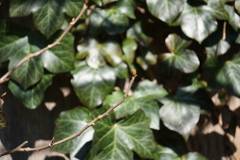
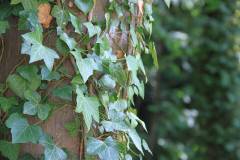
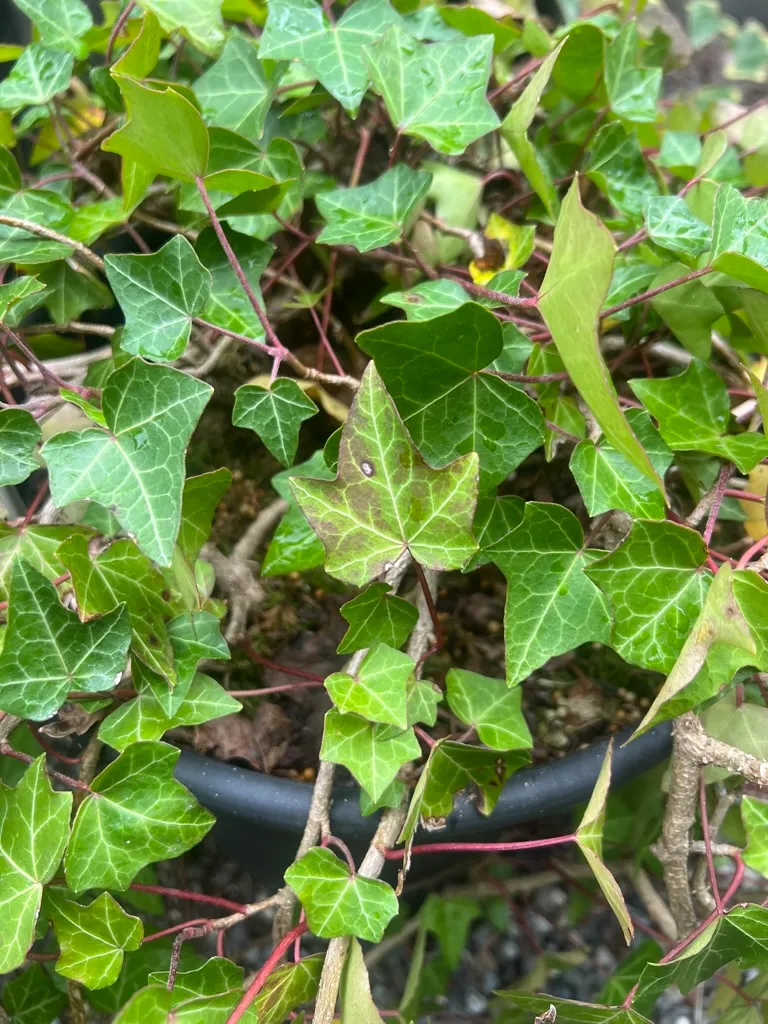
juvenile-phase leaves are dark green with prominent pale veins, palmately 3-5 lobed, 2-4 inches (5-10 cm) long; adult-phase leaves are dark green, unlobed, diamond to ovate, 2-3 inches (5-7 cm) long; the two leaf forms occur on the same plant at different heights — juvenile leaves on the ground and on the lower climbing stems, and adult leaves at the top of the support where flowering and fruiting occursGrowing Conditions
Sun Requirements
Requires 1-8 hours of direct sunlight daily
• Full Sun: 6+ hours of direct sunlight
• Partial Shade: 3-6 hours of direct sunlight
• Full Shade: Less than 3 hours of direct sunlight
Care & Maintenance
Care Guide
Site in part shade to full shade or in full sun with 1–8 hours of direct sun per day in well-drained soil with a pH of 6.0–7.5. The species adapts to loam, sand, and clay soils across a wide light range from deep shade to full sun, develops drought tolerance once the root system is established, and tolerates poor soil — this wide tolerance is the basis for the species' aggressive colonization of native vegetation in regions where it has naturalized. The species is classified as an invasive plant across the Pacific Northwest, eastern North America, and other temperate regions worldwide — Oregon and Washington list the species as a noxious weed and restrict its sale and planting, and regional invasive species lists should be consulted before planting in jurisdictions where the species is restricted. Aerial rootlets damage mortar joints in masonry walls, the bark of host trees, and wood siding. All parts contain falcarinol and saponins and are toxic to humans, cats, and dogs if ingested, and the sap can cause contact dermatitis on sensitive skin — leather gloves and long sleeves are warranted during any pruning operation. Deer-resistant. Hardy in USDA zones 4–9.Pruning
Pruning is done multiple times per year (typically March, June, and September) to contain the spread of the ground-cover form and to remove climbing growth from tree trunks before it reaches the canopy where it produces the flowering and seed-bearing adult-phase growth that drives the invasive spread of the species. Removal of adult-phase fruiting branches reduces seed production and bird dispersal of the species into surrounding vegetation. Ground-level runners that have rooted at the nodes are pulled or cut to limit horizontal spread. Leather gloves and long sleeves are warranted during any pruning operation because the cut stems release sap that contains falcarinol and saponins and that can cause contact dermatitis on sensitive skin.Pruning Schedule
Prune: March, June & September
early springsummerfall
Container Growing
Suitable for container growing
Minimum container size: 2 gallons