When to Plant Tomatoes in Phoenix: Complete Guide + Best Varieties for Zone 9b
Pets & Toxicity
Recorded toxicity for plants linked in this guide. An unknown status is not a safety assessment.
Toxic to pets: phoenix tomato, early girl tomato, Surefire red tomato and 6 moreDetailsHide
Solanum lycopersicum 'Phoenix' — Toxicity Warning
Toxic to petsView Solanum lycopersicum 'Phoenix' plant profileSolanum lycopersicum 'Early Girl' — Toxicity Warning
Toxic to petsView Solanum lycopersicum 'Early Girl' plant profileSolanum lycopersicum 'Surefire Red' — Toxicity Warning
Toxic to petsView Solanum lycopersicum 'Surefire Red' plant profileSolanum lycopersicum 'Roma' — Toxicity Warning
Toxic to petsView Solanum lycopersicum 'Roma' plant profileSolanum lycopersicum 'San Marzano' — Toxicity Warning
Toxic to petsView Solanum lycopersicum 'San Marzano' plant profileSolanum lycopersicum 'Brandywine' — Toxicity Warning
Toxic to petsView Solanum lycopersicum 'Brandywine' plant profileSolanum lycopersicum 'Stupice' — Toxicity Warning
Toxic to petsView Solanum lycopersicum 'Stupice' plant profileSolanum lycopersicum 'Heatmaster' — Toxicity Warning
Toxic to petsView Solanum lycopersicum 'Heatmaster' plant profileSolanum lycopersicum 'Black Cherry' — Toxicity Warning
Toxic to petsView Solanum lycopersicum 'Black Cherry' plant profile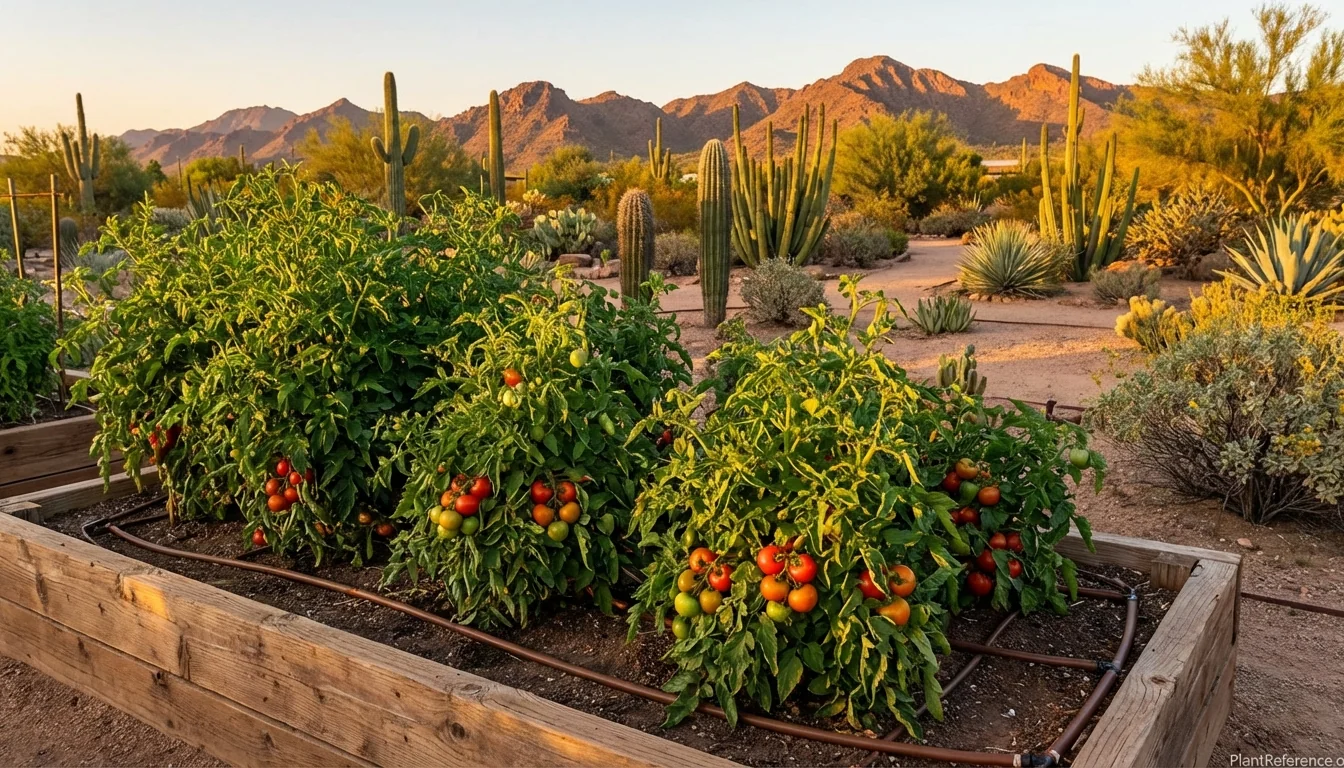
— Image © Plant Reference 2026
Growing tomatoes in Phoenix isn't like gardening anywhere else in America. While most gardeners worry about late spring frosts, you're dealing with 115°F summer days that can literally cook your plants. The good news? Phoenix's Zone 9b climate gives you something most gardeners can only dream of: nearly year-round growing potential.
I've been helping desert gardeners for over forty years, and I'll tell you straight: Phoenix tomato growing is all about timing and variety selection. You can't plant the same varieties on the same schedule as gardeners in Ohio or even California. But once you understand the desert rhythm, you'll be harvesting fresh tomatoes when everyone else has given up for the season.
Best Tomato Varieties for Phoenix's Zone 9b Climate
The biggest mistake Phoenix gardeners make? Trying to grow varieties bred for completely different climates. In the Sonoran Desert, you need tomatoes that can either tolerate extreme heat or produce quickly during the mild seasons.
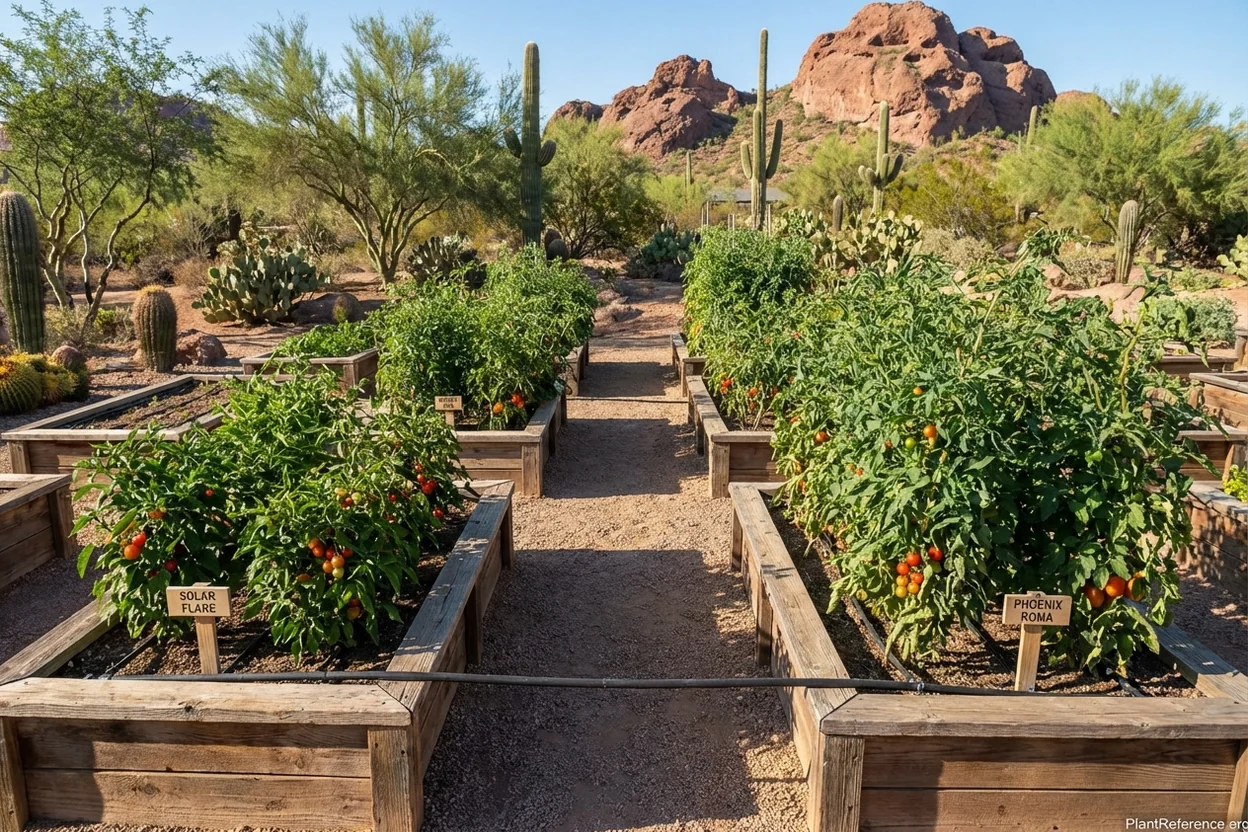
Spring/Fall Varieties (Cool Season Champions)
These varieties perform best during Phoenix's mild seasons—February through May and September through November:
🌿Solanum lycopersicum 'Early Girl' remains my top recommendation for Phoenix beginners. This F1 hybrid sets fruit at lower temperatures and matures in just 50-62 days, making it perfect for quick harvests before the heat hits. The VFF disease resistance package helps it survive in desert soils where fungal spores persist year-round.
🌿Solanum lycopersicum 'Stupice' originated in Czechoslovakia and handles temperature swings better than almost any variety I've grown. It produces 2-3 inch red fruits and continues setting even when nights drop to 45°F—common in Phoenix during February and early March.
🌿Solanum lycopersicum 'Surefire Red' was bred specifically for challenging climates. It tolerates both heat and cool conditions better than traditional varieties, making it ideal for Phoenix's unpredictable spring weather when we might see 60°F mornings and 85°F afternoons.
Heat-Tolerant Summer Warriors
Most tomatoes stop setting fruit when night temperatures exceed 75°F and day temperatures hit 90°F. These varieties laugh at those limits:
🌿Solanum lycopersicum 'Phoenix' was literally bred for this city. Developed by the University of Arizona, it continues producing even when temperatures soar above 100°F. The fruits are smaller than beefsteaks but the flavor is exceptional, and it'll keep producing through September.
🌿Solanum lycopersicum 'Heatmaster' is another university-developed variety designed for extreme heat. It produces medium-sized red fruits and maintains better leaf coverage than most varieties in intense sun, reducing sunscald on the fruits.
🌿Solanum lycopersicum 'Roma' might surprise you as a heat-tolerant choice, but this classic paste tomato originated in hot Mediterranean climates. While it slows production in extreme heat, it rarely stops completely and produces excellent sauce tomatoes through the summer.
Cherry Tomatoes for Continuous Harvest
🌿Solanum lycopersicum 'Surefire Red' cherry variety produces hundreds of small, sweet tomatoes. The small fruit size means less water stress and fewer problems with cracking during monsoon season.
🌿Solanum lycopersicum 'Black Cherry' handles heat better than most cherry varieties while producing complex, rich-flavored dark purple fruits that command premium prices at farmers markets.
Variety | Days to Maturity | Best For | Notes for Phoenix |
|---|---|---|---|
50-62 days | Quick spring harvest | Perfect for Zone 9b short spring season | |
52-60 days | Cool weather tolerance | Handles February temperature swings | |
75-85 days | Summer heat tolerance | Bred specifically for Arizona conditions | |
70-80 days | Extreme heat survival | University-developed for desert climates | |
75-80 days | Processing/sauce | Mediterranean heat tolerance | |
70-75 days | All-season reliability | Handles temperature extremes |
Specific Planting Dates for Phoenix
Phoenix gardening operates on a completely different calendar than the rest of the country. While northern gardeners start seeds indoors in March, you're transplanting established plants into the garden.
Spring Planting Season
Seed Starting Indoors: January 15-30 Start seeds indoors 6-8 weeks before transplant date. Phoenix's intense sun can shock young seedlings, so starting indoors gives them strength before facing desert conditions.
Transplant Outdoors: February 15-March 15 The magic window opens after February 14 (average last frost) but closes before April when temperatures regularly exceed 90°F. Your best transplant dates: - February 15-28: Ideal for heat-sensitive varieties like 🌿Solanum lycopersicum 'Early Girl' - March 1-15: Last chance for traditional varieties; perfect timing for 🌿Solanum lycopersicum 'Stupice'
Spring Harvest: April 15-June 30 Spring plants typically produce their main crop from mid-April through June, with heat-tolerant varieties continuing into July.
Summer Survival Period
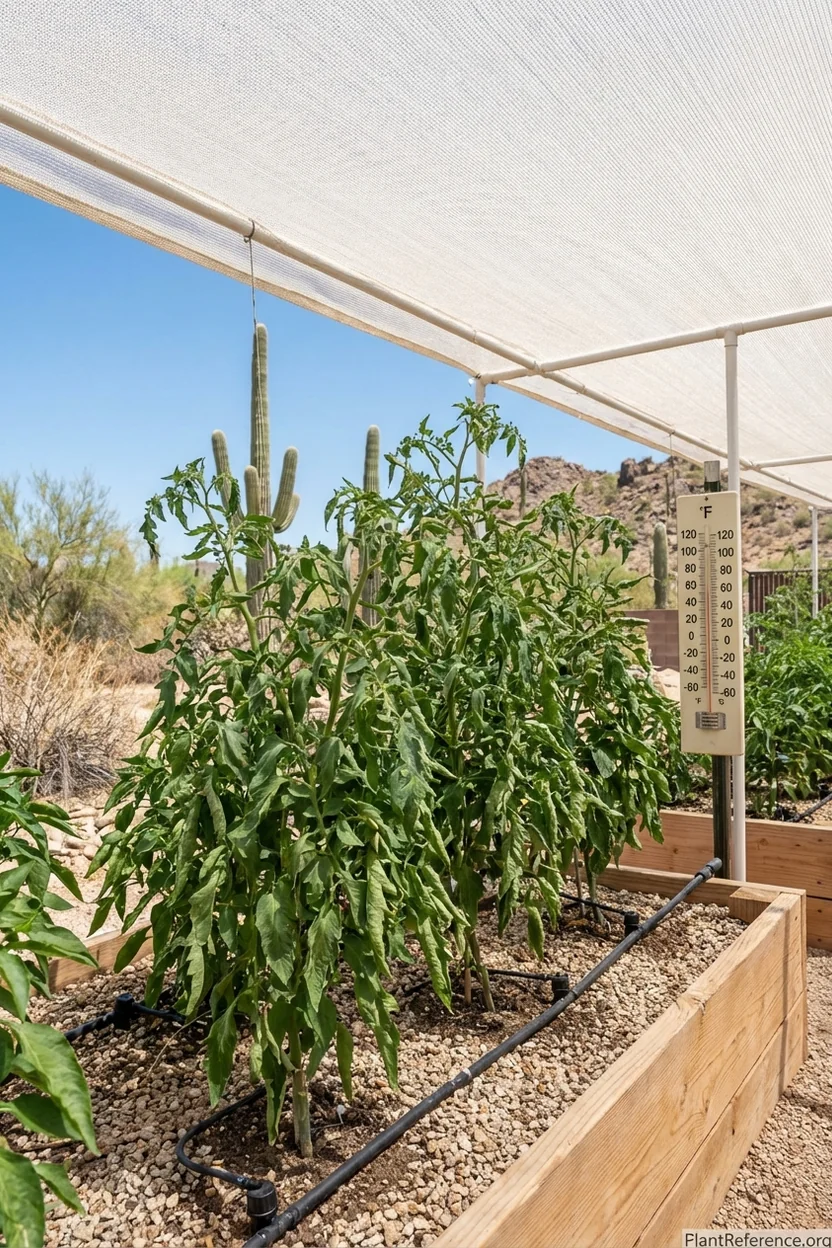
June-August: Most varieties struggle or stop producing entirely. Heat-tolerant varieties like 🌿Solanum lycopersicum 'Phoenix' and 🌿Solanum lycopersicum 'Heatmaster' provide limited harvests with proper shade protection.
Fall Planting Season
Seed Starting: July 15-August 1 Start fall seeds indoors during the hottest part of summer. While counterintuitive, this timing ensures transplants are ready when temperatures become tolerable.
Transplant Outdoors: August 15-September 15 The fall window is longer than spring, giving you more flexibility: - August 15-31: Heat-tolerant varieties and cherry tomatoes - September 1-15: All varieties including heat-sensitive types
Fall Harvest: October 1-December 15 Fall crops often outproduce spring plantings because they mature during Phoenix's most pleasant weather. Plants continue producing until the first frost around November 30.
Year-Round Container Strategy
Container Growing: Allows you to move plants to optimal locations throughout the year. Summer containers need morning sun/afternoon shade, while winter containers benefit from maximum sun exposure and protection from occasional frost.
Complete Growing Guide for Phoenix
Success with tomatoes in Phoenix requires adapting traditional techniques to desert conditions. Water management, soil preparation, and sun protection become critical factors.
Soil Preparation for Desert Conditions
Phoenix's caliche clay and alkaline soils (pH 7.5-8.5) create unique challenges. Most tomatoes prefer slightly acidic soil (pH 6.0-6.8), but you can work with what you have.
Raised Beds Are Essential: Build beds 12-18 inches deep to provide proper drainage and soil depth. Phoenix's hardpan layer often sits just 6-8 inches below the surface, blocking root development.
Soil Amendment Recipe: - 50% quality compost - 30% native soil (if workable) or additional compost - 20% perlite or pumice for drainage
pH Adjustment: Add sulfur in fall to gradually lower pH. Aim for 6.5-7.0—acidic enough for good nutrient uptake but not so low it shocks plants adapted to alkaline conditions.
Water Management in the Desert
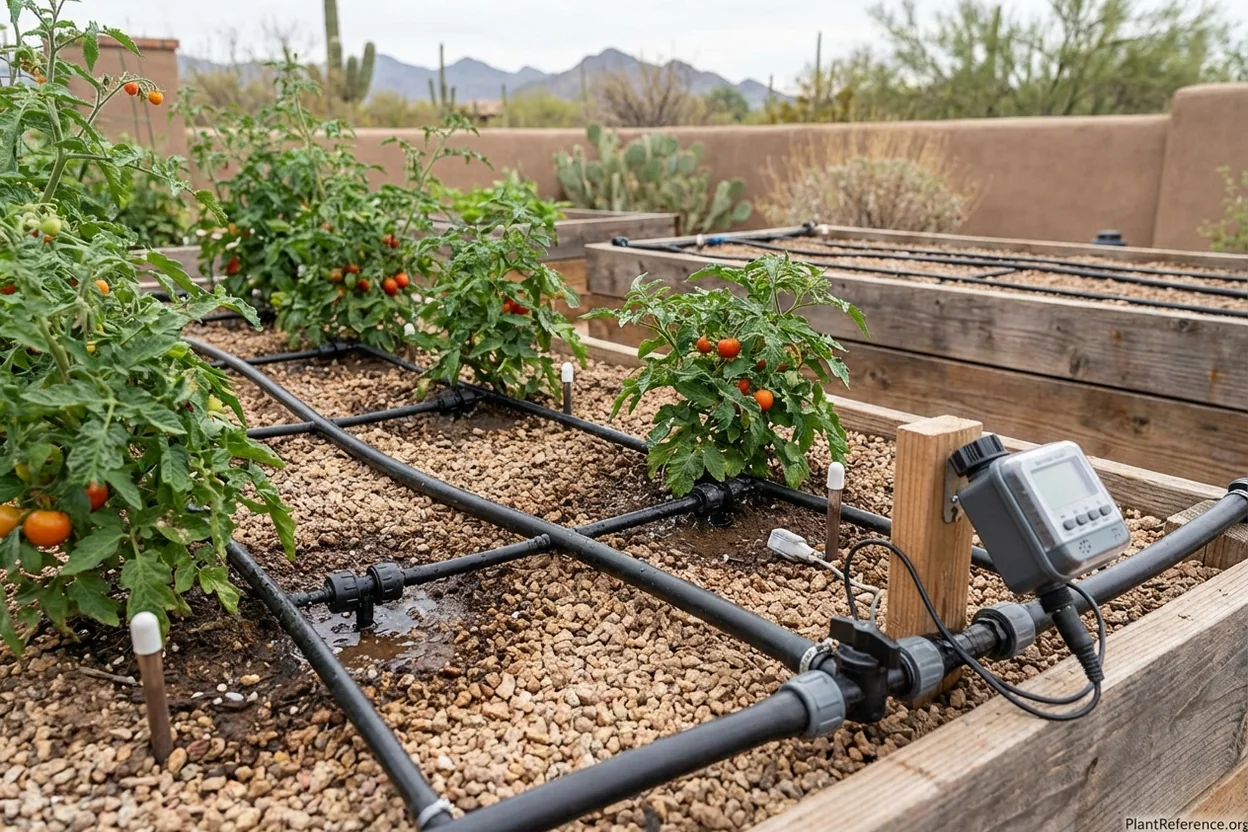
Drip Irrigation Is Non-Negotiable: Phoenix's low humidity and high temperatures create extreme evaporation rates. Overhead watering wastes water and creates humid conditions around leaves that encourage disease.
Mulching Strategy: Use 3-4 inches of organic mulch (wood chips, straw) to retain moisture and keep soil temperatures manageable. Replace regularly as desert conditions decompose mulch quickly.
Watering Schedule: - Spring/Fall: 2-3 times per week, deep watering - Summer: Daily watering for containers, every other day for raised beds - Monitor soil moisture at 4-6 inch depth; desert winds dry surface soil deceptively quickly
Sun Protection Strategies
Shade Cloth Selection: 30% shade cloth reduces temperatures by 10-15°F while still providing adequate light for photosynthesis. Install on adjustable frames so you can remove it during cooler months.
Companion Planting: Tall plants like sunflowers or corn can provide afternoon shade for tomatoes during summer months. Plant on the west side of tomato beds.
Reflective Mulch: Aluminum reflective mulch helps in spring and fall by reflecting additional light onto plants while keeping soil cool.
Fertilization in Alkaline Soils
Phoenix's alkaline soils bind up nutrients, making them unavailable to plants even when present in adequate quantities.
Nutrient Availability Issues: - Iron deficiency (chlorosis) appears as yellow leaves with green veins - Phosphorus becomes bound in alkaline conditions - Calcium is abundant but may not be available to plants
Fertilization Program: - Use chelated iron supplements monthly during growing season - Apply phosphorus at planting time mixed directly into planting holes - Organic matter additions help buffer pH and improve nutrient availability
Monsoon Season Considerations
Phoenix's July-September monsoon season brings unique challenges: sudden temperature drops, high humidity, and torrential downpours after months of dry conditions.
Disease Prevention: Increased humidity during monsoon season activates fungal spores. Ensure excellent air circulation and avoid overhead watering even more strictly.
Drainage Management: Raised beds must drain quickly after monsoon rains. Plants adapted to dry conditions can develop root rot within days in waterlogged soil.
Troubleshooting Phoenix-Specific Problems
Desert tomato growing presents challenges you won't find in traditional gardening guides. Here's how to identify and solve the most common Phoenix-specific issues:
Sunscald and Heat Stress
Symptoms: White or yellow patches on fruit exposed to direct sun, often followed by secondary bacterial infections.
Solution: Maintain adequate leaf cover by avoiding excessive pruning. Use shade cloth during peak summer months (May-September). Harvest fruits at the "breaker" stage and ripen indoors during extreme heat periods.
Prevention: Plant varieties with dense foliage like 🌿Solanum lycopersicum 'Roma' rather than varieties with sparse leaf cover.
Blossom End Rot in Alkaline Soils
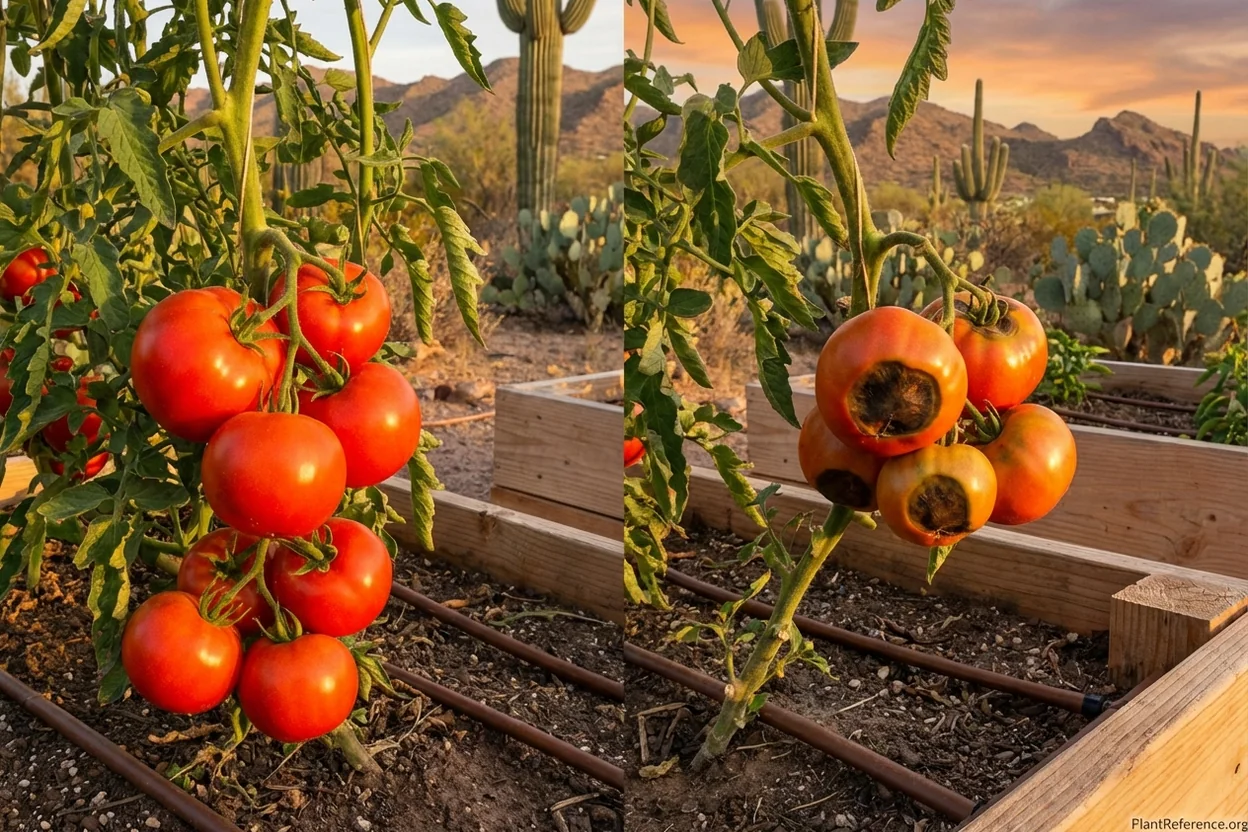
Symptoms: Dark, sunken spots on the bottom (blossom end) of fruits, particularly common in paste varieties like 🌿Solanum lycopersicum 'San Marzano'.
Phoenix-Specific Causes: Alkaline soils bind calcium, making it unavailable even when soil tests show adequate levels. Inconsistent watering in desert conditions exacerbates the problem.
Solution: Apply gypsum (calcium sulfate) rather than lime to provide available calcium without raising pH further. Maintain consistent soil moisture through automated drip irrigation.
Iron Chlorosis (Yellowing Leaves)
Symptoms: New growth shows yellow leaves with dark green veins, starting from the top of the plant.
Phoenix-Specific Cause: Alkaline soils (pH 8.0+) bind iron in forms plants cannot absorb, even when iron is present in adequate quantities.
Solution: Apply chelated iron (iron EDDHA) monthly during growing season. Avoid iron sulfate, which becomes unavailable quickly in alkaline conditions.
Fruit Cracking During Monsoons
Symptoms: Radial cracks from stem to bottom of fruit, often occurring after heavy monsoon rains following dry periods.
Cause: Rapid water uptake causes fruit to expand faster than skin can stretch.
Prevention: Maintain consistent soil moisture year-round. Harvest large-fruited varieties like 🌿Solanum lycopersicum 'Brandywine' before full ripeness during monsoon season.
Poor Fruit Set in Extreme Heat
Symptoms: Plants bloom normally but flowers drop without setting fruit when temperatures exceed 95°F days and 75°F nights.
Solution: Use shade cloth to reduce ambient temperatures. Some gardeners report success with blossom set sprays containing naphthaleneacetic acid, though results vary.
Long-term Strategy: Focus on heat-tolerant varieties during summer months and save traditional varieties for spring and fall planting.
Harvest & Storage
Phoenix's extended growing season means you'll be harvesting tomatoes from April through December in most years. Proper harvest timing and storage become especially important in desert conditions.
Harvest Timing in Desert Heat
Spring Harvest (April-June): Pick fruits at full color during cool morning hours. Desert sun can overcook tomatoes left on the vine during afternoon heat.
Summer Harvest (July-September): Harvest at "breaker" stage (first color change) and ripen indoors. Fully ripe tomatoes often develop tough skins and poor texture in extreme heat.
Fall Harvest (October-December): Allow full vine ripening during pleasant fall weather. These often produce the best flavor as plants mature during optimal conditions.
Storage in Low Humidity
Phoenix's average humidity of 15-25% creates storage challenges unknown in more humid climates. Tomatoes lose moisture rapidly and can become mealy within days.
Short-term Storage: Keep harvested tomatoes in slightly humid conditions—wrap stems in damp paper towels or store in perforated plastic bags with a damp cloth.
Ripening Green Tomatoes: Place mature green tomatoes in paper bags with an apple or banana. Check daily as ripening accelerates in warm conditions.
Preservation Methods: Phoenix's dry climate makes dehydrating tomatoes especially effective. Paste varieties like 🌿Solanum lycopersicum 'Roma' produce excellent sun-dried tomatoes when dried on screens in shade.
Frequently Asked Questions
Reading about plants and recognising them are different skills. These three build the second.
- Daily PlantIdentify the day’s mystery plant from a close-up photograph.
- Keyed OutWork a dichotomous key, lead by lead, to name a hidden specimen.
- Name That PlantName a specimen from botanical clues dealt hardest first.
Free to play, no account needed
Alejandro is a landscape designer in Phoenix who focuses on low-water, desert-adapted plantings. He grew up in Tucson surrounded by Sonoran Desert plants and got frustrated watching neighbors install water-hungry lawns in a city that gets eight inches of rain a year. After earning his landscape architecture degree, he started designing residential gardens using native and desert-adapted species. Alejandro's approach is practical—he works with the climate rather than against it, using microclimates, shade structures, and efficient irrigation to create gardens that look good without draining the aquifer. He's a regular speaker at local xeriscaping workshops.