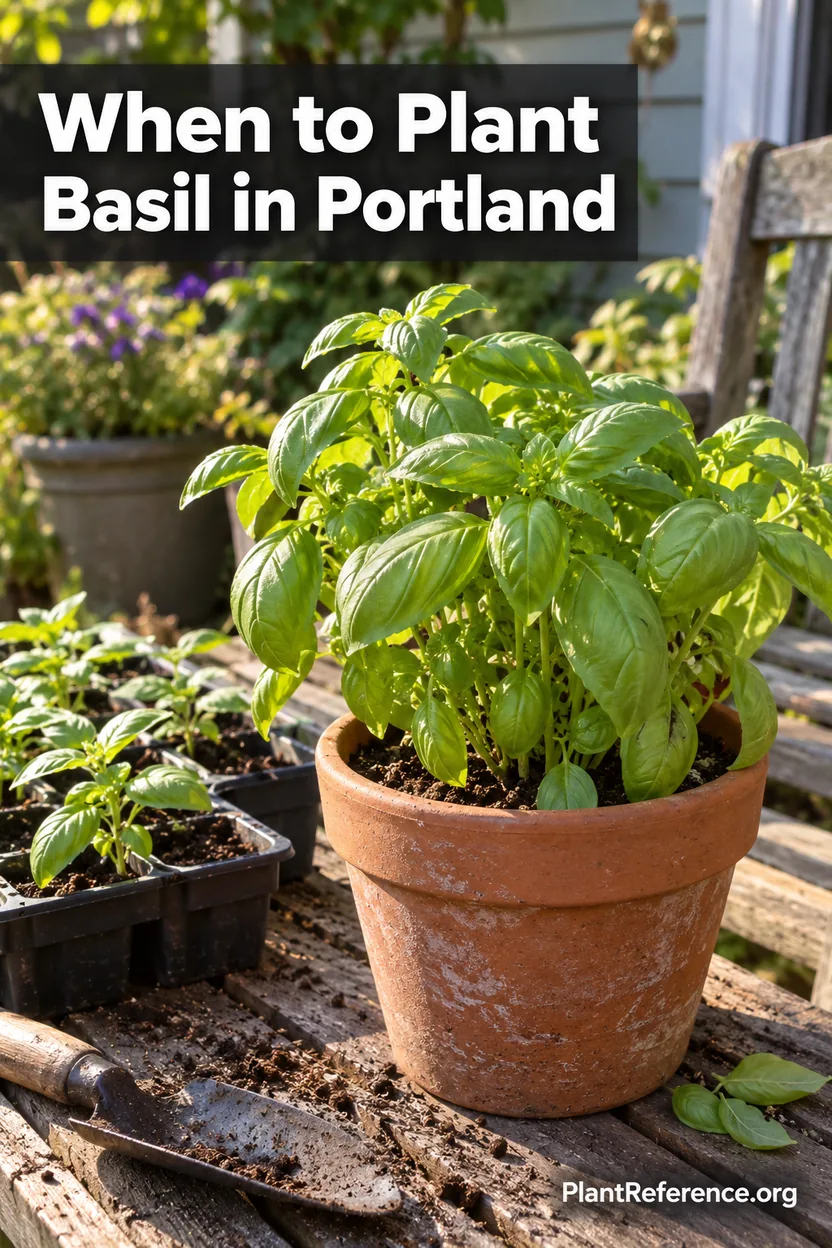
When to Plant Basil in Portland: Dates and Growing Guide
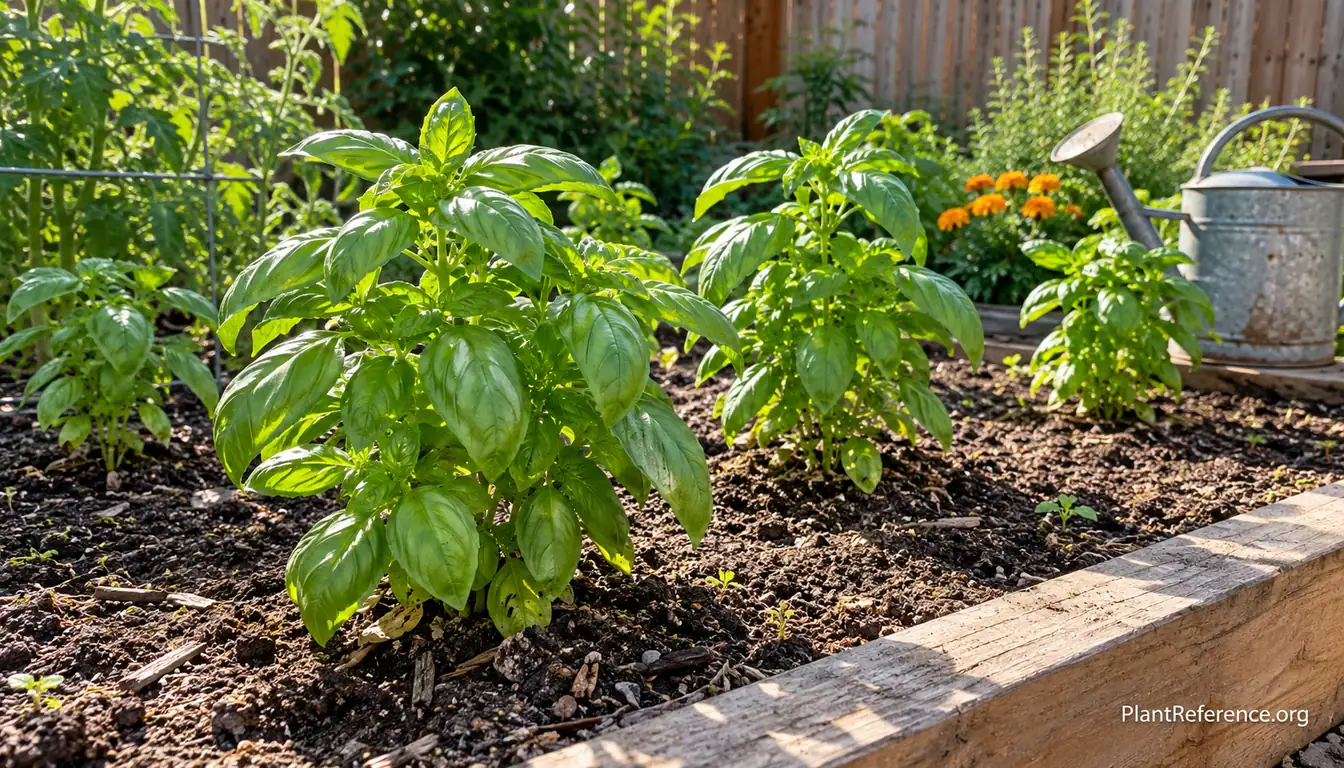
— Image © PlantReference.org 2026
Pets & Toxicity
Recorded toxicity for plants linked in this guide. An unknown status is not a safety assessment.
No linked plant is recorded as toxicDetailsHide
Ocimum basilicum 'Purple Ruffles' — Toxicity
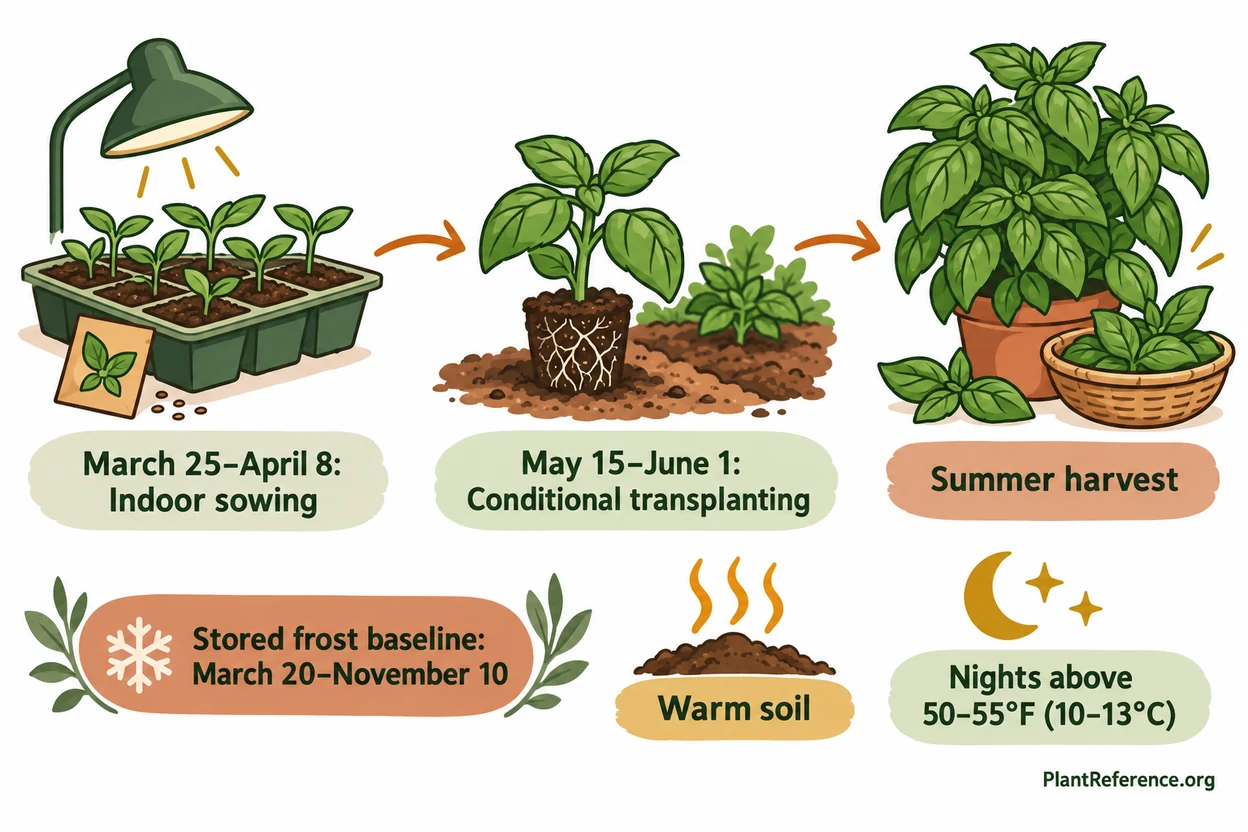
Non-toxicView Ocimum basilicum 'Purple Ruffles' plant profileWhen to plant basil in Portland depends on warmth as well as frost risk. Start seeds indoors around March 25–April 8 for a conditional May 15–June 1 transplant window, but wait until nights stay above 50–55°F (10–13°C) and soil reaches about 60°F (16°C). Those temperature checks matter because sweet basil Ocimum basilicum (OH-see-mum bah-SIL-ih-kum) can suffer chilling injury without ever encountering frost.
Think of the calendar as a reminder to observe the garden, not an instruction to ignore it. A sunny afternoon can warm the leaves while the root zone remains cool and wet, limiting uptake and growth. In western Oregon, choosing a draining, sheltered position often does more for this herb than planting earlier. If space is limited, start with the practical container principles in Growing Herbs in Containers: Pots, Soil & Harvest and give a few plants good conditions rather than crowding a larger collection.
Best Basil Varieties for Portland's Climate
The five types in the planting plan serve different kitchen uses, but none should be treated as a cold-hardy alternative to ordinary sweet basil. Match flavor and growth habit to your needs, then evaluate performance under comparable conditions. A plant in a warm container and another in shaded ground are not a fair variety trial.
The listed maturity ranges are broad planning estimates. Check whether your seed supplier counts from sowing or transplanting; cool weather can lengthen either timetable. Small tip harvests from established plants can begin before the full-size harvest represented by a maturity figure.
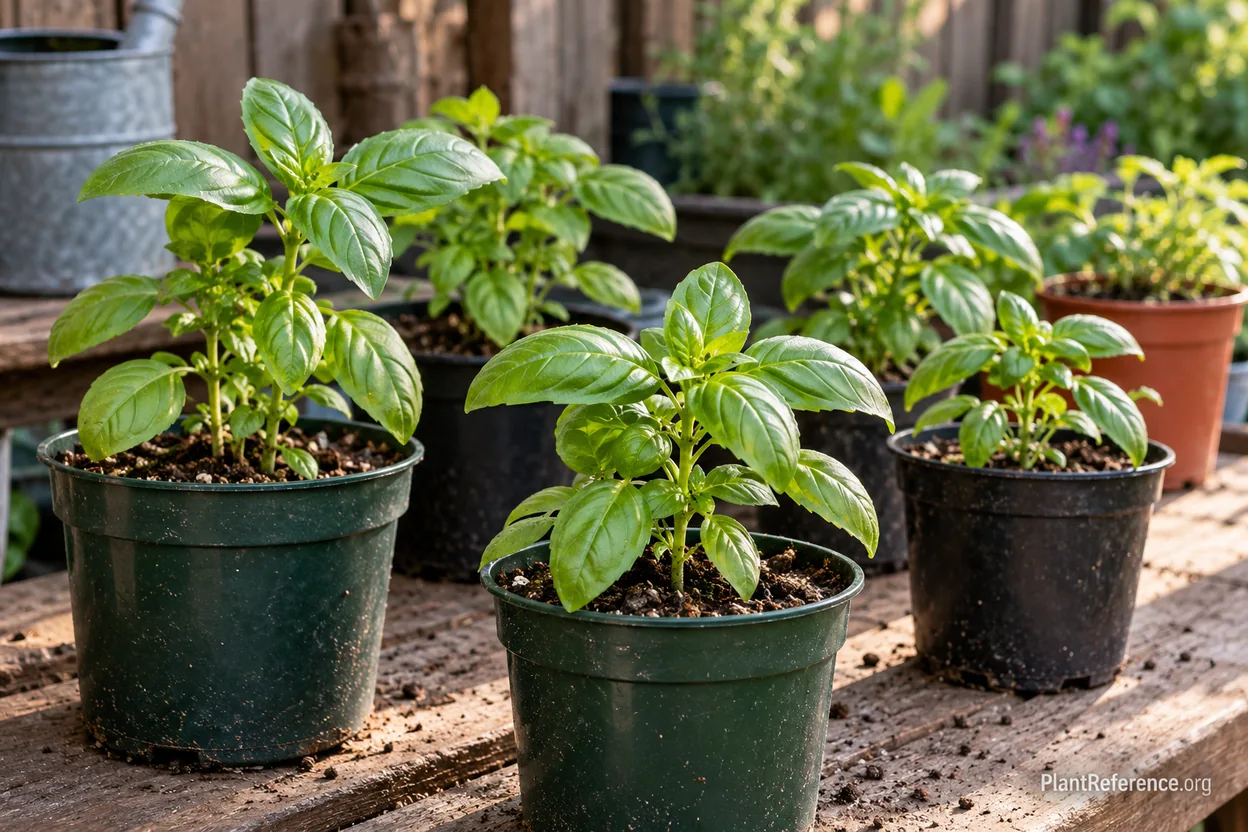
Broad leaves or a stronger cooking flavor
🌿Ocimum basilicum 'Genovese' is the straightforward choice for pesto and tender fresh leaves. Its broad foliage provides a useful harvest, but also makes wilt conspicuous when roots cannot keep pace with water loss. Avoid interpreting every drooping leaf as drought: check the mix before adding more water.
🌿Ocimum basilicum 'Thai' supplies the anise-like flavor associated with many cooked dishes. Firmer stems and narrower leaves do not eliminate its need for warmth. It can produce flower spikes readily, so decide whether you are growing it mainly for leaves or allowing some flowering as part of the garden.
The plan names 🌿Ocimum basilicum 'Lemon' for citrus-scented leaves. Lemon-scented basils have differing botanical identities in commercial seed listings; use the actual packet identity when buying rather than assuming all are the same cultivar. Consistent moisture and adequate root room help avoid stress that pushes a small plant toward early flowering.
Type | Planning maturity range | Main use | Local growing priority |
|---|---|---|---|
60–90 days | Pesto and fresh leaves | Warm roots and protection from chilling | |
60–90 days | Anise-flavored cooking herb | Warm sunny position and regular tip harvests | |
60–75 days | Citrus-scented leaves | Verify packet identity and prevent drying stress | |
70–80 days | Colorful fresh garnish | Strong light and accurate cultivar identification | |
60–90 days | Distinctive aromatic herb | Long warm growing period or movable container |
Purple foliage and a different species
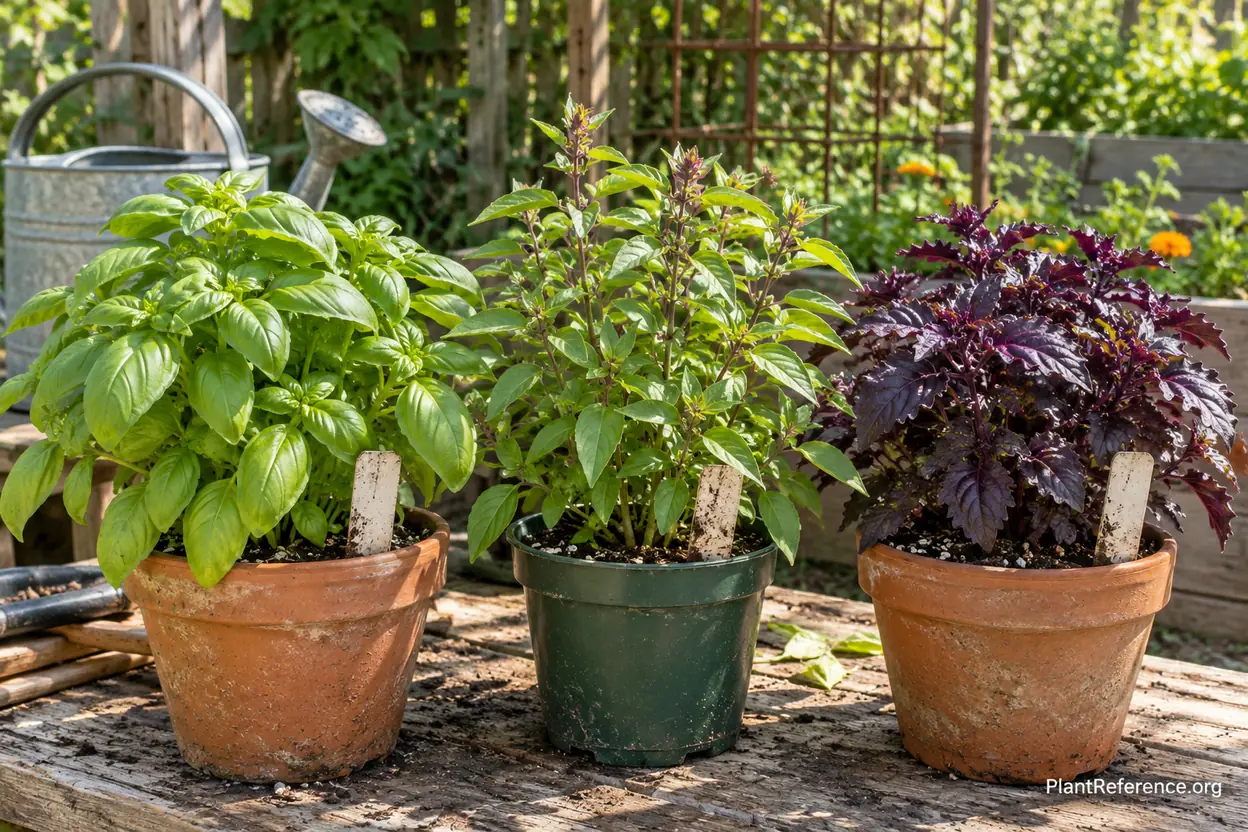
🌿Ocimum basilicum 'Purple' is the broad selection named in the plan, not a promise that every purple-leaved seed packet behaves identically. Light influences pigmentation, and shaded growth can look greener. The research also identifies 🌿Ocimum basilicum 'Purple Ruffles', a named selection with ruffled foliage, useful when you want a more precise purchasing identity.
Holy basil 🌿Ocimum tenuiflorum (OH-see-mum ten-yoo-ih-FLOR-um) is a separate species with a distinctive spicy aroma. Its growth and frequent flowering differ from the broad-leaved culinary standard. Treat it as a warm-season annual here, and do not assume a mild winter climate makes it a dependable outdoor perennial.
For a first planting, choose one main culinary type and one trial. Label them at sowing, recording the supplier and date as well as the name. That small habit makes later observations meaningful: you can distinguish a slower-growing type from a later-sown plant or a shaded position.
When to Plant Basil in Portland: Specific Dates
The supplied city record gives March 20 as last frost and November 10 as first frost: 235 days between those dates. These stored historical planning dates are not a current-year forecast. The record's Zone 8b designation describes winter cold rather than spring soil warmth or summer heat accumulation.
Separate arithmetic from a usable planting window
Subtracting six to eight weeks from March 20 gives January 23–February 6. Adding the usual seven-to-fourteen-day frost buffer gives March 27–April 3. Those calculations are correct, but they do not make early spring suitable for unheated outdoor basil when nights and roots remain cold.
Use the temperature requirement to establish the real target, then count backward. March 25–April 8 is six to eight weeks before an illustrative May 20 transplant date. This later schedule reduces the chance of maintaining oversized seedlings indoors while waiting for the garden to warm.
For comparison, the temperature-sensitive crops in When to Plant Peppers in Portland: Complete Guide + Best Varieties for Zone 8b also need more than a frost-free date. Do not copy one crop's seed-starting interval onto another; each develops at its own pace.
Sowing, transplanting, and harvest planning
March 25–April 8: sow the main indoor batch.
Early to mid-May: harden seedlings on suitable warm days, returning them to warmth at night.
May 15–June 1: transplant only after the temperature checks pass.
June 1–15: consider a small direct-sown or indoor-started replacement batch.
July 19–August 18: use as an illustrative 60–90-day harvest-planning range after a May 20 transplant.
September onward: watch declining night temperatures rather than waiting for the November frost baseline.
The harvest range is transplant date plus the plan's maturity range; if the seed packet counts from sowing, use its convention instead. Begin modest picking earlier when plants are established and branching. Heavy harvesting should wait until sufficient foliage remains to support regrowth.
Coordinate the bed with When to Plant Tomatoes in Portland: Complete Guide + Best Varieties for Zone 8b, leaving basil outside the mature canopy. A planting calendar is also a space calendar: a sunny patch in May may be shaded by a neighboring crop in July.
Complete Growing Guide for Portland
Seed-starting conditions
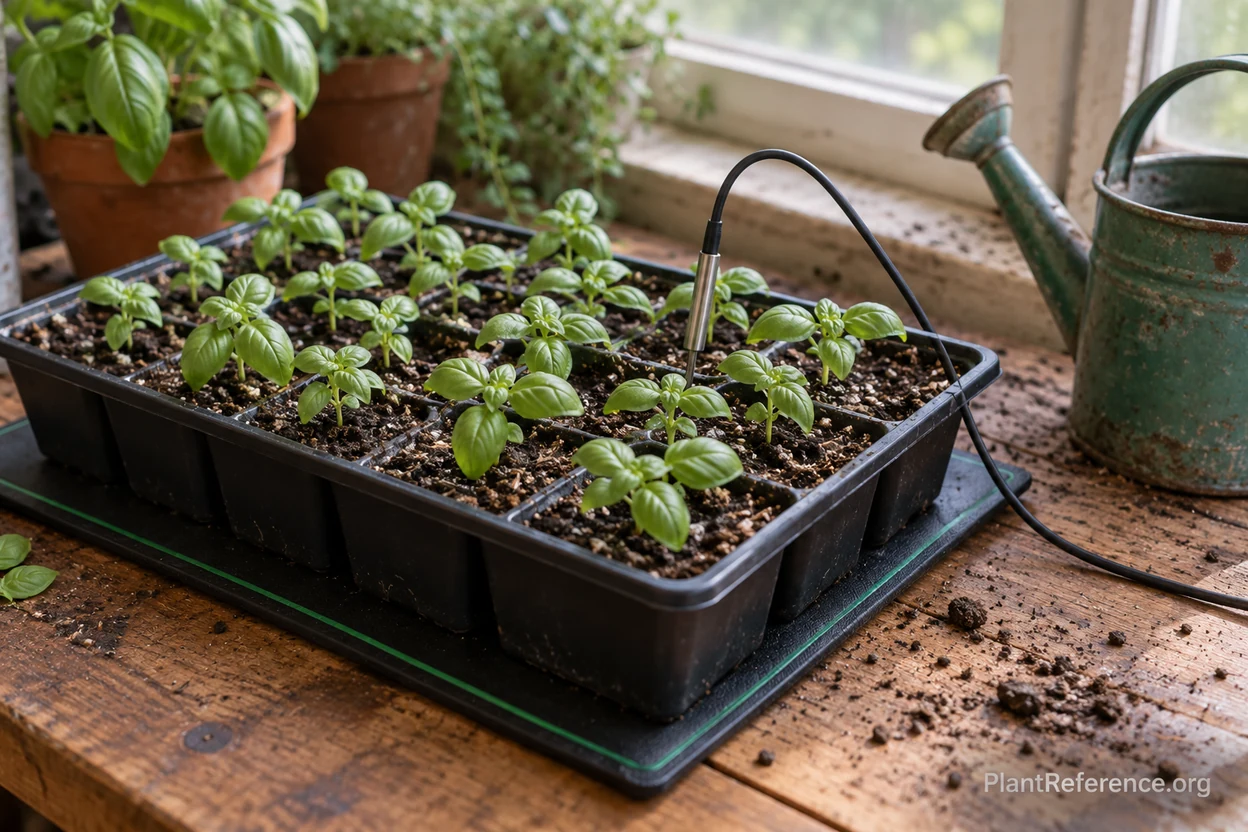
Start with fresh seed-starting mix and clean containers. Sow ordinary Ocimum basilicum selections about ¼ inch (6 mm) deep unless the packet specifies otherwise. For 🌿Ocimum tenuiflorum, follow its light-germination instructions rather than automatically burying it to the same depth.
Keep the mix evenly moist, not saturated, and aim for approximately 75°F (24°C) during germination. A thermostat-controlled heat mat can help in a cool room. Position its probe according to the equipment instructions and measure the growing medium; air temperature beside the tray is not the same measurement.
After emergence, provide strong light and enough space to prevent crowded, elongated stems. Remove humidity covers when appropriate for emerged seedlings and maintain air movement without blasting them with a drying draft. Bottom heat does not compensate for inadequate light.
Site and soil
Choose roughly six to eight hours of useful sunlight with shelter from persistent wind. Morning sun helps dry foliage, while a warm position supports active roots. During unusual heat, reassess exposure rather than assuming that a spring arrangement remains ideal throughout summer.
The roots need oxygen as well as moisture. If a bed remains saturated, improve the growing arrangement before adding plants; a container or raised bed helps only when water can leave it. How to Test Garden Soil: Jar, Ribbon & pH Tests explains how observations and testing complement one another.
Use a working pH range near 6.0–7.5 and amend according to actual soil needs. Yellow leaves alone do not prove a pH problem. For existing beds, Raised Bed Soil pH Problems: Testing, Adjusting, and Maintaining Balance helps separate measurement from guesswork.
Transplanting and container care
Harden plants over about a week, gradually increasing outdoor light and exposure on warm days. Bring them back into warmth for cold nights. Hardening off adjusts a plant to light and wind; it does not train a tender herb to tolerate chilling without consequences.
Water the root ball before planting and set the plant at approximately its previous growing depth. Allow around 12–18 inches (30–45 cm) between ordinary plants, adjusting to the cultivar's mature size. Leaves that touch while seedlings are tiny will soon form a dense, slow-drying canopy.
For one ordinary plant, a pot around 10–12 inches (25–30 cm) across provides a practical starting point, with more volume for larger growth. Use container mix and open drainage holes. A decorative outer pot must not leave the nursery pot sitting in collected water after every watering.
Check the actual root zone before watering. A light pot and drying upper mix support watering; a heavy, wet pot with wilted leaves suggests a different problem. Water thoroughly when needed, then let excess drain. Frequent small splashes can leave uneven moisture through the pot.
For another warm-season bed companion's schedule, see When to Plant Green Beans in Portland: Complete Guide + Best Varieties for Zone 8b.
Feeding and neighboring plants
Account for fertilizer already present in commercial mix before adding more. Follow the product's rate and watch new growth rather than feeding on an automatic schedule. Excessively lush growth is not the same as a well-balanced plant producing useful aromatic leaves.
For beds needing a fertility plan, DIY Organic Fertilizer Blends: A Soil-Test-First Guide offers a better starting point than combining several amendments without a diagnosis. Organic products still supply nutrients; their origin does not make excessive application harmless or useful.
Maintain access for inspection and harvesting. A sprawling neighbor can alter light and airflow, so consult When to Plant Squash in Portland: Complete Guide + Best Varieties for Zone 8b when arranging mixed beds. Leave basil where you can reach the stems without stepping into the soil.
Pruning explains the shape
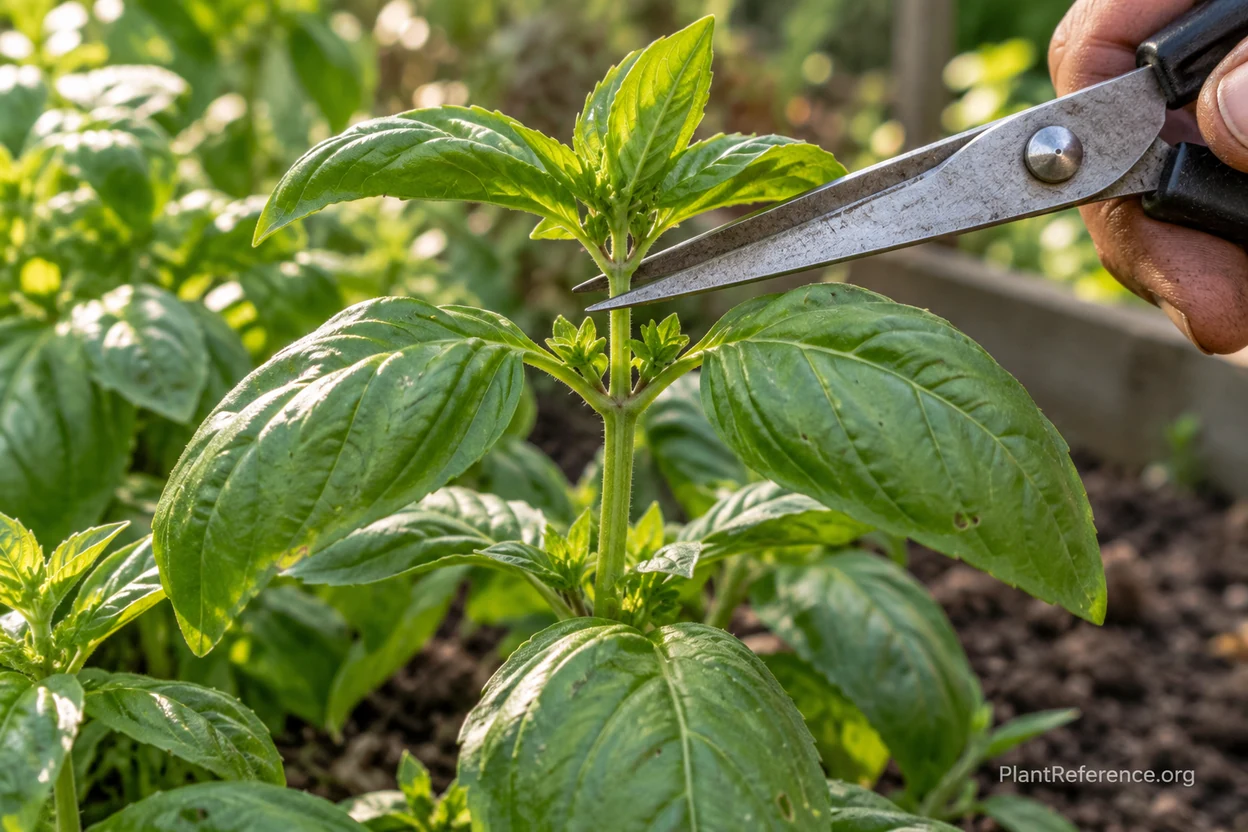
The growing tip helps suppress side-shoot growth, a process called apical dominance. Once the plant has three or four healthy leaf pairs and is growing actively, cut just above a leaf pair. Buds below that cut can then develop into branches.
Repeat modest harvesting as growth allows, leaving enough foliage to power the next flush. Remove developing flower spikes when leaves are the priority. If a plant is stressed, restore suitable conditions before making a large cut; pruning is not a cure for inadequate light or damaged roots.
Troubleshooting Portland Basil Problems
Cold damage versus a feeding problem
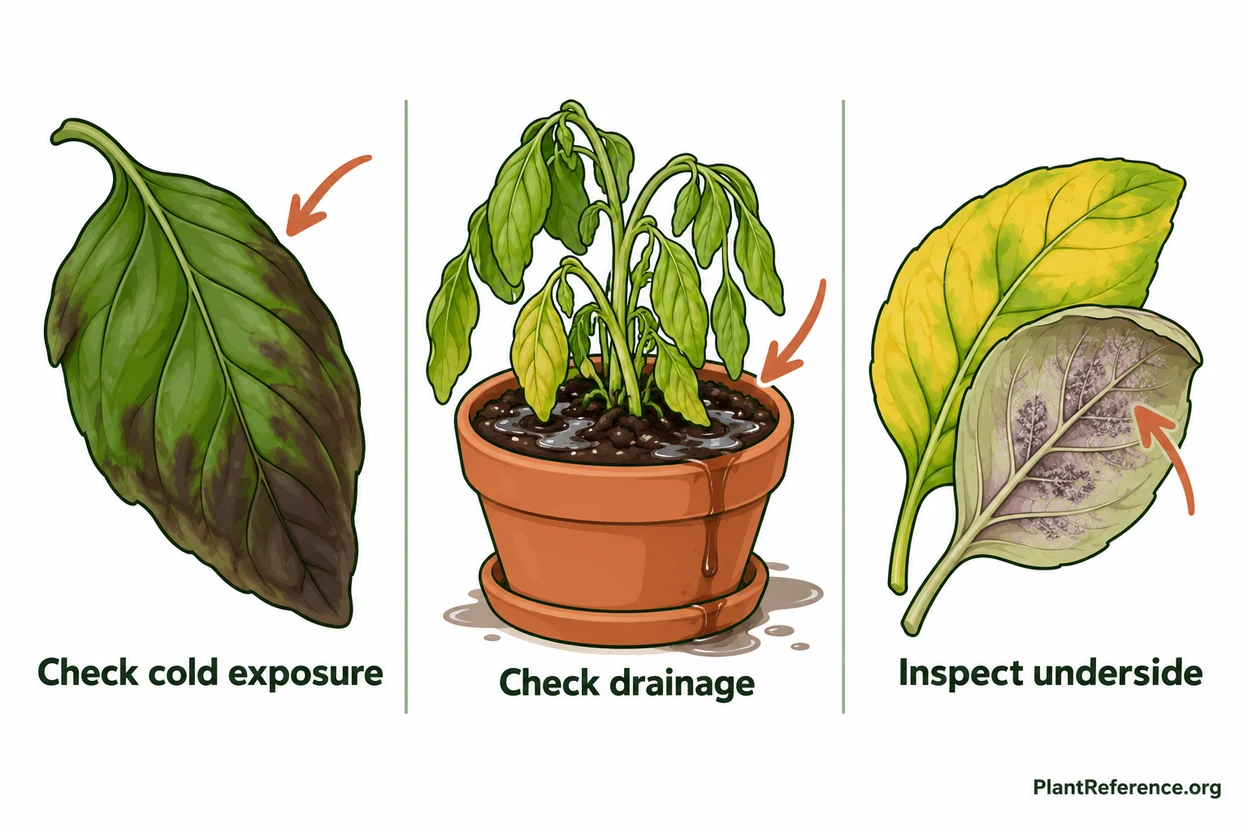
When growth stalls after transplanting, review night temperatures and soil conditions first. Chilling can interfere with normal cell function and cause darkened or damaged leaves. Extra fertilizer cannot supply the missing warmth. Move containers to a suitable protected position or delay planting the remaining seedlings.
Zone 8b does not mean every day after the last frost is suitable. Likewise, a cover is not a heater: it can become too hot in sunshine and still fail to provide enough warmth at night. Monitor conditions and ventilate covers rather than leaving them closed continuously.
Yellow leaves and downy growth
Turn leaves over before assuming nitrogen deficiency. Yellowing above with gray-purple fuzzy growth beneath is concerning for downy mildew. Isolate suspect plants, reduce opportunities for spreading contaminated plant material, and remove badly affected specimens rather than expecting a fertilizer application to reverse disease.
Keep foliage able to dry, water near the soil, and avoid excessive crowding. These measures reduce favorable conditions but do not guarantee prevention. For uncertain symptoms, seek local diagnostic help before applying a treatment to an edible crop.
Wilting, holes, and premature flowering
Wilting with dry mix calls for careful watering; wilting with saturated mix calls for drainage and root inspection. Brown stem streaking or rapid collapse raises concern for disease. Do not immediately replant into a failed setup without investigating why the first plant declined.
For holes, look for feeding evidence and inspect after dusk for slugs. Identify the pest before choosing a response. Avoid treating all leaf damage as the same problem: chewing, physical injury, sun damage, and chilling produce different clues.
Flowering is normal development, but drought and crowded roots can accelerate a plant's shift away from leafy growth. Pinch buds and maintain steady conditions when harvesting leaves. Replace an exhausted plant if repeated cuts no longer produce useful regrowth.
If purple foliage looks greener, inspect light exposure and check the actual cultivar identity. Pigmentation varies with genetics and growing conditions; do not add fertilizer solely to restore color. Record which adjustments improve new growth rather than expecting old leaves to become perfect again.
Harvest & Storage
Harvest after dew has dried but before leaves become hot and wilted. Cut tips above healthy leaf pairs using clean scissors. Take a modest amount from each actively growing plant rather than stripping one small specimen until only stems remain.
Keep harvested leaves shaded and handle them gently. Exclude damaged or diseased foliage from the kitchen batch. For fresh use, harvest close to cooking time whenever practical; the plant is often better storage than a bowl left warm on the counter.
Freeze surplus in labeled portions when you want to retain useful culinary character for later meals. Wash as needed and dry well before processing. Fresh herb-and-oil mixtures should not be left at room temperature for storage; prepare small portions for prompt use or freezing rather than treating oil as a preservative.
In Oregon, autumn cooling can end useful basil production before a frost arrives. Begin watching nights in September and take the main harvest while leaves remain healthy. The November 10 planning baseline is not a promise of good foliage until then.
Finish the season by cleaning reusable containers and recording actual planting and harvest dates. Note the soil temperature at transplanting and which site dried most evenly. Those observations make next year's decision more precise than simply repeating the same calendar date.
Frequently Asked Questions

Reading about plants and recognising them are different skills. These three build the second.
- Daily PlantIdentify the day’s mystery plant from a close-up photograph.
- Keyed OutWork a dichotomous key, lead by lead, to name a hidden specimen.
- Name That PlantName a specimen from botanical clues dealt hardest first.
Free to play, no account needed
Tagged with
Sarah earned her doctorate in plant biology and spent time working in botanical garden education before transitioning to freelance writing and consulting. Now based in Portland, Oregon, she teaches plant identification workshops at local community centers and maintains a modest collection of over 60 houseplants in her small apartment. Sarah specializes in helping beginners understand plant science without the jargon—her approach focuses on practical observation over theory. She's killed her fair share of fiddle leaf figs and finally cracked the code on keeping them alive.