When to Plant Green Beans in Salt Lake City: Complete Guide + Best Varieties for Zone 7a
Pets & Toxicity
Recorded toxicity for plants linked in this guide. An unknown status is not a safety assessment.
No linked plant is recorded as toxicDetailsHide
Phaseolus vulgaris 'Blue Lake' — Toxicity
Non-toxic when cooked. Raw pods carry lectins (phytohemagglutinin) that cause digestive upset on raw consumption — pods are cooked before eatingView Phaseolus vulgaris 'Blue Lake' plant profilePhaseolus vulgaris 'Purple Queen' — Toxicity
Non-toxicView Phaseolus vulgaris 'Purple Queen' plant profilePhaseolus vulgaris 'Dragon Tongue' — Toxicity
Non-toxicView Phaseolus vulgaris 'Dragon Tongue' plant profilePhaseolus vulgaris 'Kentucky Wonder' — Toxicity
Non-toxicView Phaseolus vulgaris 'Kentucky Wonder' plant profile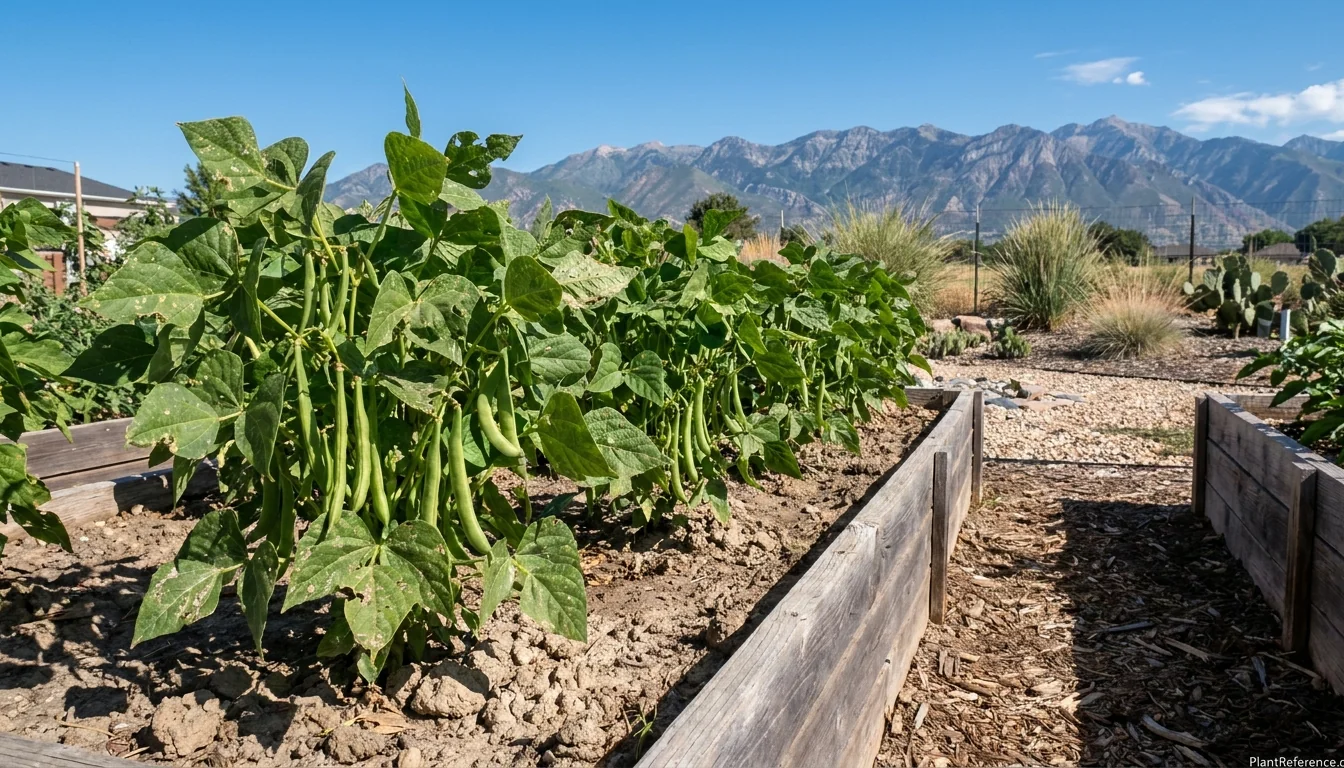
— Image © Plant Reference 2026
Salt Lake City gives green beans something rare—warm productive days with cool nights that produce exceptional pod quality. The 173-day season between our April 25 last frost and October 15 first frost is shorter than southern cities, but the low humidity, intense high-altitude sunshine, and 15-20°F day-to-night temperature swings create growing conditions that make every day count. Beans mature faster in our intense solar radiation, and the cool nights convert more sugars into flavor than plants growing in muggy 80°F overnight heat. The tradeoffs are real: alkaline soil locks up nutrients, the dry air demands constant irrigation, and the shorter window limits succession plantings to three or four rounds. But the beans you harvest here taste better than almost anywhere. The Complete Guide to Raised Bed Gardening for Beginners (2025)
Best Green Bean Varieties for Salt Lake City's Zone 7a Climate
Salt Lake City sits in a mountain valley at 4,226 feet elevation, flanked by the Wasatch Range to the east and the Oquirrh Mountains to the west. The valley floor soil is predominantly alkaline clay—heavy, often compacted, and running pH 7.5-8.5 from the ancient Lake Bonneville sediments that form the substrate of the entire valley. Beans prefer pH 6.0-6.8, so soil amendment is essential. The saving grace is humidity—or rather the lack of it. Summer relative humidity averages 15-25%, which means virtually zero fungal disease pressure. Rust, blight, and anthracnose that plague gardens in the humid East and South are non-issues here. Best Soil Mix for Raised Beds: Creating the Perfect Growing Medium
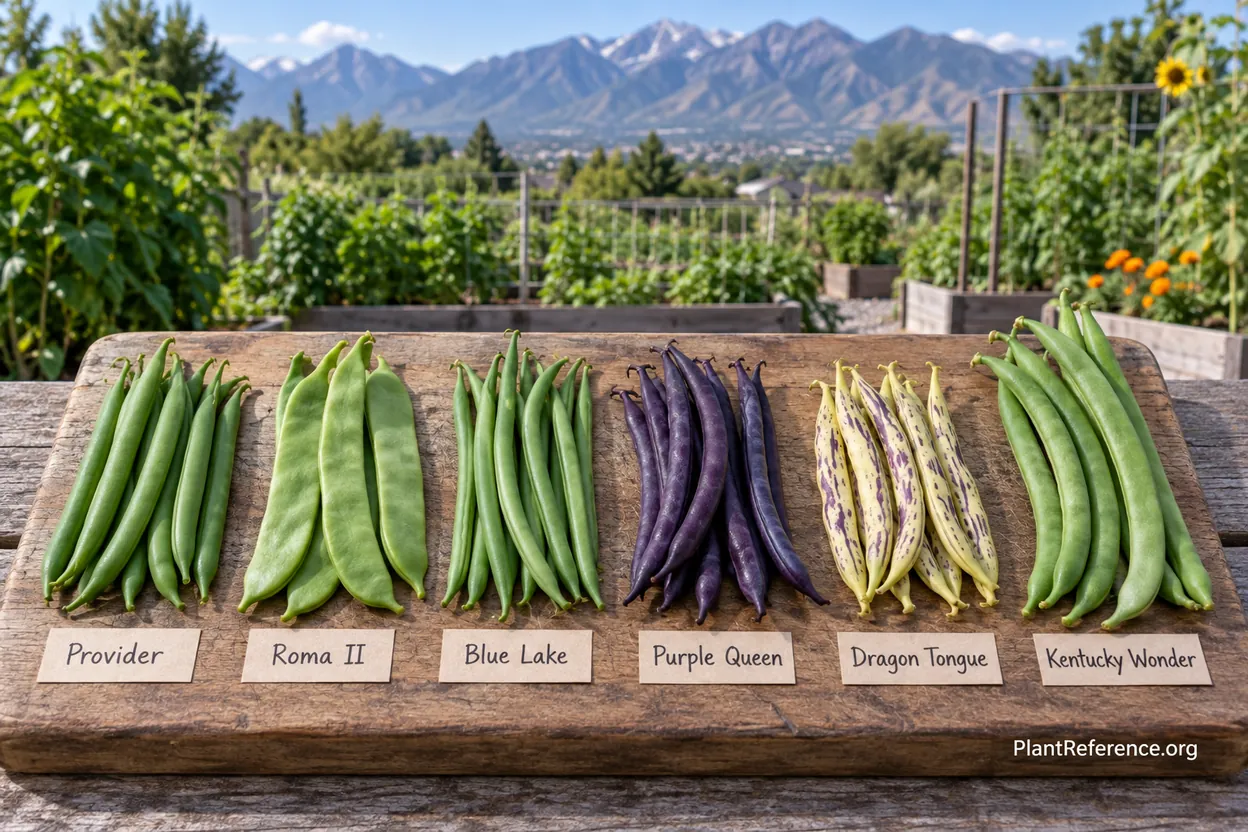
🌿Phaseolus vulgaris 'Provider' starts the Salt Lake season at 50-55 days. 🌿Phaseolus vulgaris 'Provider' germinates in cooler soil than other varieties, letting you sow in early May when the ground has barely crossed 60°F. The compact bush habit fits the efficient raised bed layouts common in Salt Lake City's smaller urban lots. Space at 4 inches (10 cm). The concentrated harvest in 10-14 days clears the bed for replanting quickly—important when your succession window is shorter than warmer zones.
🌿Phaseolus vulgaris 'Roma II' matures at 53-60 days with broad flat Italian pods. In Salt Lake City, 🌿Phaseolus vulgaris 'Roma II' is grown less for its disease resistance (unnecessary here) and more for its flat pod that holds quality on the plant—useful when the weekend hiking trip delays harvest by a few days. Excellent for cooking and roasting.
🌿Phaseolus vulgaris 'Blue Lake' is the main-season producer at 55-65 days. 🌿Phaseolus vulgaris 'Blue Lake' delivers the classic round pods that can and freeze beautifully. The vigorous bush habit needs 6-inch (15 cm) spacing. In Salt Lake City's intense sunshine, 🌿Phaseolus vulgaris 'Blue Lake' produces heavier yields per plant than in cloudier climates—the high UV drives photosynthesis at maximum efficiency.
🌿Phaseolus vulgaris 'Purple Queen' matures at 55-60 days with genuine heat tolerance. While Salt Lake City doesn't match Oklahoma or Memphis heat, July and August afternoons reach 95-100°F. 🌿Phaseolus vulgaris 'Purple Queen' handles those spikes without dropping blossoms. The purple pods are easy to spot for fast harvest.
🌿Phaseolus vulgaris 'Dragon Tongue' offers the dual-purpose option at 55-60 days. 🌿Phaseolus vulgaris 'Dragon Tongue' is particularly well-suited to Salt Lake City—the dry fall air allows on-vine drying for shell beans without the mold problems that plague humid climates. Harvest young for snap beans or let pods dry on the vine through September.
🌿Phaseolus vulgaris 'Kentucky Wonder' is the pole bean at 60-70 days. 🌿Phaseolus vulgaris 'Kentucky Wonder' produces continuously for 6-8 weeks from a single planting, maximizing production from the shorter season. Vines reach 8-10 feet (2.4-3 m). A mid-May planting produces from mid-July through September. The dry air reduces the fungal problems that affect pole beans in humid climates. Raised Bed Vegetable Garden Layout: Planning for Maximum Production
Variety | Days to Maturity | Type | Best For SLC | Notes for Zone 7a |
|---|---|---|---|---|
50-55 days | Bush | First spring crop | Cool-soil tolerance; fast turnaround for tight season | |
53-60 days | Bush | Extended harvest | Flat pods hold quality; excellent for cooking | |
55-65 days | Vigorous bush | Main season | Heavy yields in intense sunshine; best for freezing | |
55-60 days | Bush | July heat spikes | Heat-tolerant; purple pods easy to spot | |
55-60 days | Vigorous bush | Dry bean harvest | Dual-purpose; dry air ideal for on-vine shell bean drying | |
60-70 days | Pole | Continuous harvest | 6-8 weeks from one planting; maximizes shorter season |
Specific Planting Dates for Salt Lake City
Salt Lake City averages an April 25 last frost and October 15 first frost, giving you 173 frost-free days. The practical bean window starts about two weeks after the last frost—early May—when soil crosses 60°F. The shorter season compared to southern cities limits succession plantings to three or four rounds of bush beans.
First Sowing: Early May
Direct sow 🌿Phaseolus vulgaris 'Provider' starting early May once soil temperature reaches 60°F. Salt Lake City's dry spring warms soil fast once the last snow melts, but late-season cold fronts off the Wasatch can still drop freezing temperatures through late April. Wait until soil is confirmed warm rather than gambling on the calendar.
Succession Planting: May through Mid-July
Plant a new row every 2-3 weeks from May through mid-July. Switch to 🌿Phaseolus vulgaris 'Blue Lake' and 🌿Phaseolus vulgaris 'Roma II' once soil is reliably above 65°F in late May. Use 🌿Phaseolus vulgaris 'Purple Queen' for July sowings when afternoon heat peaks. Your last bush bean sowing in mid-July gives 55-day varieties enough time before the October 15 first frost. Best Raised Bed Vegetables for Beginners: Top 10 Easy-Growing Crops
Pole Bean Timing: Mid-May
Plant 🌿Phaseolus vulgaris 'Kentucky Wonder' in mid-May when nighttime temperatures hold above 50°F. A single mid-May planting produces from mid-July through September, giving you continuous harvest from one sowing—the most efficient use of Salt Lake City's shorter season.
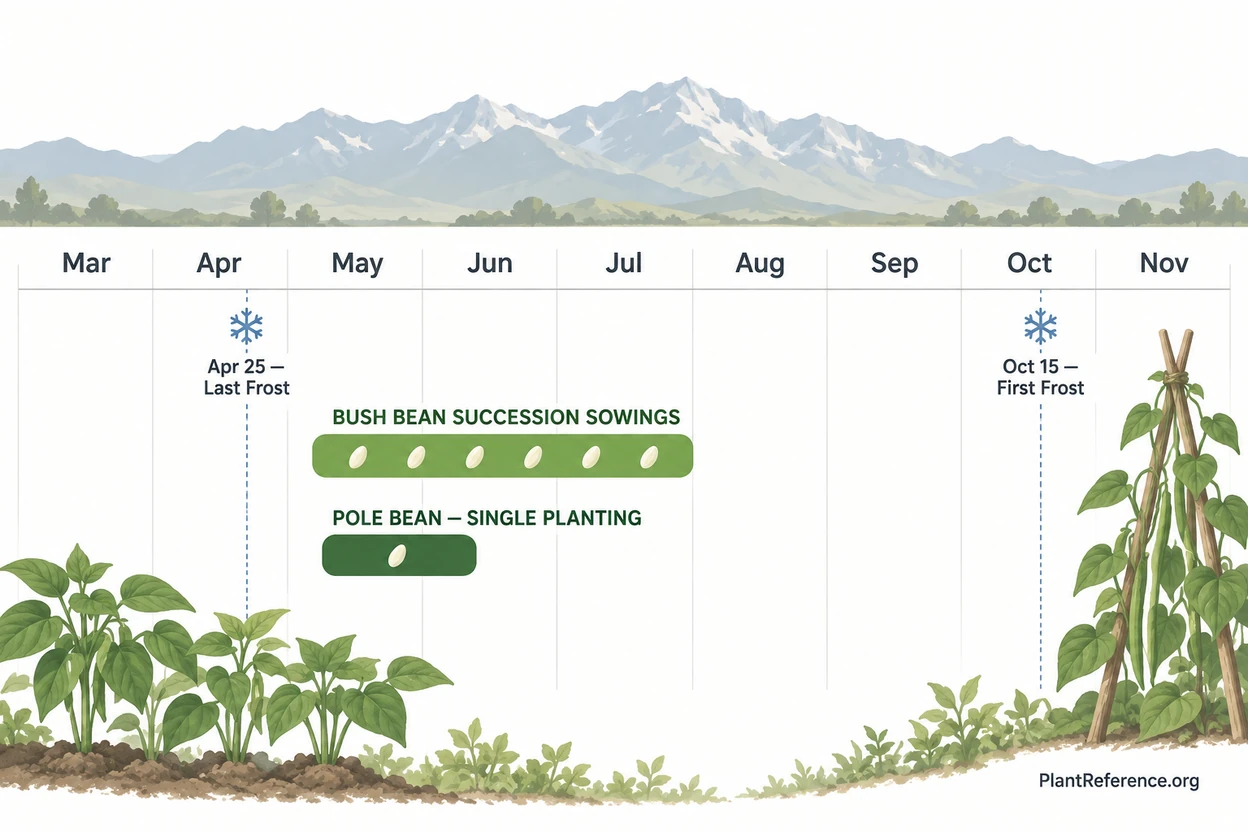
First sowing: Early May (Provider only, once soil reaches 60°F)
Main succession window: May through mid-July (every 2-3 weeks)
Pole bean planting: Mid-May (single planting, harvest mid-July through September)
Last bush sowing: Mid-July (55-day varieties only)
Peak harvest: July through September (intense sun drives fast maturity)
Season end: October 15 first frost terminates remaining plants
Complete Growing Guide for Salt Lake City
Soil Preparation
Salt Lake City's valley floor soil is alkaline clay—the legacy of ancient Lake Bonneville. pH typically runs 7.5-8.5, well above the 6.0-6.8 range Phaseolus vulgaris prefers. Raised beds with imported acidic soil mix are the most efficient solution. Mix 50% quality topsoil with 30% compost and 20% peat moss or sulfur-amended soil to bring pH down. If amending in-ground beds, work in 4-6 inches (10-15 cm) of acidic compost and add elemental sulfur at 1-2 pounds per 100 square feet annually until pH reaches target range. Test pH yearly—the alkaline groundwater works constantly to push it back up. Best Soil for Raised Beds: 6 Commercial Mixes Tested and Compared
Phaseolus vulgaris fixes atmospheric nitrogen through root nodule bacteria—a significant benefit in the high-desert soil that's naturally low in organic nitrogen. Inoculating seed with Rhizobium bacteria at planting improves nitrogen fixation, especially in beds that haven't grown legumes before.
Planting Method
Direct sow 1 inch (2.5 cm) deep. Space bush varieties at 4 inches (10 cm) and vigorous types at 6 inches (15 cm) in rows 18-24 inches (45-60 cm) apart. In Salt Lake City's dry air, the soil surface crusts quickly after watering—a hard crust can trap emerging seedlings below ground. Water gently after planting and keep the surface moist until germination. A light straw covering over the row prevents crusting. How to Build a Raised Garden Bed: Step-by-Step Construction Guide
Watering
Salt Lake City averages only 16 inches of annual precipitation—less than half what green beans need. Irrigation is not supplemental here; it is the entire water supply for your garden. Beans need 1-1.5 inches (2.5-4 cm) per week. Drip irrigation is ideal for the dry climate: it minimizes evaporation losses that are severe in 15-25% humidity air and delivers water directly to roots. Water early morning before the afternoon heat and wind accelerate evaporation. Deep watering 2-3 times per week is better than daily light watering, which encourages shallow roots that suffer during heat spikes. Raised Bed Irrigation Systems: Watering Solutions for Consistent Growth
Fertilizing
Apply low-nitrogen fertilizer (5-10-10) at planting. In alkaline soil, iron and zinc deficiencies are common—watch for yellow leaves with green veins (iron chlorosis). Apply chelated iron as a foliar spray for quick correction. Side-dress with compost at flowering. After harvest, cut plants at soil level and leave nitrogen-rich root nodules in place. In the nutrient-poor high-desert soil, this free nitrogen input matters more than in naturally fertile regions. Nutrient Deficiencies in Raised Beds: Visual Diagnosis and Treatment
Mulching
Apply 3-4 inches (8-10 cm) of straw or wood chip mulch. In Salt Lake City's dry climate, mulch serves primarily as moisture conservation—bare soil loses water rapidly to evaporation in the dry mountain air. Mulch also moderates soil temperature swings during the 25-30°F day-to-night fluctuations common in the valley. Unlike humid climates, mulch here doesn't promote fungal disease—the air is simply too dry. Raised Bed Weeds: Prevention Strategies and Control Methods
Trellising Pole Beans
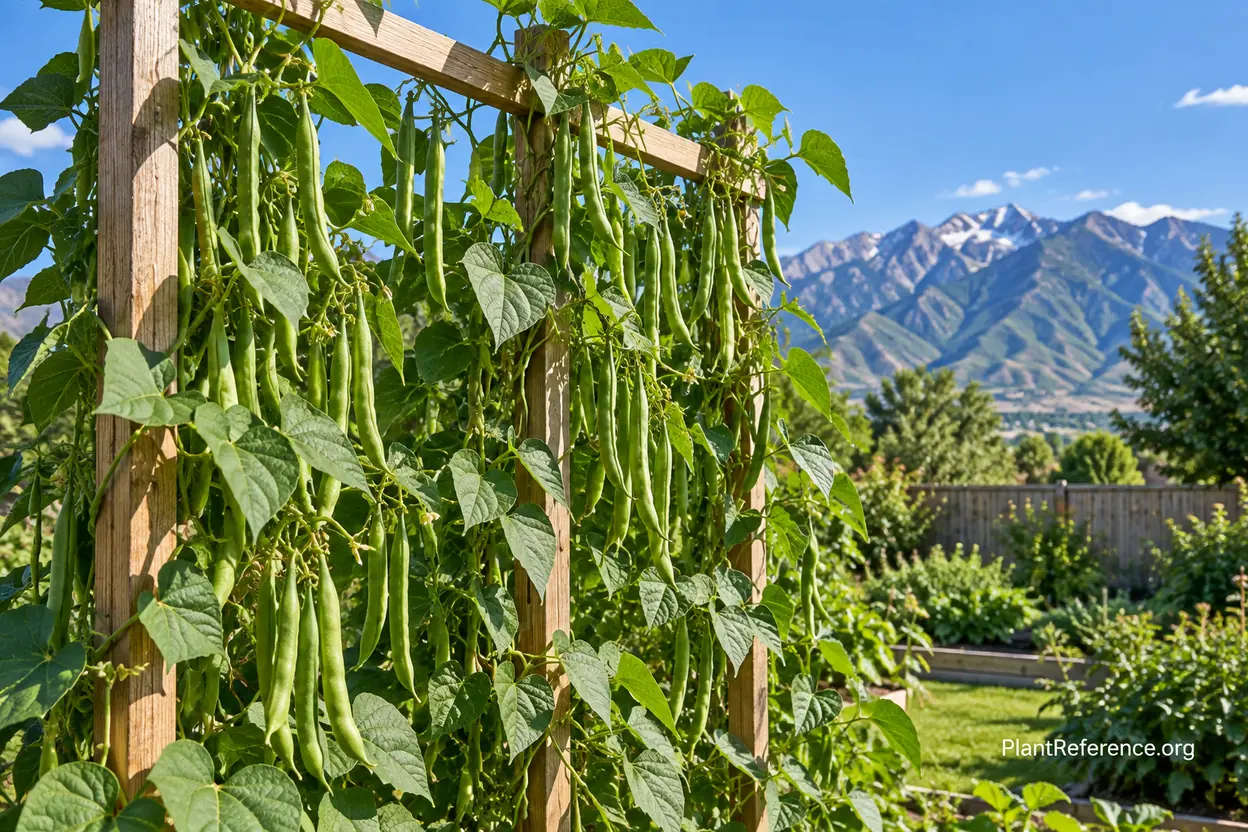
🌿Phaseolus vulgaris 'Kentucky Wonder' vines reach 8-10 feet (2.4-3 m). Salt Lake City gets afternoon canyon winds from the Wasatch that can exceed 30 mph, so build trellises sturdy. Use 8-foot posts anchored firmly with heavy twine or netting between them. The dry climate means disease doesn't develop on crowded pole bean foliage the way it does in humid areas, so you can plant slightly closer than eastern spacing recommendations.
Troubleshooting Salt Lake City-Specific Problems
Alkaline Soil and Iron Chlorosis
The most common problem in Salt Lake City bean gardens. Leaves turn yellow with green veins remaining—classic iron chlorosis caused by high pH locking up iron in the soil. Foliar spray with chelated iron corrects symptoms within days. Long-term, amend soil annually with acidic compost, peat moss, and elemental sulfur. Raised beds with imported acidic soil mix avoid the problem entirely. Test pH yearly because alkaline irrigation water gradually pushes amended soil back toward high pH. Raised Bed Soil pH Problems: Testing, Adjusting, and Maintaining Balance
Soil Crusting and Poor Germination
Salt Lake City's alkaline clay forms a hard crust after watering or rain. Large-seeded beans usually push through, but crusting can trap seedlings and reduce stands. Keep the soil surface moist and loose during germination. A light straw covering prevents crusting. If you notice poor germination from crusting, gently break the crust with a finger once seedlings begin pushing up.
Late Spring Freezes
Cold fronts sliding down the Wasatch can drop temperatures to freezing as late as early May, even after weeks of warm weather. Cover emerging bean seedlings with row cover on nights when frost threatens. A single freeze kills bean seedlings outright—they have zero frost tolerance. Check the forecast daily during the first two weeks after planting. Raised Bed Too Hot in Summer: Protecting Plants from Heat Stress
July-August Heat Spikes
Salt Lake City July and August afternoons occasionally reach 100°F+, though the heat is less sustained than in Oklahoma or Memphis. The dry heat causes rapid moisture loss from both soil and foliage. Increase irrigation frequency during heat spikes. Mulch heavily. 🌿Phaseolus vulgaris 'Purple Queen' handles the occasional extreme day better than other varieties. The cool nights (typically dropping to 60-65°F even after 100°F days) help beans recover overnight—an advantage humid southern cities don't have. Raised Bed Pest Problems: Identification and Organic Control Methods
Harvest & Storage
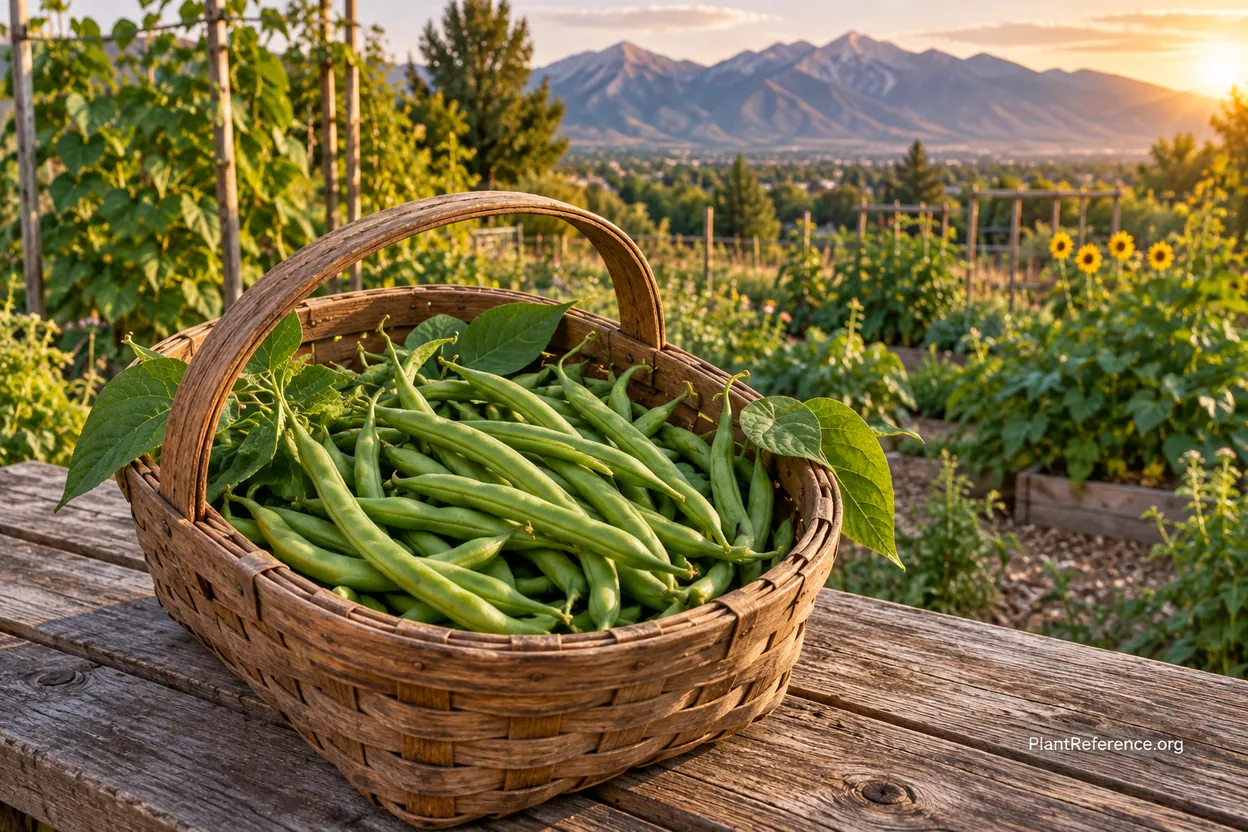
Harvest bush beans when pods are 4-6 inches (10-15 cm) long and snap crisply. Salt Lake City's intense sunshine drives fast maturity, so check plants every 2 days—pods that were perfect on Monday may be tough by Wednesday in peak summer. Pick with two hands to avoid uprooting plants. The cool night temperatures concentrate sugars in pods, giving Salt Lake City beans a sweetness that gardeners in hotter, more humid climates struggle to match.
🌿Phaseolus vulgaris 'Kentucky Wonder' pole beans need harvest every 1-2 days during peak production. The continuous flowering habit shuts down when over-mature pods stay on the vine.
Fresh beans store 5-7 days refrigerated. Blanch 3 minutes, ice bath, drain, and freeze flat before bagging. 🌿Phaseolus vulgaris 'Blue Lake' is the freezing champion. 🌿Phaseolus vulgaris 'Dragon Tongue' excels as a dried shell bean in Salt Lake City—the low humidity allows pods to dry perfectly on the vine through September and October without the mold problems that make this impossible in humid climates. Shell dried pods and store in mason jars for soups and chili through the long Utah winter.
Frequently Asked Questions
Reading about plants and recognising them are different skills. These three build the second.
- Daily PlantIdentify the day’s mystery plant from a close-up photograph.
- Keyed OutWork a dichotomous key, lead by lead, to name a hidden specimen.
- Name That PlantName a specimen from botanical clues dealt hardest first.
Free to play, no account needed
Tagged with
Yuki is a landscape designer in Salt Lake City who specializes in water-wise gardens that work with Utah's dry climate and alkaline soil. She moved to Utah from Portland, Oregon—a rude awakening for someone used to gardening in rich, acidic soil with reliable rainfall. That transition taught her to rethink everything she knew about plant selection and garden design. Yuki now focuses on intermountain-adapted plantings that combine ornamental grasses, drought-tolerant perennials, and carefully chosen shrubs for year-round interest. She works with homeowners looking to reduce water use without giving up on having an attractive garden. Yuki writes with the clarity of someone who had to learn a new climate from scratch.