When to Plant Green Beans in Oklahoma City: Complete Guide + Best Varieties for Zone 7a
Pets & Toxicity
Recorded toxicity for plants linked in this guide. An unknown status is not a safety assessment.
Phaseolus vulgaris 'Blue Lake' — Toxicity
Non-toxic when cooked. Raw pods carry lectins (phytohemagglutinin) that cause digestive upset on raw consumption — pods are cooked before eatingView Phaseolus vulgaris 'Blue Lake' plant profilePhaseolus vulgaris 'Purple Queen' — Toxicity
Non-toxicView Phaseolus vulgaris 'Purple Queen' plant profilePhaseolus vulgaris 'Dragon Tongue' — Toxicity
Non-toxicView Phaseolus vulgaris 'Dragon Tongue' plant profilePhaseolus vulgaris 'Kentucky Wonder' — Toxicity
Non-toxicView Phaseolus vulgaris 'Kentucky Wonder' plant profile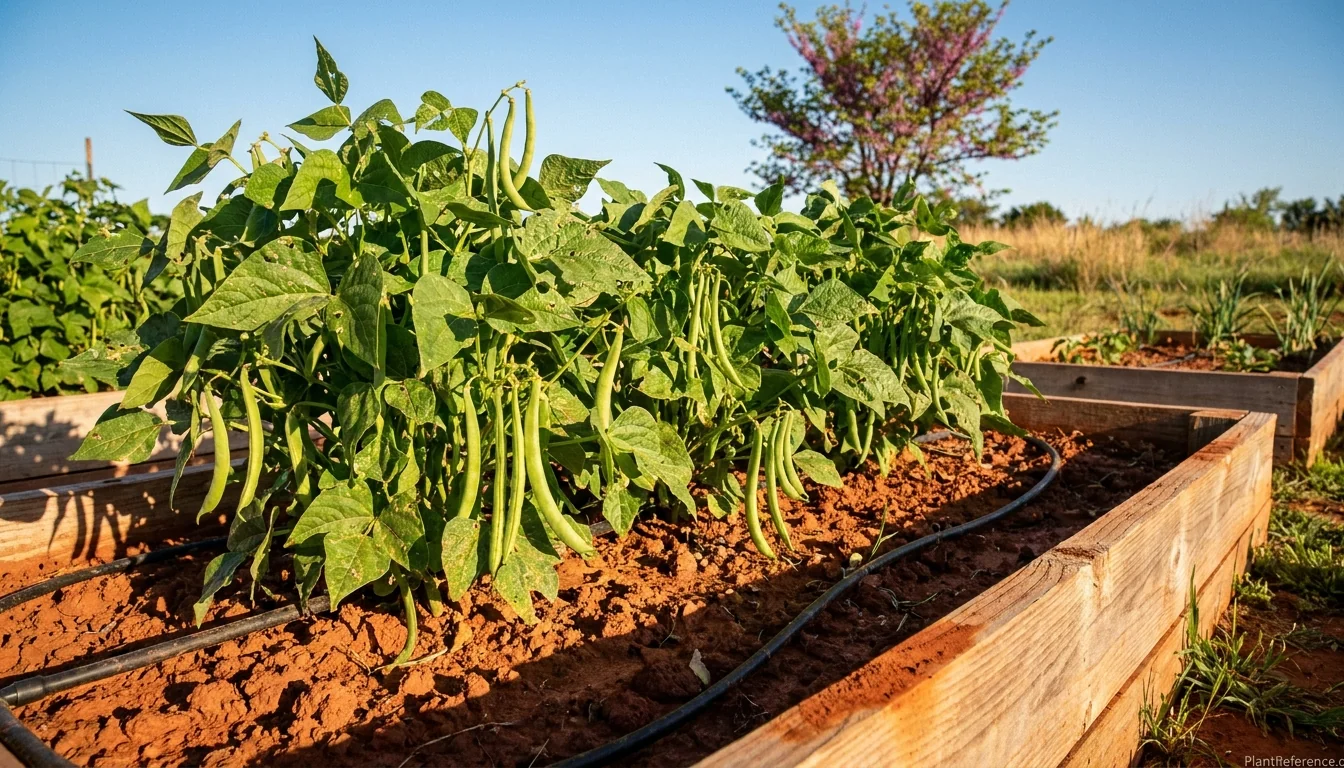
— Image © PlantReference.org 2026
Oklahoma City hands green beans a generous 218-day season—but makes them earn every pod. The stretch between our April 1 last frost and November 5 first frost is long enough for five or six succession plantings, and the heat that builds through May and June pushes beans to maturity fast. The problems start in July. When afternoons hit 100°F+ with constant south wind pulling moisture from every leaf, Phaseolus vulgaris blossoms drop and production stalls. The gardeners who harvest beans all season are the ones who irrigate consistently, mulch heavily, and treat the fall planting window as seriously as spring. September and October beans are often the best you'll grow all year—the brutal midsummer is just the price of admission. The Complete Guide to Raised Bed Gardening for Beginners (2025)
Best Green Bean Varieties for Oklahoma City's Zone 7a Climate
Oklahoma City sits on the cross timbers transition between eastern tallgrass prairie and western mixed-grass prairie. Soil varies from heavy red clay in the metro core to sandier loam in the western suburbs. The red clay is fertile but drains poorly after the intense spring thunderstorms that define Oklahoma weather. Wind is the other constant—sustained 15-25 mph south winds through summer desiccate foliage and topple unsupported plants. Variety selection for Oklahoma City prioritizes heat tolerance, sturdy plant structure, and disease resistance for the humid spring months. Best Soil Mix for Raised Beds: Creating the Perfect Growing Medium
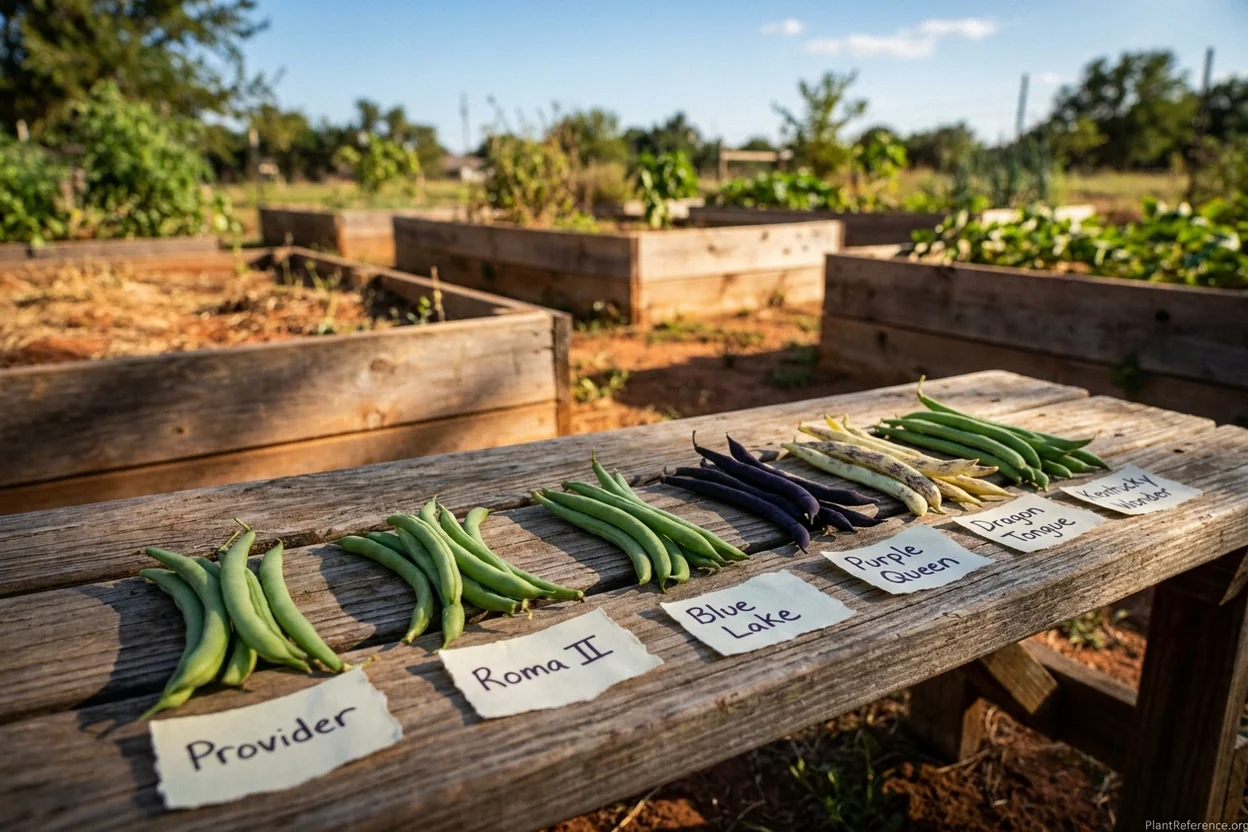
🌿Phaseolus vulgaris 'Provider' launches your Oklahoma City season at 50-55 days. 🌿Phaseolus vulgaris 'Provider' germinates in cooler soil than other varieties, critical for mid-April sowings when Oklahoma spring weather swings wildly between 80°F and 40°F within the same week. The compact bush habit resists wind damage better than taller varieties. Space 🌿Phaseolus vulgaris 'Provider' at 4 inches (10 cm) in rows 18-24 inches apart. The concentrated 10-14 day harvest window lets you clear and replant the bed quickly for your next succession.
🌿Phaseolus vulgaris 'Roma II' is the disease-resistant choice at 53-60 days. 🌿Phaseolus vulgaris 'Roma II' carries genetic resistance to common bean mosaic virus and handles Oklahoma's humid spring storms better than susceptible varieties. The broad flat Italian pods hold quality on the plant when rain delays harvest—a common scenario during Oklahoma's violent spring thunderstorm season.
🌿Phaseolus vulgaris 'Blue Lake' produces the classic round pod at 55-65 days. 🌿Phaseolus vulgaris 'Blue Lake' is the canning and freezing standard with heavy yields from its vigorous bush habit. Space at 6 inches (15 cm) for the larger plant frame. The sturdier structure handles Oklahoma wind better than compact bush types. Plant from late April through June for main season production.
🌿Phaseolus vulgaris 'Purple Queen' is essential for midsummer at 55-60 days. 🌿Phaseolus vulgaris 'Purple Queen' sets pods at higher temperatures than green varieties—the single most important trait for July sowings when Oklahoma City regularly exceeds 100°F. The purple pods stand out against foliage for fast harvesting when you want minimal time in the garden heat.
🌿Phaseolus vulgaris 'Dragon Tongue' offers a dual-purpose option at 55-60 days with cream-and-purple streaked pods. Harvest 🌿Phaseolus vulgaris 'Dragon Tongue' young as snap beans or let pods mature for dried shell beans. The vigorous habit needs 6-inch (15 cm) spacing. Best for May and September plantings when temperature extremes are moderate.
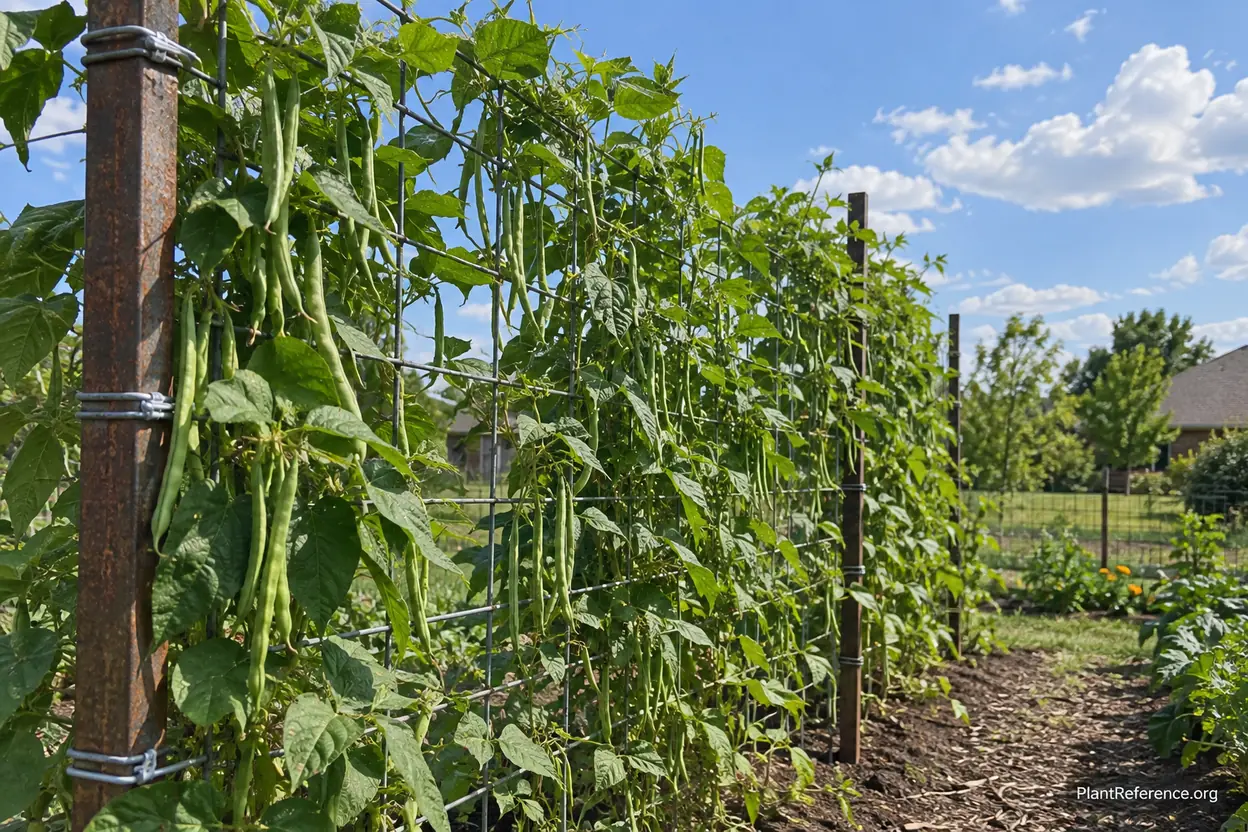
🌿Phaseolus vulgaris 'Kentucky Wonder' is the pole bean at 60-70 days that produces continuously for 6-8 weeks from a single planting. 🌿Phaseolus vulgaris 'Kentucky Wonder' vines reach 8-10 feet (2.4-3 m) and need exceptionally sturdy support in Oklahoma wind. The continuous harvest habit means established 🌿Phaseolus vulgaris 'Kentucky Wonder' vines recover from heat stress faster than newly germinated bush seedlings—a major advantage during the midsummer gap. Plant in early May on a wind-resistant trellis oriented north-south to minimize wind loading. Raised Bed Vegetable Garden Layout: Planning for Maximum Production
Variety | Days to Maturity | Type | Best For OKC | Notes for Zone 7a |
|---|---|---|---|---|
50-55 days | Bush | First spring crop | Cool-soil tolerance; compact wind-resistant habit | |
53-60 days | Bush | Disease resistance | Mosaic virus resistant; holds quality through storms | |
55-65 days | Vigorous bush | Main season | Gold standard canning and freezing; handles wind | |
55-60 days | Bush | Midsummer heat | Sets pods above 100°F; purple pods easy to spot | |
55-60 days | Vigorous bush | Specialty harvest | Dual-purpose snap or shell; spring and fall sowings | |
60-70 days | Pole | Continuous harvest | Recovers from heat; needs wind-resistant trellis |
Specific Planting Dates for Oklahoma City
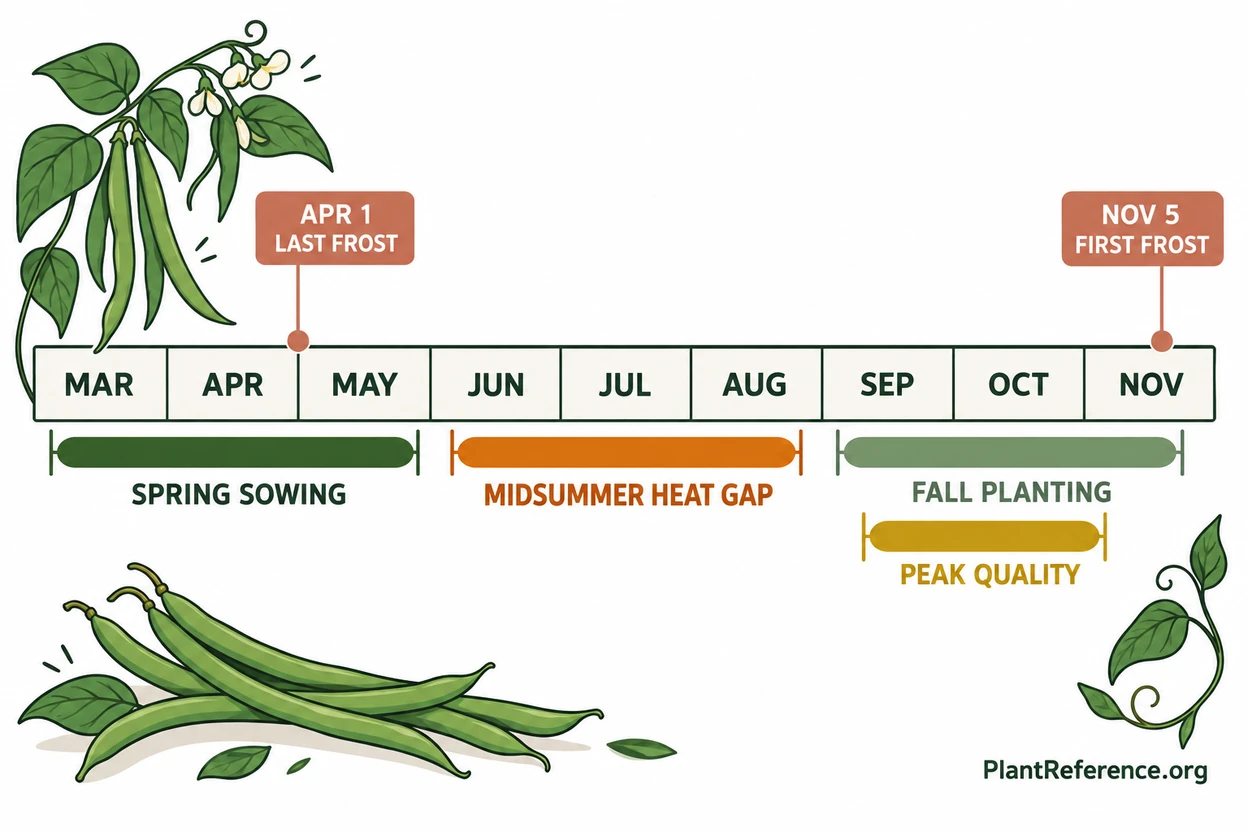
Oklahoma City averages an April 1 last frost and November 5 first frost, giving you 218 frost-free days. Green beans need soil at 60°F minimum, so your practical window opens about two weeks after the last frost. The long season supports five or six succession sowings, though midsummer plantings produce reduced yields due to extreme heat.
First Sowing: Mid-April
Direct sow 🌿Phaseolus vulgaris 'Provider' starting mid-April once soil temperature reaches 60°F. Oklahoma springs warm fast, but the notorious late cold fronts can drop temperatures 40-50 degrees overnight. Check the 10-day forecast before sowing—a late freeze after germination kills seedlings outright.
Spring and Early Summer: Late April through June
Plant 🌿Phaseolus vulgaris 'Blue Lake' and 🌿Phaseolus vulgaris 'Roma II' every 2-3 weeks from late April through June. These are your most productive plantings—beans mature during the warm-but-not-brutal window before triple-digit heat arrives. Soil temperature runs 70-80°F and germination takes just 5-7 days. Best Raised Bed Vegetables for Beginners: Top 10 Easy-Growing Crops
Midsummer: July through Mid-August
Oklahoma City July averages 94°F with frequent spikes above 100°F. Bean blossoms drop when daytime highs exceed 90°F for consecutive days. Use 🌿Phaseolus vulgaris 'Purple Queen' exclusively for July sowings. Plant 10-15% extra seed because germination rates drop when soil temperatures exceed 85°F. Keep succession planting through the heat gap—plants that germinate in July produce well in September when temperatures drop.
Fall Plantings: Mid-August through Late August
Your last sowing in late August gives fast-maturing varieties enough runway before the November 5 first frost. Fall beans are often the highlight of the Oklahoma season—September and October bring 75-85°F days, lower wind, and reduced pest pressure. Don't skip these plantings.
First sowing: Mid-April (Provider only, once soil reaches 60°F)
Spring succession: Late April through June (most productive window)
Midsummer: July through mid-August (Purple Queen only; reduced yields)
Fall planting: Mid-August through late August (best quality of season)
Pole bean planting: Early May (single planting, harvest July-September)
Season end: November 5 first frost terminates remaining plants
Complete Growing Guide for Oklahoma City
Soil Preparation
Oklahoma City's red clay is fertile but compacts hard when dry and turns slick when wet. Amend with 4-6 inches (10-15 cm) of compost worked into the top 10 inches (25 cm). The sandier soils in western suburbs drain better but need organic matter to retain moisture through the hot windy summer. Raised beds 10-12 inches deep solve both problems. Mix 60% quality topsoil with 30% compost and 10% perlite. Green beans prefer pH 6.0-6.8—Oklahoma soils tend slightly alkaline at 7.0-7.5, so the compost addition naturally brings pH into range. A soil test through the Oklahoma State University Extension Service identifies specific needs. Best Soil for Raised Beds: 6 Commercial Mixes Tested and Compared
Phaseolus vulgaris fixes atmospheric nitrogen through Rhizobium bacteria in root nodules—a significant advantage in Oklahoma where purchased fertilizer costs add up fast across five or six succession plantings. The nitrogen-fixing ability means beans improve soil for whatever crop follows them in the rotation.
Planting Method
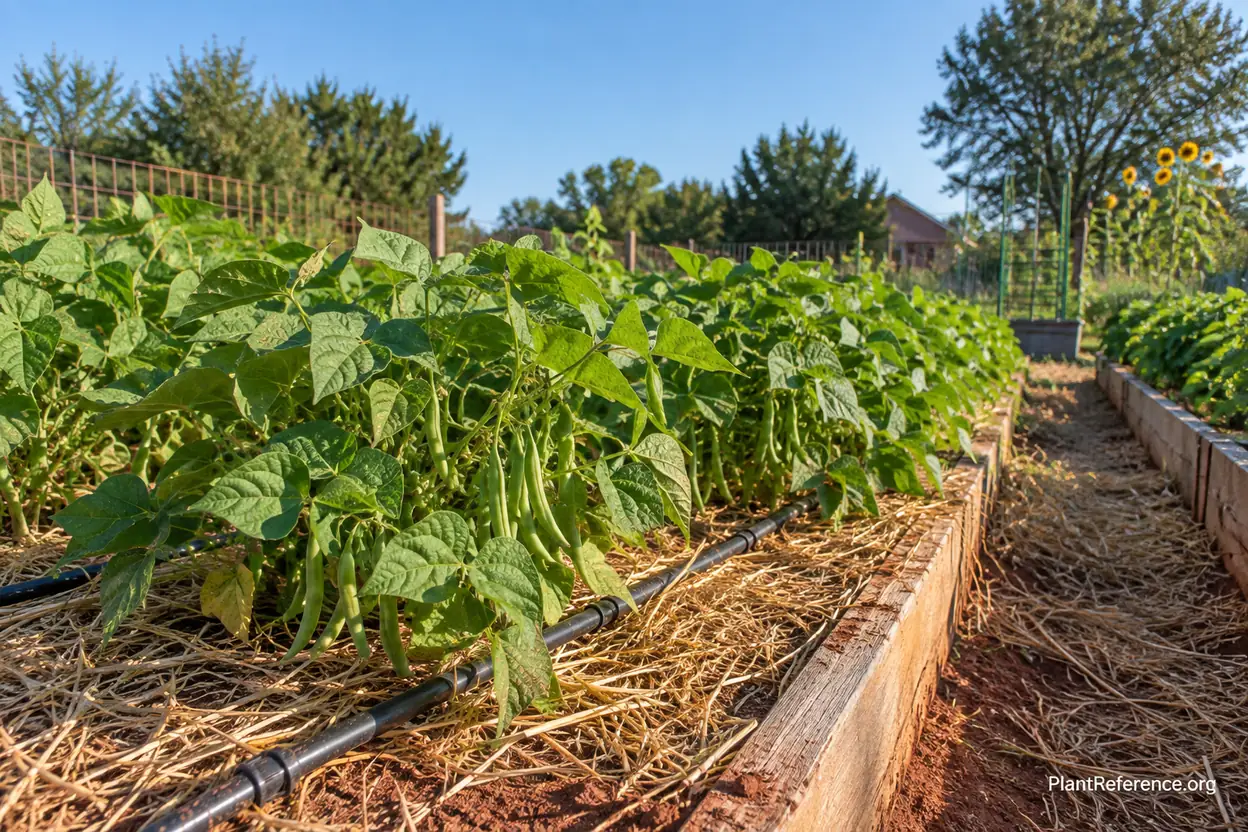
Direct sow all green bean varieties 1 inch (2.5 cm) deep. Space compact bush types at 4 inches (10 cm) and vigorous varieties at 6 inches (15 cm) in rows 18-24 inches (45-60 cm) apart. Press seeds firmly into moist soil. In Oklahoma's drying wind, water immediately after planting and consider a light layer of straw over the row to retain surface moisture until germination. Remove the straw covering once seedlings emerge. How to Build a Raised Garden Bed: Step-by-Step Construction Guide
Watering
Non-negotiable in Oklahoma City. Annual rainfall averages 36 inches but arrives in violent spring thunderstorms—then summer brings weeks of nothing while hot south wind sucks moisture from soil and foliage. Green beans need 1-1.5 inches (2.5-4 cm) per week consistently. Drip irrigation is the only practical solution: it delivers water at soil level without wetting foliage (reducing disease) and minimizes evaporation losses that plague overhead sprinklers in Oklahoma wind. Water early morning. During 100°F+ heat waves, increase to 2 inches per week—beans stressed by both heat and drought drop every blossom. Raised Bed Irrigation Systems: Watering Solutions for Consistent Growth
Fertilizing
Phaseolus vulgaris fixes its own nitrogen, so avoid nitrogen-heavy fertilizers that push foliage at the expense of pods. Apply low-nitrogen fertilizer (5-10-10) at planting for phosphorus and potassium. Side-dress with compost at flowering. Oklahoma's alkaline soils can lock up phosphorus—if plants flower heavily but set few pods, a phosphorus deficiency may be the cause. After harvest, cut plants at soil level and leave the nitrogen-rich root nodules to decompose in place. Nutrient Deficiencies in Raised Beds: Visual Diagnosis and Treatment
Mulching
Apply 3-4 inches (8-10 cm) of straw or shredded hardwood mulch after seedlings reach 4-6 inches tall. In Oklahoma, mulch serves triple duty: it moderates soil temperature during extreme heat (reducing root zone temps by 10-15°F), conserves moisture that the relentless wind would otherwise strip from bare soil, and suppresses the competitive weeds that thrive in Oklahoma's long warm season. Replenish mulch through the summer as it breaks down—Oklahoma heat decomposes organic mulch faster than northern climates. Raised Bed Weeds: Prevention Strategies and Control Methods
Trellising Pole Beans
🌿Phaseolus vulgaris 'Kentucky Wonder' requires the sturdiest trellis in Oklahoma City. The sustained 15-25 mph south wind loads a trellis full of bean vines like a sail. Use 4x4 posts set 2-3 feet deep in concrete at row ends. Run heavy-gauge cattle panel or welded wire between posts rather than lightweight netting that tears in wind. Orient rows north-south so the trellis presents its narrow edge to the prevailing south wind rather than catching it broadside. A failed trellis in July means losing your entire pole bean crop.
Troubleshooting Oklahoma City-Specific Problems
Extreme Heat and Blossom Drop
Oklahoma City's July and August routinely bring 100°F+ heat waves lasting a week or more. Bean blossoms drop and pod set ceases entirely above 90°F for consecutive days. Mitigation strategies include planting 🌿Phaseolus vulgaris 'Purple Queen' for midsummer sowings, mulching heavily to cool root zones, irrigating consistently so heat stress isn't compounded by drought, and using shade cloth (30-40% density) over beds during the worst heat waves. Established 🌿Phaseolus vulgaris 'Kentucky Wonder' pole beans bounce back from heat stress faster than newly germinated seedlings. Raised Bed Too Hot in Summer: Protecting Plants from Heat Stress
Wind Damage
Oklahoma wind is relentless—15-25 mph sustained south winds are the norm from May through August, with spring storm gusts exceeding 60 mph. Wind desiccates foliage, topples tall plants, and sandblasts young seedlings. Use row cover or burlap windbreaks on the south side of beds during establishment. Plant bush beans rather than pole beans in the most exposed locations. The compact habit of 🌿Phaseolus vulgaris 'Provider' resists wind damage better than taller varieties.
Spring Severe Weather
Oklahoma's spring thunderstorm season (April-June) brings hail, straight-line winds, and flooding rain that can destroy bean plantings overnight. Succession planting is your insurance policy—losing one planting to a storm is painful but not catastrophic when another sowing is already in the ground two weeks behind it. After hail damage, assess whether plants can recover or need replanting. Plants stripped of leaves but with intact stems often regrow, though harvest will be delayed 2-3 weeks. Raised Bed Pest Problems: Identification and Organic Control Methods
Alkaline Soil and Nutrient Lockout
Oklahoma City soils run pH 7.0-7.5, which can lock up iron and phosphorus. Beans showing yellow leaves with green veins (interveinal chlorosis) likely have iron deficiency from alkaline conditions. Apply chelated iron as a foliar spray for quick correction. Annual compost additions gradually lower pH over time. Raised beds with imported acidic soil mix bypass the issue entirely. Raised Bed Soil pH Problems: Testing, Adjusting, and Maintaining Balance
Harvest & Storage
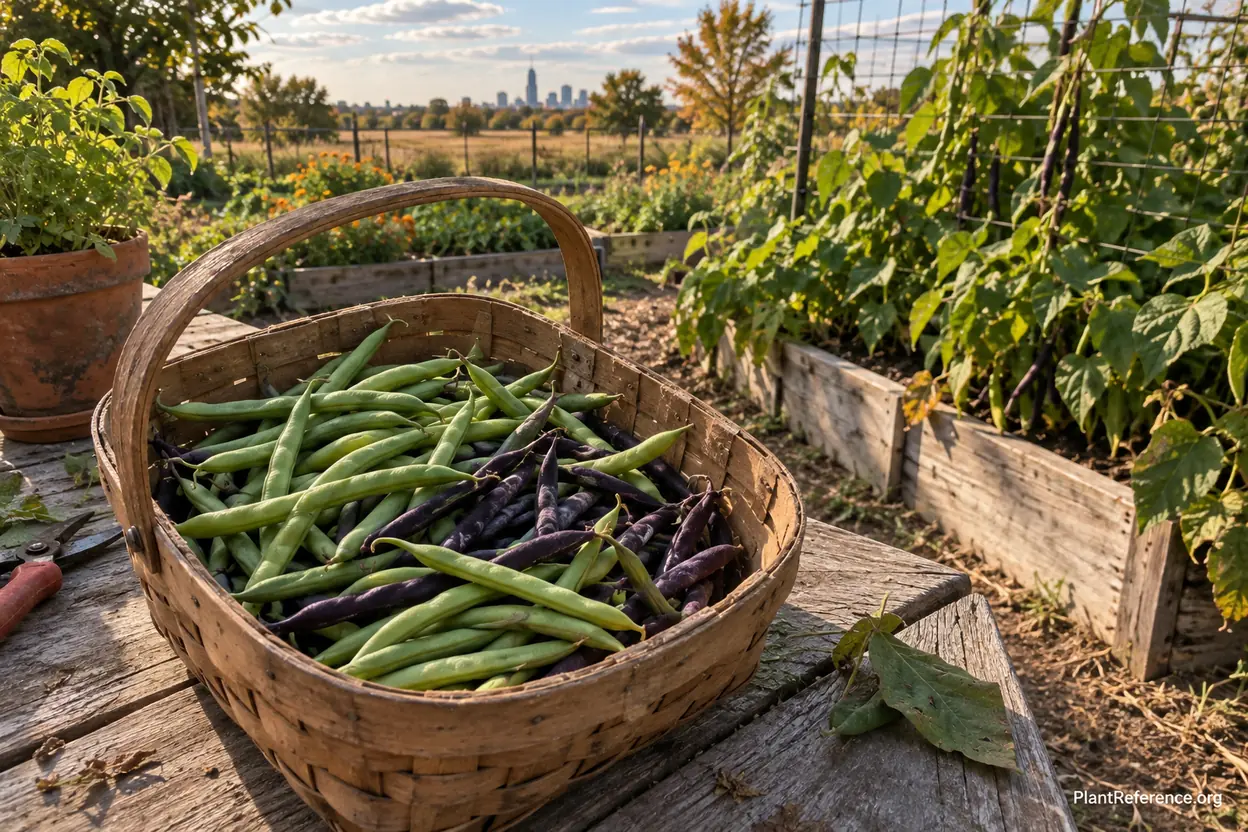
Harvest bush beans when pods are 4-6 inches (10-15 cm) long and snap crisply. In Oklahoma heat, pods mature from perfect to tough faster than in moderate climates—check plants every 2 days during peak production. Leaving over-mature pods signals Phaseolus vulgaris to stop flowering. Pick with two hands to avoid uprooting plants in Oklahoma's lighter soils. Harvest in early morning before the heat builds—pods picked during 100°F afternoons wilt quickly and lose quality before you get them inside.
🌿Phaseolus vulgaris 'Kentucky Wonder' pole beans need daily harvest during peak production. Over-mature pods on the vine suppress new flower production immediately.
Fresh green beans store 5-7 days refrigerated. Blanch 3 minutes, ice bath, drain, and freeze flat on sheets before bagging. Five or six Oklahoma succession plantings can easily fill a freezer. 🌿Phaseolus vulgaris 'Blue Lake' freezes best. 🌿Phaseolus vulgaris 'Dragon Tongue' makes excellent dried shell beans—let pods brown fully on the vine during the dry Oklahoma fall air, shell, and store in jars. The low fall humidity is actually ideal for on-vine drying, unlike humid southern states where pods mold before they dry.
Frequently Asked Questions
Reading about plants and recognising them are different skills. These three build the second.
- Daily PlantIdentify the day’s mystery plant from a close-up photograph.
- Keyed OutWork a dichotomous key, lead by lead, to name a hidden specimen.
- Name That PlantName a specimen from botanical clues dealt hardest first.
Free to play, no account needed
Tagged with
Robert is a retired meteorologist who turned his lifelong hobby of gardening into a second career writing about weather-climate interactions and their effects on plants. Living in Oklahoma, he's seen it all—ice storms, tornadoes, 110°F heat, and drought, sometimes in the same month. Robert brings a data-driven approach to gardening, tracking weather patterns and correlating them with plant performance in his own large garden. He's particularly knowledgeable about wind-resistant plantings, storm damage recovery, and the challenge of gardening in a climate where extremes are the norm rather than the exception. Robert is a calm, measured writer who presents information without drama.