When to Plant Carrots in Los Angeles: Zone 10b Dates + Best Varieties
Pets & Toxicity
Recorded toxicity for plants linked in this guide. An unknown status is not a safety assessment.
No linked plant is recorded as toxicDetailsHide
Daucus carota ssp. sativus 'Chantenay' — Toxicity
Non-toxicView Daucus carota ssp. sativus 'Chantenay' plant profileDaucus carota ssp. sativus 'Imperator' — Toxicity
Non-toxicView Daucus carota ssp. sativus 'Imperator' plant profileDaucus carota ssp. sativus 'Rainbow' — Toxicity
Non-toxicView Daucus carota ssp. sativus 'Rainbow' plant profileDaucus carota ssp. sativus 'Nantes' — Toxicity
Non-toxicView Daucus carota ssp. sativus 'Nantes' plant profileDaucus carota ssp. sativus 'Danvers 126' — Toxicity
Non-toxicView Daucus carota ssp. sativus 'Danvers 126' plant profile
— Image © Plant Reference 2026
Los Angeles turns the carrot calendar upside down. In most of the country, gardeners plant carrots in spring and fall, working around winter cold. Here, winter is your best growing season. Our mild temperatures, low humidity, and predictable weather from November through March create nearly perfect carrot conditions. The challenge isn't cold—it's summer heat, limited rainfall, and the heavy clay soils that cover much of the LA basin. Once you stop thinking of carrots as a spring crop and start thinking of them as a winter crop, everything clicks.
Best Carrot Varieties for Los Angeles's Zone 10b Climate
Los Angeles soil varies dramatically by neighborhood. Much of the basin sits on heavy clay—dense, slow-draining, and tough on root crops. Hillside areas may have shallow, rocky soil over decomposed granite. Coastal neighborhoods often have sandier ground. A soil test through the UC Cooperative Extension identifies your specific conditions, but most LA gardeners are working with some version of clay.
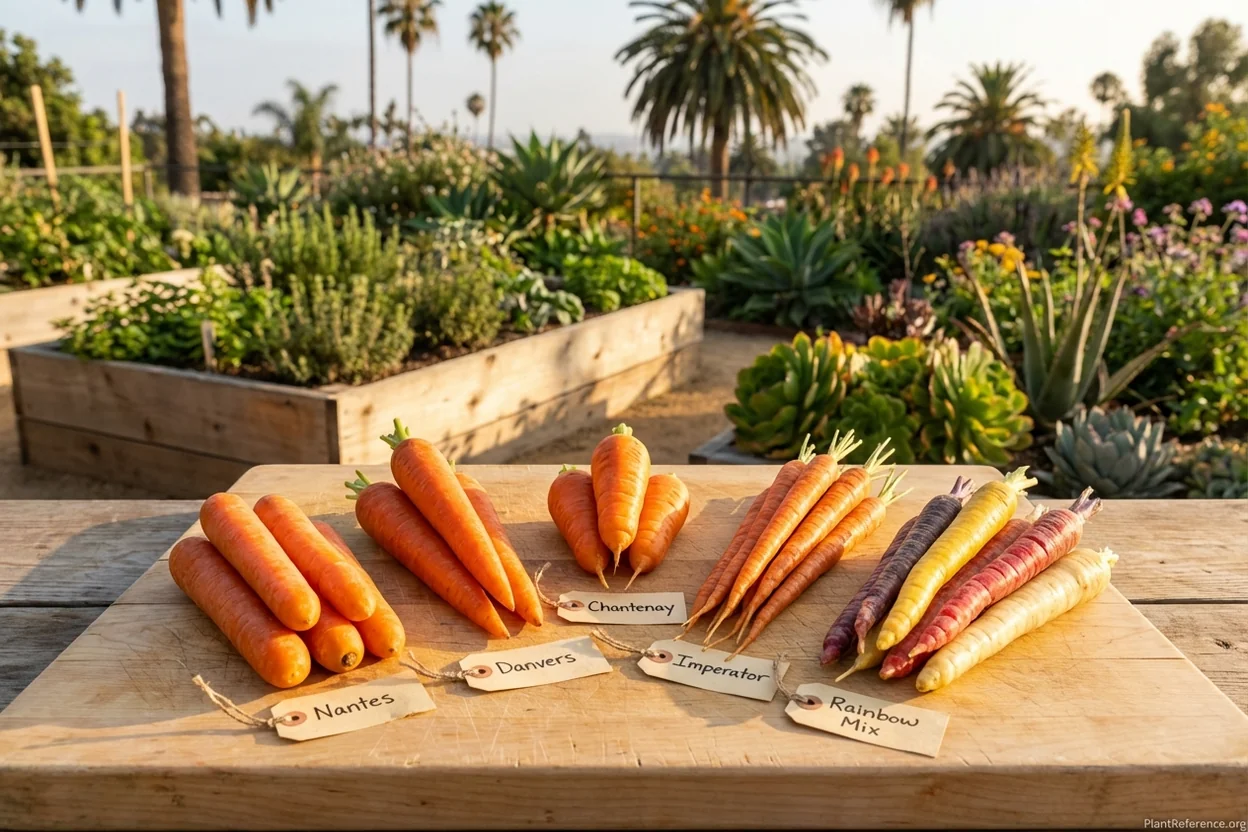
🌿Daucus carota ssp. sativus 'Nantes' (DAW-kus kuh-ROH-tuh) is the top variety for Los Angeles. LA's mild winter temperatures—daytime highs in the 60s-70s°F, nighttime lows in the 40s-50s°F—sit exactly in the sweet spot for 🌿Daucus carota ssp. sativus 'Nantes' flavor development. The cylindrical roots produce the sweetest, most tender eating quality of any type. In amended beds or containers, 🌿Daucus carota ssp. sativus 'Nantes' is hard to beat. The cultivar 'Bolero' adds disease resistance and storage durability.
🌿Daucus carota ssp. sativus 'Danvers 126' is the reliable choice for LA's heavier soils. The conical root pushes through clay better than cylindrical types. At 70-80 days to maturity, 🌿Daucus carota ssp. sativus 'Danvers 126' completes easily within the long winter window. The firm flesh stores well—useful when continuous succession planting keeps fresh carrots coming.
🌿Daucus carota ssp. sativus 'Chantenay' works in shallow, rocky hillside soil and containers. At 4-5 inches (10-13 cm) long, 🌿Daucus carota ssp. sativus 'Chantenay' stays above the clay layer. A strong option for apartment balconies and small-space gardens common in LA.
🌿Daucus carota ssp. sativus 'Imperator' is the classic supermarket carrot—long and slender. It needs 12 inches (30 cm) of loose soil, which means raised beds or deep containers in LA. The cultivar 'Sugarsnax 54' adds sweetness to the familiar form.
🌿Daucus carota ssp. sativus 'Rainbow' produces white, yellow, orange, and coral roots. At 70-75 days, it fits the winter window easily. The color variety appeals to LA's food-forward culture and farmers market aesthetic.
Variety | Days to Maturity | Best For | Notes for Los Angeles |
|---|---|---|---|
65-75 days | Flavor and winter growing | Top pick for LA; mild winters produce peak sweetness; needs amended soil | |
70-80 days | Native clay and storage | Best clay tolerance; conical root handles heavy LA basin soil | |
65-75 days | Containers and hillside soil | Short roots for shallow rocky soil; ideal for balcony and patio gardens | |
75-85 days | Deep raised beds | Classic long form; needs 12+ inches loose soil; deep containers work well | |
70-75 days | Specialty and farmers market | Multiple colors; fits long winter window; pairs with water-wise design |
Specific Planting Dates for Los Angeles
Los Angeles averages a February 15 last frost and December 15 first frost, giving you 303 frost-free days. But those frost dates barely matter for carrots—the real calendar is driven by soil temperature. Carrots produce bitter terpenoid compounds when soil exceeds 75°F (24°C), and LA's summer heat pushes well past that inland. Your productive window runs from fall through spring, not spring through fall.
Primary Window: October through February
Begin sowing in October as summer heat fades. Soil temperatures drop into the 60-70°F range—ideal for germination and root development. Continue succession sowings every 2-3 weeks through February. This five-month window is the heart of LA carrot production. Winter temperatures in the 50-70°F daytime range with 40-55°F nights produce the sweetest roots you'll grow anywhere in the country.
Extended Coastal Window: Through March
Coastal neighborhoods from Santa Monica to Long Beach benefit from marine layer cooling that moderates spring warming. If you're within a few miles of the ocean, you can push sowings through March and sometimes into early April before soil heat catches up. The June gloom marine layer in May and June further extends this coastal advantage.
Summer Gap: June through September
Inland valleys—the San Fernando Valley, San Gabriel Valley, and Inland Empire—experience sustained soil temperatures above 80°F from June through September. Coastal areas have a shorter gap, roughly July through early September. Don't fight it. Focus summer energy on warm-season crops and restart carrots in October.
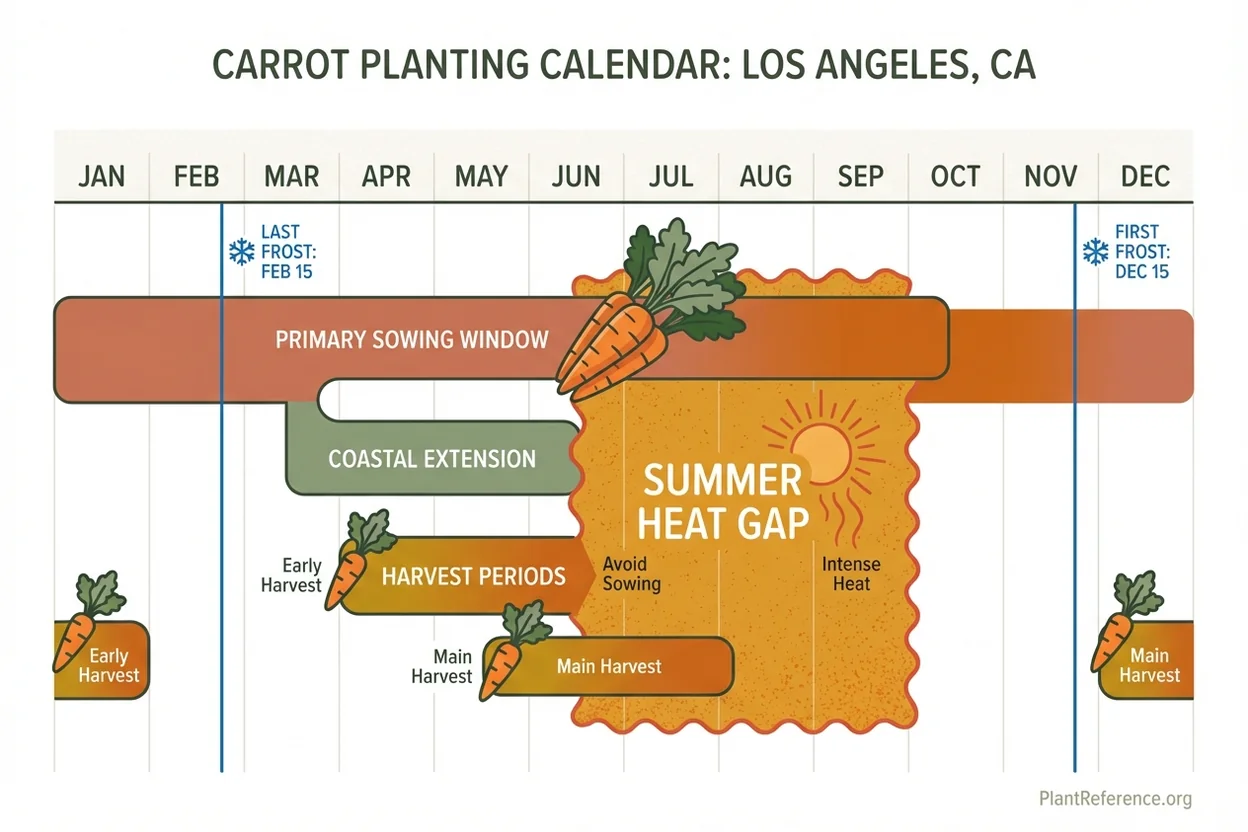
Primary sowing window: October 1 - February 28
Coastal extension: Through March (within marine layer influence)
First harvest: December (from October sowings)
Continuous harvest: December through May (with succession planting)
Summer heat gap: June through September (inland); July through September (coastal)
Best flavor: January-March harvest from November-December sowings
Complete Growing Guide for Los Angeles
Soil Preparation
Much of the LA basin sits on heavy clay deposited by ancient river systems. It holds nutrients well but drains poorly and compacts into a surface that resists both water and root penetration. Hillside neighborhoods may have shallow, rocky soil over decomposed granite. Coastal areas tend toward sandier compositions. Know your specific soil before investing in amendments.
For in-ground beds on clay, work the top 10-12 inches (25-30 cm) and incorporate 3-4 inches (8-10 cm) of finished compost plus 1-2 inches (2.5-5 cm) of coarse sand. LA clay typically runs pH 7.0-8.0—slightly alkaline. Carrots prefer 6.0-6.8, so sulfur amendment may be needed. Test through the UC Cooperative Extension before adding anything. Best Soil Mix for Raised Beds: Creating the Perfect Growing Medium
For raised beds—the best approach for most LA gardens—build to at least 12 inches (30 cm) deep with 60% topsoil, 30% compost, and 10% coarse sand or perlite. Containers work especially well in LA's small-space gardens. Use at least 12-inch deep pots with high-quality potting mix. How to Build a Raised Garden Bed: Step-by-Step Construction Guide
Seeding
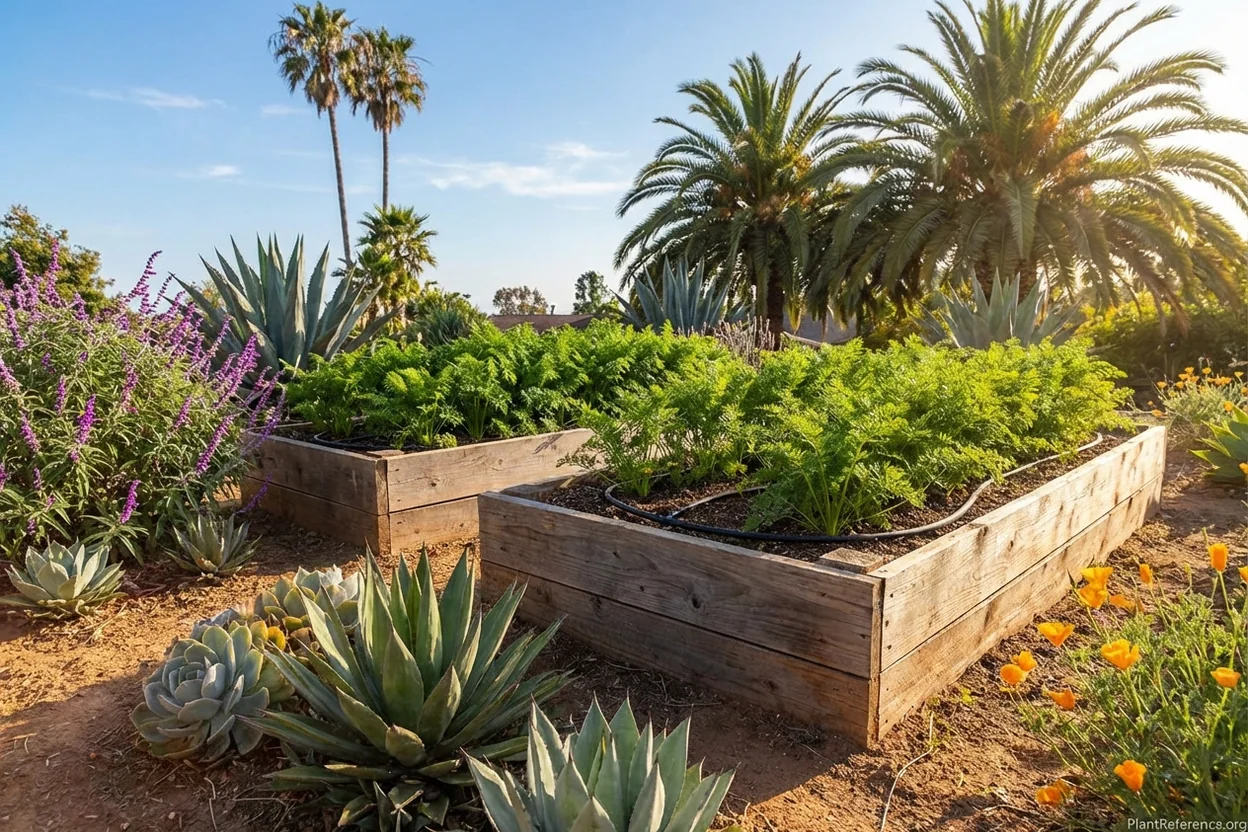
Sow seeds 1/4 inch (0.6 cm) deep in rows 12 inches (30 cm) apart. Cover with vermiculite or fine compost—not native clay. LA's dry air pulls moisture from the seed zone quickly, and the clay crusts hard between waterings. October sowings germinate in 10-14 days as soil is still warm from summer. Midwinter sowings take 14-21 days in cooler soil. Best Soil for Raised Beds: 6 Commercial Mixes Tested and Compared
Water gently twice daily during germination. LA gets almost no rain from May through October, so every drop comes from your irrigation system. When winter rains arrive (November-March), they supplement but don't replace targeted watering—LA's 15 inches of annual rainfall isn't enough on its own.
Thinning
Thin in two stages: first to 1 inch (2.5 cm) at 2 inches (5 cm) tall, then to 2-3 inches (5-8 cm) at 4-5 inches (10-13 cm). Cut at the soil line with scissors. Raised Bed Vegetable Garden Layout: Planning for Maximum Production
Watering
Los Angeles receives about 15 inches of annual rainfall, concentrated between November and March. Carrots need 1-1.5 inches per week, so irrigation is essential year-round. During the dry fall planting season (October-November), you're providing all the water. When winter rains arrive, reduce irrigation accordingly but don't stop entirely—LA rain is irregular, and dry spells of 2-3 weeks occur even in winter.
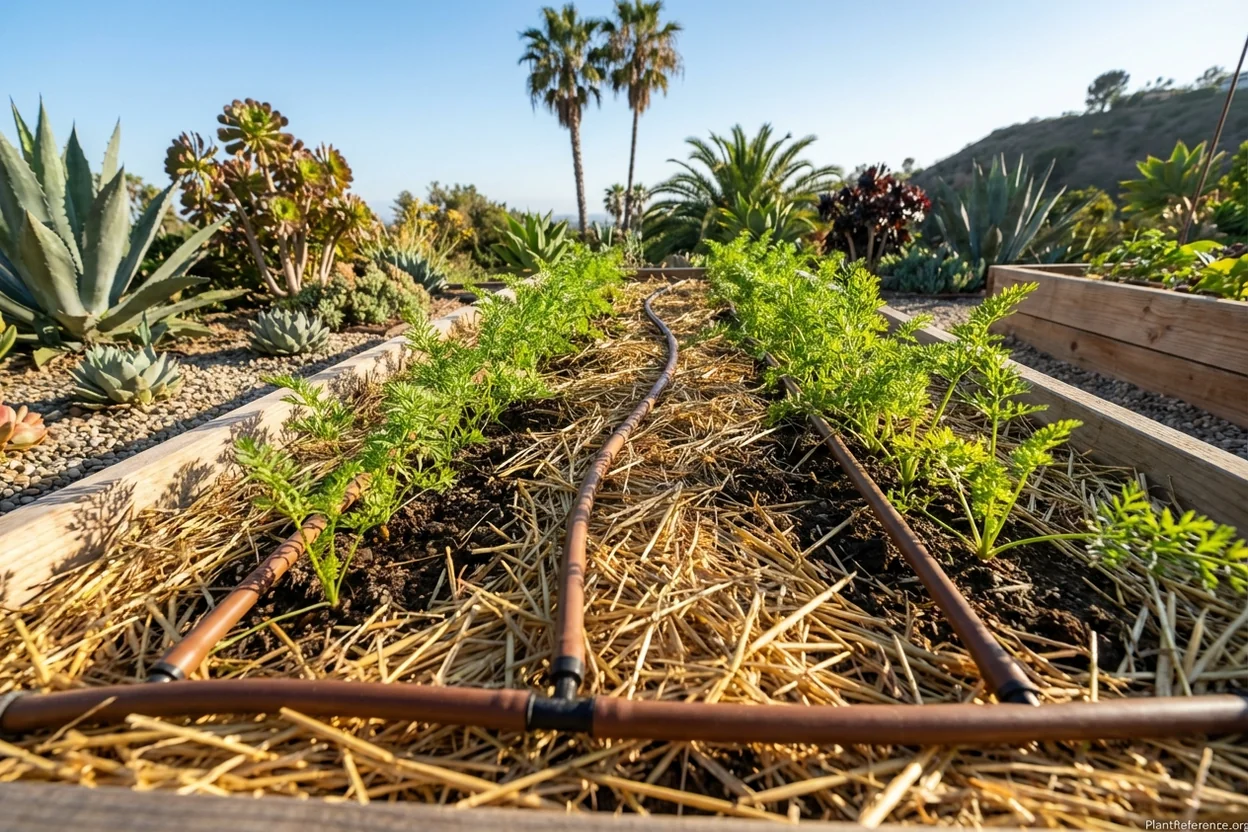
Drip irrigation is the water-wise standard in LA. With water costs among the highest in the country, overhead sprinklers waste both money and moisture to evaporation. Run drip lines alongside rows and mulch to reduce water use by 30-40%. Consistent moisture prevents the root splitting that comes from drought-then-deluge cycles. Raised Bed Irrigation Systems: Watering Solutions for Consistent Growth
Mulching
Apply 2-3 inches (5-8 cm) of straw or shredded bark after seedlings establish. Mulch in LA is primarily a water conservation tool—it reduces evaporation, moderates soil temperature, and suppresses weeds. During the cooler months, mulch also prevents the light frost damage that occasionally catches coastal gardens off guard. LA gardeners who mulch well can reduce irrigation frequency significantly. Raised Bed Soil Settling and Compaction: Prevention and Solutions
Troubleshooting Los Angeles-Specific Problems
Summer Heat Gap
Inland LA valleys push soil temperatures above 85°F (29°C) from June through September—far above the 75°F bitterness threshold. Shade cloth (40-50%) can extend coastal plantings through June but isn't practical for inland areas. Accept the summer gap and focus on maximizing the October-through-May window with succession planting every 2-3 weeks. When to Plant Peppers in Los Angeles: Complete Guide + Best Varieties for Zone 10b
Microclimate Variation
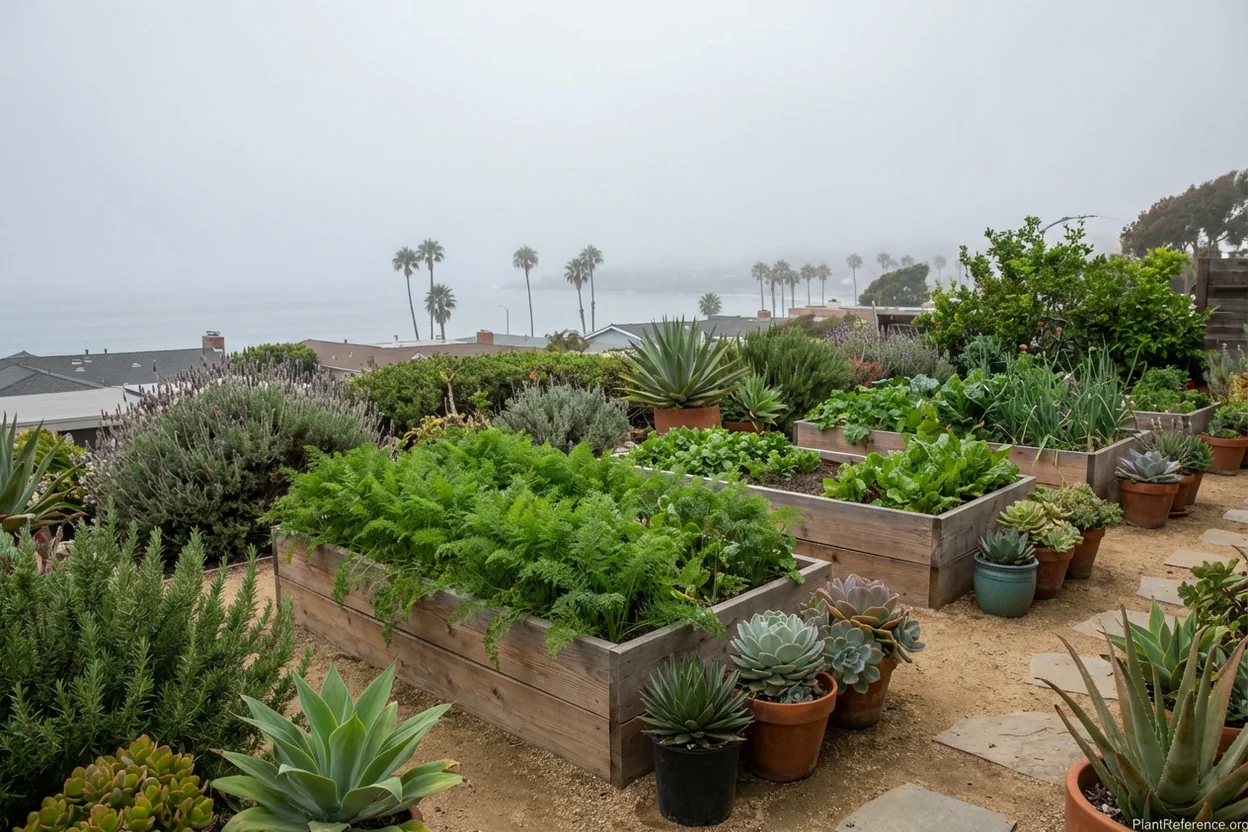
LA's microclimates create dramatically different growing conditions within a few miles. Coastal neighborhoods (Santa Monica, Venice, Long Beach) stay 10-15°F cooler than inland valleys (San Fernando, San Gabriel) during summer. The marine layer extends the carrot window by 4-6 weeks on the coast. Inland areas face a longer summer heat gap and more extreme temperature swings. Know your microclimate—a thermometer in your garden tells you more than any zone map. When to Plant Tomatoes in Los Angeles: Complete Guide + Best Varieties for Zone 10b
Water Cost and Conservation
LA water rates rank among the highest in the country, and carrots need consistent irrigation. Drip systems, mulch, and efficient container growing minimize water use per carrot produced. Succession planting in small batches—rather than large beds all at once—matches production to consumption and prevents wasting water on crops you can't eat before they decline. When to Plant Squash in Los Angeles: Complete Guide + Best Varieties for Zone 10b
Aphid Pressure in Mild Winters
LA's frost-free winters allow aphid populations to persist year-round rather than dying back in cold weather. Carrot foliage attracts green peach aphids and willow-carrot aphids. A strong water spray dislodges light infestations. For heavier pressure, insecticidal soap or neem oil applied every 7-14 days provides control. Encourage ladybugs and lacewings—LA's mild climate supports beneficial insect populations year-round too. When to Plant Kale in Los Angeles: Complete Guide + Best Varieties for Zone 10b
Harvest & Storage
Carrots reach harvest size when shoulders measure 3/4-1 inch (2-2.5 cm) in diameter, typically 65-85 days after sowing. With succession planting starting in October, first harvests arrive in December and continue through May. Water the bed before harvest—LA clay grips roots tightly when dry. Use a garden fork alongside the row. When to Plant Onions in Los Angeles: Complete Guide + Best Varieties for Zone 10b
The beauty of LA's long window is that you can leave mature carrots in the ground longer without the freeze risk that forces harvest in other cities. Cool winter soil acts as natural cold storage. However, carrots left too long past maturity develop a woody core and lose sweetness, so harvest within 2-3 weeks of reaching full size.
For refrigerator storage, remove foliage immediately. Store unwashed carrots in perforated plastic bags at 32-38°F (0-3°C). 🌿Daucus carota ssp. sativus 'Danvers 126' stores four to five months. With year-round succession planting, most LA gardeners harvest fresh rather than storing—plant small batches frequently rather than large batches infrequently. Poor Drainage in Raised Beds: Causes and Fixes for Waterlogged Soil
Frequently Asked Questions
Reading about plants and recognising them are different skills. These three build the second.
- Daily PlantIdentify the day’s mystery plant from a close-up photograph.
- Keyed OutWork a dichotomous key, lead by lead, to name a hidden specimen.
- Name That PlantName a specimen from botanical clues dealt hardest first.
Free to play, no account needed
Tagged with
Aisha manages a small tropical nursery on the east side of Houston, specializing in plants that can handle the Gulf Coast's humidity, heat, and unpredictable flooding. She studied horticulture in college and worked at a wholesale grower before opening her own operation. Growing up, her parents kept a kitchen garden with okra, bitter gourd, and curry leaf plants—a tradition she's continued. Houston's subtropical climate lets her grow things most of the country can't, but it also means dealing with fungal issues, standing water, and summers where it's too hot for even tomatoes. Aisha writes about tropical and subtropical plant care, humidity management, and working with heavy clay soils.