When to Plant Carrots in Houston: Zone 9a Dates + Best Varieties
Pets & Toxicity
Recorded toxicity for plants linked in this guide. An unknown status is not a safety assessment.
No linked plant is recorded as toxicDetailsHide
Daucus carota ssp. sativus 'Danvers 126' — Toxicity
Non-toxicView Daucus carota ssp. sativus 'Danvers 126' plant profileDaucus carota ssp. sativus 'Nantes' — Toxicity
Non-toxicView Daucus carota ssp. sativus 'Nantes' plant profileDaucus carota ssp. sativus 'Chantenay' — Toxicity
Non-toxicView Daucus carota ssp. sativus 'Chantenay' plant profileDaucus carota ssp. sativus 'Imperator' — Toxicity
Non-toxicView Daucus carota ssp. sativus 'Imperator' plant profileDaucus carota ssp. sativus 'Rainbow' — Toxicity
Non-toxicView Daucus carota ssp. sativus 'Rainbow' plant profile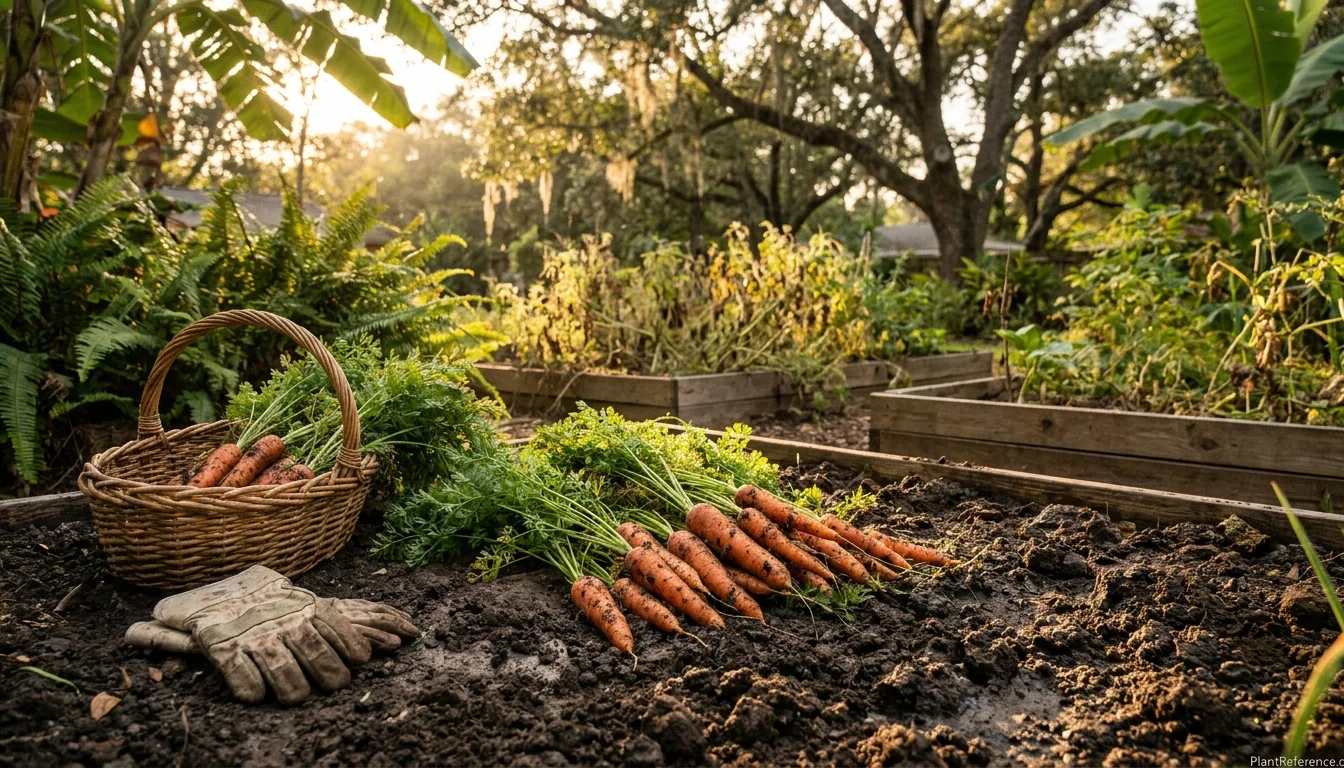
— Image © Plant Reference 2026
Houston clay doesn't drain. I've tested this more times than I'd like to admit—compost alone breaks down in our climate and compacts back to something resembling concrete within a season. If you want carrots in Houston, you need to understand that our gumbo clay is among the most challenging soil types for root crops in the entire country. It holds water like a bathtub, stays waterlogged after every rain, and bakes into cracked hardpan during drought. But Houston's mild winters provide excellent carrot growing temperatures from October through March. The solution is raised beds with expanded shale—the one amendment that actually creates lasting drainage improvement in Gulf Coast clay.
Best Carrot Varieties for Houston's Zone 9a Climate
Houston's Beaumont clay series covers most of the metro area—dense, poorly drained, and slightly acidic to neutral (pH 6.5-7.5). Unlike the alkaline soils across western Texas, Houston clay doesn't usually need pH adjustment for carrots. The problem is structure: this clay holds moisture so tightly that carrot roots suffocate, rot, and fork in waterlogged conditions. Drainage is everything.
🌿Daucus carota ssp. sativus 'Danvers 126' (DAW-kus kuh-ROH-tuh) is the most reliable variety for Houston. The conical root pushes through heavy soil better than cylindrical types, and the firm flesh resists the soft rot that Houston's moisture promotes. 🌿Daucus carota ssp. sativus 'Danvers 126' tolerates less-than-perfect drainage—important even in amended beds during heavy rain events. At 70-80 days, it fits the winter window easily.
🌿Daucus carota ssp. sativus 'Nantes' produces the sweetest roots when grown in properly drained raised beds. Houston's winter temperatures—daytime highs in the 60s°F, nighttime lows in the 40s-50s°F—create ideal flavor conditions for 🌿Daucus carota ssp. sativus 'Nantes'. The cultivar 'Bolero' adds disease resistance that matters in Houston's humidity. Don't attempt 🌿Daucus carota ssp. sativus 'Nantes' in native clay—the cylindrical roots rot before reaching harvest size.
🌿Daucus carota ssp. sativus 'Chantenay' works in shallow raised beds and containers. At 4-5 inches (10-13 cm) long, 🌿Daucus carota ssp. sativus 'Chantenay' needs less soil depth than other varieties. The stout shape handles the occasional waterlogging that Houston rain creates even in raised beds.
🌿Daucus carota ssp. sativus 'Imperator' needs 12 inches (30 cm) of well-drained soil—achievable only in deep raised beds in Houston. The cultivar 'Sugarsnax 54' adds sweetness. Reserve for gardeners committed to maintaining premium bed conditions.
🌿Daucus carota ssp. sativus 'Rainbow' adds color variety at 70-75 days. Performs adequately in amended beds but offers no particular advantage for Houston's challenges.
Variety | Days to Maturity | Best For | Notes for Houston |
|---|---|---|---|
70-80 days | Heavy soil and reliability | Top pick; best rot resistance; conical root handles clay conditions | |
65-75 days | Amended beds and flavor | Sweetest roots; needs excellent drainage; choose 'Bolero' for disease resistance | |
65-75 days | Shallow beds and containers | Short roots need less depth; handles occasional waterlogging better | |
75-85 days | Deep raised beds only | Needs 12+ inches well-drained soil; premium bed maintenance required | |
70-75 days | Specialty growing | Color variety; no particular Houston advantage; amended beds required |

Specific Planting Dates for Houston
Houston averages a February 15 last frost and December 1 first frost, giving you 289 frost-free days. But the combination of summer heat and extreme humidity creates a four-month gap when carrot growing is impractical. Soil temperatures exceed 85°F from June through September, and humidity promotes fungal disease that destroys cool-season crops.
Fall Planting: October through November
Begin sowing in early October as soil temperatures drop below 80°F. October sowings germinate in 7-10 days in warm soil and develop through November and December's cooling temperatures. This is Houston's strongest planting window—warm soil for germination transitioning to cool air for root development.
Winter Planting: December through February
Continue succession sowings through mid-February. Houston winters are mild—hard freezes are infrequent—providing steady carrot growing conditions. December and January sowings germinate in 14-21 days. February is the last practical sowing date; roots need 65-80 days to mature before summer heat returns.
Spring Transition
Houston's spring accelerates quickly. March temperatures are pleasant, but by April soil is warming fast. Harvest all remaining carrots by late April. There is no effective spring planting window in Houston—by the time February sowings mature, conditions are deteriorating.
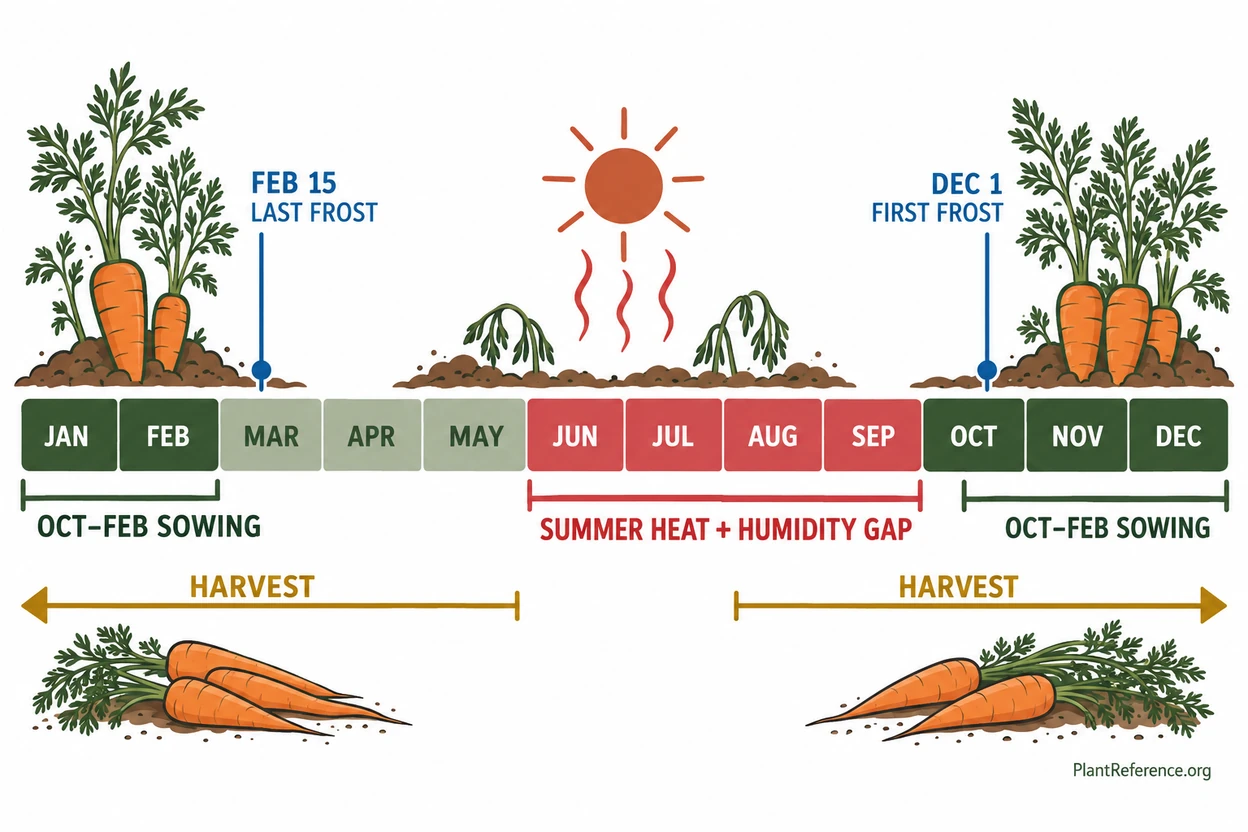
Fall sowing window: October 1 - November 30
Winter sowing window: December 1 - February 15
Harvest period: December through late April
Summer heat and humidity shutdown: June through September
Best flavor: January-March harvest from November-December sowings
Final harvest: Late April before summer heat returns
Complete Growing Guide for Houston
Soil Preparation
Houston's Beaumont clay is the primary obstacle for carrot growing. This gumbo clay holds water tenaciously, drains poorly, and compacts into a surface that resists root penetration. Compost alone doesn't fix it—organic matter breaks down quickly in Houston's heat and humidity, and within one season you're back to clay. The lasting solution is expanded shale—a lightweight aggregate that creates permanent air pockets in clay soil.
For raised beds—the only practical approach in Houston—build to at least 12 inches (30 cm) deep. Mix 50% quality topsoil, 25% compost, 15% expanded shale, and 10% coarse sand. The expanded shale doesn't decompose like organic matter, so drainage improvement persists across multiple seasons. Elevate beds 6-8 inches above ground level to prevent waterlogging during Houston's intense rain events. Best Soil Mix for Raised Beds: Creating the Perfect Growing Medium
For containers, use 12-inch deep pots with premium potting mix. Containers avoid Houston clay entirely and offer the best drainage control—critical during the rainy periods that punctuate even the winter dry season. How to Build a Raised Garden Bed: Step-by-Step Construction Guide
Seeding
Sow seeds 1/4 inch (0.6 cm) deep in rows 12 inches (30 cm) apart. Cover with vermiculite or fine compost—never native Houston clay, which crusts into an impenetrable surface. October sowings germinate in 7-10 days. Winter sowings take 14-21 days. Houston's humidity maintains surface moisture better than dry climates, so water once or twice daily during germination rather than the two to three times desert gardeners need. Best Soil for Raised Beds: 6 Commercial Mixes Tested and Compared
Don't overwater during germination—Houston's humidity already keeps the seed zone moist. Excess water in clay-based beds promotes damping off, the fungal disease that kills seedlings at the soil line. Light, consistent moisture is the target.
Thinning
Thin in two stages: first to 1 inch (2.5 cm) at 2 inches (5 cm) tall, then to 2-3 inches (5-8 cm) at 4-5 inches (10-13 cm). Cut at the soil line with scissors. Generous spacing matters more in Houston than in dry climates—air circulation between plants reduces the fungal pressure that Gulf Coast humidity creates. Raised Bed Vegetable Garden Layout: Planning for Maximum Production

Watering
Houston receives over 50 inches of annual rainfall—more than enough total water, but distribution is wildly uneven. Tropical downpours can drop 4-6 inches in a single event, followed by dry spells lasting weeks. Carrots need consistent 1-1.5 inches per week, not feast-or-famine cycles.
Drip irrigation on a timer provides the consistency Houston's erratic rainfall can't deliver. Reduce irrigation during rainy weeks. Ensure beds drain freely—standing water after a heavy rain means your drainage amendment ratio needs adjustment. Elevate beds above ground level so excess water runs off rather than pooling. Mulch between rows to prevent splash-up of clay soil particles that coat foliage and promote disease. Raised Bed Irrigation Systems: Watering Solutions for Consistent Growth
Mulching
Apply 2-3 inches (5-8 cm) of pine straw or shredded hardwood after seedlings establish. Keep mulch pulled back from carrot crowns to allow air circulation. In Houston's humidity, thick mulch against stems promotes crown rot. Mulch primarily controls weeds and prevents soil splash during the intense downpours that hit even during the drier winter months. Avoid hay—it often contains weed seeds that germinate aggressively in Houston's warmth. Raised Bed Soil Settling and Compaction: Prevention and Solutions

Troubleshooting Houston-Specific Problems
Gumbo Clay Drainage
Houston's Beaumont clay series is among the poorest-draining soils in the country. Root crops rot in waterlogged conditions. Raised beds with expanded shale are the standard fix, but even raised beds can waterlog during Houston's intense rain events. Elevate beds above grade, ensure drainage holes are clear, and consider adding a gravel layer at the bed bottom for additional drainage capacity. When to Plant Tomatoes in Houston: Complete Guide + Best Varieties for Zone 9a
Fungal Disease in Humidity
Houston's humidity promotes leaf blight (Alternaria dauci), damping off, and crown rot year-round—including during the cooler winter months when humidity drops only slightly. Choose disease-resistant cultivars like 'Bolero.' Space plants generously. Water at the soil line with drip irrigation. Apply copper-based fungicide preventatively every 10-14 days during humid periods. Remove spotted foliage immediately to prevent spread. When to Plant Kale in Houston: Complete Guide + Best Varieties for Zone 9a
Flooding and Standing Water
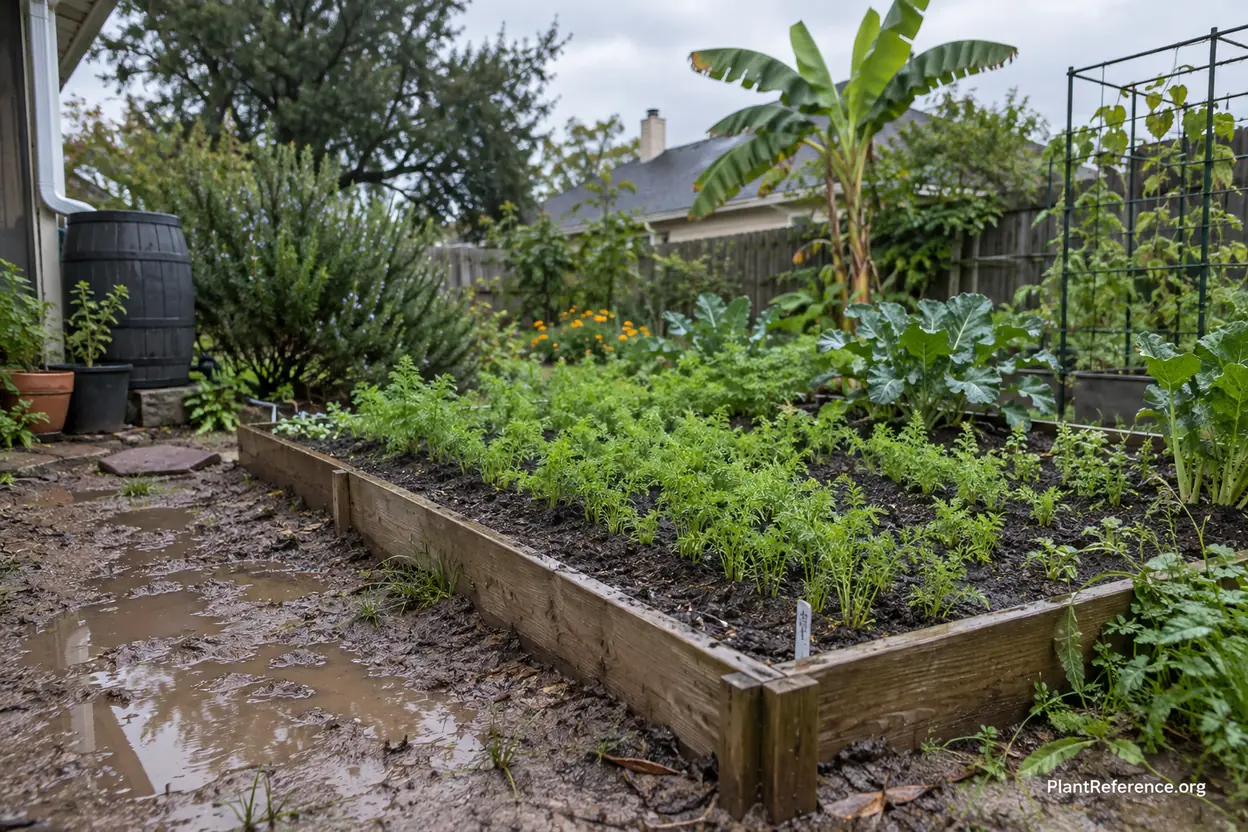
Houston floods. Period. Tropical downpours, tropical storm remnants, and hurricane season (June-November) all create standing water conditions that kill carrots within hours. Elevated raised beds provide the best protection. After a major rain event, check beds immediately and remove any standing water. Carrots that sit in water for more than 24 hours develop root rot that cannot be reversed. When to Plant Onions in Houston: Complete Guide + Best Varieties for Zone 9a
Summer Heat and Humidity Combination
Houston's summer combines temperatures above 95°F with humidity above 80%—conditions that make carrot growing impossible from June through September. Unlike dry-heat cities where shade cloth helps, Houston's humidity compounds the heat stress. No practical intervention makes summer production viable. Focus on maximizing the October-through-April window with succession planting. Poor Drainage in Raised Beds: Causes and Fixes for Waterlogged Soil
Harvest & Storage
Carrots reach harvest size when shoulders measure 3/4-1 inch (2-2.5 cm) in diameter, typically 65-85 days after sowing. With October sowings, first harvests arrive in December and continue through late April. Water the bed lightly before harvest—even amended Houston soil grips roots when dry. Use a garden fork alongside the row. Raised Bed Weeds: Prevention Strategies and Control Methods
Don't leave mature carrots in Houston's warm, moist soil longer than necessary. Unlike dry or cold climates where ground storage extends harvest, Houston's conditions promote bacterial activity and root rot even during winter. Harvest within two weeks of reaching full size.
For storage, remove foliage immediately. Store unwashed carrots in perforated plastic bags at 32-38°F (0-3°C). 🌿Daucus carota ssp. sativus 'Danvers 126' stores four to five months—useful for extending harvest through the summer gap. Refrigerator storage is the only reliable option in Houston. The warmth and humidity that make our climate great for tropical plants make it terrible for root storage outside of refrigeration. Raised Bed Soil Settling and Compaction: Prevention and Solutions
Frequently Asked Questions
Reading about plants and recognising them are different skills. These three build the second.
- Daily PlantIdentify the day’s mystery plant from a close-up photograph.
- Keyed OutWork a dichotomous key, lead by lead, to name a hidden specimen.
- Name That PlantName a specimen from botanical clues dealt hardest first.
Free to play, no account needed
Tagged with
Aisha manages a small tropical nursery on the east side of Houston, specializing in plants that can handle the Gulf Coast's humidity, heat, and unpredictable flooding. She studied horticulture in college and worked at a wholesale grower before opening her own operation. Growing up, her parents kept a kitchen garden with okra, bitter gourd, and curry leaf plants—a tradition she's continued. Houston's subtropical climate lets her grow things most of the country can't, but it also means dealing with fungal issues, standing water, and summers where it's too hot for even tomatoes. Aisha writes about tropical and subtropical plant care, humidity management, and working with heavy clay soils.