When to Plant Carrots in Minneapolis: Complete Guide + Best Varieties for Zone 4a
Pets & Toxicity
Recorded toxicity for plants linked in this guide. An unknown status is not a safety assessment.
No linked plant is recorded as toxicDetailsHide
— Image © Plant Reference 2026
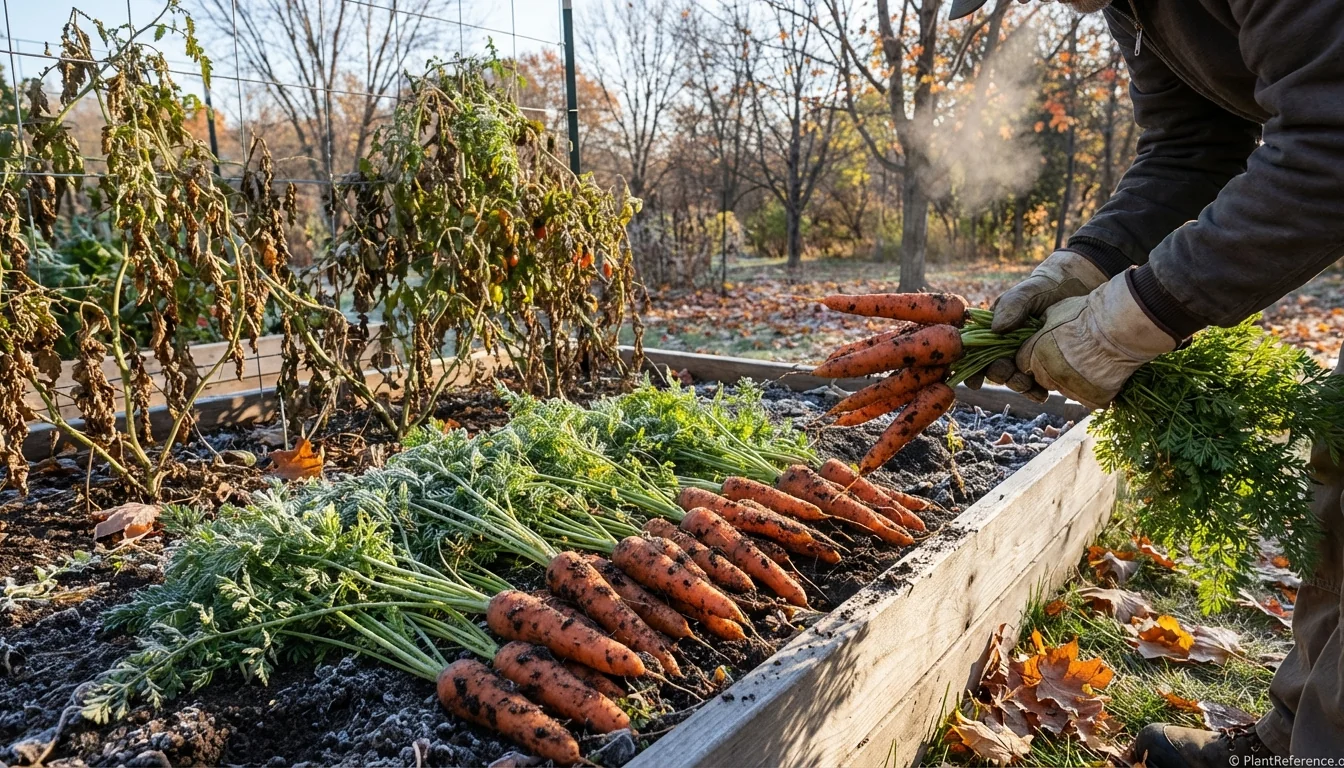
Been growing carrots in Minnesota for forty years, and I'll tell you what works in Minneapolis: timing beats variety every time. Zone 4a gives us exactly 138 days between our last frost May 14 and first frost September 29, which means you've got two distinct windows to grow carrots that'll make your neighbors jealous.
Best Carrot Varieties for Minneapolis's Climate
Minneapolis gardeners need varieties that can handle our brutal winters, short growing season, and unpredictable spring weather. After testing dozens of varieties in Zone 4a, these five consistently deliver.
Variety | Days to Maturity | Best For | Notes for Minneapolis |
|---|---|---|---|
Daucus carota 'Napoli' | 58-68 days | Quick summer harvest | Fastest Nantes type, perfect for May planting |
Daucus carota 'Nelson' | 58-65 days | Early fresh eating | Sweet and crisp, handles cool soil well |
Daucus carota 'Bolero' | 75-80 days | Fall storage crop | Disease resistant, stores until March |
Daucus carota 'Scarlet Nantes' | 65-75 days | Reliable producer | Classic variety, good for beginners |
Daucus carota 'Chantenay Red Core' | 65-75 days | Heavy clay soil | Short and stout, works in tough Minneapolis clay |
Nantes varieties dominate in Minneapolis because they mature fast and handle cool soil better than Imperator types. Daucus carota 'Napoli' (nah-POH-lee) is my go-to for spring planting—it'll give you harvestable roots by mid-July even if you plant late.
For clay soil common in Minneapolis neighborhoods, Daucus carota 'Chantenay Red Core' pushes through compaction that stops longer varieties dead. These stubby 4-5 inch (10-13 cm) carrots pack incredible sweetness into their broad shoulders.
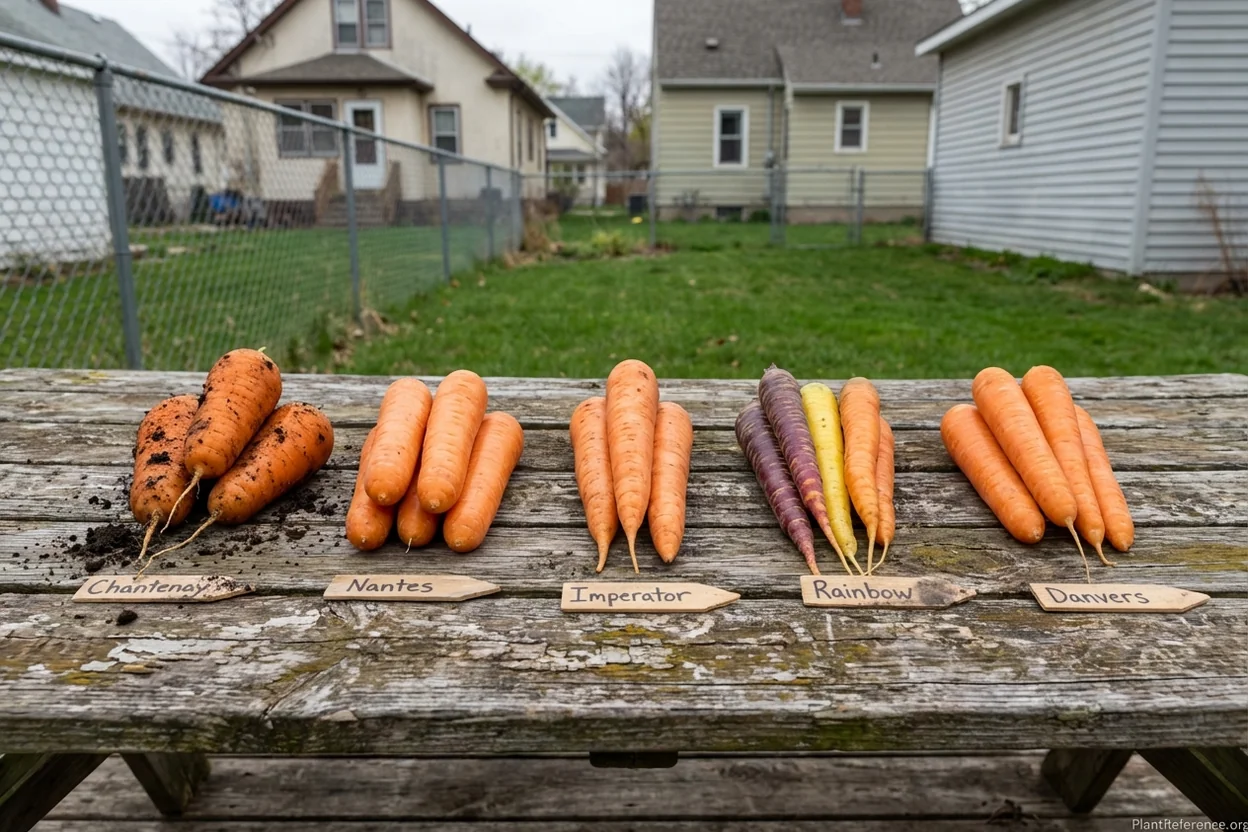
Rainbow varieties add color but mature inconsistently. 🌿Daucus carota 'Rainbow' mixes take 70-75 days with purple carrots often lagging behind orange ones by a week. Plant these only for your July planting window.
Specific Planting Dates for Minneapolis
Minneapolis sits right on the edge of carrot-growing possibility. Our 138-day season forces strategic timing decisions that gardeners in warmer zones never face.
Spring Planting Window: May 1-15
Plant too early and cold soil kills germination. Plant too late and summer heat ruins root quality. Start carrot seeds indoors March 15-22, then transplant outdoors May 1-8 after last frost danger passes May 14.
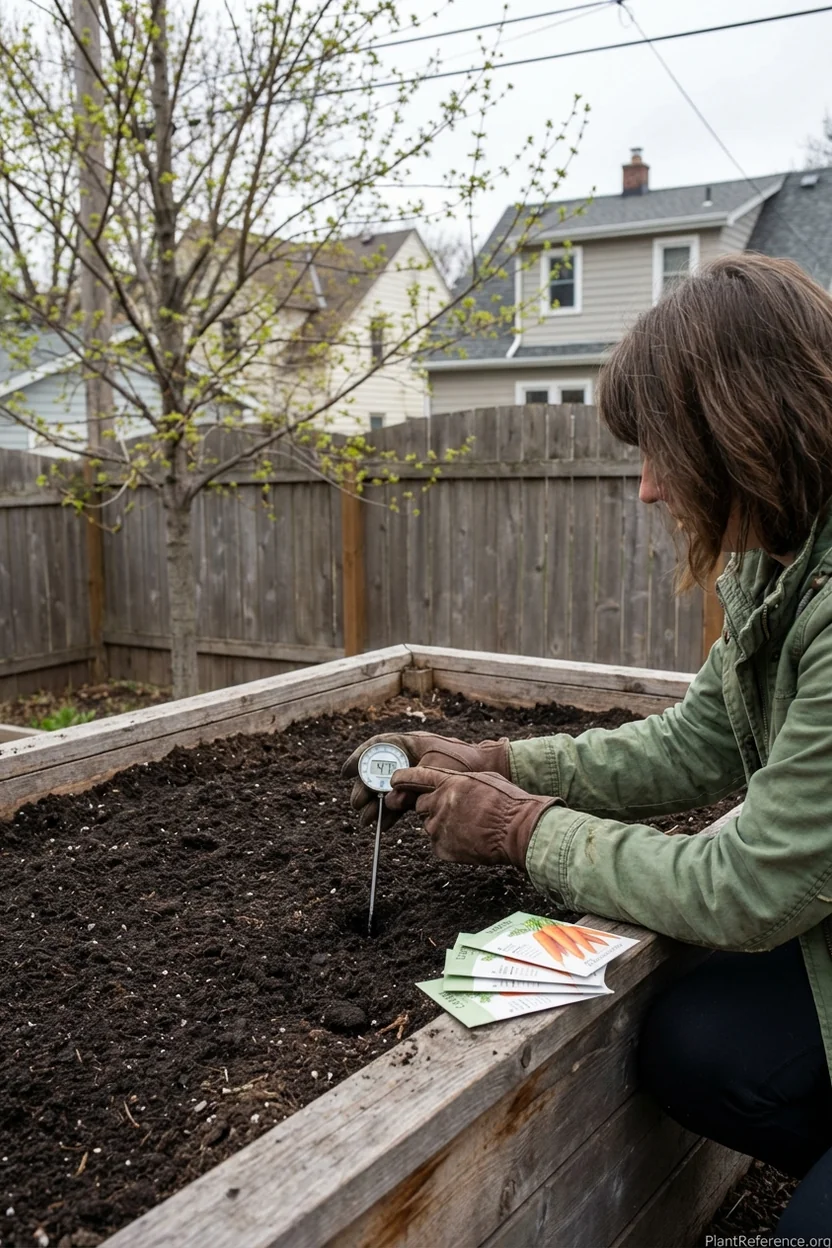
Wait—scratch that. Never transplant carrots. That's advice for tomatoes, not root crops. Direct sow only, which means waiting until soil temperature hits 45°F (7°C) consistently. In Minneapolis, that's typically May 1-5 in a warm year, May 10-15 in a cold one.
Summer Succession: May 15-June 15
Plant new rows every 2 weeks through mid-June for continuous harvest. Daucus carota 'Nelson' planted June 1 harvests by August 1, giving you baby carrots through summer.
Fall Storage Crop: July 1-15
This is the money planting in Minneapolis. Carrots planted July 1-8 harvest September 15-October 1, right when first frost sweetens them naturally. Daucus carota 'Bolero' planted July 15 harvests October 1-15 and stores in your basement until March.
Critical timing insight: Count backwards from September 29 (first frost). An 80-day variety planted July 11 harvests October 1—perfect for frost sweetening without freeze damage.
Complete Growing Guide for Minneapolis
Soil Preparation for Minneapolis Clay
Most Minneapolis soil runs heavy clay that stops carrot roots cold. I've seen beautiful Daucus carota 'Scarlet Nantes' seeds sprout perfectly, then produce 2-inch (5 cm) stubby roots because they couldn't penetrate the hardpan.
Double-dig your carrot beds. Remove the top 8 inches (20 cm) of soil, break up the subsoil with a broadfork, then mix in 3 inches (7.5 cm) of coarse sand and 2 inches (5 cm) of compost before replacing the topsoil. Yes, it's work. No, there's no shortcut if you want straight carrots.
For container growing, use 12-inch (30 cm) deep pots minimum. Daucus carota 'Chantenay Red Core' works in 8-inch (20 cm) pots, but longer varieties need that foot of depth.
Germination Strategy for Minneapolis Weather
Carrot seeds are fussy about moisture. They need 14-21 days of consistent dampness to sprout, but Minneapolis spring weather swings from 40°F (4°C) to 75°F (24°C) in the same week.
The board method works perfectly here. Plant seeds ¼ inch (6 mm) deep, water thoroughly, then lay a 1x6 board directly over the row. This stops evaporation dead while soil warms underneath.
Critical management: Check under the board daily starting day 5. Remove it the instant you see white carrot loops breaking soil surface. One day late and those seedlings etiolate (get spindly) from lack of light.
Thinning and Spacing
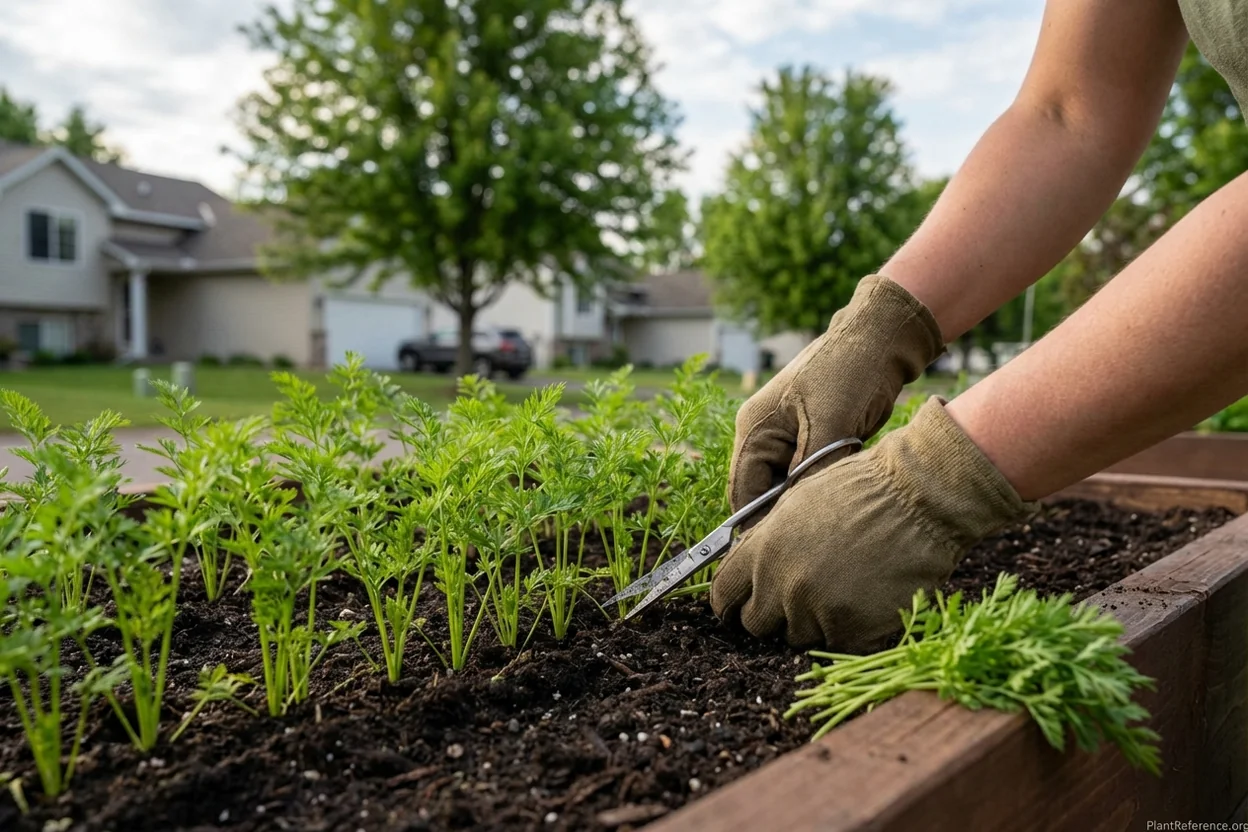
Thin Daucus carota 'Napoli' to 2 inches (5 cm) apart when seedlings reach 2 inches (5 cm) tall. Use small scissors—pulling disturbs neighboring roots. Second thinning at 4 inches (10 cm) tall to final 3-inch (7.5 cm) spacing.
Save those thinnings. Second-pass carrot thinnings are gourmet baby carrots that sell for $6/pound at Minneapolis farmers markets.
Water Management Through Minnesota Weather
Minneapolis averages 30 inches (76 cm) annual precipitation, but it comes in spurts. May can dump 4 inches (10 cm) in three days, followed by two weeks of drought. This inconsistency ruins carrot quality.
Install drip irrigation or soaker hoses. Carrots need 1 inch (2.5 cm) weekly through germination and early growth, increasing to 1.5 inches (3.8 cm) as roots size up in August-September.
Mulch heavily once plants reach 4 inches (10 cm) tall. Straw mulch keeps soil moisture consistent during Minneapolis heat waves and prevents soil crusting after thunderstorms.
Troubleshooting Minneapolis-Specific Problems
Carrot Rust Fly
This pest hits Minneapolis gardens hard in late May and again in August. Adult flies lay eggs at the carrot crown; larvae tunnel into roots creating rust-colored damage.
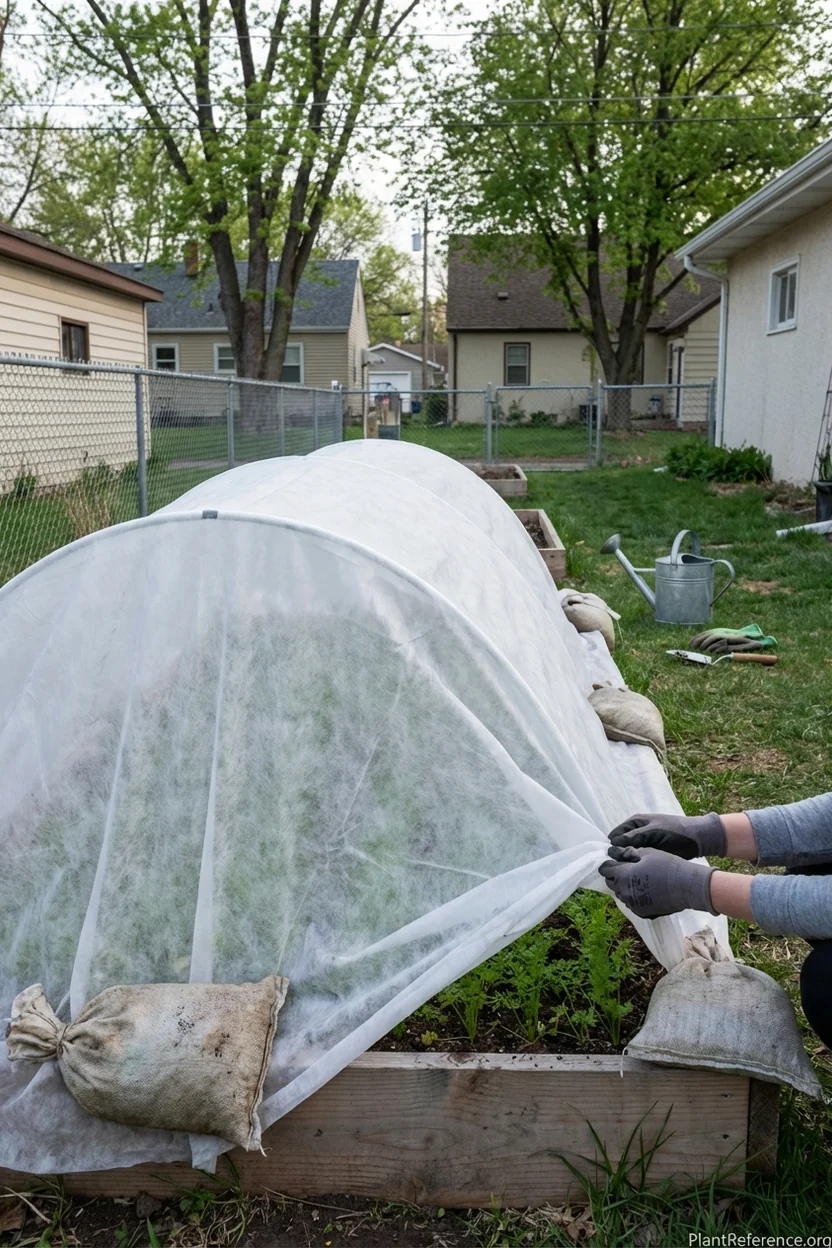
Row covers are your only defense. Install immediately after seeding and keep them on for 6 weeks. The August generation targets fall storage carrots—cover those too from July planting through early September.
Clay Soil Forking
Minneapolis clay causes carrot roots to fork when they hit compacted layers or stones. 🌿Daucus carota 'Imperator' varieties fail completely in unimproved clay.
Switch to 'Chantenay Red Core' if soil improvement isn't possible. These broad-shouldered carrots force through clay that stops slender varieties.
Early Bolting from Cold Snaps
Late May cold snaps trigger premature flowering in spring plantings. Carrots exposed to temperatures below 45°F (7°C) for 10+ days think they've been through winter and bolt to seed.
Cover with row fabric when temperatures drop below 50°F (10°C) in May and June. Daucus carota 'Bolero' shows better bolt resistance than other varieties.
Harvest & Storage
Summer Harvest: July 15-August 31
Spring-planted Daucus carota 'Napoli' and Daucus carota 'Nelson' harvest when shoulders reach 1 inch (2.5 cm) diameter. Pull a test carrot first—if it's sweet and crisp, harvest the whole row.
Summer carrots don't store well. Use them fresh or preserve immediately. Minneapolis July heat makes roots go pithy fast once pulled.
Fall Storage Harvest: September 15-October 15
This is when Minneapolis carrots shine. Fall-grown Daucus carota 'Bolero' and Daucus carota 'Scarlet Nantes' convert starches to sugars after first frost September 29. Wait 1-2 weeks after frost for maximum sweetness.
Harvest before ground freezes solid, typically October 15-25 in Minneapolis. Mulch heavily with 12 inches (30 cm) of straw to extend harvest into November in mild years.
Root Cellaring in Minnesota
Minneapolis basements average 45-55°F (7-13°C) in winter—perfect for carrot storage. Pack harvested carrots in damp sand or sawdust, removing tops first to prevent moisture loss.
Storage life: Properly stored fall carrots last until March. Check monthly and remove any showing soft spots to prevent spread.
Frequently Asked Questions
Reading about plants and recognising them are different skills. These three build the second.
- Daily PlantIdentify the day’s mystery plant from a close-up photograph.
- Keyed OutWork a dichotomous key, lead by lead, to name a hidden specimen.
- Name That PlantName a specimen from botanical clues dealt hardest first.
Free to play, no account needed
Amanda came to gardening through an unexpected route—after developing chronic pain from rheumatoid arthritis in her late 20s, she started researching adaptive gardening techniques that would allow her to continue growing plants without aggravating her condition. Now based in Minneapolis, she writes about accessible gardening, raised bed designs for people with mobility challenges, and ergonomic tools that reduce strain. Amanda completed a certificate in sustainable urban agriculture and volunteers with a nonprofit that builds accessible community gardens. She grows vegetables, herbs, and flowers in waist-high raised beds she designed herself. Her writing focuses on practical solutions that work for real people with real limitations—whether that's arthritis, limited mobility, or just a bad back.