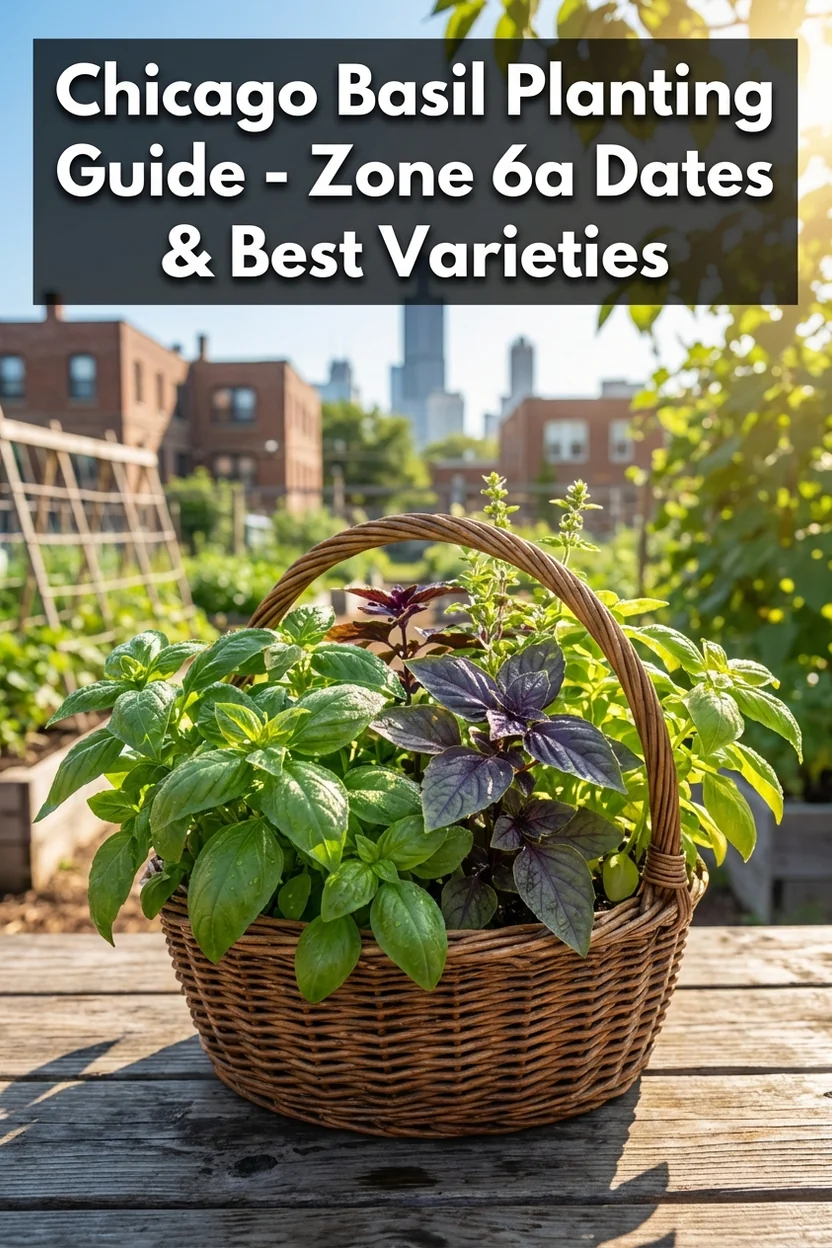
When to Plant Basil in Chicago: Complete Guide + Best Varieties for Zone 6a
Pets & Toxicity
Recorded toxicity for plants linked in this guide. An unknown status is not a safety assessment.
No linked plant is recorded as toxicDetailsHide
Ocimum basilicum 'Purple Ruffles' — Toxicity
Non-toxicView Ocimum basilicum 'Purple Ruffles' plant profile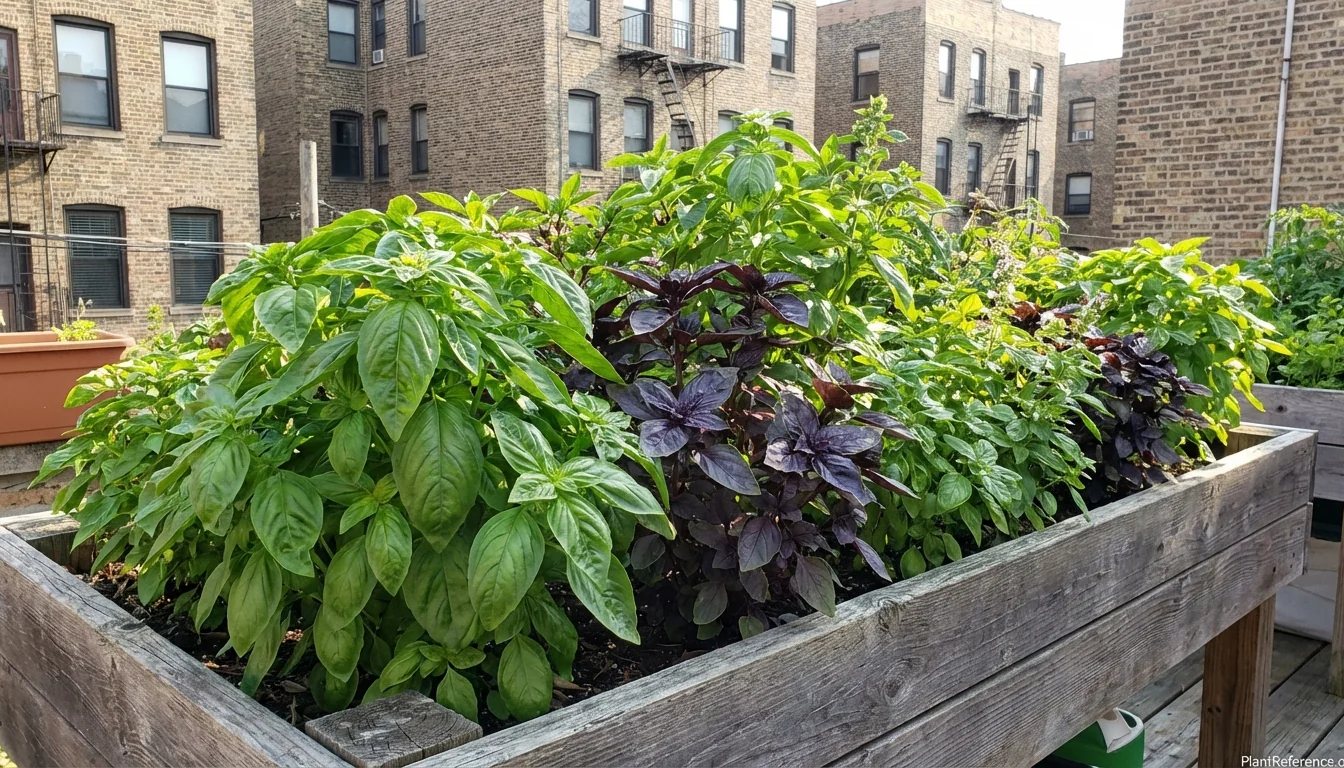
— Image © Plant Reference 2026
Basil is the herb that separates gardeners who cook from gardeners who just garden. One Genovese plant produces enough leaves for pesto every week from June through September, and it costs less to grow a season's worth of basil than to buy two of those plastic clamshell packages from the grocery store. In Chicago's Zone 6a climate, the timing is everything. Basil is more cold-sensitive than most people realize—it's not just frost-tender, it's chill-sensitive. Temperatures below 50°F (10°C) damage leaf tissue and stunt growth even without frost, which means our May 10 last frost date is the absolute earliest, not the target date. Wait until soil hits 65°F and nighttime air stays above 50°F consistently—that's usually late May in Chicago. Get the timing right and basil is one of the easiest, most productive herbs you can grow. Get it wrong and you'll watch your transplants turn black overnight from a cold snap that wouldn't bother your tomatoes. When to Plant Tomatoes in Chicago: Complete Guide + Best Varieties for Zone 6a
Best Basil Varieties for Chicago's Climate
Chicago sits in USDA Zone 6a with a May 10 last frost and October 15 first frost—158 growing days. Lake Michigan moderates temperatures somewhat in lakefront neighborhoods, but inland areas experience the full range of Midwest weather. Basil variety selection for Chicago should emphasize cold tolerance for our late spring, bolt resistance for summer production, and flavor profiles that match how you actually use the herb.
Variety | Type | Days to Harvest | Cold Tolerance | Best For |
|---|---|---|---|---|
Sweet | 60-70 days | Low (below 50°F damage) | Pesto, Italian cooking, kitchen essential | |
Ocimum basilicum var. thyrsiflora | Thai | 60 days | Moderate (more heat-tolerant) | Stir-fry, Southeast Asian cuisine |
Lemon | 55 days | Low | Teas, fish, light salads | |
Purple | 65-70 days | Low | Garnish, vinegars, ornamental | |
Holy (Tulsi) | 60 days | Low-Moderate | Tea, medicinal, adaptogen use |
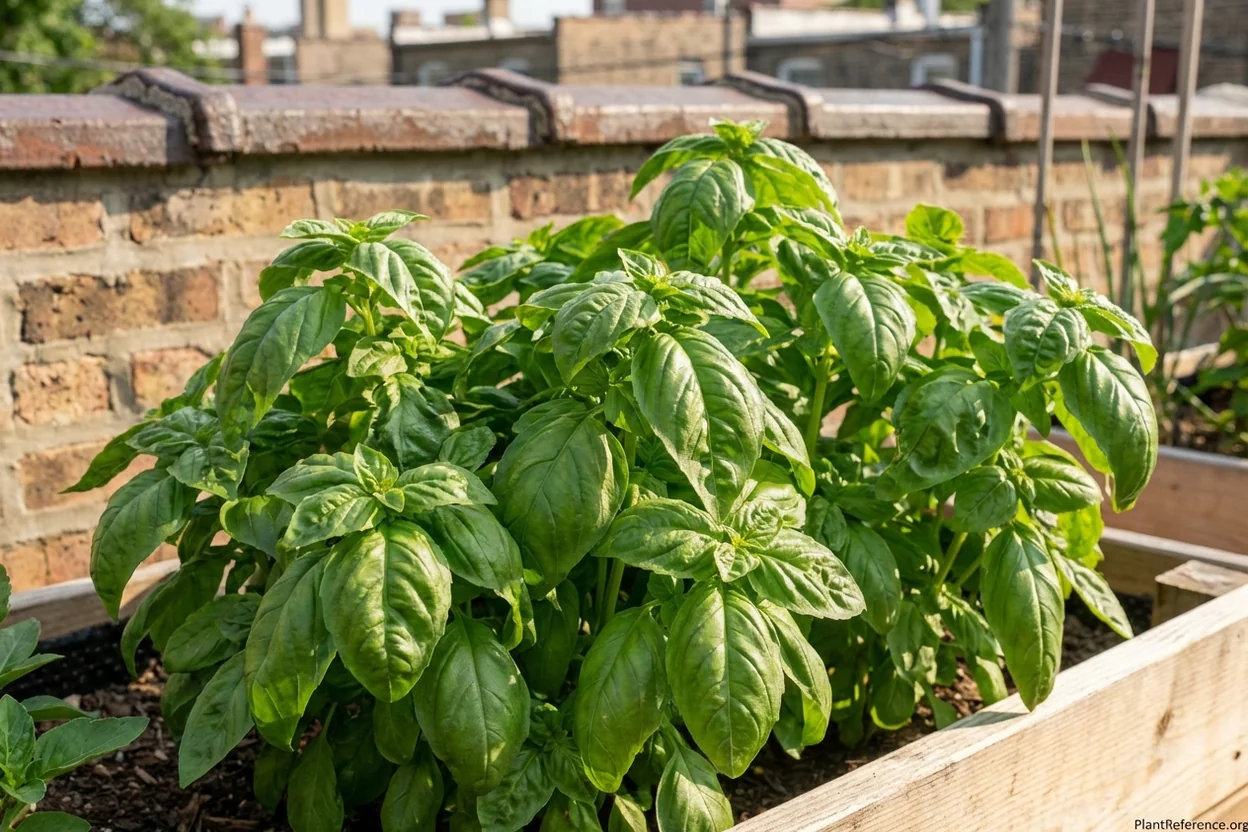
🌿Ocimum basilicum 'Genovese' is the variety most Chicago gardeners should start with. It's the classic pesto basil—large, cupped, deeply aromatic leaves with the sweet, clove-like flavor that defines Italian cooking. One well-maintained plant produces 2-3 cups of leaves per week during peak summer. The large leaf surface area makes it slightly more vulnerable to wind damage near the lakefront, but in a sheltered spot it's unmatched for kitchen production. Pinch flower buds religiously because once Genovese bolts, the leaves turn bitter and production drops sharply.
Ocimum basilicum var. thyrsiflora (Thai basil) is the variety I recommend for Chicago gardeners who want something different. It handles our summer heat better than Genovese because its Southeast Asian tropical genetics are adapted to sustained warmth. The anise-licorice flavor works in stir-fries, Vietnamese pho, and Thai curries. Thai basil also bolts later than Genovese in Chicago's warm July and August, giving you a longer harvest window without constant pinching.
🌿Ocimum × citriodorum (Lemon basil) matures fastest at 55 days—valuable in Chicago's 158-day season. The bright citrus flavor works in tea, fish dishes, and salads. It bolts aggressively in heat, so succession plant every 3 weeks for continuous supply.
🌿Ocimum basilicum 'Purple Ruffles' grows slower than green varieties but adds dramatic visual interest to containers and garden beds. The deep purple leaves make stunning basil vinegar and garnishes. Less productive per plant than Genovese, so grow it as a complement, not a replacement.
🌿Ocimum tenuiflorum (Holy Basil/Tulsi) produces strongly clove-scented leaves used for tea and traditional medicine. It's slightly more cold-tolerant than Genovese and handles variable Chicago weather with less drama. Popular with gardeners interested in herbal remedies and adaptogenic plants. When to Plant Peppers in Chicago: Complete Guide + Best Varieties for Zone 6a
Specific Planting Dates for Chicago Gardens
Chicago's May 10 last frost is the absolute earliest for basil, but smart Chicago gardeners wait longer. Basil needs warmer conditions than tomatoes or peppers—soil at 65°F (18°C) and nighttime air consistently above 50°F (10°C). In most Chicago neighborhoods, that's late May.
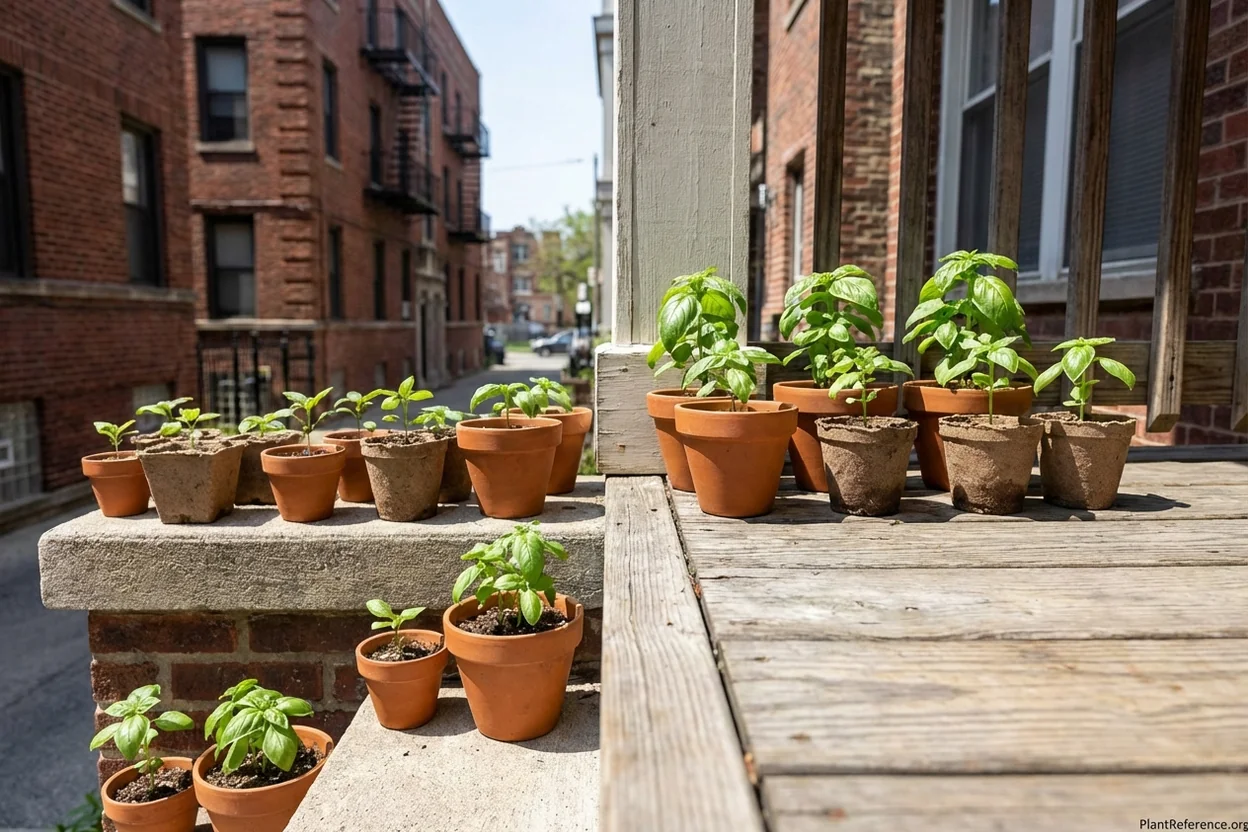
Indoor Seed Starting: April 10-17 (4-6 weeks before transplanting). Start at 70-75°F (21-24°C) for 5-7 day germination. Basil seeds need light to germinate—press into soil surface, don't bury. Grow under lights or in the brightest south-facing window you have. Thin to one seedling per pot when true leaves appear.
Transplant Outdoors: May 17-25. This is the sweet spot for Chicago—one to two weeks after last frost, when nighttime temperatures stabilize above 50°F. Check the extended forecast before committing. A single night below 45°F can set transplants back by two weeks. Harden off seedlings for 5-7 days by gradually increasing outdoor exposure.
Direct Sow: May 20-June 15. Basil germinates in 5-7 days when soil is warm. Direct sowing works well in Chicago because our warm June soil drives fast emergence, but you lose 2-3 weeks of production compared to transplants. Scatter seeds on prepared soil, press lightly, and water gently.
Succession Plantings: Every 3 weeks from May through mid-July. Chicago's season supports 3-4 basil successions. 🌿Ocimum × citriodorum (Lemon basil) benefits most from succession planting because it bolts faster than other varieties. Fresh plantings replace bolting plants for continuous supply.
Final Sowing Deadline: July 15. A 55-day variety sown July 15 matures by early September with 6 weeks of harvest before the October 15 frost. Sixty-day varieties need to go in by July 10. Raised Bed Vegetable Garden Layout: Planning for Maximum Production
Complete Growing Guide for Chicago
Container and Raised Bed Growing
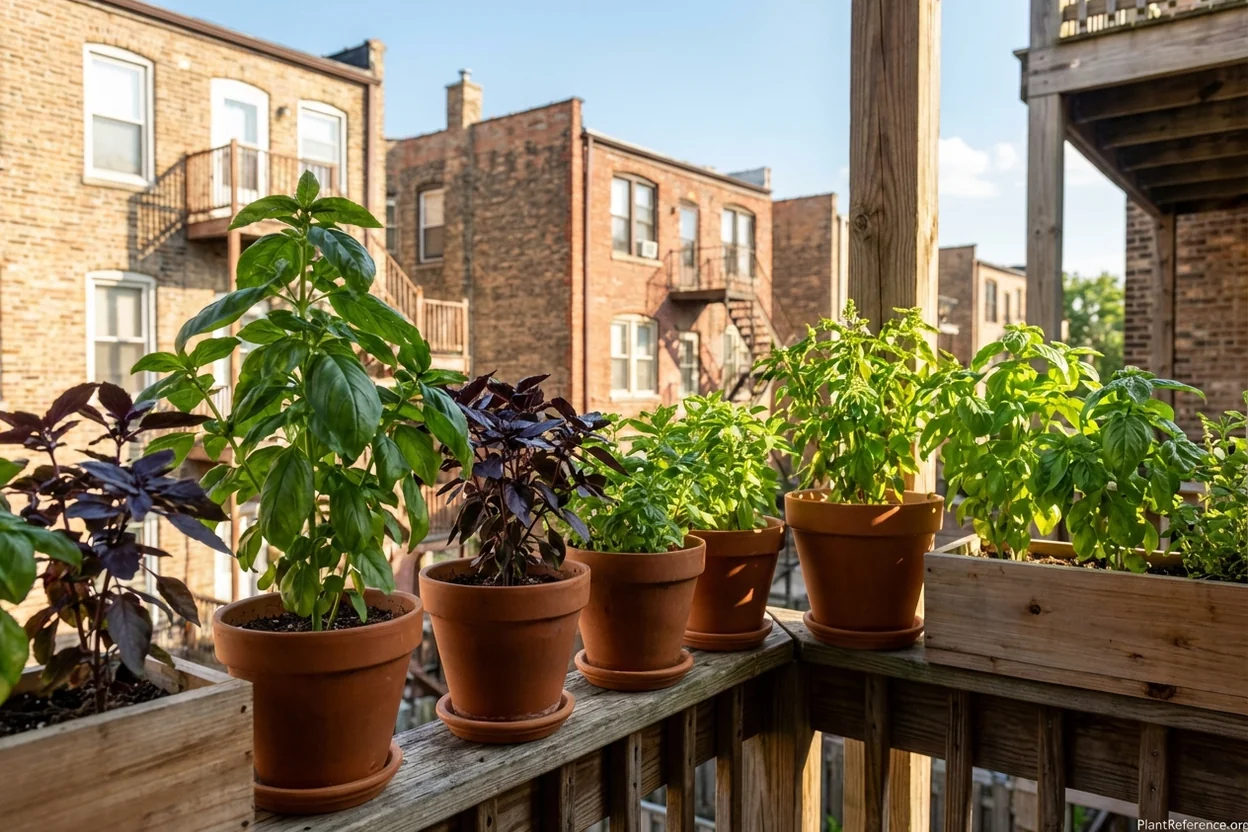
Basil thrives in containers—a major advantage for Chicago gardeners with limited space, balconies, or patios. A 12-inch (30 cm) pot supports one productive Genovese plant; a 5-gallon bucket supports 2-3 plants. Containers also let you bring plants inside when unexpected cold threatens, which happens in Chicago more than we'd like. Use well-draining potting mix—basil hates wet feet.
For raised beds, basil needs well-drained soil with pH 6.0-7.0. Most Chicago soils test slightly acidic to neutral, which basil handles well. Work 2-3 inches (5-8 cm) of compost into the top 8 inches (20 cm) for in-ground planting. Basil's shallow root system (6-8 inches deep) makes it an excellent companion for deeper-rooted vegetables—plant it between tomatoes, peppers, and cucumbers where it functions as a living mulch and pollinator attractant. How to Build a Raised Garden Bed: Step-by-Step Construction Guide
Sun and Placement
Basil needs 6-8 hours of direct sun minimum. In Chicago, south-facing locations provide the best exposure. Near the lakefront, buildings create wind tunnels that desiccate basil's large, tender leaves—position plants behind windbreaks or in sheltered garden areas. Inland neighborhoods have less wind but occasionally more extreme temperature swings.
Watering
Basil needs consistent moisture—about 1 inch (2.5 cm) per week. Water at the base to keep foliage dry. Chicago's summer rainfall is usually adequate but poorly timed (thunderstorms followed by dry stretches). Drip irrigation or consistent hand watering provides the steady moisture basil demands. Mulch 2 inches (5 cm) with straw or shredded leaves to retain moisture and moderate the soil temperature swings from Chicago's variable weather. 5 Best Drip Irrigation Kits for Raised Beds (Tested for Easy Installation)
Pinching: The Most Important Practice
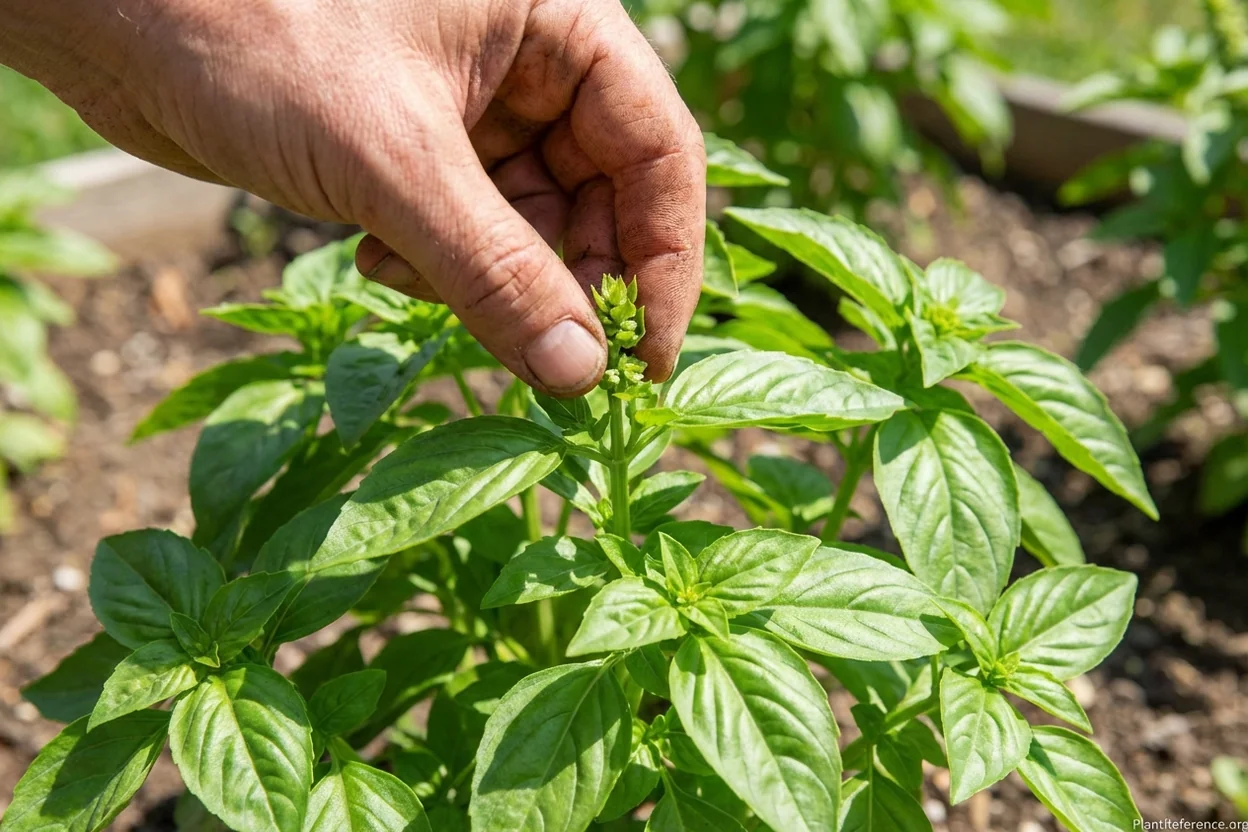
Pinching flower buds is the single most important thing you can do for basil production. Once basil flowers, the plant shifts energy from leaf production to seed production—leaves shrink, turn bitter, and essential oil concentration drops. Begin pinching when plants have 3-4 sets of true leaves by cutting the stem back to just above a leaf pair. This forces branching, creating a bushier plant with more harvest points. During Chicago's warm July and August, check plants twice weekly for developing flower buds and remove them immediately. One missed week of pinching in July can cut leaf production in half for the remainder of the season.
Feeding
Basil is a moderate feeder. Side-dress with balanced fertilizer or compost tea every 3-4 weeks during the growing season. Avoid heavy nitrogen, which promotes lush growth with diluted essential oil concentration—your basil will look great but taste bland. Fish emulsion every 2-3 weeks provides balanced nutrition that maintains flavor intensity. When to Plant Squash in Chicago: Complete Guide + Best Varieties for Zone 6a
Companion Planting
Basil and tomatoes are the classic companion pairing—not just in recipes but in the garden. Basil's aromatic oils may help repel certain tomato pests including aphids and hornworms, and the two share similar water and sun requirements. Plant basil at the base of tomato cages or between pepper plants. The flowers (when you do let a few bloom late in the season) attract pollinators that benefit neighboring fruiting crops. When to Plant Green Beans in Chicago: Complete Guide + Best Varieties for Zone 6a
Troubleshooting Chicago-Specific Problems
Cold Damage (The #1 Basil Killer in Chicago)
Basil is damaged by temperatures below 50°F (10°C)—not frozen, just cold. Chicago's late spring delivers nights in the 40s well into late May, and occasionally even early June lake breezes push temperatures below the damage threshold in lakefront neighborhoods. Symptoms: blackened or water-soaked leaf margins, stunted growth, and wilting despite adequate moisture. Prevention: don't transplant before nighttime temperatures consistently stay above 50°F. Keep row covers or bring containers indoors if a cold night threatens. Damaged plants recover slowly—it's faster to replace them than to wait for cold-damaged basil to regrow. Raised Bed Too Hot in Summer: Protecting Plants from Heat Stress
Downy Mildew (Peronospora belbahrii)
Basil Downy Mildew has spread across the Midwest since its first US detection and is now present in Chicago. Yellow patches on upper leaf surfaces with gray-purple fuzzy growth on undersides indicate infection. It spreads rapidly in cool, humid conditions—exactly what Chicago's June weather often delivers. Prevention: space plants for airflow, water at the base only, and choose resistant varieties when available. Remove infected leaves immediately. Ocimum basilicum var. thyrsiflora (Thai basil) shows more resistance than Genovese. Raised Bed Pest Problems: Identification and Organic Control Methods
Bolting in Summer Heat
Chicago's July and August heat (85-95°F) triggers bolting, particularly in 🌿Ocimum × citriodorum (Lemon basil) and 🌿Ocimum basilicum 'Genovese'. Consistent pinching is the primary prevention. Succession planting replaces bolting plants with fresh ones. Light afternoon shade from taller companion plants like tomatoes can reduce bolting pressure during the hottest weeks.
Japanese Beetles
Active from late June through August in Chicago. They skeletonize basil leaves, leaving only veins. Hand-pick into soapy water in the early morning when beetles are sluggish. Neem oil provides some deterrence. Row covers exclude beetles but reduce airflow—use only during peak emergence periods. Best Soil Mix for Raised Beds: Creating the Perfect Growing Medium
Harvest & Storage
Harvest basil by cutting stems just above a leaf pair—this promotes branching and continued growth. Begin harvesting when plants have at least 6 sets of leaves, taking no more than one-third of the plant at a time. In Chicago's peak summer (July-August), harvest twice weekly to stay ahead of flower bud production and to encourage the bushy growth that maximizes leaf area.
A single 🌿Ocimum basilicum 'Genovese' plant produces 2-3 cups of packed leaves per week during peak production. Four to six plants provide enough basil for daily cooking plus pesto-making sessions through the season. Harvest before 10 AM when essential oil concentration peaks—leaves picked in afternoon heat contain less aromatic intensity.
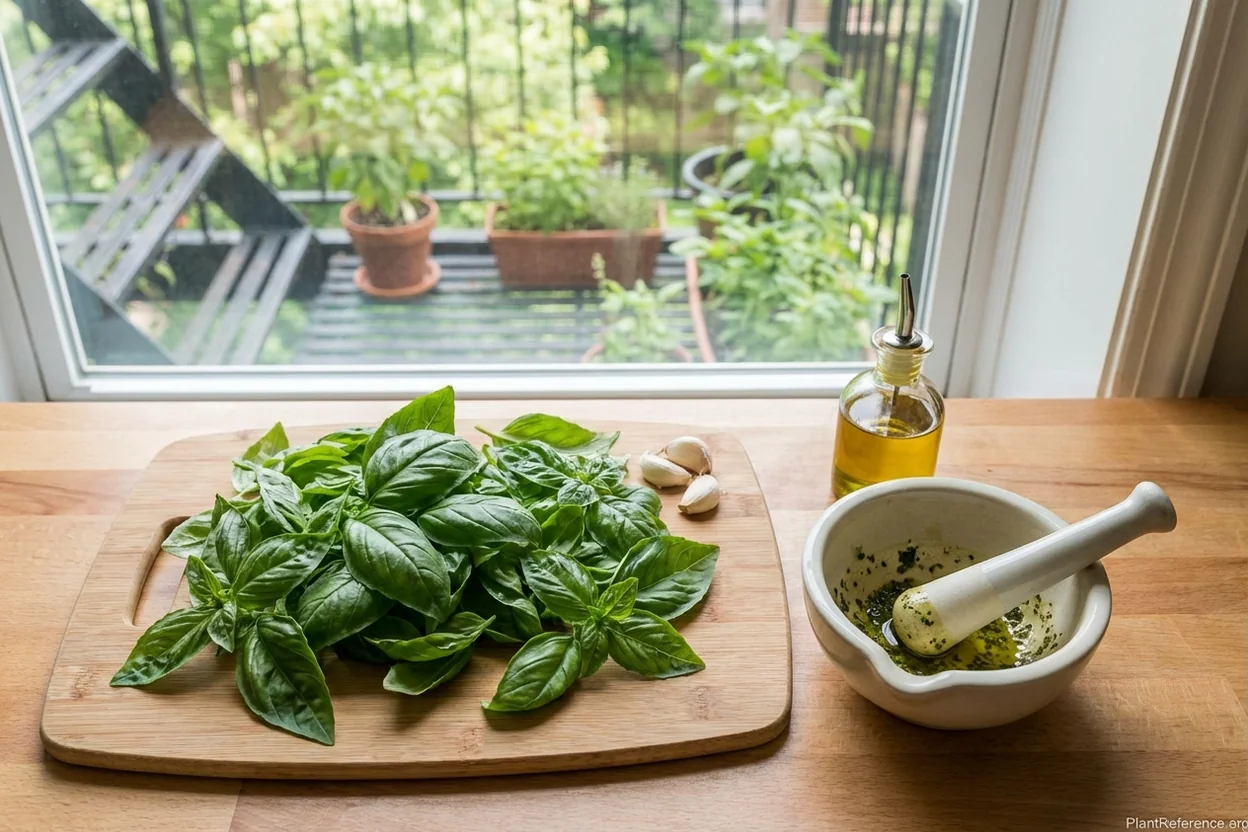
Fresh basil stores poorly in refrigeration (leaves blacken below 40°F). Instead, place stems in a glass of water on the counter like a bouquet—basil stays fresh for 5-7 days this way. For preservation, blend leaves with olive oil and freeze in ice cube trays for year-round pesto. Dry basil loses significant flavor compared to fresh or frozen, so freezing is the preferred Chicago method for winter supply. As the October 15 frost approaches, harvest everything and process into frozen pesto cubes or herb butter for winter cooking. The Complete Guide to Raised Bed Gardening for Beginners (2025)
Frequently Asked Questions
Reading about plants and recognising them are different skills. These three build the second.
- Daily PlantIdentify the day’s mystery plant from a close-up photograph.
- Keyed OutWork a dichotomous key, lead by lead, to name a hidden specimen.
- Name That PlantName a specimen from botanical clues dealt hardest first.
Free to play, no account needed
Pat has been gardening in Milwaukee for over thirty years, through every kind of Wisconsin weather. She worked as a school librarian and started gardening seriously when her kids were small—she wanted them to know where food came from. Now retired, she's a certified Master Gardener and runs the plant sale at her local garden club every spring. She specializes in cold-hardy perennials, native wildflower meadows, and the art of getting a vegetable garden producing in Wisconsin's short but intense growing season. Pat is practical and patient—she's seen enough Wisconsin winters to know that gardening here is a long game, and she writes with the steady confidence of someone who's been doing this a long time.