When to Plant Carrots in Richmond: Zone 7b Dates + Best Varieties
Pets & Toxicity
Recorded toxicity for plants linked in this guide. An unknown status is not a safety assessment.
No linked plant is recorded as toxicDetailsHide
Daucus carota ssp. sativus 'Rainbow' — Toxicity
Non-toxicView Daucus carota ssp. sativus 'Rainbow' plant profileDaucus carota ssp. sativus 'Imperator' — Toxicity
Non-toxicView Daucus carota ssp. sativus 'Imperator' plant profileDaucus carota ssp. sativus 'Danvers 126' — Toxicity
Non-toxicView Daucus carota ssp. sativus 'Danvers 126' plant profile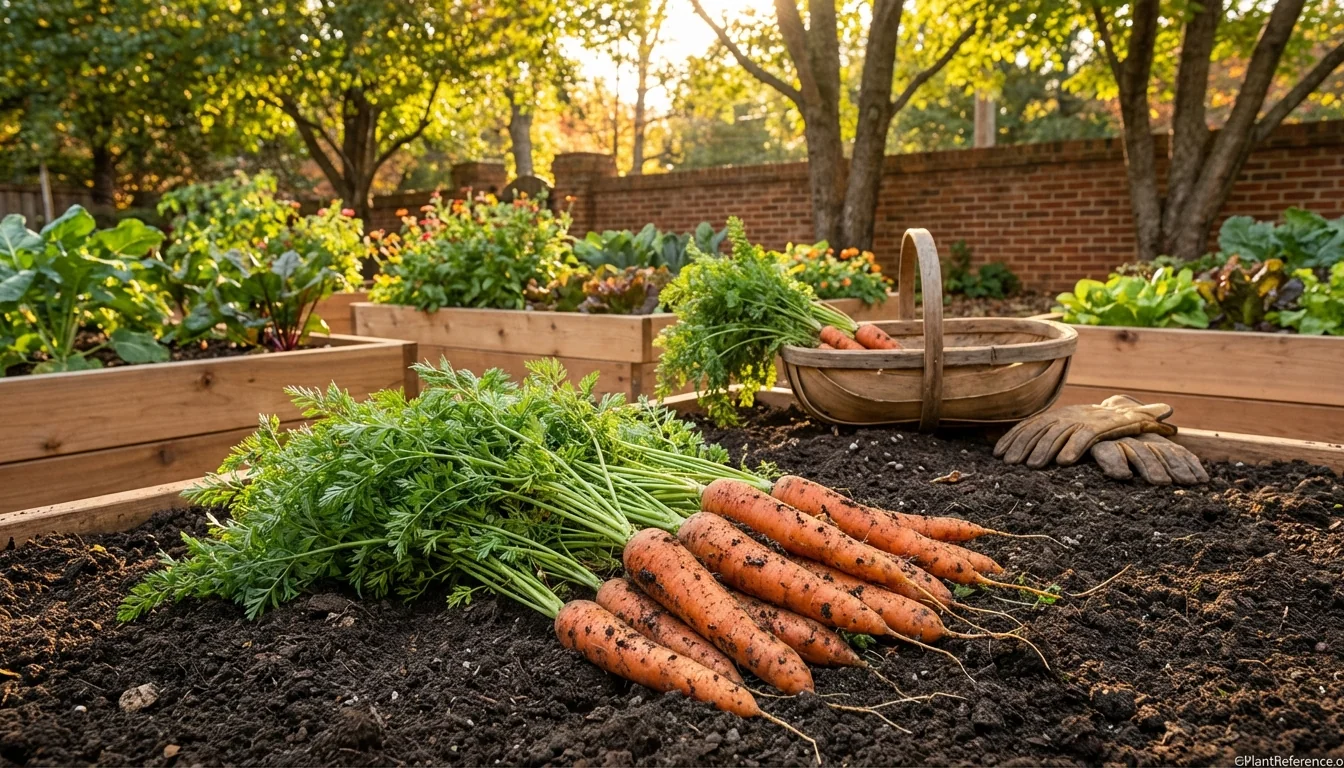
— Image © Plant Reference 2026
I've been growing carrots in Virginia since before most of my gardening students were born, and the one thing I tell every new grower is this: carrots are simple. People make them complicated—fussing over specialty seed mixes and gadgets—when the basics haven't changed in generations. Plant when the soil is cool enough, keep the bed moist until they germinate, thin them properly, and harvest before the quality drops. My grandmother grew beautiful carrots in rural Virginia with nothing but a hoe and good timing. Richmond's 193-day growing season gives you two clear windows to work with. Use them both, and you'll have fresh carrots from May through December.
Best Carrot Varieties for Richmond's Zone 7b Climate
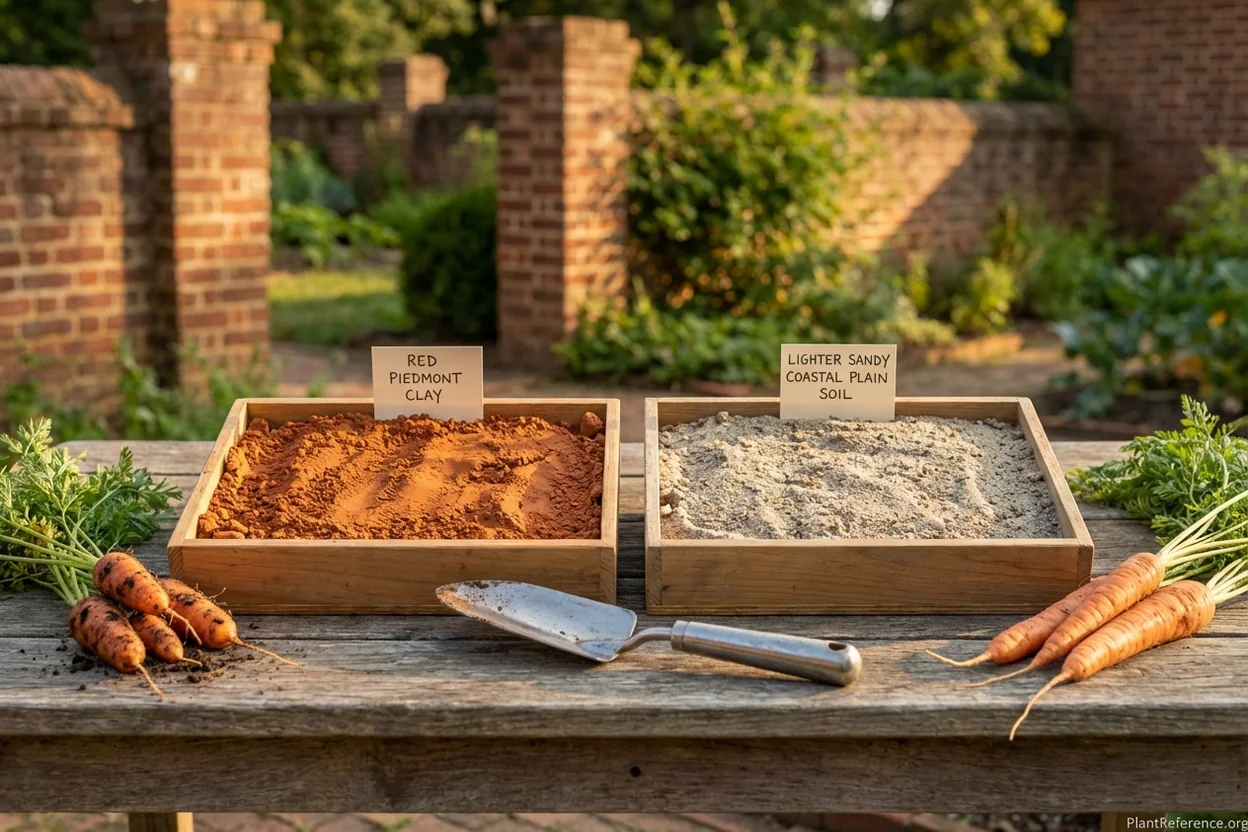
Richmond sits on the fall line where the Piedmont meets the Coastal Plain, so soil varies considerably across the city. West of the James River, you'll find the heavy red Piedmont clay that gardeners across Virginia know well—dense, acidic (pH 5.5-6.5), and sticky when wet. East of the river, the soil shifts toward sandier Coastal Plain material. Both grow carrots, but they need different approaches.
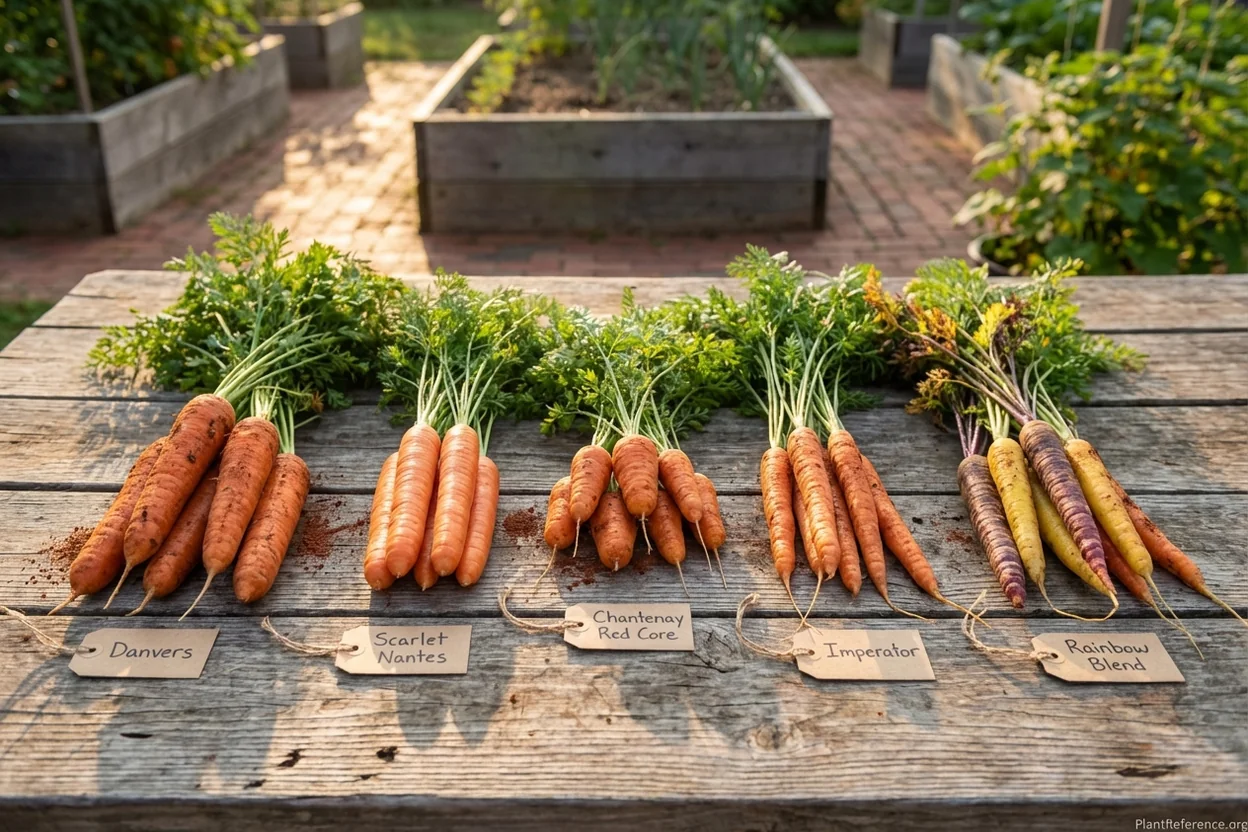
🌿Daucus carota ssp. sativus 'Danvers 126' (DAW-kus kuh-ROH-tuh) is the variety I recommend for Richmond gardeners working with native Piedmont clay. My grandmother grew Danvers, and I've never found a reason to stop. The conical root pushes through heavy soil better than any cylindrical type. At 70-80 days to maturity, 🌿Daucus carota ssp. sativus 'Danvers 126' fits both planting windows with room to spare. The firm flesh stores better than any other variety I've grown—four months easily in a cold spot.
Daucus carota ssp. sativus 'Scarlet Nantes' is the heirloom I recommend for flavor. Open-pollinated, which means you can save seed and replant year after year—something more gardeners ought to do. Daucus carota ssp. sativus 'Scarlet Nantes' produces sweet, tender roots with the classic Nantes cylindrical shape, but it needs amended or raised bed soil. Clay resistance defeats it. The newer hybrid 'Bolero' offers better disease resistance for Richmond's humid conditions, but you can't save seed from a hybrid.
Daucus carota ssp. sativus 'Chantenay Red Core' is another open-pollinated variety worth growing. At 4-5 inches (10-13 cm) long with stout shoulders, Daucus carota ssp. sativus 'Chantenay Red Core' stays in the amended topsoil and avoids the clay below. The red core adds sweetness and visual appeal. Works in containers and shallow beds where soil depth is limited.
🌿Daucus carota ssp. sativus 'Imperator' needs 12 inches (30 cm) of loose soil. In Richmond's Piedmont clay, that means raised beds. On the sandier east side, in-ground 🌿Daucus carota ssp. sativus 'Imperator' is possible if the sand is amended with compost. The cultivar 'Sugarsnax 54' adds high sugar content to the long form.
🌿Daucus carota ssp. sativus 'Rainbow' produces multiple colors from one packet—white, yellow, orange, and coral. At 70-75 days, it fits both windows. The color variety is appealing, though I'll admit I'm partial to the traditional orange.
Variety | Days to Maturity | Best For | Notes for Richmond |
|---|---|---|---|
70-80 days | Native clay and storage | Top pick for Piedmont clay; conical root handles heavy Virginia soil | |
Daucus carota ssp. sativus 'Scarlet Nantes' | 65-75 days | Flavor and seed saving | Open-pollinated heirloom; sweetest flavor; needs amended soil |
Daucus carota ssp. sativus 'Chantenay Red Core' | 65-75 days | Shallow beds and containers | Open-pollinated; short roots avoid clay; red core adds sweetness |
75-85 days | Deep raised beds or sandy soil | Needs 12+ inches loose soil; possible on east-side sandy ground | |
70-75 days | Specialty and visual variety | Multiple colors; fits both windows in amended beds |
Specific Planting Dates for Richmond
Richmond averages an April 15 last frost and October 25 first frost, giving you 193 frost-free days. That's shorter than Raleigh or Charlotte despite sharing the same zone designation—a reminder that hardiness zone tells you about minimum winter temperatures, not growing season length.
Spring Planting
Start sowing in mid-March, about four weeks before the April 15 last frost. Carrots tolerate light frost without complaint, so there's no risk. Continue succession sowings every two weeks through mid-April. Richmond's spring warms gradually, giving spring carrots until mid-June before soil heat becomes a problem. That's a solid 90-day window from first sowing to final harvest—plenty of time for even slower varieties.
Fall Planting
Fall is where Richmond carrots shine, but you need to start earlier than you might think. Sow from early August through early September. With an October 25 first frost, you need seeds in the ground by Labor Day at the latest to give roots 65-80 days of growth. August soil is warm—germination takes just 5-7 days—and roots develop as temperatures cool through September and October. The first frost converts stored starch to sugar, producing the best-tasting carrots of the year.
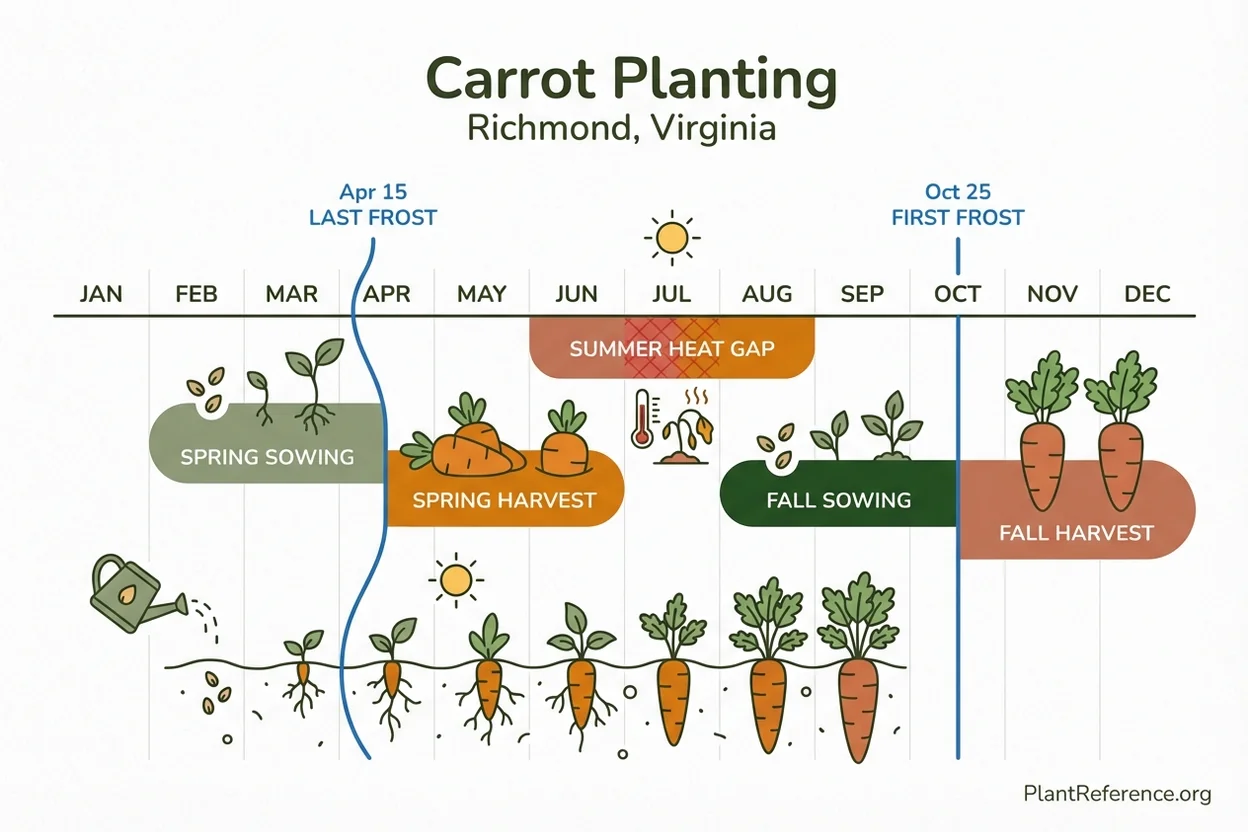
Spring sowing window: March 15 - April 15
Spring harvest: May through mid-June (before sustained heat)
Summer heat gap: Late June through late July
Fall sowing window: August 1 - September 5
Fall harvest: October through December (with mulch protection)
Best flavor: Fall harvest after frost triggers sugar conversion
Complete Growing Guide for Richmond
Soil Preparation
Richmond's fall line location means your soil depends on which side of the James River you garden. West of the river, Piedmont clay dominates—heavy, acidic, and poorly drained. East of the river, you're on Coastal Plain sand and silt—lighter, better drained, but lower in nutrients. Both grow carrots with the right preparation.
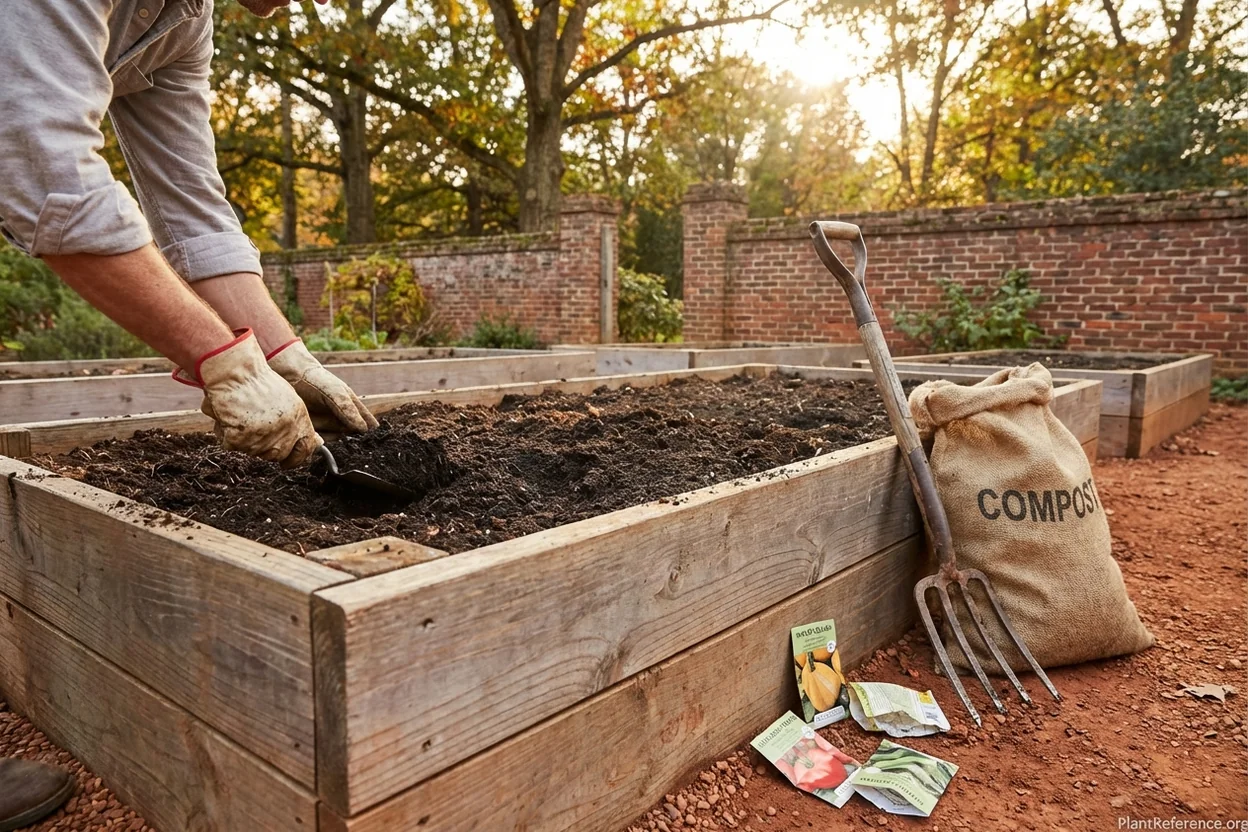
For Piedmont clay, work the top 10-12 inches (25-30 cm) with a garden fork and incorporate 3-4 inches (8-10 cm) of finished compost plus 1-2 inches (2.5-5 cm) of coarse sand. Test pH through the Virginia Cooperative Extension—Piedmont clay typically runs 5.5-6.5, and carrots prefer 6.0-6.8. Add lime if needed. For sandy Coastal Plain soil, compost is the priority—it adds water-holding capacity and nutrients that sand lacks. Best Soil Mix for Raised Beds: Creating the Perfect Growing Medium
Raised beds work well on both soil types. Build to at least 12 inches (30 cm) deep with 60% topsoil, 30% compost, and 10% coarse sand or perlite. On Piedmont clay, line the bottom with landscape fabric to prevent clay from wicking into your blend. On sandy ground, skip the fabric—you want drainage continuity. How to Build a Raised Garden Bed: Step-by-Step Construction Guide
Seeding
Sow seeds 1/4 inch (0.6 cm) deep in rows 12 inches (30 cm) apart. Cover with vermiculite or fine compost—not native soil. Piedmont clay crusts hard after rain. Sandy soil dries too fast. Neither makes good seed cover. This is where most germination failures start, and it's the easiest problem to prevent. Best Soil for Raised Beds: 6 Commercial Mixes Tested and Compared
Spring sowings take 14-21 days to germinate. Lay burlap or a board over the row to hold moisture. Check daily from day 5 and remove the cover when seedling loops appear. Fall sowings germinate in 5-7 days in warm August soil. Water lightly twice daily to keep the seed zone moist without saturating the bed.
Thinning
Thin in two stages: first to 1 inch (2.5 cm) at 2 inches (5 cm) tall, then to 2-3 inches (5-8 cm) at 4-5 inches (10-13 cm). Use scissors and cut at the soil line. I know pulling seems faster, but it disturbs everything around the seedling you're removing—especially in clay. Thin properly and every root reaches full size. Skip thinning and you get a bundle of pencils. Raised Bed Vegetable Garden Layout: Planning for Maximum Production
Watering
Carrots need 1 inch (2.5 cm) of water weekly during early growth, increasing to 1.5-2 inches (4-5 cm) as roots develop. Richmond averages about 44 inches annually, spread fairly evenly. The mid-Atlantic pattern delivers gentler, more frequent rain than the Deep South's intense thunderstorms—better for carrots overall.
Keep watering consistent. Erratic moisture causes splitting—the root grows slowly during dry spells, then cells expand too fast when water returns. Drip irrigation or a soaker hose on a timer removes the guesswork. In clay soil, check at 2-inch depth before watering—overwatering promotes root rot. In sandy soil, you'll water more frequently because moisture drains faster. Raised Bed Irrigation Systems: Watering Solutions for Consistent Growth
Mulching
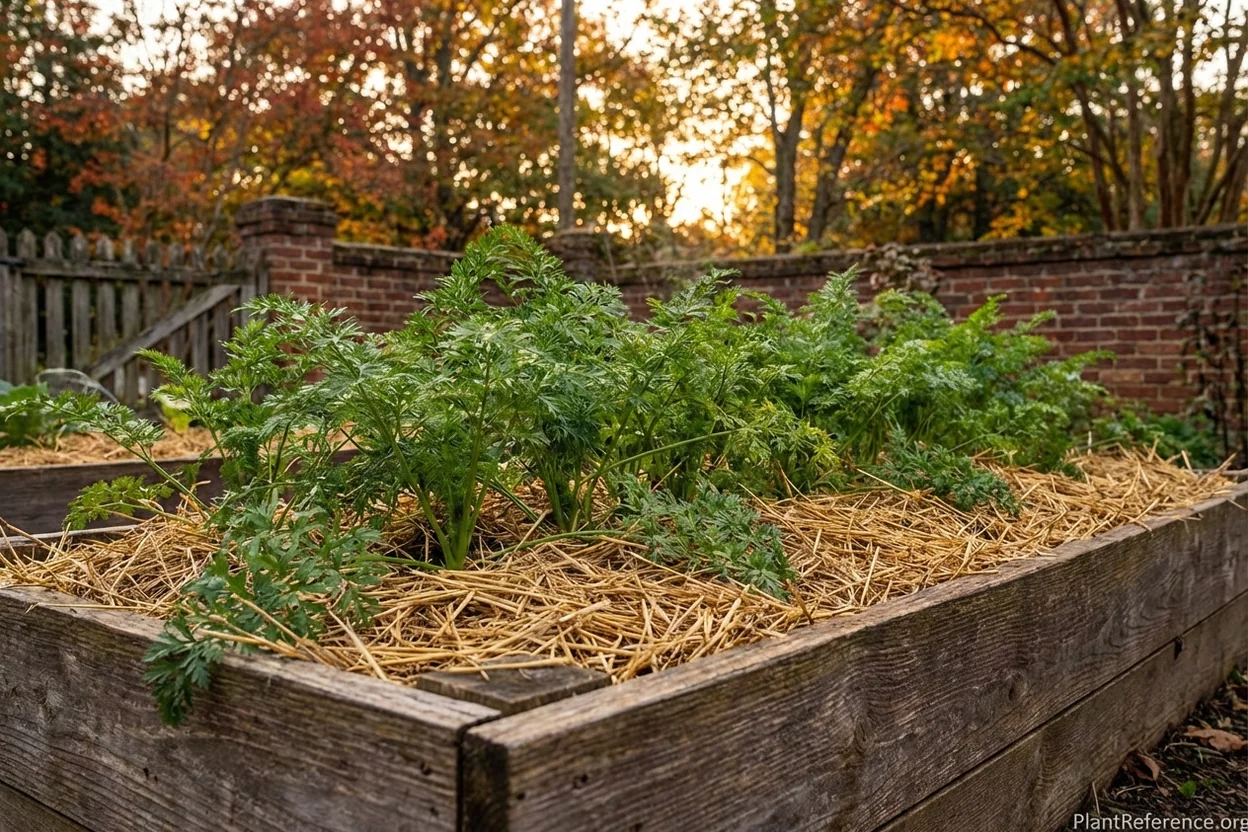
Apply 2-3 inches (5-8 cm) of straw or shredded leaves after seedlings establish. Mulch is especially important for fall carrots—Richmond's October 25 first frost comes earlier than most Zone 7b cities, and 3-4 inches of straw mulch after frost extends the harvest through November and December. Virginia's hardwood trees provide free leaf mulch every fall. Shred them with a mower before applying. Raised Bed Soil Settling and Compaction: Prevention and Solutions
Troubleshooting Richmond-Specific Problems
Summer Heat Gap
Richmond's summer pushes soil above 75°F (24°C) from late June through late July—a relatively short gap of about 4-6 weeks compared to cities farther south. This shorter gap means you can push spring harvest a bit later and start fall sowing earlier. Harvest spring carrots by mid-June and begin fall sowings in early August. When to Plant Peppers in Richmond: Complete Guide + Best Varieties for Zone 7b
Fall Line Soil Variation
Richmond gardeners deal with two completely different soil types depending on location. Piedmont clay west of the James holds moisture but compacts and crusts. Coastal Plain sand east of the river drains well but dries fast and lacks nutrients. Know which soil you have before choosing your preparation strategy. A simple jar test—shake soil in water and let it settle—shows the clay/silt/sand ratio. When to Plant Squash in Richmond: Complete Guide + Best Varieties for Zone 7b
Deer Pressure
Richmond's expanding suburbs push deer into residential gardens, and carrot foliage is palatable browse. Deer damage is worst during spring emergence when tender seedlings are most vulnerable. Floating row cover during the first 4-6 weeks serves double duty—it protects seedlings from browsing and maintains soil moisture for germination. Permanent fencing is the only reliable long-term solution for heavy deer pressure. When to Plant Tomatoes in Richmond: Complete Guide + Best Varieties for Zone 7b
Leaf Blight in Humid Conditions
Richmond's humidity promotes Alternaria and Cercospora leaf blight during warm, wet periods. Space rows 12 inches (30 cm) apart for airflow, irrigate at soil level, and remove infected foliage promptly. The hybrid 'Bolero' offers strong resistance, though you can't save its seed. For open-pollinated disease management, good spacing and air circulation matter more than variety selection. When to Plant Kale in Richmond: Complete Guide + Best Varieties for Zone 7b
Harvest & Storage
Spring carrots reach harvest size when shoulders measure 3/4-1 inch (2-2.5 cm) in diameter, typically 65-85 days after sowing. Richmond's moderate spring gives you until mid-June. Water the bed the day before harvest and loosen alongside the row with a garden fork. Don't yank them straight out of clay—you'll snap off the bottom third every time. When to Plant Onions in Richmond: Complete Guide + Best Varieties for Zone 7b
Fall carrots are the reward for getting seeds in the ground by Labor Day. Roots that mature through October's cooling temperatures develop peak sweetness from starch-to-sugar conversion. Richmond's October 25 first frost enhances flavor rather than ending the season. Apply 3-4 inches (8-10 cm) of straw mulch after frost and continue harvesting through November and into December. Richmond winters occasionally dip into single digits°F, so harvest before severe cold arrives.
For storage, cut foliage immediately—it draws moisture from the root. Store unwashed carrots in perforated plastic bags at 32-38°F (0-3°C). 🌿Daucus carota ssp. sativus 'Danvers 126' stores four to five months this way. My grandmother kept them in a root cellar packed in damp sand, and they lasted just as long. The method doesn't matter as much as the temperature. Poor Drainage in Raised Beds: Causes and Fixes for Waterlogged Soil
Frequently Asked Questions
Reading about plants and recognising them are different skills. These three build the second.
- Daily PlantIdentify the day’s mystery plant from a close-up photograph.
- Keyed OutWork a dichotomous key, lead by lead, to name a hidden specimen.
- Name That PlantName a specimen from botanical clues dealt hardest first.
Free to play, no account needed
Tagged with
Dot grew up on a small farm in rural Virginia and has maintained a vegetable garden for decades. After retiring from teaching elementary school, she became a Master Gardener volunteer and spends her time mentoring new gardeners at community garden plots in Richmond. She's especially knowledgeable about heirloom varieties, seed saving, and traditional growing methods passed down from her grandmother. Dot's no-nonsense advice comes from extensive trial and error—she's seen every tomato disease, pest problem, and weather disaster imaginable. Her biggest pet peeve is gardeners who overcomplicate simple tasks. "Plants want to grow," she often says. "Your job is to not get in their way."