When to Plant Carrots in Salt Lake City: Zone 7a Dates + Best Varieties
Pets & Toxicity
Recorded toxicity for plants linked in this guide. An unknown status is not a safety assessment.
No linked plant is recorded as toxicDetailsHide
Daucus carota ssp. sativus 'Nantes' — Toxicity
Non-toxicView Daucus carota ssp. sativus 'Nantes' plant profileDaucus carota ssp. sativus 'Chantenay' — Toxicity
Non-toxicView Daucus carota ssp. sativus 'Chantenay' plant profileDaucus carota ssp. sativus 'Imperator' — Toxicity
Non-toxicView Daucus carota ssp. sativus 'Imperator' plant profileDaucus carota ssp. sativus 'Rainbow' — Toxicity
Non-toxicView Daucus carota ssp. sativus 'Rainbow' plant profileDaucus carota ssp. sativus 'Danvers 126' — Toxicity
Non-toxicView Daucus carota ssp. sativus 'Danvers 126' plant profile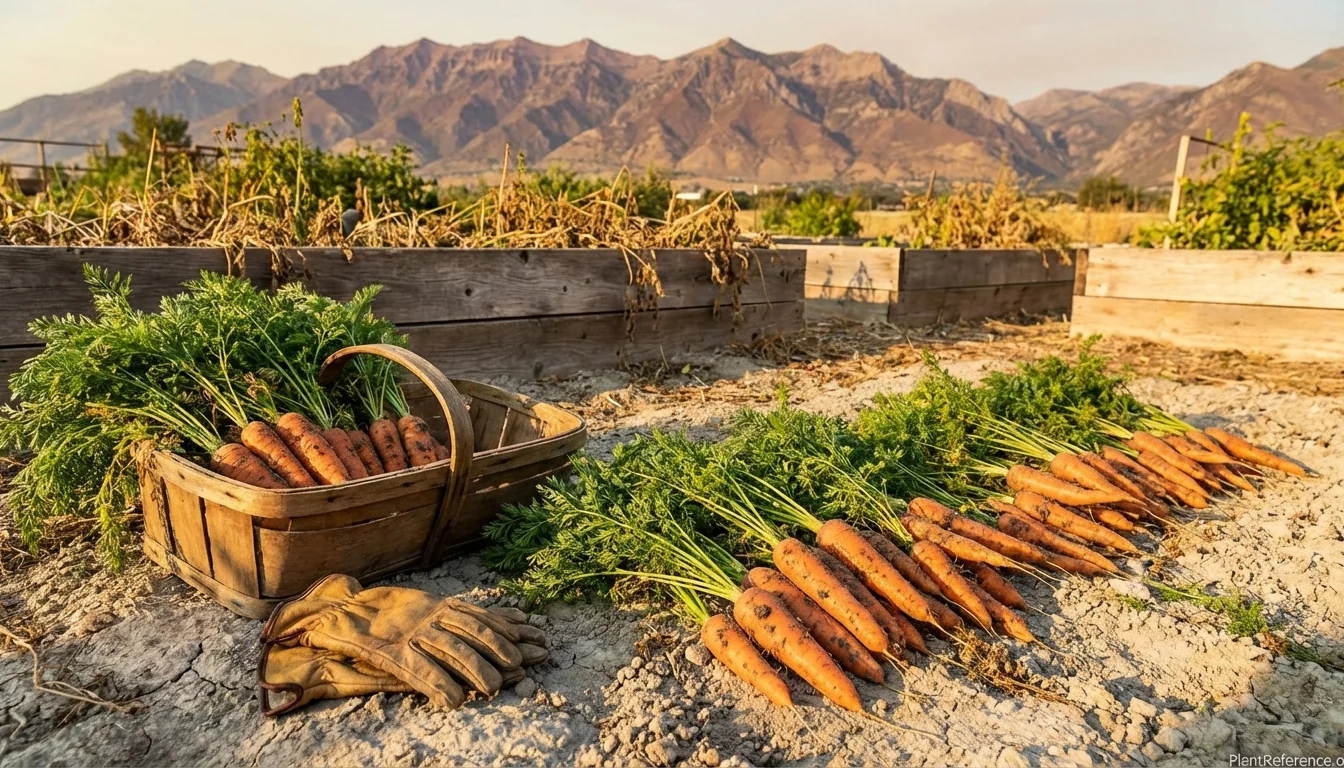
— Image © Plant Reference 2026
When I moved from Portland to Salt Lake City, I had to relearn gardening from the ground up. Everything I knew about soil, water, and timing was wrong for this climate. Portland soil is rich, acidic, and rain does half the watering for you. Salt Lake City soil is alkaline, dry, and nothing grows without deliberate irrigation. But here's what I discovered: the Wasatch Front's dry air and dramatic day-to-night temperature swings produce some of the sweetest carrots I've ever tasted. The combination of warm days, cool nights, and low humidity creates conditions that concentrate sugars in root crops. You just need to manage the soil chemistry and water supply that nature doesn't provide.
Best Carrot Varieties for Salt Lake City's Zone 7a Climate
Salt Lake City's native soil is alkaline clay—pH typically runs 7.5-8.5, sometimes higher, thanks to the ancient Lake Bonneville lakebed that underlies the valley. This high pH locks up iron, manganese, and phosphorus, creating nutrient deficiencies even in mineral-rich ground. The clay is often bentonite-heavy, expanding when wet and cracking when dry. Choosing varieties that tolerate alkaline conditions and managing pH through amendment are both essential.
🌿Daucus carota ssp. sativus 'Danvers 126' (DAW-kus kuh-ROH-tuh) is the most reliable variety for Salt Lake City's alkaline clay. The conical root handles heavy soil structure, and 🌿Daucus carota ssp. sativus 'Danvers 126' shows better tolerance to high-pH conditions than most varieties. At 70-80 days to maturity, it fits both windows—important in a 173-day season where timing is tight. The firm flesh stores well for months.
🌿Daucus carota ssp. sativus 'Nantes' produces the sweetest roots, and Salt Lake City's cool nights amplify that sweetness through temperature-driven sugar accumulation. 🌿Daucus carota ssp. sativus 'Nantes' needs loose, amended soil with pH brought down to the 6.0-6.8 range. In raised beds with imported soil mix, 🌿Daucus carota ssp. sativus 'Nantes' performs beautifully. The cultivar 'Bolero' adds storage durability to the Nantes flavor profile.
🌿Daucus carota ssp. sativus 'Chantenay' is the practical choice for native soil where amendment depth is limited. At 4-5 inches (10-13 cm) long, 🌿Daucus carota ssp. sativus 'Chantenay' stays within the amended topsoil layer and avoids the alkaline clay below. Works well in containers—a strong option for Salt Lake City patios and balconies where water can be managed precisely.
🌿Daucus carota ssp. sativus 'Imperator' requires 12 inches (30 cm) of loose soil. In Salt Lake City, that's only achievable in deep raised beds with imported, pH-adjusted soil. The cultivar 'Sugarsnax 54' adds high sugar content to the long form.
🌿Daucus carota ssp. sativus 'Rainbow' produces multiple colors from one hybrid packet. At 70-75 days, it fits both windows in amended beds. The color variety adds visual appeal that complements water-wise garden designs.
Variety | Days to Maturity | Best For | Notes for Salt Lake City |
|---|---|---|---|
70-80 days | Alkaline clay and storage | Top pick; best alkaline tolerance; conical root handles heavy soil | |
65-75 days | Amended beds and flavor | Sweetest roots; cool SLC nights amplify sugar; needs pH-adjusted soil | |
65-75 days | Containers and native soil | Short roots stay in amended zone; ideal for patio and balcony gardens | |
75-85 days | Deep raised beds only | Needs 12+ inches pH-adjusted soil; not for native SLC ground | |
70-75 days | Specialty and garden design | Multiple colors complement water-wise landscape plantings |

Specific Planting Dates for Salt Lake City
Salt Lake City averages an April 25 last frost and October 15 first frost, giving you only 173 frost-free days—the shortest season of any city in this carrot series. That tight window demands precise timing on both ends.
Spring Planting
Start sowing in late March, about four weeks before the April 25 last frost. Carrots tolerate frost and even light freezes, so early planting is safe. Continue succession sowings every two weeks through late April. Salt Lake City's spring warms gradually at 4,300 feet elevation, giving spring carrots until late June before soil heat becomes problematic. The wide day-night temperature swings during May and early June actually benefit carrot development—warm days drive top growth while cool nights promote sugar storage.
Fall Planting
Fall carrots are Salt Lake City's premium crop, but the window starts earlier than you'd expect. Begin sowing in late July while soil is warm for fast germination (5-7 days), and finish by mid-August. You need 65-80 days before the October 15 first frost for roots to reach harvest size. This early start catches most gardeners off guard—fall carrot planning begins in midsummer. Roots developing through September and October benefit from SLC's dramatic nighttime cooling.

Spring sowing window: March 25 - April 25
Spring harvest: June through late June (before sustained heat)
Summer heat gap: Late June through mid-July (shorter than most cities)
Fall sowing window: July 25 - August 15
Fall harvest: October through November (with mulch protection)
Best flavor: Fall harvest after cool nights concentrate sugars in roots
Complete Growing Guide for Salt Lake City
Soil Preparation
Salt Lake City's alkaline clay is the single biggest challenge for carrot growing here. pH values of 7.5-8.5 lock up iron, manganese, and phosphorus, producing yellowed foliage and stunted roots even when those minerals are present in the soil. The bentonite clay component swells when irrigated and shrinks into hard cracks during dry spells. You have to address both the chemistry and the structure.
For in-ground beds, work the top 10-12 inches (25-30 cm) with a garden fork. Incorporate 3-4 inches (8-10 cm) of finished compost, 1-2 inches (2.5-5 cm) of coarse sand, and elemental sulfur to lower pH. The sulfur rate depends on your starting pH—a soil test through the USU Extension Service is essential, not optional. Expect to apply 1-2 pounds of elemental sulfur per 100 square feet for every full pH point you need to drop. Results take weeks to months, so amend well before planting. Best Soil Mix for Raised Beds: Creating the Perfect Growing Medium
For raised beds—the approach I recommend for Salt Lake City—build to at least 12 inches (30 cm) deep with imported acidic topsoil blended with compost and coarse sand. Control the pH from the start by testing your blend before planting. Irrigating with Salt Lake City's alkaline municipal water gradually raises bed pH over time, so test annually and re-amend with sulfur as needed. How to Build a Raised Garden Bed: Step-by-Step Construction Guide
Seeding
Sow seeds 1/4 inch (0.6 cm) deep in rows 12 inches (30 cm) apart. Cover with vermiculite or fine compost. Salt Lake City's dry air pulls moisture from the seed zone rapidly—the low humidity that makes summers pleasant for people creates harsh conditions for germinating carrot seeds. Consistent irrigation during the 14-21 day spring germination window is non-negotiable. Best Soil for Raised Beds: 6 Commercial Mixes Tested and Compared
Fall sowings germinate in 5-7 days in warm July-August soil. Water lightly twice daily during germination. Salt Lake City's intense UV at altitude dries the surface faster than in lower-elevation cities. A thin layer of floating row cover reduces moisture loss without blocking light.
Thinning
Thin in two stages: first to 1 inch (2.5 cm) at 2 inches (5 cm) tall, then to 2-3 inches (5-8 cm) at 4-5 inches (10-13 cm). Cut at the soil line with scissors. SLC's alkaline clay releases seedlings slightly easier than acidic clay, but pulling still risks disturbing neighbors. Raised Bed Vegetable Garden Layout: Planning for Maximum Production

Watering
Salt Lake City receives only about 16 inches of annual rainfall—carrots need 1-1.5 inches per week, so irrigation is required for nearly every inch of water your crop needs. Every watering decision matters here. Drip irrigation on a timer delivers water directly to the root zone without the evaporation losses that overhead sprinklers suffer in SLC's dry air and afternoon breezes.
Water deeply and consistently. The worst approach is frequent shallow watering that keeps the surface wet but doesn't reach developing roots. Run drip lines for 30-45 minutes per session, 2-3 times per week, adjusting based on soil moisture at 2-inch depth. SLC's alkaline water gradually raises bed pH—monitor annually and add sulfur to counteract. Raised Bed Irrigation Systems: Watering Solutions for Consistent Growth
Mulching
Apply 2-3 inches (5-8 cm) of straw or shredded leaves after seedlings establish. In SLC's dry climate, mulch is primarily a moisture retention tool rather than a temperature moderator. It reduces watering frequency significantly—a meaningful cost savings when every gallon counts. In fall, 3-4 inches of mulch after the October 15 frost extends harvest into November. When to Plant Kale in Salt Lake City: Complete Guide + Best Varieties for Zone 7a

Troubleshooting Salt Lake City-Specific Problems
Alkaline Soil and Nutrient Lockout
Salt Lake City's pH of 7.5-8.5 locks up iron, manganese, and phosphorus even when they're physically present in the soil. Carrot foliage yellows between veins (interveinal chlorosis), and roots develop poorly despite adequate watering and fertility. Elemental sulfur is the long-term fix, but it works slowly. For faster results, apply chelated iron (EDDHA form) as a foliar spray during the growing season while sulfur amendments take effect in the soil. When to Plant Peppers in Salt Lake City: Complete Guide + Best Varieties for Zone 7a
Short Growing Season
At 173 days, Salt Lake City's frost-free window is the tightest of any city in this series. There's minimal margin for error—late spring cold snaps and early fall frosts compress both windows. Choose varieties at 65-75 days to maturity for the most flexibility. Start spring sowings at the earliest safe date and begin fall sowings by late July. Succession planting within each window maximizes total production despite the short calendar. When to Plant Tomatoes in Salt Lake City: Complete Guide + Best Varieties for Zone 7a
Intense UV and Surface Drying
Salt Lake City sits at 4,300 feet with dry, thin air that transmits more UV radiation than sea-level cities. This accelerates soil surface drying during germination—the critical period when seeds need consistent moisture. Floating row cover reduces UV intensity and moisture loss simultaneously. In midsummer fall sowings, shade cloth (30-40%) over the seedbed prevents surface baking during the germination period. When to Plant Squash in Salt Lake City: Complete Guide + Best Varieties for Zone 7a
Alkaline Irrigation Water
Salt Lake City's municipal water is alkaline, gradually raising bed pH even in imported acidic soil mixes. Test raised bed pH annually—a half-point increase per year is common. Counteract with elemental sulfur applications each spring. Gardeners using well water should test pH even more frequently, as well water in the Salt Lake Valley often runs pH 8.0 or higher. Poor Drainage in Raised Beds: Causes and Fixes for Waterlogged Soil

Harvest & Storage
Spring carrots reach harvest size when shoulders measure 3/4-1 inch (2-2.5 cm) in diameter, typically 65-85 days after sowing. Salt Lake City's spring allows harvest through late June. Water the bed before harvest to loosen soil—alkaline clay grips roots tenaciously when dry. Use a garden fork alongside the row. When to Plant Onions in Salt Lake City: Complete Guide + Best Varieties for Zone 7a
Fall carrots are Salt Lake City's finest production. The wide day-night temperature swings during September and October—often 30-40°F (17-22°C) between afternoon highs and predawn lows—drive exceptional sugar accumulation in roots. This temperature differential is something humid eastern cities don't get, and it produces carrots with noticeably better flavor. Apply 3-4 inches (8-10 cm) of straw mulch after the October 15 frost and continue harvesting through November. SLC winters can deliver hard freezes, so harvest before sustained temperatures below 15°F (-9°C).
For storage, remove foliage immediately. Store unwashed carrots in perforated plastic bags at 32-38°F (0-3°C). 🌿Daucus carota ssp. sativus 'Danvers 126' stores four to five months. SLC's dry basement conditions work well for root storage. Raised Bed Weeds: Prevention Strategies and Control Methods
Frequently Asked Questions
Reading about plants and recognising them are different skills. These three build the second.
- Daily PlantIdentify the day’s mystery plant from a close-up photograph.
- Keyed OutWork a dichotomous key, lead by lead, to name a hidden specimen.
- Name That PlantName a specimen from botanical clues dealt hardest first.
Free to play, no account needed
Tagged with
Yuki is a landscape designer in Salt Lake City who specializes in water-wise gardens that work with Utah's dry climate and alkaline soil. She moved to Utah from Portland, Oregon—a rude awakening for someone used to gardening in rich, acidic soil with reliable rainfall. That transition taught her to rethink everything she knew about plant selection and garden design. Yuki now focuses on intermountain-adapted plantings that combine ornamental grasses, drought-tolerant perennials, and carefully chosen shrubs for year-round interest. She works with homeowners looking to reduce water use without giving up on having an attractive garden. Yuki writes with the clarity of someone who had to learn a new climate from scratch.