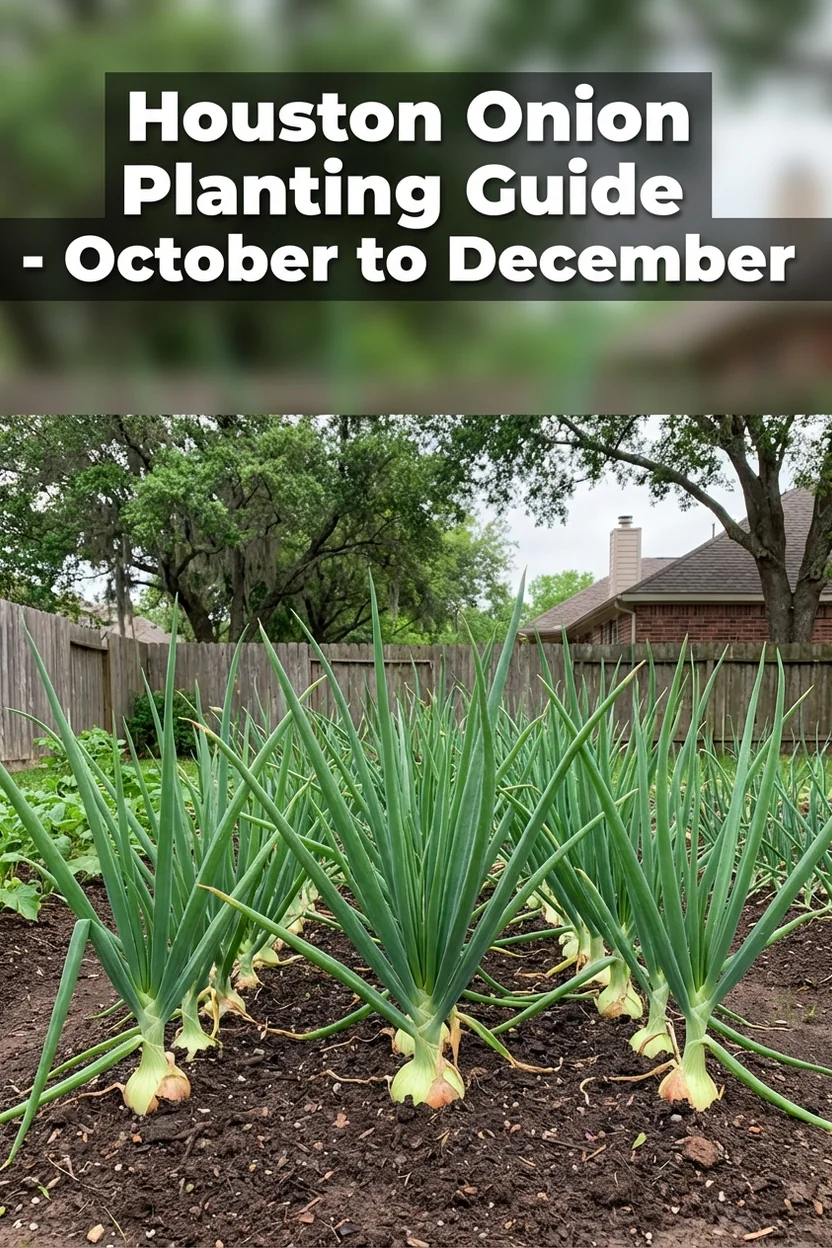
When to Plant Onions in Houston: Complete Guide + Best Varieties for Zone 9a
Pets & Toxicity
Recorded toxicity for plants linked in this guide. An unknown status is not a safety assessment.
Toxic to pets: evergreen hardy white bunching onion, Texas super sweet onion, red creole onion and 1 moreDetailsHide
Allium cepa 'Evergreen Hardy White' — Toxicity Warning
Toxic to cats and dogs if eaten; cats are especially susceptible, and raw, cooked or concentrated plant material can damage red blood cells and cause anaemia.View Allium cepa 'Evergreen Hardy White' plant profileAllium cepa 'Texas Super Sweet' — Toxicity Warning
Toxic to cats and dogs if eaten; cats are especially susceptible, and raw, cooked or concentrated plant material can damage red blood cells and cause anaemia.View Allium cepa 'Texas Super Sweet' plant profileAllium cepa 'Red Creole' — Toxicity Warning
Toxic to cats and dogs if eaten; cats are especially susceptible, and raw, cooked or concentrated plant material can damage red blood cells and cause anaemia.View Allium cepa 'Red Creole' plant profileAllium cepa 'Yellow Granex' — Toxicity Warning
Toxic to cats and dogs if eaten; cats are especially susceptible, and raw, cooked or concentrated plant material can damage red blood cells and cause anaemia.View Allium cepa 'Yellow Granex' plant profile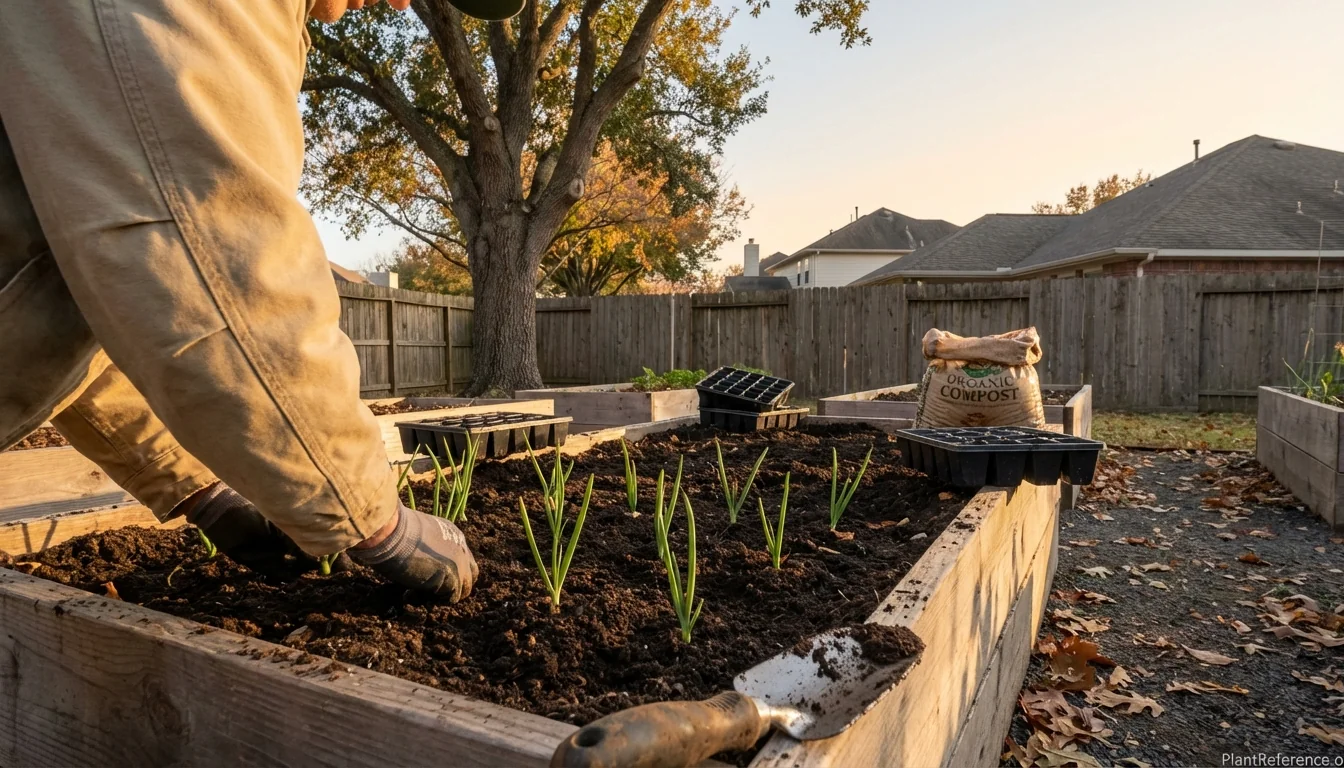
— Image © Plant Reference 2026
Growing onions in Houston requires understanding one critical fact: latitude determines everything. At 30°N latitude, Houston sits squarely in short-day onion territory, where day length never exceeds 14 hours even at summer solstice. This means only varieties that bulb in 10-12 hours of daylight will succeed here.
I've been growing onions in Texas for forty years, and I'll tell you what works in Houston's climate. The key is fall planting with short-day varieties—try to grow long-day types here and you'll get giant scallions that never bulb. Here's your complete guide to successful onion production in Space City.
Best Onion Varieties for Houston's Zone 9a Climate
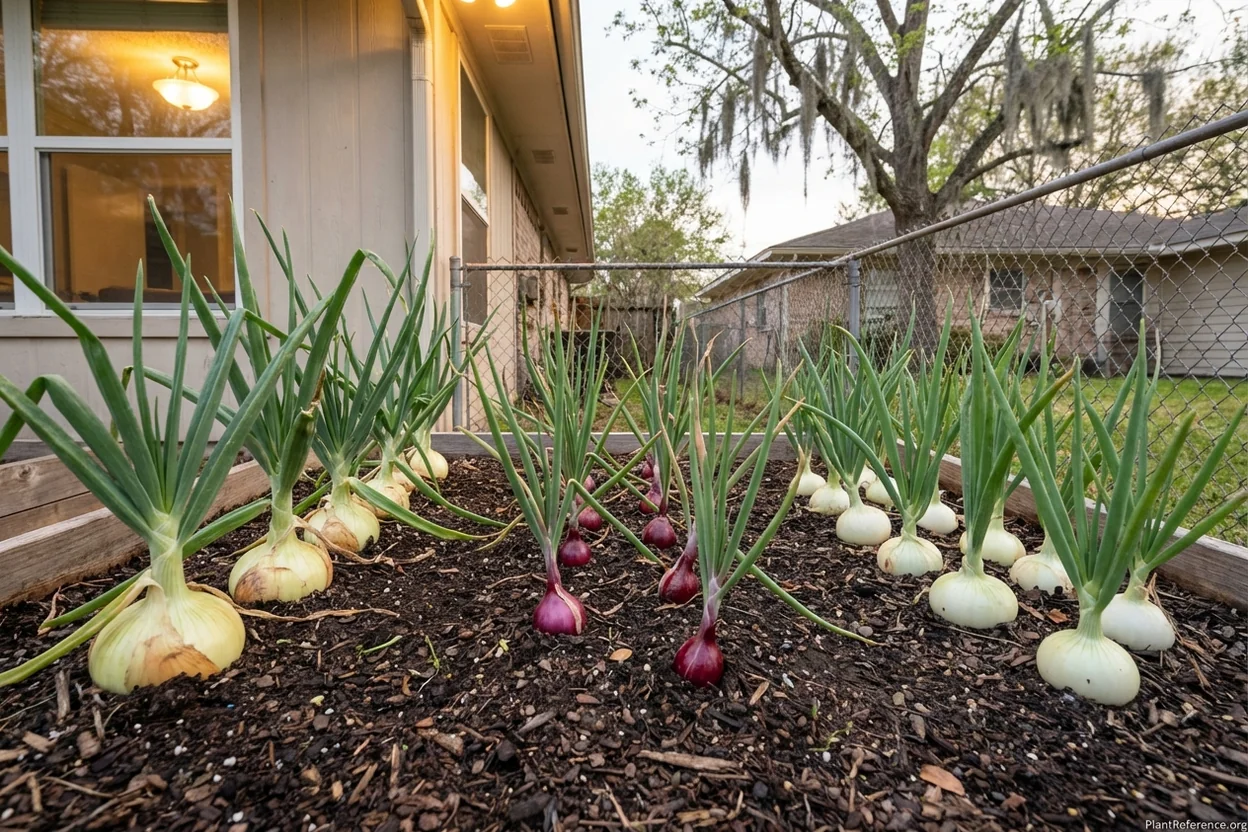
Houston's climate demands specific onion varieties bred for southern conditions. Short-day onions 🌿Allium cepa 'Tokyo Long White' (AL-ee-um SEP-uh) require only 10-12 hours of daylight to trigger bulbing, making them perfect for our latitude and growing season.
Top Short-Day Varieties for Houston
Variety | Days to Maturity | Best For | Notes for Houston |
|---|---|---|---|
120-140 days | Fresh eating | Developed by Texas A&M specifically for our climate | |
130-150 days | Storage | Heat tolerant, stores better than sweet types | |
120-130 days | All-purpose | Reliable performer, good disease resistance | |
Allium cepa '1015Y' | 120-135 days | Fresh eating | The famous "million dollar baby" sweet onion |
Allium cepa 'White Granex' | 120-130 days | Fresh eating | Mild flavor, perfect for salads and sandwiches |
Why Short-Day Only? Long-day varieties like 'Walla Walla' or 'Red Wing' will never bulb in Houston. They need 14-16 hours of daylight to switch from leaf production to bulb formation. Since Houston's longest day is only 13.5 hours, these varieties remain in vegetative growth indefinitely, producing enormous green tops but no bulbs.
The best performer for Houston gardens is 🌿Allium cepa 'Texas Super Sweet', developed specifically for our climate at Texas A&M University. These onions can reach 4-5 inches in diameter with proper care, and their ultra-sweet flavor makes them perfect for eating fresh.
For storage purposes, 🌿Allium cepa 'Red Creole' offers the best keeping quality among short-day types, storing 3-4 months when properly cured compared to 1-2 months for sweet varieties.
Specific Planting Dates for Houston
Houston's Zone 9a climate allows a long fall-through-spring growing season, but timing remains crucial for maximum bulb development.
Optimal Planting Windows
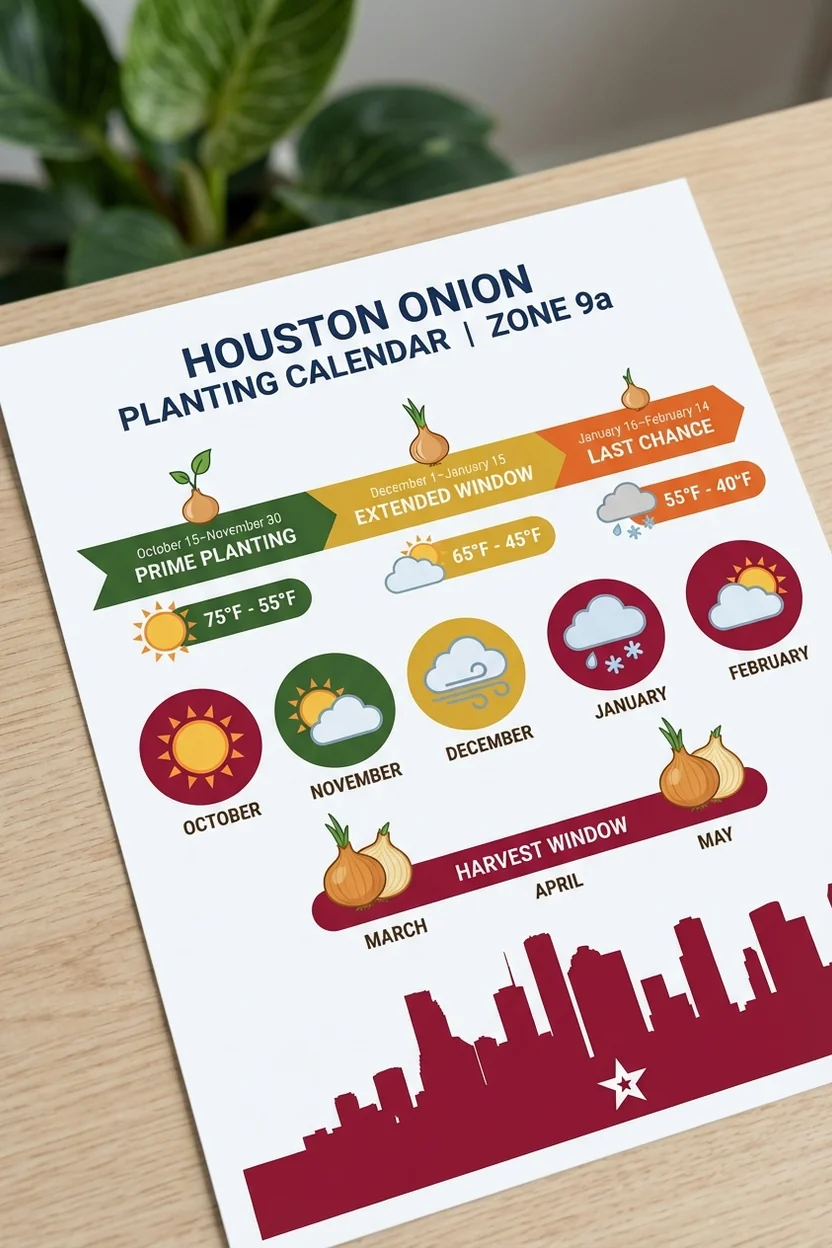
Prime Planting Period: October 15 - November 30
Soil temperatures have cooled from summer heat
Transplants establish easily without heat stress
Maximum growing time before spring bulbing trigger
Best weather for outdoor work
Extended Planting Period: December 1 - January 15
Still viable but shorter growing season
Smaller bulbs due to reduced vegetative growth time
Good option if fall planting was missed
Requires protection during occasional cold snaps
Latest Possible: January 16 - February 14
Emergency planting window only
Significantly reduced yields
Must use fastest-maturing varieties (120 days or less)
High risk from late spring heat
Calculating Your Planting Date
For Houston, work backwards from your desired harvest date:
Spring harvest (March 15 - May 1): Plant October 15 - November 15
Late spring harvest (May 1 - June 1): Plant November 15 - January 1
Critical timing factor: Onions need 100+ days of vegetative growth before day length triggers bulbing in March. Late plantings don't have sufficient time to develop large leaf systems, resulting in small bulbs.
Monthly Planting Strategy
October Planting:
Advantages: Longest growing season, largest bulbs, best establishment weather
Risks: Occasional heat waves, higher pest pressure early on
Best varieties: All short-day types perform well
November Planting:
Advantages: Cooler weather, easier establishment, reduced pest pressure
Risks: Occasional early cold fronts
Best varieties: All recommended varieties suitable
December Planting:
Advantages: Cool weather establishment, winter growth period
Risks: Cold protection may be needed, shorter season
Best varieties: Faster varieties like
January Planting:
Advantages: Last chance option, still viable in Houston
Risks: Short season, smaller bulbs, late spring heat stress
Best varieties:
Allium cepa '1015Y' and other 120-day varieties only
Complete Growing Guide for Houston
Houston's unique climate presents specific challenges: high humidity, occasional cold snaps, intense spring heat, and clay-heavy soils. Success requires adapting techniques to our local conditions.
Soil Preparation for Houston Clay
Houston's heavy clay soil retains too much moisture for onions, leading to rot and poor bulb development. Proper soil modification is non-negotiable.
Add 3-4 inches of coarse sand and compost to improve drainage
Create raised beds 6-8 inches high to elevate roots above standing water
Test soil pH—Houston clay tends acidic (pH 5.5-6.0), onions prefer 6.0-6.8
Incorporate sulfur carefully as onions are sensitive to excess sulfur in our area
Till amendments 8-10 inches deep, breaking up hardpan layers
Houston Soil Amendment Recipe:
50% existing soil
25% coarse builder's sand (not fine sand)
25% compost or aged manure
2 tablespoons lime per square foot if pH below 6.0
Planting Techniques for Houston
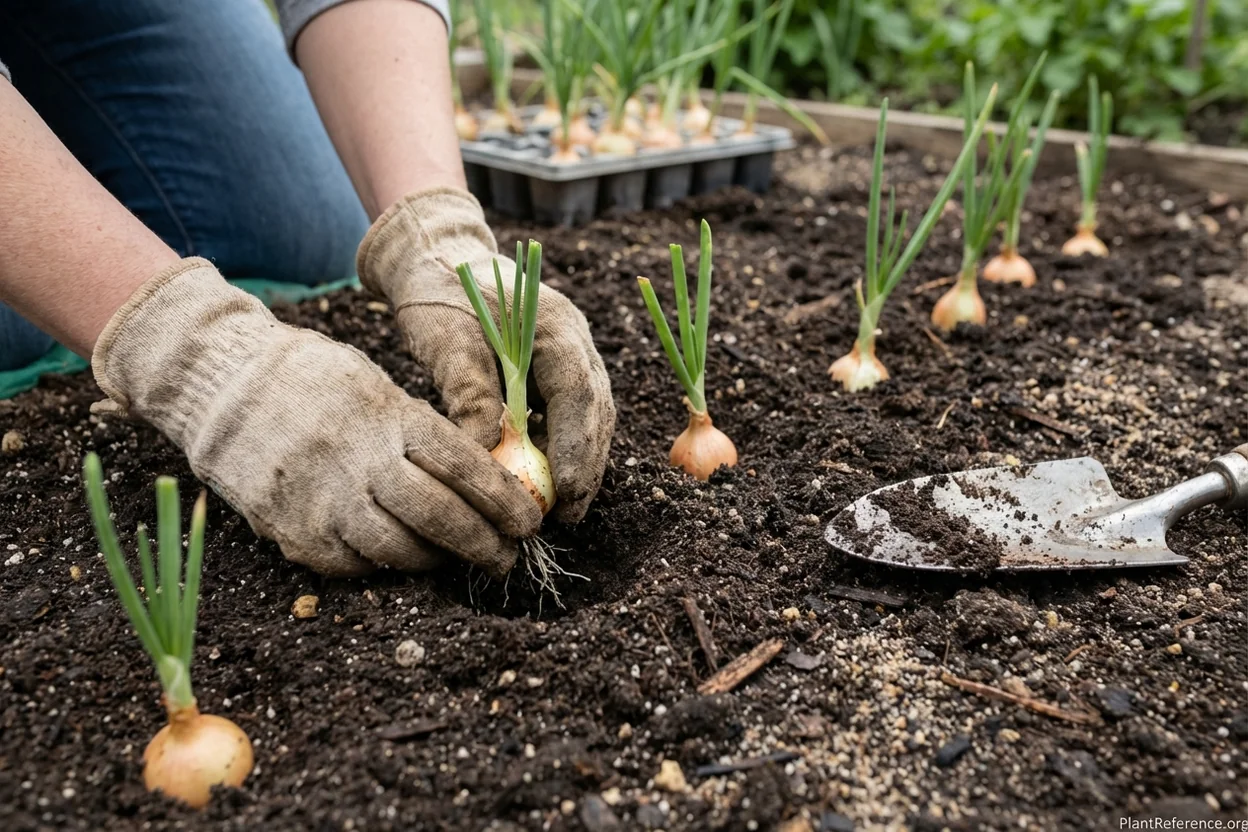
Transplant Method (Recommended): Short-day onion transplants are widely available at Houston garden centers from October through January. This method provides the best success rate for beginners.
Choose transplants with stems pencil-thick or smaller (larger ones may bolt)
Trim roots to 2 inches, tops to 4 inches before planting
Plant 1 inch deep with only root ball buried, green portion above soil
Space 4-6 inches apart in rows 12 inches apart
Water immediately after planting, then maintain consistent moisture
Seed Method (Advanced): Direct seeding works in Houston but requires more attention and timing precision.
Sow seeds October 1-15 for transplanting in late November
Plant seeds 1/4 inch deep in seed-starting mix indoors
Maintain 70-75°F for germination (7-14 days)
Transplant outdoors when seedlings reach 6 inches tall
Harden off gradually over 7-10 days before transplanting
Watering Strategy for Houston Humidity
Houston's high humidity creates unique watering challenges—too much moisture encourages fungal diseases, but onions need consistent moisture for bulb development.
Early Season (October-December):
Water deeply once weekly if no rain
Allow soil surface to dry between waterings
Morning watering preferred to reduce fungal issues
Mulch around plants to retain moisture and suppress weeds
Growing Season (January-March):
Increase to twice weekly as temperatures rise
Monitor soil moisture 2-3 inches deep
Reduce watering as bulbing begins (soil cracks visible at base)
Stop supplemental watering 2 weeks before harvest
Fertilizing Schedule for Houston
Houston's long growing season requires strategic nutrient management to maximize bulb size without encouraging disease.
At Planting:
Work 2-3 inches compost into planting area
Add balanced organic fertilizer (10-10-10) at 2 pounds per 100 square feet
Ensure adequate phosphorus for root development
Monthly Feeding (November-February):
Side-dress with nitrogen source (blood meal or fish emulsion)
Apply 1 tablespoon per plant monthly
Water thoroughly after fertilizing
Pre-Bulbing (March):
Final nitrogen application in early March
Switch to low-nitrogen, high-potassium fertilizer
Stop all fertilizing when soil begins cracking at plant base
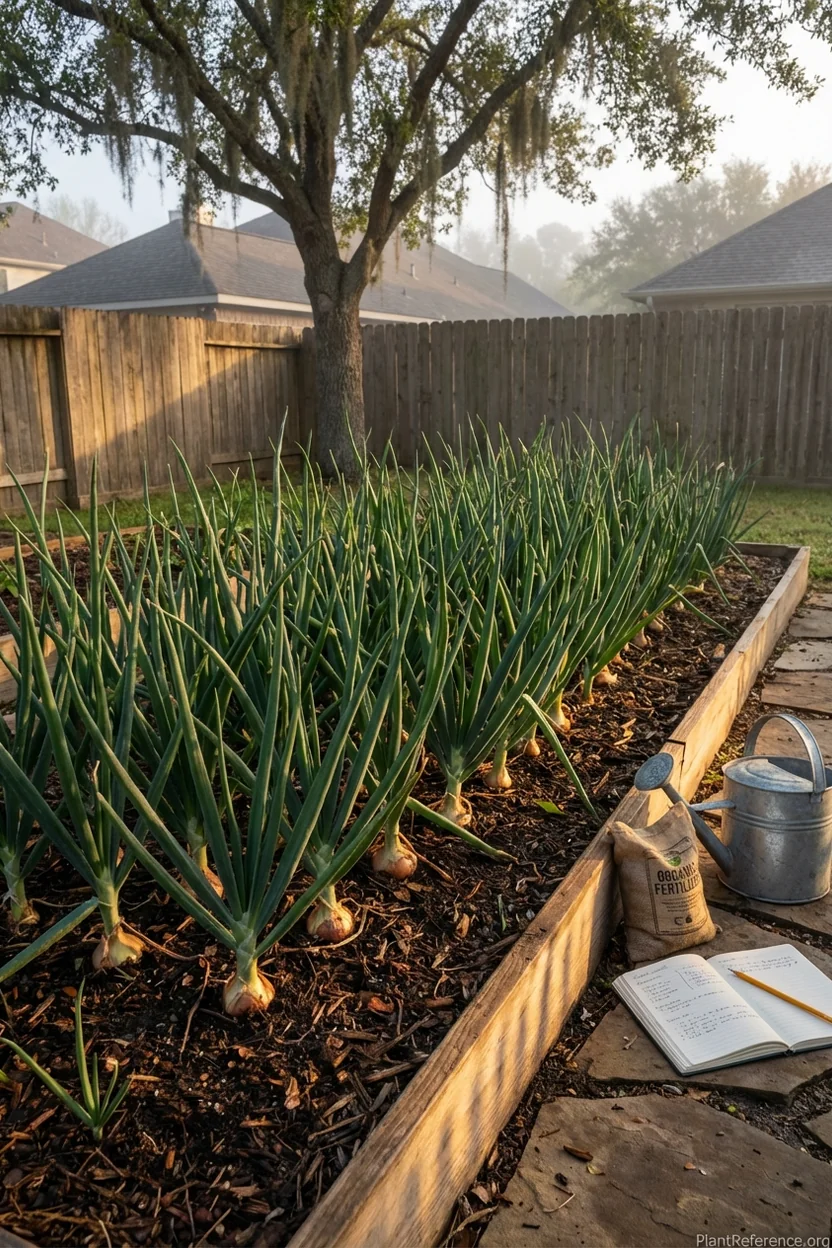
Companion Planting for Houston
Strategic companion planting helps manage Houston-specific challenges like high humidity, pest pressure, and intense spring heat.
Excellent Companions:
Lettuce and spinach: Provide living mulch, harvest before onions need full space
Carrots: Deep roots complement shallow onion roots, similar harvest timing
Herbs: Oregano, thyme, and parsley deter pests while thriving in Houston humidity
Brassicas: Cool-season crops that mature before onions need maximum space
Plants to Avoid:
Beans and peas: Compete for nitrogen, different watering needs
Tomatoes: Plant too close to onion harvest time, different nutrient requirements
Corn: Too much shade, blocks air circulation needed in Houston humidity
Troubleshooting Houston-Specific Problems
Houston's unique climate creates specific challenges that differ from other onion-growing regions. Here's how to identify and solve the most common issues.
Heat Stress and Bolting
Problem: Onions planted too late or exposed to unseasonable warm spells bolt (send up flower stalks) instead of forming bulbs.
Identification:
Hard, thick stalk emerging from center of plant
Flower bud formation at stalk tip
Bulb development stops completely
Prevention:
Plant during optimal October-November window
Choose short-day varieties appropriate for Houston latitude
Provide afternoon shade during exceptional heat waves
Maintain consistent soil moisture to reduce plant stress
Treatment: Remove flower stalks immediately if caught early, though bulb quality will be compromised.
Fungal Diseases in High Humidity
Houston's high humidity creates ideal conditions for onion diseases rarely seen in drier climates.
Purple Blotch:
Symptoms: Purple-brown lesions on leaves, white fuzzy growth in humid weather
Treatment: Improve air circulation, water at soil level only, apply copper fungicide
Prevention: Space plants properly, avoid overhead watering
Downy Mildew:
Symptoms: Yellow patches on leaves, fuzzy white growth on leaf undersides
Treatment: Remove affected leaves, apply organic fungicide
Prevention: Morning watering only, ensure good drainage
Clay Soil Drainage Issues
Yellowing from bottom leaves upward indicates waterlogged roots
Bulbs develop soft rot in overly wet conditions
Poor bulb formation due to insufficient oxygen in root zone
Plants remain small despite adequate fertilization and time
Solutions:
Install French drains in chronically wet areas
Build raised beds 8-12 inches high
Add more coarse sand to improve soil structure
Plant cover crops (crimson clover) in summer to improve soil biology
Pest Management in Houston
Thrips:More problematic in Houston heat than northern climates
Symptoms: Silver streaking on leaves, stunted growth
Treatment: Beneficial insects (lacewings), reflective mulch, row covers during worst infestations
Timing: Most problematic March-May as temperatures rise
Onion Maggots:Less common in Houston than northern areas but still present
Symptoms: Wilting plants, tunnels in bulbs
Prevention: Row covers, beneficial nematodes, proper sanitation
Cultural control: Rotate planting areas, remove all plant debris
Harvest & Storage
Houston's climate affects both harvest timing and storage methods differently than northern regions.
Harvest Indicators
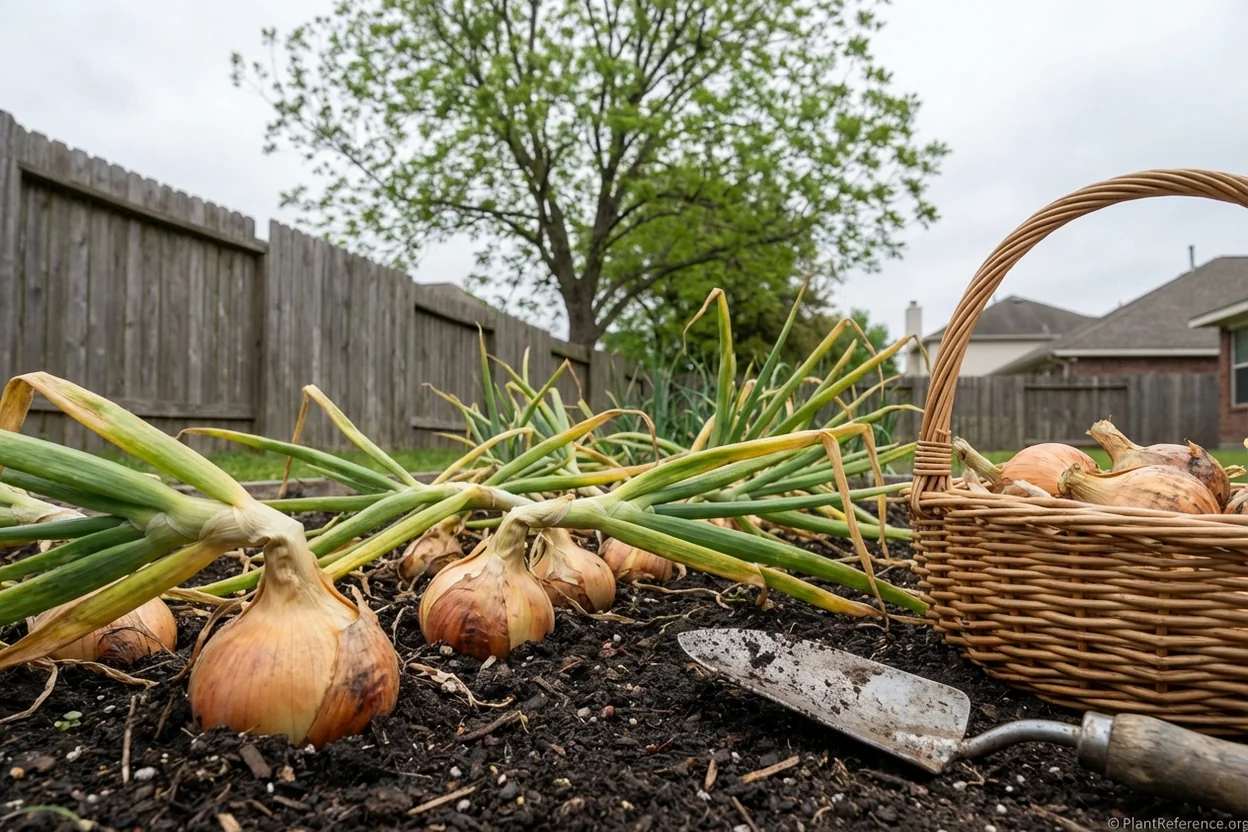
Prime Harvest Signs:
50-75% of tops have fallen over naturally
Outer bulb scales become papery and brown
Neck area feels firm when gently squeezed
Bulbs show good size development
Harvest Timing for Houston:
Fall-planted (October): Harvest late March to early May
Late fall-planted (November-December): Harvest April to May
Winter-planted (January): Harvest May to early June
Weather Considerations: Time harvest for dry weather periods—Houston's spring humidity can complicate curing if onions are harvested during wet spells.
Curing in Houston Humidity
Houston's high humidity requires modified curing techniques compared to drier climates.
Field Curing (if weather permits):
Leave in ground 24 hours only if no rain forecast
Cover bulbs with tops from adjacent rows to prevent sunscald
Move to protected curing area quickly
Protected Curing (recommended):
Move to well-ventilated garage, carport, or covered patio
Use fans to improve air circulation—critical in Houston humidity
Lay bulbs on screens or hang in mesh bags
Maintain temperatures 80-90°F with good airflow
Curing Timeline:
Short-day varieties: 2-3 weeks minimum
Test by pinching neck—should be completely dry and tight
Trim tops to 1 inch after complete curing only
Storage in Houston Climate
Houston's year-round warmth and humidity significantly reduce onion storage life compared to northern climates.
Storage Expectations: - Sweet varieties: 1-2 months maximum - 🌿Allium cepa 'Red Creole': 3-4 months with proper conditions - Storage onions: 4-6 months in climate-controlled conditions
Optimal Storage Conditions:
Temperature: 32-40°F (challenging in Houston without refrigeration)
Humidity: 65-70% (use dehumidifier if necessary)
Air circulation: Essential to prevent mold in humid conditions
Storage Methods for Houston:
Refrigerator storage for small quantities
Climate-controlled pantry with dehumidifier
Mesh bags in coolest, driest indoor location
Consume sweet varieties within 6-8 weeks of harvest
Frequently Asked Questions
Reading about plants and recognising them are different skills. These three build the second.
- Daily PlantIdentify the day’s mystery plant from a close-up photograph.
- Keyed OutWork a dichotomous key, lead by lead, to name a hidden specimen.
- Name That PlantName a specimen from botanical clues dealt hardest first.
Free to play, no account needed
Aisha manages a small tropical nursery on the east side of Houston, specializing in plants that can handle the Gulf Coast's humidity, heat, and unpredictable flooding. She studied horticulture in college and worked at a wholesale grower before opening her own operation. Growing up, her parents kept a kitchen garden with okra, bitter gourd, and curry leaf plants—a tradition she's continued. Houston's subtropical climate lets her grow things most of the country can't, but it also means dealing with fungal issues, standing water, and summers where it's too hot for even tomatoes. Aisha writes about tropical and subtropical plant care, humidity management, and working with heavy clay soils.